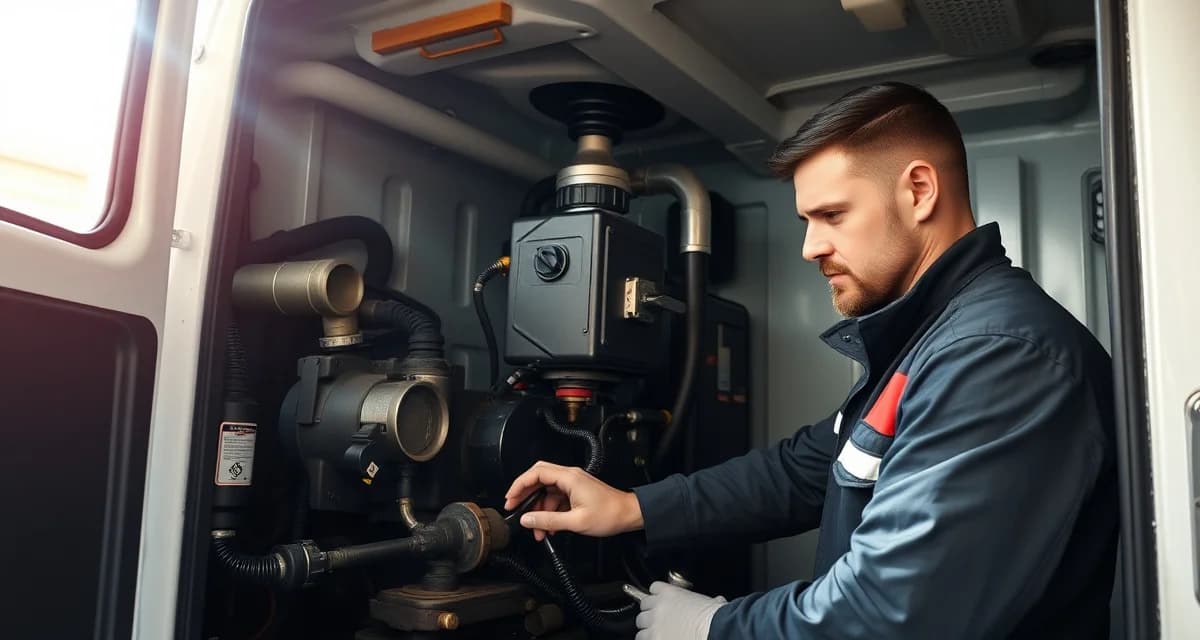
How to Maintain a Septic Pump Truck: A Technician's Guide
By the SepticMind Editorial Team
A poorly maintained pump truck breaks down three times more often than a truck on a structured maintenance schedule. That's not a small inconvenience. A broken-down truck is a cancelled job, a rescheduled customer, and a repair bill that often comes at the worst possible time.
TL;DR
- Vacuum pump oil changes every 250-500 hours of operation (not calendar time) are the most important preventive maintenance task for extending pump life.
- Pre-trip inspections completed before each day catch developing problems before they become mid-route breakdowns that eliminate a day's revenue.
- Hose inspection should cover cracks, wear at fittings, and separation at couplings; worn hoses cause spills that generate regulatory and customer liability.
- Tank valve and gauge inspection at the start of each week catches seal wear before it becomes a field emergency.
- Maintaining a pump hours log by truck VIN enables service scheduling by operating hours rather than calendar time, which is more accurate for high-use equipment.
- Parts inventory for high-wear consumables (oil, fittings, hose sections, vanes) avoids multi-day downtime waiting for delivery when repairs are needed.
Companies without truck maintenance schedules experience 40% more unplanned breakdowns than those with programs in place. If your maintenance approach is "fix it when it breaks," you're paying more for repairs, running more risk of mid-day breakdowns, and almost certainly failing DOT inspections at a higher rate than you should be.
Here's the maintenance program your technicians should be running.
Daily Pre-Trip Inspection
This is non-negotiable, and your DOT obligation makes it a legal requirement anyway. Before every truck leaves the yard, the driver should check:
Engine and drivetrain:
- Engine oil level
- Coolant level
- Transmission fluid
- Power steering fluid
- Brake fluid
- Belt condition (visual check for cracking or fraying)
- Battery terminals (no corrosion buildup)
- Fuel level
Vacuum system:
- Vacuum pump oil level (critical, running dry destroys the pump fast)
- All hose connections tight and no visible cracking
- Valve handles operating smoothly
- Tank pressure gauge reading zero before startup
- Tank relief valve not stuck open
- Hose reel operation check (if equipped)
Safety and regulatory:
- Headlights, brake lights, turn signals, reverse light
- Tires (visual for flats, low pressure, visible damage)
- Mirrors adjusted
- Fire extinguisher present and dated
- Spill kit present
- Any visible fluid leaks under the truck
If anything fails the pre-trip check, the truck does not leave the yard until the issue is resolved or evaluated by a mechanic.
Document the daily pre-trip in writing. This protects you in the event of an accident and creates a record that shows when issues were first noticed.
Weekly Inspection Items
Vacuum pump hose condition. Flex hoses crack from the inside out. A hose that looks acceptable on the outside may be failing internally. Inspect connections and flex points weekly and feel for soft spots.
Tank body inspection. Look at the inside of the tank when it's pumped out and cleaned. Check for corrosion, cracking at welds, and any areas where the tank coating is failing. Early stage tank issues are inexpensive. Advanced corrosion is catastrophic and expensive.
PTO operation. Engage and disengage the PTO under load. Listen for unusual sounds. Delayed engagement or grinding indicates wear.
Chassis lubrication. Grease all fittings on the chassis per the manufacturer's schedule. Running dry fittings quickly destroys bushings and joints.
Tire pressure. Septic trucks run heavy. Tire pressure affects fuel consumption, tire wear, and handling. Check all tires including the spare.
Scheduled Service Intervals
Engine Oil
Follow the manufacturer's recommendation, typically 5,000-7,500 miles for diesel, but many operators on short routes with frequent stop-and-go operations should shorten this interval. Track by hours as well as miles if your routes are slow-speed.
Vacuum Pump Oil
This is the most critical maintenance item on the pump system. Vane pumps and rotary lobe pumps each have their own oil change schedules, typically every 500-1,000 hours of pump operation. Running old oil increases operating temperature and accelerates wear. Document pump hours and change on schedule.
Vacuum Pump Seals and Hoses
Seals and hoses need inspection every 6 months and replacement as needed. Wear patterns in the pump internals show up in decreased vacuum performance before failure is complete. If you're noticing reduced vacuum or pump running longer to achieve target vacuum, inspect seals and vanes.
Vacuum and Pressure Gauges
Calibrate annually. A gauge reading wrong is worse than no gauge, because you're making operational decisions on bad data.
DOT Inspection
Annual DOT inspection is required. Don't wait for the DOT to find deferred maintenance. Run through the federal inspection requirements monthly so you're never surprised at annual inspection time.
Tracking Maintenance for Multiple Trucks
How do I track maintenance history for multiple trucks in one system? SepticMind's equipment module tracks oil changes, pump service, and DOT inspection deadlines per truck. You get reminders before service is due rather than tracking it manually across a spreadsheet that might not get updated.
For a three-truck operation, keeping three separate paper maintenance logs is manageable. For five trucks or more, missing an oil change or upcoming DOT deadline becomes a real risk. Digital tracking with automated reminders eliminates that risk.
Common Failure Points to Watch
Vacuum pump vane wear. Symptoms: decreased vacuum pull, pump running hotter than normal, longer pump-down times. Cause: worn vanes not sealing against the pump housing. Fix: replace vanes and inspect housing.
Baffle on-off valves. These valves take heavy use and tend to develop leaks over time. A slow leak from a tank valve is both a spillage risk and a permit compliance issue. Replace valves showing any weeping.
Hose couplings. Cam-lock fittings take abuse from daily use. Inspect coupling teeth for deformation and replace any coupling that doesn't lock positively.
PTO clutch wear. Engagement becomes rough or delayed. Address early; a failed PTO mid-job is an expensive tow.
Rear door seal. Tank rear door seals dry out and crack, particularly on trucks stored outside. A rear door that doesn't seal properly is a spillage risk. Inspect quarterly and replace seals annually.
The technician who notices something wrong in the morning pre-trip saves the company far more than the time the inspection takes.
Get Started with SepticMind
SepticMind is designed around the actual workflows of septic service companies, from county permit tracking to automated maintenance reminders. Whether you are managing a single truck or a multi-county fleet, the platform scales with your operation. See how it works for your business.
Frequently Asked Questions
What daily checks should a septic technician perform on a pump truck?
Daily pre-trip checks should cover engine fluid levels (oil, coolant, transmission, brake fluid), vacuum pump oil level, all hose connections and hose condition, valve operation, tire condition and pressure, all lights and signals, and any visible fluid leaks. The vacuum pump oil check is the most critical item specific to pump trucks, as running the pump low on oil causes rapid wear and can destroy the pump in a single run. All daily checks should be documented in a pre-trip log.
How often do vacuum pump seals and hoses need to be inspected?
Vacuum pump seals should be inspected every 6 months and replaced as needed based on condition or performance indicators like reduced vacuum or extended pump-down times. Hoses should be inspected weekly for visible cracking at connections and flex points, and any hose showing cracking, soft spots, or bulging should be replaced immediately. Planned replacement on a scheduled interval, typically annually for high-use hoses, prevents unplanned failures.
How do I track maintenance history for multiple trucks in one system?
SepticMind's equipment module tracks each truck separately with its own maintenance schedule, service history, and upcoming service reminders. You can log oil changes, pump service, DOT inspections, and custom maintenance items for each truck. When a service interval is approaching, the system generates a reminder so nothing gets missed across multiple trucks. This is more reliable than paper logs or spreadsheets, which depend on consistent manual updating that often doesn't happen when operations are busy.
What metrics matter most for managing a septic service business?
The most important operational metrics for a septic service company are route utilization rate (percentage of available truck capacity actually booked), customer retention rate (percentage of customers who return for the next service visit), revenue per truck per day, cost per job including labor, disposal, fuel, and overhead allocation, and recurring revenue percentage from service agreements versus one-time calls. Companies that track these metrics by route and by technician identify improvement opportunities faster than those looking only at total revenue.
How does field service software reduce administrative costs for septic companies?
Field service software eliminates manual steps in scheduling, dispatching, invoicing, permit tracking, and inspection report preparation. Tasks that take an office manager 2-4 hours per day on spreadsheets and phone calls are handled automatically: reminders go out, reports generate, invoices are sent, and permit deadlines are flagged without human intervention. The hours saved are redeployed to customer service, sales, and higher-value work that grows the business.
Try These Free Tools
Sources
- National Onsite Wastewater Recycling Association (NOWRA)
- US EPA Office of Wastewater Management
- National Environmental Services Center (NESC)
- Water Environment Federation
- Occupational Safety and Health Administration (OSHA)