How much does a septic system cost in 2025?
By the SepticMind Editorial Team
TL;DR
- A conventional septic system runs $3,500 to $15,000 for most single-family homes, with the national midpoint near $7,000 to $9,000.
- Alternative systems (mound, aerobic, drip) push $15,000 to $30,000 or more.
- Soil conditions, tank size, drain field design, local permits, and system type drive the final number more than anything else.
What is the average cost of a septic system?
Here's the honest answer: it depends on where you live and what your soil allows. The numbers that show up over and over across contractor surveys and state extension data still land in a tight range.
A conventional gravity-fed system on a typical three-bedroom home with good soil runs $3,500 to $10,000 all in. That covers the tank, labor, excavation, drain field, and permits. Most contractors put the national midpoint around $6,000 to $9,000 [1].
Alternative systems change the math fast. A mound system in Minnesota or Wisconsin, where the water table sits high, runs $10,000 to $20,000. An aerobic treatment unit (ATU) in Texas or the Gulf Coast often costs $10,000 to $15,000 installed. Drip irrigation, which some states require on marginal lots, hits $15,000 to $30,000 [2].
Those upper-end figures are not outliers. They come from real quotes in states with tight setback rules, high water tables, clay-heavy soils, or small lots that force a pricier design. If your county health department wants a nitrogen-reducing system near a shellfish bed or a watershed protection zone, add another $5,000 to $10,000.
So budget $7,000 to $12,000 as a realistic planning number for most U.S. single-family homes. Then get a site evaluation before you assume you're on the low end.
What factors affect the cost of a septic system most?
Soil is the single biggest variable. A percolation test (perc test) measures how fast water moves through your soil. Fast-draining sandy soil means a smaller, cheaper drain field. Slow-draining clay means a larger field or an alternative system entirely. The perc test itself costs $200 to $1,000 depending on your state and how many test holes the inspector requires [3].
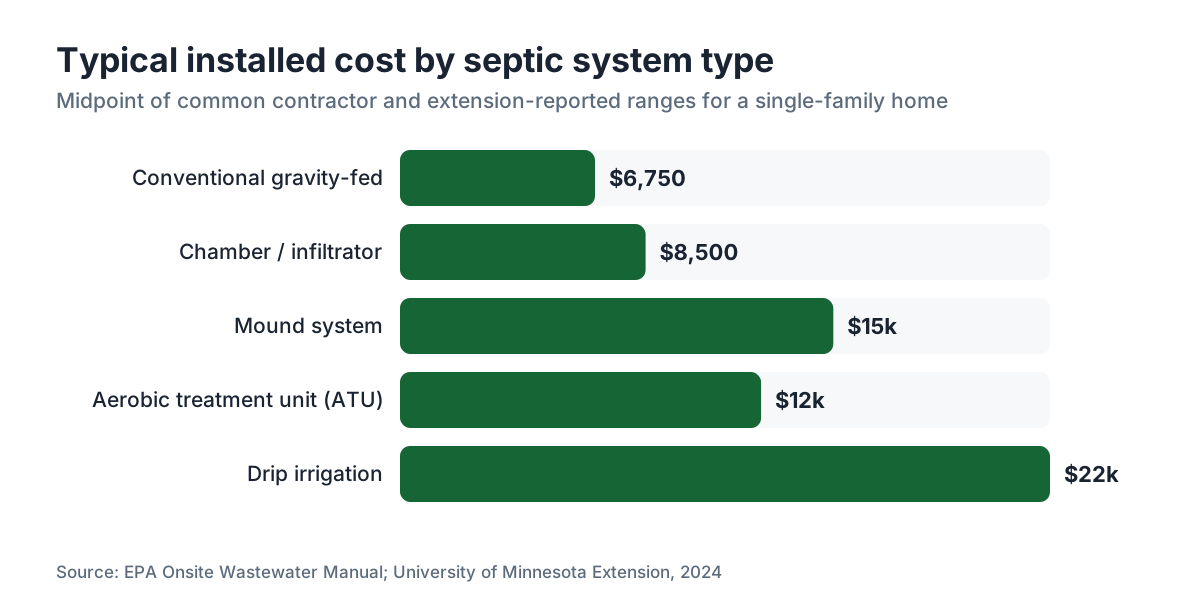
System type is the second-largest factor. The table below breaks it down.
| System Type | Typical Installed Cost | Best For |
|---|---|---|
| Conventional gravity-fed | $3,500 to $10,000 | Good-draining soil, adequate lot size |
| Chamber/infiltrator | $5,000 to $12,000 | Moderately restrictive soil |
| Mound system | $10,000 to $20,000 | High water table, shallow restrictive layer |
| Aerobic treatment unit (ATU) | $10,000 to $15,000 | Poor soil or small lots |
| Drip irrigation | $15,000 to $30,000 | Very restrictive soil, specific watersheds |
| Constructed wetland | $8,000 to $20,000 | Environmentally sensitive areas |
Tank size matters, but less than people think. A 1,000-gallon concrete tank runs $700 to $1,500 for the tank alone. A 1,500-gallon tank adds maybe $300 to $500 more [1]. The tank is rarely where the real money goes.
Excavation and site conditions are huge. Rocky ground, steep slopes, or mature trees near the field area all add cost. A clean dig in soft soil might take half a day. Blasting or grinding through ledge rock can add $2,000 to $8,000 by itself.
Permits and engineering fees swing wildly by county. Some rural counties charge $150. Some suburban counties want a licensed engineer to stamp the design, inspections at multiple stages, and fees that total $1,500 to $3,000 before a shovel hits the ground [4].
Labor follows the same regional pattern as the rest of construction. The Southeast and rural Midwest run cheaper. The Northeast, Pacific Coast, and Mountain West run more. Figure labor makes up 40 to 60 percent of the total installed cost on a conventional system.
How much does each type of septic system cost?
Conventional systems are the starting point. They rely on gravity to move effluent from the tank through perforated pipes in gravel-filled trenches. It's the cheapest design when the soil cooperates. Total installed cost runs $3,500 to $10,000. No pump, no electricity, almost no mechanical parts.
Chamber systems (sometimes called infiltrator systems after a common brand) swap the gravel for plastic arch chambers. They work better in moderately restrictive soils and install faster, which can trim labor in some markets. Installed cost runs $5,000 to $12,000.
Mound systems are what contractors build when the water table sits too shallow or a restrictive layer comes too close to the surface. The drain field gets built above grade in a mound of imported sand. More materials, more hauling, a pump chamber, and more labor push costs to $10,000 to $20,000 [2].
Aerobic treatment units use an air compressor to force oxygen into the treatment process, which produces cleaner effluent. They're common in Texas and other states with thin soils. They cost more to install and more to maintain because the mechanical and electrical parts need annual service contracts, typically $150 to $300 a year [5].
Drip irrigation systems push highly treated effluent through buried drip tubing. They fit on small lots and slopes where nothing else will. They're the most expensive to install ($15,000 to $30,000) and need controls, filters, and pumps to run.
For a closer look at the install itself, the septic tank installation guide walks through each stage with timelines and what to ask your contractor.
How much does the septic tank alone cost?
People sometimes shop the tank separately from the full system. That's reasonable, but it rarely moves the big picture much.
Concrete tanks are the standard. A 1,000-gallon concrete tank runs $600 to $1,200 for the tank itself, before delivery or installation. A 1,500-gallon tank runs $900 to $1,800. Most counties require at least a 1,000-gallon tank for any occupied home, and a three-bedroom home typically calls for 1,000 to 1,500 gallons under standard sizing rules [6].
Plastic (polyethylene) tanks cost about the same or a little less than concrete, sometimes $500 to $1,000 for a 1,000-gallon unit. They're lighter, so delivery and installation go easier on tight lots. Some states and counties don't allow plastic tanks or limit them to certain uses, so check your local code first.
Fiberglass tanks run $1,200 to $2,500 for a 1,000-gallon unit. They're stronger than plastic and lighter than concrete. You see them in rocky areas where a concrete delivery truck can't reach the site.
For tank-only numbers, see the cost to put in a septic tank guide. For the full picture of what a complete system quote includes, the cost to install septic system article breaks it down line by line.
What does a drain field or leach field cost?
The drain field is usually the most expensive single component of a conventional septic system, and it's the piece homeowners tend to underestimate.
A standard gravity drain field for a three-bedroom home runs $2,000 to $6,000 for materials and installation. That covers the gravel, perforated pipe, filter fabric, and excavation. The size depends on soil perc rate and local code. Many states size the field with a formula based on bedroom count and daily flow, typically 75 to 100 gallons per bedroom per day [6].
If the soil needs a larger field, or the lot forces an odd layout with extra excavation, costs climb. A field that needs 1,500 linear feet of trench instead of 600 can easily double both labor and materials.
Replacing a failed field often costs more than the original install. You're paying to remove or cap the old field and sometimes to deal with soil that's been loaded with biomat. Replacement drain fields run $5,000 to $20,000 depending on system type and soil condition [7].
The leach field article goes deep on how fields work, why they fail, and what restoration options actually exist before you commit to a full replacement.
How do permits, soil testing, and design fees add to the cost?
These soft costs are real, and they blindside first-time buyers of rural property.
A perc test (percolation test) or soil evaluation costs $200 to $1,000. Some states require a licensed soil scientist or engineer to perform and certify it, which pushes the number higher [3]. In North Carolina and Virginia, a state-licensed soil evaluator must sign off before any permit gets issued.
The permit itself ranges from $50 in some rural counties to $2,500 or more in counties with heavy review. Some jurisdictions require several inspections during installation, and each may carry its own fee.
If your property needs a full engineered design because the lot is nonstandard, the engineer's design fee alone runs $500 to $2,500. That's separate from the permit fee.
Survey costs come up when setback requirements (from wells, property lines, buildings, and waterways) require a licensed surveyor to locate and stake the installation area. Expect $400 to $1,200 for a property survey if one isn't already on file.
All in, soft costs can add $1,500 to $5,000 to a project a homeowner assumed was a simple contractor hire. Get your county health department's requirements in writing before you sign anything.
How much does a septic system cost for a new home build?
New construction is the most common scenario, and the cost range matches everything above. What changes is how the cost gets handled inside the construction budget.
Most general contractors in rural areas fold a septic allowance into their bids, often $8,000 to $12,000. If the site evaluation turns up difficult soil or a system type pricier than conventional, you're likely paying the overage yourself. Pin this down before you close on land.
On a lot purchase, the perc test is the single most important contingency to negotiate. Plenty of rural land deals hinge on a passing perc test. If the test fails, or shows that only an expensive alternative system will work, you can renegotiate or walk. Skip that contingency and you're the one staring at a $25,000 mound system budget when you planned on $7,000.
EPA's SepticSmart program, run by the Office of Water, notes that proper siting and design from the start is what prevents early system failure and the expensive repairs that follow [8]. Getting the soil evaluation right the first time is worth every dollar.
What are the ongoing costs of owning a septic system?
A new system has upfront costs. The ongoing maintenance costs are just as real, and people leave them out of the budget all the time.
Pumping is the baseline. Most tanks need it every three to five years. The EPA recommends pumping every three to five years for a household of four [8]. The cost runs $200 to $600 depending on tank size, access, and local market [9].
ATUs and other mechanical systems need annual service contracts with a licensed maintainer, $150 to $300 a year. Most states that permit ATUs require these contracts by law.
Inspections at the time of a home sale cost $200 to $600 and are increasingly required by lenders or buyers in many states. The septic tank inspection guide covers what inspectors actually check and which findings are red flags versus routine.
Minor repairs, like replacing a distribution box, a riser lid, or a pump float switch, run $200 to $1,500. Major repairs like a drain field restoration or tank replacement run $3,000 to $30,000 depending on what failed and why [7].
Over a 30-year ownership stretch, a homeowner who pumps every three years, handles minor repairs, and eventually replaces a drain field will spend $15,000 to $40,000 in total maintenance and repairs on top of the original install. That's not a scare number. That's the honest math of owning a private wastewater treatment plant in your backyard.
For operators tracking these costs across many service accounts, SepticMind's operations software manages pumping schedules, service history, and compliance tracking in one place.
Can you get financial assistance for septic system costs?
Yes, and more homeowners qualify than realize it.
The USDA Rural Development program offers loans and grants for essential home repairs, septic systems included, through the Section 504 Home Repair program. As of 2024, grants up to $10,000 go to very-low-income homeowners who are 62 or older, and loans up to $40,000 are available to others [10].
EPA's Clean Water State Revolving Fund (CWSRF) sends low-interest financing to states, which pass it through to local programs, sometimes as direct homeowner assistance. The mechanism varies a lot by state. Check your state environmental agency for what's live right now.
Some states run their own septic repair assistance. Massachusetts has the Title 5 Septic Loan Program through MassHousing, which offers 0 percent interest loans for septic repairs required by state code [11]. North Carolina, Minnesota, and several others have county-level loan programs for homeowners with failing systems.
Local health departments sometimes administer grant or low-interest loan programs funded by USDA or state revolving funds. Your first call should go to your county health or environmental services office.
Federal tax deductions for septic systems are limited. Installing a new system on a primary residence is generally a capital improvement, not a deductible expense, though it can raise your cost basis for capital gains when you sell. A few states offer specific tax credits for approved nitrogen-reducing systems, so check your state revenue department.
How much does it cost to repair vs. replace a septic system?
This is the question homeowners hit when something goes wrong, and the gap between repair and replacement is wide enough that a proper diagnosis always comes first.
Minor repairs (replacing a baffle, fixing a crushed pipe, swapping a pump, resetting a float switch) run $200 to $2,500. These are common and don't mean the system is dying [12].
Drain field restoration sits in the middle. Techniques like mechanical aeration, biological additives, and resting sections of the field carry mixed evidence, but they sometimes extend field life for $500 to $3,000. The science on additives is weak. The closest thing to a rigorous review, from the University of Minnesota Extension, concluded that most commercially sold septic additives have not been proven effective in controlled studies and are not a substitute for pumping [13].
Full drain field replacement runs $5,000 to $20,000. Full system replacement (tank and field) runs $10,000 to $30,000 or more depending on system type.
The decision rule is simple. If the tank is sound and only the field has failed, replace the field. If the tank is also failing (cracks, structural damage, root intrusion, baffle collapse), replacing the whole system often costs little more than a piecemeal fix and usually buys 25 to 30 more years.
For repair-side numbers, the septic system repair and septic tank repair guides break down what each type of failure typically costs to fix.
How does septic system cost compare to connecting to public sewer?
If you have the choice, you want to know which is cheaper over the long haul.
Connecting to public sewer, where the line is already at or near your property, typically costs $3,000 to $12,000 for the lateral connection, depending on distance, pavement cuts, and local connection fees. After that, you pay a monthly sewer bill. The American Water Works Association reports the average U.S. residential sewer bill at roughly $30 to $80 a month, or about $360 to $960 a year [14].
A septic system costs more upfront ($6,000 to $15,000 for a typical install) but carries no monthly bill. The ongoing cost is pumping ($200 to $600 every three to five years) plus the occasional repair.
Over 20 years, a homeowner on public sewer might pay $7,200 to $19,200 in sewer charges plus the connection fee. A homeowner on septic might pay $7,000 to $12,000 to install plus $3,000 to $8,000 in pumping and minor maintenance. For most households the 20-year total is roughly a wash. Septic loses when a major repair or replacement lands, which can add $10,000 to $30,000 in a single year.
If sewer is available and your septic system is failing, the math often favors connecting rather than replacing, especially where the market doesn't pay a premium for septic over sewer. If you're on a large rural lot with no sewer option, a well-maintained conventional system is a perfectly good long-term answer.
Frequently asked questions
How much does a septic system cost for a 3-bedroom house?
Plan on $5,000 to $12,000 for a conventional system on a three-bedroom home with cooperative soil. Standard sizing calls for a 1,000 to 1,500-gallon tank and a drain field sized for roughly 300 to 450 gallons per day. Difficult soil or a required alternative system can push the same three-bedroom house to $15,000 to $25,000.
How long does a septic system last?
A concrete tank in good soil typically lasts 30 to 40 years or more with regular pumping. A conventional drain field lasts 25 to 30 years if it's not overloaded or damaged by tree roots, compaction, or non-biodegradable waste. Plastic and fiberglass tanks have similar lifespans on paper but can shift or float in high-water-table areas if they aren't installed right.
How much does it cost to pump a septic tank?
Pumping a standard 1,000-gallon tank runs $200 to $400 in most U.S. markets. A 1,500-gallon or larger tank runs $300 to $600. The EPA recommends pumping every three to five years for a household of four. Skipping pumps is the most common cause of premature drain field failure, and that failure costs ten to fifty times as much as a pump-out.
Can I install a septic system myself?
Most states prohibit homeowner installation without a licensed contractor or, at minimum, a licensed installer permit. Even where DIY is technically legal on your own property, the permitting process requires inspections that effectively demand professional execution. The EPA and state health departments require design approval, licensed installers, and post-installation inspections in most jurisdictions. A DIY install without permits creates real liability at resale.
Does homeowners insurance cover septic system costs?
Standard homeowners insurance typically excludes septic systems for gradual failure or maintenance-related breakdown, which is how most systems fail. Some policies cover sudden and accidental damage, like a tank crushed by a falling tree. Specialized home warranty products sometimes cover pumps and mechanical parts. Read your policy exclusions carefully. Most septic repair and replacement costs come fully out of pocket.
How much does a mound septic system cost?
A mound system on a high-water-table lot typically runs $10,000 to $20,000. The cost comes from imported sand fill (sometimes hundreds of tons), a pump chamber with a dosing pump, and the extra labor to build the mound above grade. Pumping the pump chamber adds a small recurring cost. Mound systems are common in Minnesota, Wisconsin, and other Upper Midwest states with shallow, seasonally saturated soils.
What is included in a septic system installation quote?
A complete quote should include tank supply and delivery, excavation, bedding material, distribution box or manifold, drain field pipe and gravel (or chamber units), backfill and grading, and permit fees. Often excluded: perc testing, engineered design, electrical work for pump systems, and inspections beyond the basic county inspection. Always ask for a line-item breakdown so you know exactly what's covered.
How much does replacing a drain field cost?
Drain field replacement runs $5,000 to $20,000 depending on system type, field size, and whether a fresh area of your lot must be used. If your county requires an alternative system because no untreated soil area is available for a conventional replacement field, costs can top $20,000. Get a second contractor opinion before committing, since early-stage field failure sometimes responds to resting and loading reduction.
How much does a septic inspection cost for a home purchase?
A basic septic inspection at the time of a home sale runs $200 to $600. A full inspection that pumps the tank, checks baffles and the distribution box, and probe-tests the drain field runs $400 to $900. In some states, lenders require the full inspection for FHA or VA loans on properties with private septic. Budget for and require an inspection before closing on any home with a private system.
How much does an aerobic septic system cost?
An aerobic treatment unit (ATU) installed and ready to run costs $10,000 to $15,000 in most markets. States like Texas with large numbers of ATU installations tend to run on the lower end thanks to contractor familiarity. Most states require an annual maintenance contract with a licensed provider, adding $150 to $300 a year. ATUs produce cleaner effluent than conventional systems but carry more mechanical complexity and ongoing cost.
Are there grants or loans to help pay for septic systems?
Yes. The USDA Section 504 Home Repair program offers grants up to $10,000 for qualifying low-income homeowners aged 62 and older, plus loans up to $40,000 for repairs including septic systems. Some states, like Massachusetts, run dedicated zero-interest septic repair loan programs. EPA's Clean Water State Revolving Fund provides financing that states can direct to homeowner assistance. Contact your county health department or state environmental agency for what's available near you.
How much does it cost to add a second septic tank?
Adding a second tank, usually to increase capacity or add a pump tank, runs $1,500 to $5,000 depending on tank size, material, and the work of tying it into your existing system. It needs a permit in virtually every jurisdiction. People do this when an existing 1,000-gallon tank proves undersized for a growing household, or when converting a conventional system to a pump-to-drain-field setup.
How does lot size affect the cost of a septic system?
Small lots often force pricier system choices because conventional drain fields need space plus setbacks from wells, property lines, and buildings. A lot under half an acre may not have room for a conventional field and a repair area, pushing the design toward drip irrigation, ATU, or another compact alternative that costs two to four times as much. Lot size doesn't set the price directly, but it limits which systems are legally permitted.
What's the cheapest way to install a septic system?
The cheapest legal path is a conventional gravity-fed concrete tank with a gravel trench drain field on sandy or loamy soil with a good perc rate, in a jurisdiction with low permit fees and a market where labor is affordable. Get three contractor bids. Price spreads of 30 to 50 percent between bidders are common on the same site. Never cut costs by skipping the perc test or engineering review. Those shortcuts cause failures that cost far more to fix.
Sources
- HomeAdvisor (Angi), Septic System Installation Cost Guide: Average installed cost for a conventional septic system for a single-family home is approximately $6,000, $9,000 nationally, with a range of $3,500, $10,000 for conventional systems and higher for alternative types.
- University of Minnesota Extension, Septic System Costs: Mound systems in Minnesota run $10,000, $20,000 installed; alternative systems including drip and ATU can exceed $20,000.
- North Carolina Department of Health and Human Services, Onsite Wastewater Section: Soil evaluation by a licensed soil scientist is required in North Carolina before a permit is issued; costs vary by evaluator and site complexity, typically $200, $1,000.
- Virginia Department of Health, Onsite Sewage and Water Programs: Virginia requires a licensed onsite soil evaluator and permit approval before any septic installation; permit and design fees vary by locality and system complexity.
- Texas Commission on Environmental Quality, Aerobic Septic Systems: Texas law requires owners of aerobic treatment units to maintain a maintenance contract with a licensed maintenance provider; contracts typically run $150, $300 per year.
- EPA, Onsite Wastewater Treatment Systems Manual (EPA/625/R-00/008): Standard sizing guidance calls for a minimum 1,000-gallon tank for any occupied home and a drain field sized for daily sewage flow; typical design flow is 75 to 100 gallons per bedroom per day.
- EPA, SepticSmart: Caring for Your Septic System: Drain field replacement is among the most expensive septic repairs, and proper design and siting from installation prevents premature failure.
- EPA SepticSmart, Homeowner Guidance: The EPA recommends that homeowners have their septic systems inspected every three years and pumped every three to five years depending on household size.
- EPA, SepticSmart Week Resources: Septic tank pumping costs approximately $200, $500 for a standard residential system; regular pumping prevents solids from overloading the drain field.
- USDA Rural Development, Section 504 Home Repair Program: Section 504 offers grants up to $10,000 for very-low-income homeowners aged 62+ and loans up to $40,000 for essential home repairs including septic systems in rural areas.
- MassHousing, Title 5 Septic Loan Program: Massachusetts offers 0% interest loans through MassHousing for septic system repairs and replacements required to comply with the state Title 5 code.
- EPA, How to Care for Your Septic System: Minor component failures such as baffles, distribution boxes, and pump switches are common and do not indicate overall system failure; repair costs are typically $200, $2,500.
- University of Minnesota Extension, Septic System Additives: A review of commercially available septic system additives found that most have not been proven effective in controlled studies; biological and chemical additives are not recommended as a substitute for pumping.
- American Water Works Association, Buried No Longer: Confronting America's Water Infrastructure Challenge: Average residential sewer bill in the United States is approximately $30, $80 per month; costs vary significantly by utility and region.
Last updated 2026-07-09