How often should a septic system be pumped?
By the SepticMind Editorial Team
TL;DR
- The EPA recommends pumping most residential septic tanks every 3 to 5 years.
- The right interval depends on tank size, household size, and how much solid waste you send down the drain.
- A 1,000-gallon tank serving four people usually needs pumping every 3 to 4 years.
- Skipping pumps is the most common cause of drain field failure.
What is the standard recommendation for how often to pump a septic system?
Pump most residential septic tanks every 3 to 5 years, and have a professional inspect the system at least every 3 years. That's the EPA's SepticSmart guidance, and it's the number most state programs start from [1].
That range isn't arbitrary. It comes from field data on how fast sludge and scum pile up in a typical residential tank. Three to five years gives solids time to settle and compact without letting the sludge layer climb so high that it spills through the outlet baffle and out into your drain field.
Some states tighten the window. Washington requires operation and maintenance inspections of conventional systems every three years, and more often for systems with mechanical parts, with pumping triggered when solids reach a set fraction of tank volume [2]. North Carolina requires pumping once the combined sludge and scum layers fill 25 percent or more of the liquid depth [3]. If your state mandates a shorter interval, that rule wins over the federal guidance.
Treat 3 to 5 years as a starting point, not a verdict. It assumes a reasonably sized tank, average water use, and no garbage disposal. Change any one of those and the interval moves.
How does household size affect how often you need to pump?
More people means more waste, which means solids stack up faster. A single person in a 1,500-gallon tank can go seven or eight years between pumps without trouble. Put a family of six in that same tank and you're looking at service every couple of years. The fill rate scales almost directly with the number of bodies using the system.
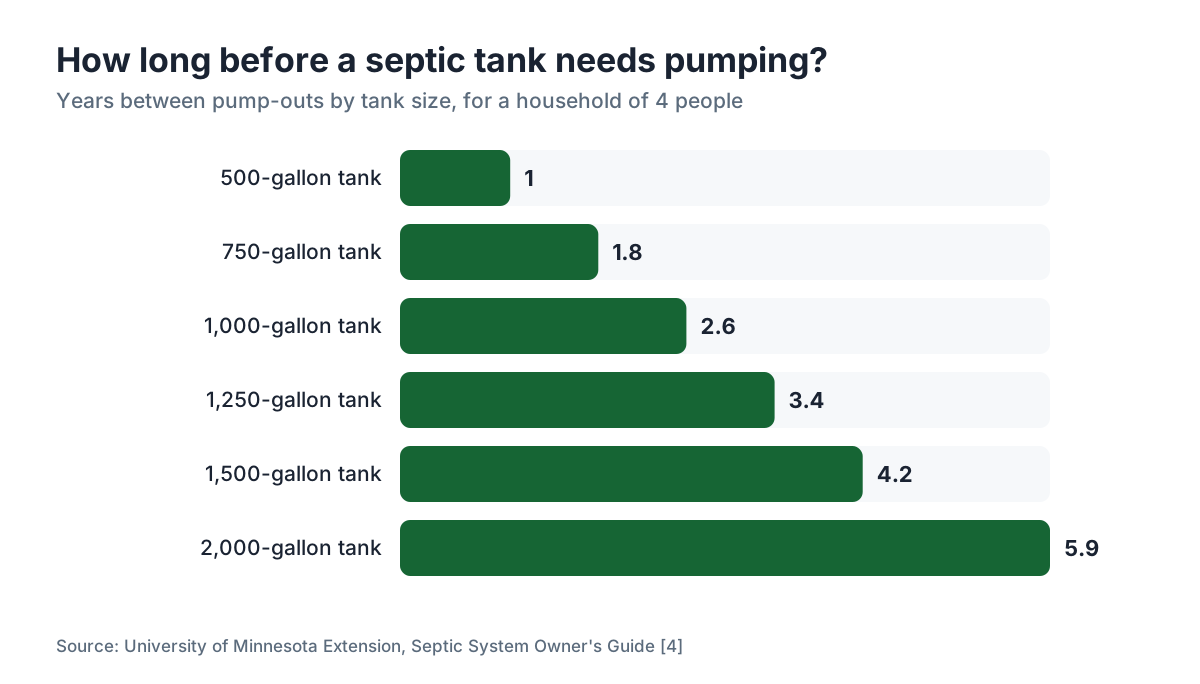
The EPA and most state extension services publish lookup tables that cross-reference tank size against occupants. The table below uses figures from University of Minnesota Extension's widely cited septic guidance [4]:
| Tank size (gallons) | 1 person | 2 people | 3 people | 4 people | 5 people | 6 people |
|---|---|---|---|---|---|---|
| 500 | 5.8 yrs | 2.6 yrs | 1.5 yrs | 1.0 yr | 0.7 yr | 0.4 yr |
| 750 | 9.1 yrs | 4.2 yrs | 2.6 yrs | 1.8 yrs | 1.3 yrs | 1.0 yr |
| 1,000 | 12.4 yrs | 5.9 yrs | 3.7 yrs | 2.6 yrs | 2.0 yrs | 1.5 yrs |
| 1,250 | 15.6 yrs | 7.5 yrs | 4.8 yrs | 3.4 yrs | 2.6 yrs | 2.0 yrs |
| 1,500 | 18.9 yrs | 9.1 yrs | 5.9 yrs | 4.2 yrs | 3.3 yrs | 2.6 yrs |
| 2,000 | 25.4 yrs | 12.4 yrs | 8.0 yrs | 5.9 yrs | 4.5 yrs | 3.7 yrs |
Source: University of Minnesota Extension, Septic System Owner's Guide [4]
Notice something. A 1,000-gallon tank with four people lands at 2.6 years, which is shorter than the EPA's 3-year floor. So the 3-to-5-year rule runs a little optimistic for mid-size tanks at average density. Use the low end of the range as your default and stretch it only if your tank is large or your household is small.
These figures assume no garbage disposal. Add one and cut the interval by roughly a third, because ground food waste dumps a lot of extra solids into the tank [1].
What else changes how often a septic tank should be pumped?
Tank size and household size are the two big levers. Several other factors push the interval shorter in ways homeowners don't always see coming.
Garbage disposals are the most underrated. Ground food waste skips the digestion a body would do and lands in your tank almost entirely as raw solids. The EPA is blunt about it: using a garbage disposal significantly raises the amount of solids entering the system [1]. Daily use? Knock 30 to 40 percent off your baseline interval.
High-efficiency fixtures help, but not as much as people hope. Low-flow toilets and showerheads cut the water volume going into the tank, which slows dilution a bit and may stretch the interval slightly. But solids drive pumping frequency, and solids come from people, not from water.
Business use of a residential system is a warning sign. Run a home daycare or a salon, or host frequent large gatherings at a vacation property, and your solids load can jump well past what a normal household produces. In those cases, an annual inspection earns its cost.
Old cast-iron or concrete baffles corrode and fail, and a failed outlet baffle lets solids escape the tank long before the calendar says it's time to pump. If your system is more than 20 years old and nobody has ever looked at the baffles, that inspection matters more than the pumping date. A blown baffle is a fast road to a ruined leach field.
Additive products, the bacteria packets and enzyme jugs at the hardware store, are mostly wasted money. A healthy tank already grows the bacteria it needs. The EPA doesn't recommend additives as a substitute for pumping, and University of Minnesota Extension's review found no evidence they extend pump intervals [5].
What happens if you wait too long between pumps?
Wait too long and solids start leaving the tank. The sludge layer builds from the bottom, the scum layer builds from the top, and the band of clear liquid in the middle gets squeezed thin. Once it's thin enough, solids ride out through the outlet and into the distribution box and drain field pipes.
That's when it gets expensive. Biomat, a dense black mat of biological growth, forms in the soil and clogs the pores that let effluent soak away. A clogged drain field almost never has a cheap fix. Replacing one runs $5,000 to $20,000 depending on soil, lot size, and local labor [6]. That's ten to twenty times the cost of the pump-out that would have kept it from happening.
The warning signs: slow drains across more than one fixture, gurgling in the plumbing, sewage odor near the tank or drain field, wet or spongy ground over the field, and in the worst case, sewage backing up into your lowest drains. Seeing any of these? Book a septic tank inspection before you schedule a pump, because pumping alone won't clear a biomat.
One number worth keeping in mind. The EPA estimates that about one in five U.S. households relies on a septic or other decentralized system, and failing systems are a leading source of groundwater contamination [8]. That's not a scare tactic. It's why more states demand maintenance records every year.
How do you know when your specific tank actually needs pumping?
The reliable answer is direct measurement during an inspection. A technician drops a rod called a sludge judge through the access lid and measures the sludge depth at the bottom and the scum thickness at the top. When those combined layers fill 30 percent or more of the tank's liquid capacity, it's time to pump. North Carolina sets its trigger at 25 percent [3]. Minnesota and most other states work in the 25 to 30 percent range [9].
Want a rough self-check? You can build a homemade sludge judge from a length of clear PVC with a check valve at the bottom. It's not hard, and several state extension services publish instructions. Still, a professional inspection every three years is more dependable, and many pumping companies throw in a basic inspection when you book a septic tank pump out.
Newer systems often have risers with lids at grade and an effluent filter on the outlet. Rinse that filter back into the tank every one to two years, separate from the pumping schedule [10]. If your system has one and you've never touched it, start there.
Operators running multiple client systems can use scheduling tools like SepticMind to track pump-out dates and flag accounts nearing their interval, which takes the guesswork out of dispatch.
Does the type of septic system change how often it needs to be pumped?
Yes, and it matters. The 3-to-5-year rule is written for a conventional gravity system with a standard two-compartment tank. Other designs run on different clocks.
Aerobic treatment units (ATUs) add a pump chamber and an aeration chamber on top of a settling tank. They treat effluent harder but carry more moving parts, so most states require frequent maintenance contracts. Texas, for one, requires a maintenance contract with a licensed provider for all aerobic units [7]. The pump tank in an ATU still gets pumped every 3 to 5 years, same as a conventional tank, but the service visits happen far more often.
Mound systems and drip irrigation systems use pressure-dosed pump chambers that need separate attention. Inspect the pump every year and pump the dose tank on roughly the same cycle as a conventional septic tank.
Holding tanks have no drain field at all. They store everything until pumped, so most need service every one to two months depending on how many people use them. Different animal entirely. Don't confuse one with a conventional system.
Constructed wetlands, sand filters, and other alternative systems follow schedules set by the manufacturer and your state permit. Check your permit documents or your state's onsite wastewater authority for the required intervals.
How much does septic pumping cost, and does it vary by region?
A standard residential pump-out runs $250 to $600 nationally, and most homeowners pay around $300 to $400 for a 1,000 to 1,500-gallon tank [6]. Rural areas with few providers push toward $500 or higher. Dense regions with real competition tend to land at the low end.
Access drives price hard. If the lid sits buried under sod or a few inches of soil, the technician either charges by the hour to dig or installs a riser. A riser costs $100 to $300 and makes every future pump-out faster and cheaper. Put one in at the first pump-out. It pays for itself.
Emergency pump-outs cost more, because after-hours rates and urgency both stack up. The gap between a scheduled pump at $350 and an emergency call at $700 to $900 is the whole argument for a calendar reminder.
For a fuller cost breakdown and what happens during service, see our guide to septic tank pumping.
What questions should you ask when hiring a pumping contractor?
Not all pump-outs are equal. Some technicians pull the liquid and drive off. Others do a real cleanout, backflushing to break up the sludge and mixing the tank contents before extracting. Ask for a full pump-out with backflushing. In most markets you pay the same either way, and the result is a lot better.
Ask whether they'll inspect the inlet and outlet baffles while the lid is off. A cracked or missing baffle is a $50 to $150 fix at pump-out time. It's a $5,000 problem if nobody catches it until the drain field clogs.
Confirm the contractor is licensed in your state. Most states require a license for septic pumping and waste hauling. The pumped waste has to go to an approved facility, so ask for a receipt or manifest. Improper dumping is illegal and a health hazard.
Get a written receipt after the job with the date, tank size, volume pumped, baffle condition, and any repair recommendations. That's your maintenance record, and buyers' agents often ask for it. If you ever need a septic tank inspection for a home sale, a clean pumping history makes the whole thing move faster.
Can you pump a septic tank too often?
Technically yes, though it's rare in a home. Pump more often than needed and you strip out the bacterial population that digests incoming waste. The tank recolonizes fast, usually within a few weeks. But emptying a tank that's only 10 percent full is just money down the drain.
The real over-pumping trap is companies that sell annual pump-out contracts as a standard product no matter what the tank actually needs. For most households, yearly pumping is far more often than necessary and quietly adds up to hundreds of dollars over time. The right interval comes from tank size and occupancy, not from the shortest service cycle a company can sell you.
That said, recalculate when your situation changes. New baby, an added family member, or a shift to working from home all raise your load. The University of Minnesota table above [4] is a good place to rerun the numbers.
How do you keep records and stay on schedule?
The most reliable system is the plainest one. A paper receipt in your home files, a calendar reminder set for the next service date, and a note of your tank size and lid location. That's genuinely all most homeowners need.
Bought a home and don't know when the system was last pumped? Assume it's overdue and book a septic tank inspection or pump-out within six months. The previous owner may not have kept records, the pump-out may have been put off for years, and you don't want to inherit a failing system blind.
Operators juggling dozens or hundreds of accounts need something better than a spreadsheet. SepticMind is built for exactly that, tracking pump history, setting interval reminders, and handling dispatch without manual follow-up.
Maintenance isn't exciting. Nobody's thrilled to see the pump truck roll up. But the math is clean: a $350 pump-out every 3 to 5 years is a rounding error next to a septic system repair or a full drain field replacement, which runs well past $10,000 in most states [6].
Frequently asked questions
How often should septic systems be pumped?
The EPA recommends pumping most residential septic tanks every 3 to 5 years. The exact interval depends on tank size and the number of people in your household. A 1,000-gallon tank serving four people typically fills to the pumping threshold in about 2.6 to 3.7 years. If your state has a shorter mandated schedule, follow that instead.
How often should you have your septic system pumped?
Start with the EPA's 3-to-5-year guidance, then adjust for your household. More people, a smaller tank, or a garbage disposal all shorten the interval. A family of four with a 1,000-gallon tank and a daily garbage disposal should likely pump every 2 years. A single occupant in a 1,500-gallon tank might safely go 8 to 9 years.
How often should a septic tank be pumped for a family of 4?
University of Minnesota Extension data puts a 1,000-gallon tank serving four people at roughly 2.6 years between pumps. A 1,500-gallon tank at the same occupancy stretches to about 4.2 years. If you have a garbage disposal, subtract about a third from those figures. When in doubt, schedule an inspection every three years and let sludge depth guide the decision.
What are the signs that your septic tank needs to be pumped?
Slow drains throughout the house, gurgling sounds in the plumbing, sewage odors near the tank or drain field area, and soggy or unusually green ground over the drain field all suggest the tank is overdue. Sewage backing up into low-lying fixtures like basement toilets or floor drains is an emergency. At that point, call for service the same day.
Does a garbage disposal affect how often you pump the septic tank?
Yes, significantly. The EPA notes that a garbage disposal substantially increases the solids load entering a septic system. Ground food waste doesn't break down the way human waste does, so it accumulates faster. Most practitioners recommend shortening your normal pumping interval by roughly one-third if you use a garbage disposal regularly.
Is pumping a septic tank every year necessary?
For most households, no. Annual pumping is more frequent than necessary and costs money without adding protection. A small household in a large tank can safely go 5 to 8 years. Annual pumping may be warranted for very small tanks under 750 gallons serving large households, or for certain alternative systems that require it under state permit conditions.
How much does it cost to pump a septic tank?
Most residential pump-outs cost between $250 and $600 nationally, with the typical range around $300 to $400 for a 1,000 to 1,500-gallon tank. Rural areas with fewer service providers often land at the higher end. Emergency calls outside normal business hours cost more, often $700 to $900. Installing risers at first pump-out saves money on every future service call.
What happens if you never pump your septic tank?
Solids accumulate until they overflow the outlet baffle and enter the drain field. There, they create a dense biomat that clogs the soil and prevents effluent from draining. A failed drain field costs $5,000 to $20,000 to replace. Groundwater contamination is also a real risk. Skipping pumps is the single most common cause of premature septic system failure.
Do aerobic septic systems need to be pumped as often as conventional ones?
Aerobic treatment units (ATUs) still need the settling tank pumped roughly every 3 to 5 years, same as a conventional system. But ATUs also require much more frequent maintenance visits, typically quarterly, because of their mechanical components. Most states mandate an annual maintenance contract for ATUs. The pumping interval is similar; the overall maintenance burden is higher.
How do I find out when my septic tank was last pumped?
Check your home sale records, which may include a required inspection report. Ask your county health department or environmental agency, which sometimes maintains pumping records for permitted systems. If you can't find a record, assume the system is overdue and schedule an inspection. Getting the tank's condition assessed before it becomes a problem is always the safer path.
Does a septic additive or bacteria treatment replace the need to pump?
No. The EPA does not recommend additives as a substitute for pumping, and University of Minnesota Extension's review found no evidence that bacteria packets or enzyme treatments extend pump intervals. A healthy tank already has the microbial community it needs. Save the money you'd spend on additives and put it toward keeping your pump-out schedule.
How does tank size affect pumping frequency?
Larger tanks hold more solids before reaching the threshold that requires pumping, so they go longer between service calls. A 2,000-gallon tank serving a family of four lasts roughly 5.9 years versus 2.6 years for a 1,000-gallon tank at the same occupancy, according to University of Minnesota Extension data. Knowing your tank size is the first step in building an accurate schedule.
Do vacation homes or seasonal properties need septic pumping as often?
Generally less often, because total use is lower. But seasonal use can still be intense during peak weeks. A property used by six people for three months per year generates roughly half the annual solids of a permanently occupied home with two or three residents. Inspect and pump based on actual cumulative use rather than calendar years. An inspection every 4 to 6 years is usually reasonable.
What should a septic pump-out include beyond just emptying the tank?
A proper pump-out should include backflushing to break up the sludge layer, inspection of the inlet and outlet baffles, a check of any effluent filter, and a written report noting tank condition, volume pumped, and any observed problems. Many technicians also check the access lids and risers. Ask for all of this explicitly when you book the appointment.
Sources
- U.S. EPA, SepticSmart Homeowners: EPA recommends inspecting septic systems every three years and pumping every three to five years; garbage disposals significantly increase solids load; additives not recommended as a substitute for pumping
- Washington State Department of Health, Septic System (On-Site Sewage) Operation and Maintenance: Washington requires operation and maintenance inspection of conventional systems every three years, and more often for systems with mechanical components
- North Carolina Department of Health and Human Services, On-Site Water Protection: North Carolina requires pumping when combined sludge and scum layers occupy 25 percent or more of liquid depth
- University of Minnesota Extension, Septic Systems: Pumping frequency table cross-referencing household size and tank size; 1,000-gallon tank with four occupants requires pumping approximately every 2.6 years
- University of Minnesota Extension, Septic Systems: Review found no evidence that additives extend pump intervals; additives not a substitute for regular pumping
- Angi, Septic Tank Pumping Cost Guide: National average septic pump-out cost $250 to $600; drain field replacement costs $5,000 to $20,000
- Texas Commission on Environmental Quality, On-Site Sewage Facilities: Texas requires a maintenance contract with a licensed provider for all aerobic treatment units
- U.S. EPA, Septic Systems: About one in five U.S. households relies on a septic or other decentralized wastewater system; failing systems are a leading source of groundwater contamination
- Minnesota Pollution Control Agency, Subsurface Sewage Treatment Systems: Minnesota uses the 25 to 30 percent sludge-and-scum threshold to determine when a tank requires pumping
- Penn State Extension, Septic Systems: Effluent filters on outlet baffles should be cleaned every one to two years as part of routine maintenance
Last updated 2026-07-09