How to tell if your septic tank is full (7 clear signs)
By the SepticMind Editorial Team

TL;DR
- Your septic tank is full when sludge and scum layers leave less than 12 inches of clear liquid, or when solids reach within 6 inches of the outlet baffle.
- Warning signs include slow drains across the house, gurgling pipes, sewage odors, soggy ground over the drain field, and sewage backing up into fixtures.
- Most tanks need pumping every 3 to 5 years.
What does 'full' actually mean for a septic tank?
A septic tank always holds liquid. That's the design. The tank sits between your house and the drain field, and it stays wet on purpose. So 'full' has nothing to do with the tank brimming over like a glass filled too high. It means the solid layers have built up until the tank can't do its job.
Picture the layers inside a healthy tank. Grease and floating solids form a scum layer on top. Settled waste forms a sludge layer on the bottom. In between sits a zone of cloudy liquid called effluent. The tank works only if that middle zone stays deep enough for solids to settle out before liquid moves to the drain field. When scum and sludge grow too thick, solids ride out with the effluent and clog the leach field. That's the real danger.
The EPA says a tank needs pumping when the scum layer comes within 3 inches of the outlet baffle, or when the sludge layer reaches within 12 inches of the outlet [1]. State guidelines use slightly different numbers, but the logic doesn't change.
There's a second version of 'full' too. The tank hits its hydraulic limit because of a water surge, a system failure, or a drain field pushing liquid back up into the tank. That kind shows up fast and hard. You'll know.
What are the signs your septic tank is full?
Most homeowners never watch their septic tank. They find out something's wrong when the house starts complaining. Here are the seven signals worth taking seriously.
1. Slow drains throughout the house
One slow drain usually means a clogged pipe. Slow drains on several fixtures at once, especially on the lowest floor, point to a septic problem. The tank or drain field is backing up and dragging the whole system down.
2. Gurgling sounds in the pipes
When liquid can't move freely toward the tank, air gets trapped and forced back through the plumbing. You hear it as gurgling in toilets, sinks, or floor drains, often right after a flush.
3. Sewage odors inside the house
Sulfur or rotten-egg smells near indoor drains or toilets mean sewer gas is finding its way back through the system. A full tank loses its ability to hold gases back. Act on this one fast.
4. Sewage odors outside near the tank or drain field
A faint smell after heavy rain isn't always a crisis. A strong, steady odor near your tank lid or over the drain field trenches means effluent is surfacing or gassing off where it shouldn't.
5. Unusually green or spongy grass over the drain field
One patch of lawn that's dark green, lush, and soft underfoot while the rest looks ordinary usually means effluent is reaching the surface. Sewage is fertilizing your grass. It looks great right up until you step through the soggy spot and understand what's underneath.
6. Standing water or wet spots over the drain field
Pooling over the leach field trenches is serious. The drain field is saturated, or the tank is so full that liquid is backing up through the soil. See leach field for how this failure runs its course.
7. Sewage backing up into the house
This is the end of the line. Raw sewage coming up through a floor drain or toilet means the system has lost the ability to move waste at all. Stop using water in the house and call a pumper now.
How to tell if your septic tank is full vs. clogged
This is a real distinction, and it changes what you do next.
A full tank means the sludge and scum layers have built up over time. The fix is simple: pump the tank. Nothing is broken. After pumping, the system works normally again.
A clog is a different animal. It can happen in the pipe between the house and the tank, at the inlet or outlet baffle inside the tank, or in the distribution box and leach field lines. Signs pointing to a clog rather than a full tank include one fixture draining slowly, a sudden onset with no gradual warning, and normal function upstairs while the ground floor backs up.
Here's the overlap that trips people up. A tank left full too long pushes solids into the drain field, and those solids cause clogs. So you can have both problems at once. If you pump the tank and it still backs up within days, the drain field has been compromised, and you're looking at septic system repair instead of routine maintenance.
A pumper who opens the tank can usually tell you on the spot whether solids are getting past the outlet baffle. Look for sludge or floating material in the outlet tee or the first inspection port of the distribution line. That's your answer.
How to physically check if your septic tank is full
You can measure this yourself if you're comfortable around a tank lid. It's messy, but it isn't complicated.
First, find the tank. If you don't have a system map, check your property's as-built drawing (often on file with the county health department), look for a slight mound or dip in the yard, or follow the main drain line out from the house. Pumpers use soil probes and metal detectors to locate buried lids.
Open the lid carefully. Wear gloves and keep your face out of the concentrated sewer gas. Look for an inspection port, or pull the main access lid.
To measure sludge, make a sludge judge. Take a 6-foot length of 1.5-inch white PVC pipe, wrap a 2-foot section at one end in white terrycloth or velcro, and lower it slowly to the tank bottom. Hold it there about 3 minutes, then pull it straight up. The dark stain shows how deep the sludge layer is. The National Environmental Services Center at West Virginia University describes this method for reading sludge depth against tank capacity [7].
To measure scum, bend a stiff wire into an L and probe up from beneath the floating mat until you feel resistance. Mark that point. The gap between the bottom of the scum and the outlet opening should be at least 3 inches per EPA guidance [1].
If sludge depth is more than a third of the total liquid depth, or if either layer is crowding the outlet, pump the tank. Most homeowners run this measurement once, then just schedule regular pumping. It matters most when you've lost track of the last service date.
How do I know if I even have a septic tank?
About 21 million households in the United States use onsite septic systems, according to the EPA [2]. If you're on a rural property, a lot developed before municipal sewer reached your area, or a home built before the 1950s in an outer suburb, there's a decent chance you're on septic.
The clearest tell is a water bill with no sewer charge. If you pay for water but see no separate sewer line item, you're probably on septic. Call your water utility and ask straight out.
You can also check with your county health department or the local building and permitting office. Septic permits are public records in most states. Give them your address and ask whether a permitted onsite wastewater system is on file.
Other physical clues: a concrete or plastic lid (usually 12 to 24 inches across) buried 5 to 30 feet from the house, a cleanout pipe near the foundation, or a mounded or leveled patch in the yard that doesn't match the surrounding grade.
Buying a home and not sure? A septic tank inspection during the purchase confirms the system's existence, location, and condition.
How often does a septic tank need to be pumped?
The EPA recommends pumping every 3 to 5 years for a typical household [1]. That's a fair starting point, but it's genuinely not one-size-fits-all.
The variables that matter are household size, tank size, and what goes down the drains. A family of five with a 1,000-gallon tank fills it faster than a retired couple with a 1,500-gallon tank. A garbage disposal speeds up sludge buildup a lot. So does flushing anything besides toilet paper.
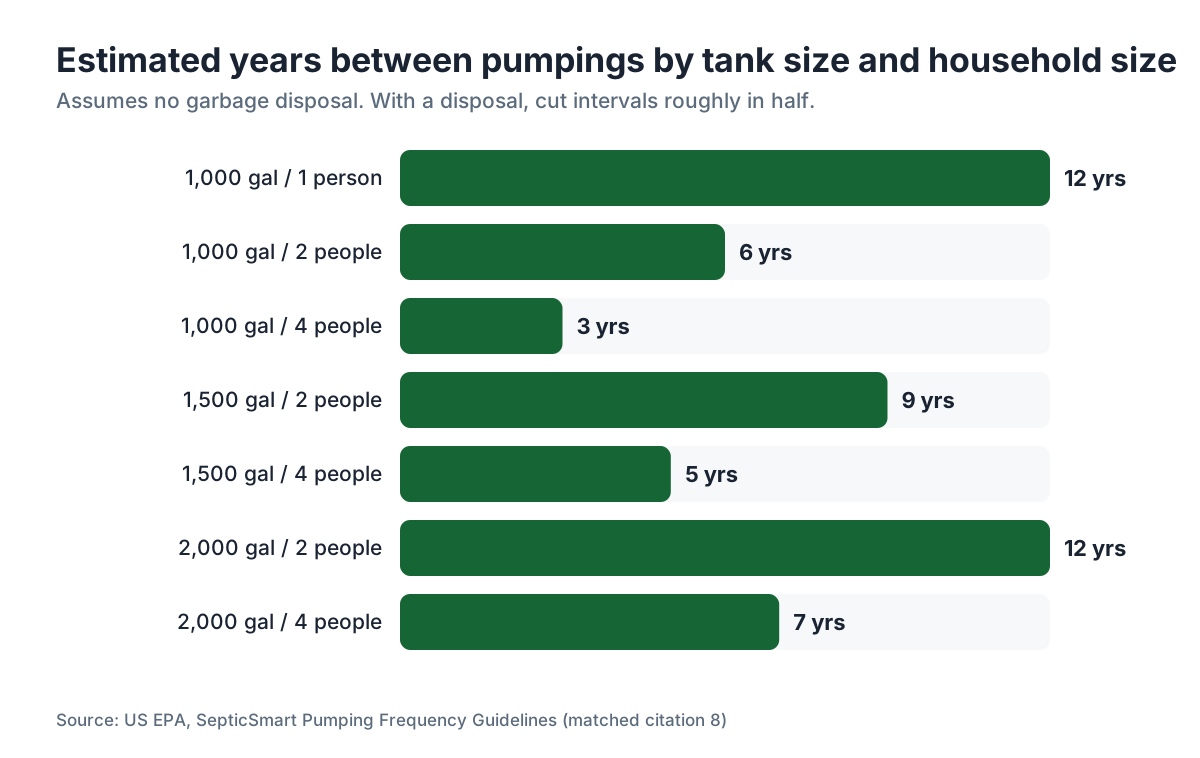
The table below shows EPA's published pumping frequency estimates by household size and tank capacity [8].
| Tank size (gallons) | 1-person household | 2-person | 4-person | 6-person |
|---|---|---|---|---|
| 1,000 | 12 years | 6 years | 3 years | 2 years |
| 1,500 | 19 years | 9 years | 5 years | 3 years |
| 2,000 | 25 years | 12 years | 7 years | 4 years |
These numbers assume no garbage disposal. Add one, and cut the intervals roughly in half.
For more on setting your schedule, see how often to pump septic tank. The short version: keep a record of when the tank was last pumped and what the sludge depth was that day. That's the only way to learn your specific interval.
What happens if you ignore a full septic tank?
Nothing good, and the bill climbs the longer you wait.
The first casualty is the drain field. Once solids pass the outlet baffle and flow into the leach lines, they clog the pores in the soil. That biomat layer, once it gets thick enough, won't break down on its own. Some drain fields recover with rest and careful management. Many need partial or full replacement.
Drain field replacement is expensive. Costs run from about $5,000 to $20,000 or more depending on soil conditions, system size, and local labor rates, against $250 to $600 for a routine pump-out [3]. Do the math. Skipping a $400 pump-out can cost you $10,000.
There's a public health cost too. The EPA states that failing septic systems are a major source of groundwater contamination, sending pathogens like bacteria and viruses into drinking water sources [2]. Some states require reporting or remediation when a system is actively failing.
Sewage backing up inside the house adds its own health risk from pathogen exposure, plus interior cleanup costs stacked on top of the system repair.
This isn't meant to scare you. It's meant to say one thing: pump the tank. It's cheap maintenance.
How much does it cost to pump a full septic tank?
A standard septic tank pump-out in the United States runs between $250 and $600 for most residential tanks, with a national average near $400 [3]. Larger tanks (over 1,500 gallons) or tanks that are badly overfull cost more. Prices swing by region. Rural areas can be cheaper on labor but pricier when the disposal site is a long haul.
For the full breakdown, see septic tank pump out and septic tank pumping.
If the pump-out turns up a cracked baffle, a broken lid, or a damaged outlet tee, septic tank repair costs get added on. Baffle replacement usually runs $150 to $500. A standard concrete lid runs $50 to $150.
One thing not worth a dime: septic tank additives. The EPA, multiple university extension services, and the National Onsite Wastewater Recycling Association have all reviewed the evidence and found no reliable data that commercial additives improve performance or stretch pumping intervals [4]. The tank already grows the biology it needs. Keep the money.
If you track pump-out schedules and service records across multiple properties, SepticMind builds operator tools for exactly that workflow.
What to do when you think your septic tank is full
Work in this order.
Stop adding water. Skip the dishwasher, the laundry, and long showers until you know the system can handle the load. If sewage is backing up, cut all water use in the house.
Call a licensed septic pumping company. Most states require a license to pump a tank. Don't open and empty it yourself. The gases alone (hydrogen sulfide, methane) can kill you in a confined space. Find a pumper through your state's licensing board or the National Association of Wastewater Technicians.
Have the tank inspected during the pump-out. While the pumper is on-site, ask them to check the inlet and outlet baffles, look for cracks in the tank walls, and note whether any solids have passed into the outlet line. A good pumper does this by habit. A rushed one might skip it unless you ask.
Get a written record. Ask for a service report showing the tank's condition, sludge and scum depths before pumping, any findings, and the date. That record anchors your maintenance schedule. Some states require it, and it helps when you sell the home.
Handle the repairs. If a baffle is broken or the lid is cracked, fix it before the problem circles back. For bigger issues, read up on septic tank cleaning and septic tank emptying to see what's involved.
If the real problem is a failed drain field rather than a full tank, that's a longer conversation. Start at leach field to weigh your options.
How to prevent your septic tank from filling too fast
Regular pumping is the core answer. A few habits slow the buildup on top of that.
Water conservation matters more than most people think. The less water you push through in a short window, the less you stir up settled solids, and the longer effluent sits before it moves to the drain field. Spread laundry loads across the week. Fix a leaky toilet (a running one can add 200 gallons a day). Install low-flow fixtures. It all helps.
Keep a mental list of what never goes down the drain. Wipes (even the 'flushable' ones), paper towels, feminine products, medications, cooking grease, and coffee grounds all add to scum or sludge in ways ordinary organic waste doesn't. Fewer of those in, slower the layers build. North Carolina State University Extension makes the same point in its septic maintenance guidance [10].
Don't drive over the tank or drain field. Compaction wrecks the soil structure in the leach field and can crack the tank itself.
Plant grass over the drain field and nothing else. Tree and shrub roots chase moisture and will find drain field pipes. The University of Minnesota Extension recommends keeping trees at least 30 feet from drain field lines [5].
Last, know where your tank is and keep the access point reachable. A buried, forgotten tank never gets pumped on schedule. SepticMind's homeowner tracker keeps a digital record of your system location, service history, and next pump date.
Frequently asked questions
How can you tell when your septic tank is full?
The clearest signs are slow drains on several fixtures at once, gurgling in pipes, sewage odors inside or outside the house, unusually green or soggy grass over the drain field, and in bad cases, sewage backing up through drains. Two or more of these together means you should call a pumper to inspect and likely empty the tank.
How do I know if my septic tank is full without opening it?
Slow drains throughout the house, gurgling toilets, outdoor sewage smell near the tank or drain field, and wet or overly green patches of grass above the leach lines are all outside indicators. You don't need to open the tank to act on these. Call a pumper; they'll open it, measure sludge and scum depths, and confirm what's going on.
How to tell if a septic tank is full or clogged?
If every fixture drains slowly and the problem built up gradually, the tank is likely full. If only one fixture is affected, or the trouble started suddenly, suspect a pipe clog. A pumper can look inside and tell you whether solids have passed the outlet baffle. Both problems can exist at once if the tank stayed full long enough to push solids into the drain field.
How do I know if I have a septic tank?
Check your water bill: if you pay for water but see no sewer charge, you're likely on septic. You can also call your county health or building department and ask if a septic permit is on file for your address. Physically, look for a buried lid 5 to 30 feet from the house. Rural properties and lots developed before municipal sewer reached them are strong candidates.
How often should a septic tank be pumped?
The EPA recommends every 3 to 5 years for a typical household. The exact interval depends on tank size and number of occupants. A 1,000-gallon tank serving four people should be pumped about every 3 years. A 1,500-gallon tank for two people can often go 9 years between pumpings. A garbage disposal shortens these intervals a lot.
Can a septic tank smell outside even if it's not full?
Yes. A damaged or missing lid, a cracked baffle, a dry floor-drain trap, or a wet spell pushing gases up through the soil can all cause outdoor odors without the tank being full. But a steady outdoor smell near the tank or drain field, especially with soggy ground, is a strong reason to get a professional inspection rather than wait it out.
What happens if you never pump your septic tank?
Sludge and scum layers grow until solids pass the outlet baffle and flow into the drain field. That clogs the soil and the field fails. Drain field replacement costs $5,000 to $20,000 or more, against $250 to $600 for a pump-out. Beyond cost, a failing system can contaminate groundwater and cause sewage backups inside the home.
Will a full septic tank unclog itself?
No. The solids stay put until the tank is pumped. A full tank doesn't drain itself or break down solids fast enough to matter. If the drain field has also been compromised by solids overflow, resting the field for weeks or months may allow partial recovery in mild cases, but the tank still needs pumping before the system can work right.
Does heavy rain affect whether my septic tank seems full?
Yes, temporarily. Heavy rain can saturate the soil around the drain field, backing liquid up into the tank and cutting its effective capacity. Slow drains and gurgling can show up after a big storm even when the tank isn't overdue. If the symptoms clear within a few days as the soil dries, the system is probably intact. If they linger, get a pump-out and inspection.
How do you know when your septic tank is full versus the drain field failing?
If you pump the tank and the symptoms clear, the tank was the problem. If they come back within a few weeks, the drain field has been compromised. A pumper can also check at service time whether solids have passed the outlet baffle. Wet, foul-smelling ground above the leach lines that doesn't clear after pumping points to drain field damage needing repair or replacement.
How to know if a septic tank is full by checking water level?
A tank with liquid at or above the outlet pipe invert is at hydraulic capacity. To check, open the lid and look at the liquid level against the outlet tee. Liquid overflowing the outlet or reaching the underside of the lid means the tank is backed up. For solid buildup, though, you need to measure sludge depth with a probe, more than eyeball the liquid.
Are septic tank additives worth buying to prevent the tank from filling?
No. The EPA and several university extension services have reviewed the evidence and found no reliable data that commercial additives cut sludge buildup or stretch pumping intervals. Some biological additives are harmless; some chemical ones can damage the system or contaminate groundwater. Keep the money and put it toward regular pump-outs on schedule.
How do you find your septic tank if you don't know where it is?
Start with your county health or building department; septic permits usually include a site diagram. You can also follow the main drain pipe out from the foundation to find the tank's general direction. Probe the soil with a thin metal rod every foot or two, about 10 to 30 feet from the house, or rent a drain camera to trace the line. A professional locating service uses electronic probes and usually finds the tank in under an hour.
Sources
- US EPA, SepticSmart: Homeowner's Guide to Septic Systems: EPA recommends pumping every 3 to 5 years and defines pumping thresholds as scum within 3 inches of outlet baffle or sludge within 12 inches of outlet.
- US EPA, Septic Systems Overview: Approximately 21 million households in the US use onsite septic systems; failing systems are a significant source of groundwater contamination.
- Angi, Septic Tank Pumping Cost Guide: National average cost of septic tank pump-out is approximately $400, with typical range $250 to $600 for residential tanks.
- US EPA, Septic System Additives: EPA finds no reliable scientific evidence that biological or chemical septic additives improve system performance or reduce pumping frequency.
- University of Minnesota Extension, Septic System Owner's Guide: University of Minnesota Extension recommends keeping trees at least 30 feet from drain field lines to prevent root intrusion.
- US EPA, How Your Septic System Works: Description of septic tank layers: scum, effluent, and sludge, and how solids accumulation impairs function.
- National Environmental Services Center (NESC) at West Virginia University, Septic System Owner's Guide: Guidance on sludge judge measurement technique and interpreting sludge depth relative to tank capacity.
- US EPA, Septic System Pumping Frequency Table: EPA published estimated pumping frequency by household size and tank size, ranging from 2 years (6-person, 1,000-gallon) to 25 years (1-person, 2,000-gallon).
- NSF International, Residential Wastewater Treatment Systems Standard (NSF/ANSI 40): Industry standard reference for onsite wastewater treatment system performance and inspection criteria.
- North Carolina State University Extension, Septic System Maintenance: Extension guidance on signs of septic system failure and preventive maintenance practices including water conservation.
Last updated 2026-07-09