Drain field cleaner: what works, what doesn't, and when to skip it
By the SepticMind Editorial Team
TL;DR
- Drain field cleaners are enzyme or bacteria products meant to break down biomat clogging a leach field.
- EPA and university research find little proof they restore failed fields.
- Pumping the tank, resting the field, and fixing water overload are the proven moves.
- Products like Dr.
- Pooper have anecdotal support, but no peer-reviewed trials back them.
What is a drain field cleaner and how is it supposed to work?
A drain field cleaner is a liquid or powder you pour into your septic system to dissolve or digest the biomat that clogs soil pores in the leach field. The biomat is a dark, dense, anaerobic layer of microbial cells, organic solids, and grease that forms along the trench walls and gravel of every drain field. A thin biomat is normal and helpful. It slows effluent just enough for the soil to treat it. Trouble starts when the mat thickens past the point where water can push through it, and wastewater backs up.
Most cleaners claim one of two mechanisms. Some add concentrated bacteria (often aerobic or facultative strains) meant to outcompete the anaerobic biomat organisms. Others add enzymes (lipases, proteases, cellulases) that break down grease and organic matter chemically. Some do both. A few use hydrogen peroxide or another oxidizer to physically burn off the biomat and improve permeability for a while, though oxidizers can also damage soil structure if you overdose them [1].
The appeal is obvious. A bottle you pour down a toilet costs a rounding error next to the $5,000 to $20,000 or more a leach field replacement runs [2]. The skepticism is just as obvious. If it were that easy, we'd have solved this decades ago.
Does the science say drain field cleaners actually work?
The evidence is thin and mostly unfavorable. EPA's SepticSmart program says plainly that there's no scientific proof septic additives, biological or chemical, eliminate the need for routine pumping or restore failed systems [1]. That's the short answer.
The most-cited independent work comes from university extension studies in Virginia, Minnesota, and North Carolina, plus a review from the National Onsite Wastewater Recycling Association [8]. Virginia Cooperative Extension found that most enzyme and bacterial additives do not meaningfully improve drain field performance, and that a healthy septic system already holds the bacteria these products sell you, usually at far higher concentrations [3].
There's a narrower case where additives show some promise. Very early biomat problems, where the field is slow but not fully saturated and the root cause (unpumped tank, too much water, grease) has already been corrected. In those exact conditions, a few small field trials reported modest gains in soil percolation after bacterial inoculation. But those weren't randomized controlled studies, the sample sizes were small, and the improvement is hard to separate from simply resting the field.
Treat the cause first. Add a cleaner without fixing the underlying problem and you're almost certainly wasting money. Fix the underlying problem and the field may recover on its own with no additive at all [3].
What causes drain field failure in the first place?
Knowing why fields fail tells you whether a cleaner is even relevant to your situation.
The most common cause is a septic tank nobody pumped often enough. Once the tank fills past its working capacity, solids carry over into the distribution system and speed up biomat formation fast. EPA recommends pumping every 3 to 5 years for a typical household, though the right interval depends on tank size and how many people use it [10]. If your field is sluggish and your tank hasn't seen a truck in seven or ten years, start there. Our guide on septic tank pumping covers what that service involves.
Hydraulic overload is the second big one. Too much water in too short a window: large households, houseguests, a running toilet, every load of laundry crammed into Saturday. The field never dries out between doses, and biomat grows faster than it gets consumed.
Grease and non-degradable solids (wipes, dental floss, some medications) do outsized damage. Grease coats soil particles and blocks pores in ways bacteria struggle to reverse.
Then there are physical causes: crushed or collapsed pipes, root intrusion, soil compacted by vehicles parking over the field. No cleaner touches any of those.
Dr. Pooper drain field cleaner: what is it and what do users say?
Dr. Pooper (sometimes written Doctor Pooper drain field cleaner) is one of the more visible branded products in this category. It sells itself as a bacterial and enzyme concentrate built specifically for drain field restoration, separate from general tank treatments.
The manufacturer's claims run the usual playbook: proprietary bacterial strains, high colony-forming unit counts, an enzyme blend aimed at grease and organic solids. As of this writing, the company publishes no peer-reviewed trial data, which is normal across the whole category.
Reviews online split in a way that's predictable. Homeowners who were already pumping their tanks on schedule and who cut their water use before trying it tend to report improvement. Homeowners with badly failed fields, broken pipes, or compacted soil tend to report nothing. That's exactly what the science predicts. The product may help mild early biomat, but it isn't rescuing a genuinely failed system.
Here's the tell. The Dr. Pooper protocol involves multiple applications over several months paired with reduced water use, and resting a field by cutting hydraulic load is a proven fix on its own. Separating the product's effect from the behavior change is genuinely hard in homeowner self-reports.
Price runs roughly $30 to $80 per treatment depending on size and formulation. That's low-risk money next to field repair. If you want to try it, do it the sensible way: pump the tank, fix your water use, then run the additive as a helper, not a substitute.
What do state regulations say about septic additives?
This is where it gets practical. Several states have taken a position.
Massachusetts prohibits using biological additives as a substitute for routine maintenance under Title 5, the state's onsite sewage regulations [4]. Wisconsin, New Hampshire, and Washington carry language in their onsite wastewater codes that discourages or restricts claims additives can replace pumping [9]. No state requires you to use any additive as part of a maintenance program.
EPA does not regulate septic additives under the Safe Drinking Water Act unless they contain registered pesticides. Chemical products like oxidizers may need state review before use. Bacterial and enzyme products sit in a gray zone. They're not regulated as drugs or pesticides in most places, so manufacturers face almost no oversight on efficacy claims [1].
So check your local rules before you pour anything, especially in Massachusetts or a similarly strict state. Violating a state septic code can complicate a home sale and your ability to get permits for repairs later.
How do you actually restore a failing drain field, with or without a cleaner?
Here's the proven order of operations, drawn from extension service guidance and what experienced contractors actually do.
Step one is a tank pump-out. You can't assess or treat a field while the tank is overloaded. Get it pumped and inspected. That also tells you whether solids have been carrying over into the field. Our septic tank pump out article walks through what the inspection should cover.
Step two is hydraulic rest. Take a vacation, stay elsewhere for a week or two, or slash water use hard. You give the field time to dry, aerobic conditions return to the soil, aerobic bacteria eat the biomat, and permeability often improves you can measure. This is free, and it genuinely works for mild to moderate biomat.
Step three is fixing the cause. Repair leaking toilets and faucets (a running toilet can dump 200 gallons a day into your system [5]). Spread laundry across the week. Ease off the garbage disposal. Route roof and surface water away from the field.
Step four, if none of that clears the slow drainage, is calling a licensed inspector to check for pipe damage, compaction, or soil fracture. At that point you may be looking at septic system repair rather than maintenance.
An additive like Dr. Pooper fits reasonably between steps three and four as a cheap trial. It isn't irrational to try. Just don't let it stall the professional assessment if symptoms hang on past 60 to 90 days.
Operators managing many client systems get more mileage from tools that track pumping intervals and maintenance history across accounts. The scheduling and records features in SepticMind's service platform flag systems that are overdue so you catch failure early instead of chasing it with products.
Are there any drain field cleaners that have solid evidence behind them?
Aeration is the closest thing to an evidence-backed restoration method, though it's a system modification, not a bottle. Aerobic treatment units (ATUs) inject oxygen into the effluent before it reaches the field, which cuts biological oxygen demand and slows biomat formation. University of Minnesota Extension found that converting to aerobic treatment extended drain field life in certain soil types [6]. An ATU install runs $3,000 to $8,000, still well under a full field replacement.
For pourable additives, Virginia Cooperative Extension reviewed a pile of products and concluded that "no additive has been scientifically proven to restore a failed septic system," while noting that "additives with high bacterial counts may provide some benefit in systems that are marginally stressed" [3]. That's about the most generous line the literature offers.
Hydrogen peroxide has a longer track record in commercial use. Applied through the distribution pipes at 3 to 5 percent, it can oxidize biomat and improve percolation for a while. University of Minnesota tested it and found short-term gains, but percolation rates slid back to pre-treatment levels within 6 to 18 months when nobody fixed the hydraulic load [6]. Some licensed contractors offer it as a last swing before replacement.
Nobody has good long-term data on the consumer enzyme and bacterial products. The closest things to controlled comparisons are the extension reviews, and they lean cautiously skeptical.
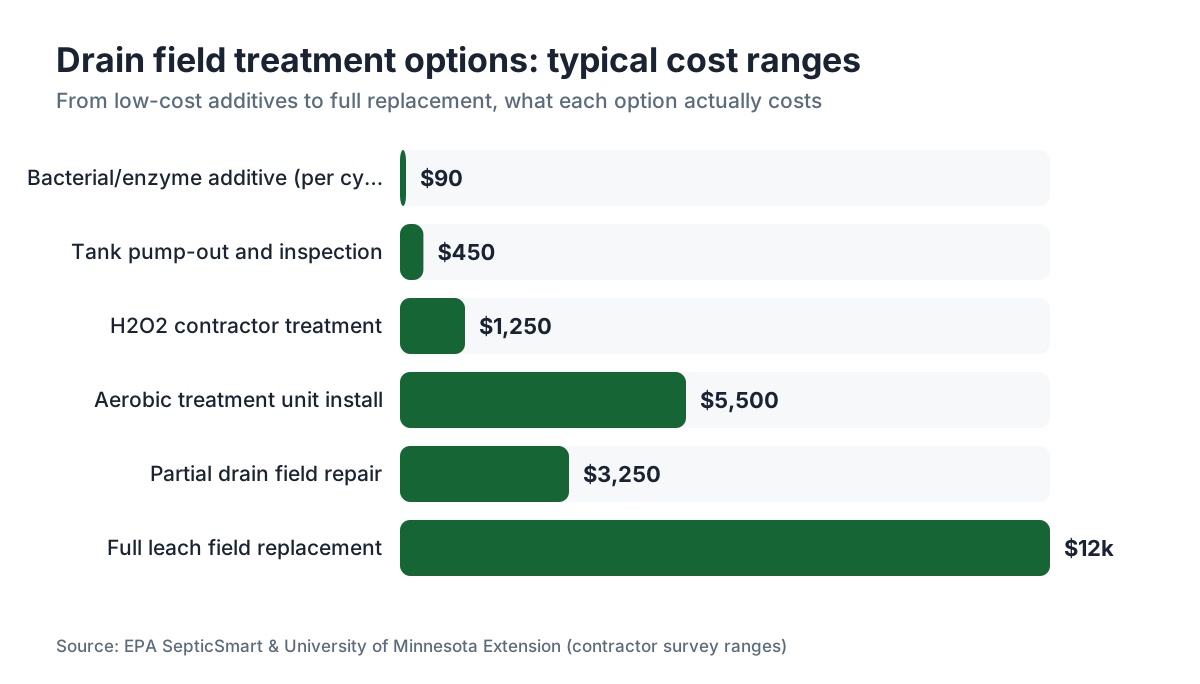
How much does drain field treatment cost compared to repair or replacement?
Cost context changes everything about whether an additive is worth trying.
| Option | Typical cost range | Evidence of effectiveness |
|---|---|---|
| Bacterial/enzyme additive (e.g., Dr. Pooper) | $30 to $150 | Weak; may help mild biomat |
| Hydrogen peroxide treatment (contractor-applied) | $500 to $2,000 | Moderate; temporary improvement |
| Tank pump-out and inspection | $300 to $600 | Strong; essential first step |
| Hydraulic rest (behavior change) | $0 | Strong for mild failure |
| Aerobic treatment unit installation | $3,000 to $8,000 | Strong for long-term load reduction |
| Drain field repair (partial) | $1,500 to $5,000 | Depends on failure type |
| Full leach field replacement | $5,000 to $20,000+ | Permanent solution [2] |
Those replacement figures come from contractor surveys and swing hard by region, soil type, and lot constraints. A full replacement on a rocky or coastal lot can top $30,000. That spread is exactly why homeowners grab the $50 bottle first. It's a rational move, as long as you walk in with honest expectations.
If you're weighing full replacement, our articles on cost to install septic system and leach field repair specifics cover what drives those numbers.
What should you never put down the drain if you want your leach field to last?
Prevention beats any cleaner, and it's mostly about what you keep out of the system.
Fats, oils, and grease are the single biggest controllable enemy of a drain field. Even small amounts poured down a kitchen sink cool, harden, and coat soil particles in ways that are brutal to reverse. Wipe pans before you wash them.
Antibiotics, flushed in quantity, can knock back the microbial population in your tank and field. Hard to avoid when you're sick, but worth knowing.
Household chemicals like drain cleaners, bleach, and paint solvents kill useful bacteria in the tank and can shift soil chemistry. A little diluted bleach from normal laundry is fine. A quart of drain cleaner down the sink is not.
Non-flushable wipes, cotton balls, and dental floss don't degrade. They clog the system mechanically, and no additive dissolves them.
Garbage disposals pile on solids. EPA's SepticSmart guidance notes that disposal use can roughly double the solids entering the tank [1], which shrinks your safe pumping interval a lot.
The how often to pump septic tank article gives specific intervals by household size and tank capacity if you want the numbers.
When should you call a professional instead of trying a drain field cleaner?
Some symptoms mean a cleaner won't help and might stall a needed repair.
Sewage odors inside the house or out in the yard (well away from the tank lid) usually mean a pipe failure or a fully saturated field. Get a professional inspection. Our septic tank inspection guide covers what a proper one includes.
Wastewater surfacing in the yard is an emergency. Saturated effluent is a public health hazard, and many states require you to report it. Don't try to treat your way out.
Multiple slow drains with gurgling sounds, especially during heavy rain, point to pipe damage or hydraulic overload past what biology can fix.
If the system is more than 25 to 30 years old and hasn't been maintained, the odds an additive extends its life are low. Field media (gravel or chambers) can clog past the point of return, and pipe connections corrode or crush.
Operators tracking systems at scale can triage smarter when they know which properties sit in this late-stage bucket. SepticMind's system records give you that portfolio-level view, which matters when you're running dozens or hundreds of service accounts.
Facing major work? Understanding the full picture of septic tank repair options, costs, and permit requirements makes for a far better conversation with your contractor.
How do you use a drain field cleaner correctly?
Protocols vary by brand, but the best-practice approach for any bacterial or enzyme treatment follows the same shape.
Pump the septic tank first. Starting with an empty tank gives the additive a clean environment with less competition from accumulated sludge, and it helps the bacteria or enzymes actually reach the field instead of getting eaten in the tank.
Cut water use during the treatment window. Most manufacturer protocols call for lower-than-normal use for 24 to 72 hours after each application. That makes biological sense. You want contact time between the additive and the biomat, not a quick flush through the system.
Follow the dose exactly. Overdosing doesn't speed anything up, and with oxidizers it can damage the system. Under-dosing just wastes money.
Plan on multiple applications. Most field cleaner protocols run monthly treatments across 3 to 6 months. One dose won't move the needle on a real biomat problem.
Keep the conservative water habits after treatment. If hydraulic overload caused the problem, no treatment holds unless the load stays manageable.
Write down what you do and when. If you end up needing a pro or selling the house, a maintenance record of what you tried is genuinely useful for the septic tank inspection that real estate deals require.
Frequently asked questions
Do drain field cleaners actually work?
Sometimes, in mild cases, with realistic expectations. EPA and university extension programs have found no scientific proof any additive restores a failed drain field. Products like Dr. Pooper may help marginally when biomat is early-stage and the underlying cause is already fixed. Pumping the tank and resting the field are more reliably effective first steps.
How long does it take for a drain field cleaner to work?
Most products need 3 to 6 months of monthly applications before any meaningful improvement shows up, if it shows up at all. Don't expect results in days or weeks. If you see no change after 90 days of consistent treatment plus reduced water use and a recently pumped tank, the problem goes beyond biomat and needs a professional assessment.
What is the best drain field cleaner on the market?
No product has peer-reviewed evidence placing it clearly above the others. Dr. Pooper, BioOne, and Rid-X Septic Treatment come up often. User reviews favor products applied after a tank pump-out with concurrent water conservation. Independent tests don't rank them with statistical confidence. Choose on price, availability, and how clear the manufacturer's protocol is, not marketing claims.
Is Dr. Pooper drain field cleaner any good?
Dr. Pooper reviews skew positive for homeowners who pair it with tank pumping and reduced water use. No controlled trial data is publicly available for the product. That pattern mirrors the whole additive category: it may assist mild biomat recovery, but it can't salvage a heavily failed or physically damaged system. It's low-risk to try if your expectations are realistic.
Can you use a drain field cleaner in a system with a pump?
Generally yes, but check with the product manufacturer and your system's designer. Pressurized systems with dosing chambers distribute effluent differently, and timing your application to normal dose cycles maximizes contact with the field media. Avoid pouring thick concentrates that could clog pump screens. Dilute per the instructions.
How often should you use a drain field cleaner?
Most products recommend monthly application for 3 to 6 months as a restoration protocol, then quarterly or twice-yearly maintenance doses. There's no evidence more frequent use speeds results, and overdosing oxidizing products can harm soil structure. Follow the specific product protocol and pair treatment with proper pumping intervals.
What is the difference between a septic tank treatment and a drain field cleaner?
Tank treatments (like Rid-X monthly packets) support bacterial populations inside the tank. Drain field cleaners are formulated to reach the distribution pipes and soil trench, targeting biomat. Some products do both. If your problem is slow drainage or surfacing in the yard, a field-targeted product fits better than a general tank treatment.
Will a drain field cleaner work if sewage is surfacing in the yard?
No. Surfacing sewage means the field is fully saturated and likely failing structurally. That's a health hazard needing immediate professional inspection, not a product. Many states require you to notify the health department when sewage surfaces. Trying a chemical fix at this stage delays needed repair and can make the problem worse.
Are drain field cleaners safe for the environment?
Bacterial and enzyme products are generally low environmental risk at recommended doses. Hydrogen peroxide products, at the concentrations used for field treatment, break down to water and oxygen fairly quickly in soil. Never use chemical cleaners or solvents; they can contaminate groundwater. Check your state's onsite wastewater code before using any additive, since some states restrict or prohibit specific types.
Can I use a drain field cleaner after my septic tank is pumped?
Yes, and that's the ideal time. An empty tank gives bacteria-based additives a fresh environment and improves the odds the product reaches the field instead of getting consumed by tank sludge. Apply within a few days of pumping, then follow the maintenance protocol with reduced water use for 24 to 72 hours after each application.
How much does drain field treatment cost compared to field replacement?
A drain field cleaner costs $30 to $150 per treatment cycle. Professional hydrogen peroxide treatments run $500 to $2,000. Full leach field replacement runs $5,000 to over $20,000 depending on region, soil, and lot constraints. The low cost of additives makes them worth a trial in mild cases, but don't let them delay a professional assessment when symptoms are severe.
Does Rid-X help drain fields or just the tank?
Rid-X is marketed mainly as a tank treatment and works in the tank environment. It does reach the field in effluent, but it isn't concentrated or formulated for biomat in drain field trenches. For field-specific biomat, products labeled and dosed for drain field restoration fit better, though the evidence for all these products is similarly limited.
What states prohibit or restrict septic additives?
Massachusetts Title 5 prohibits using additives as a substitute for pumping. Wisconsin, New Hampshire, and Washington carry restrictive language in their onsite wastewater rules discouraging additive reliance. No state requires additive use. Check your specific state's onsite wastewater code before buying a product, particularly in a regulated shoreland or wellhead protection zone.
How do I know if my drain field is actually failing versus just slow?
Slow drainage during or after heavy rain can be normal as soil absorbs water. Consistently slow drains, gurgling pipes, sewage odors in the yard, or wet spots over the field that persist through dry weather all point to genuine failure. A licensed inspector can run a percolation observation or dye test to confirm field status before you spend on treatments or repairs.
Sources
- EPA SepticSmart Program, US Environmental Protection Agency: EPA states no scientific proof exists that septic additives eliminate the need for pumping or restore failed systems; garbage disposal use roughly doubles solids entering the tank.
- EPA OnSite Wastewater Treatment Systems, Cost and Performance: Full leach field replacement costs range from approximately $5,000 to over $20,000 depending on site conditions.
- Virginia Cooperative Extension, Septic System Additives publication 448-833: Virginia Cooperative Extension found no additive has been scientifically proven to restore a failed septic system; native microbial populations already contain bacteria introduced by additives at far higher concentrations.
- Massachusetts Department of Environmental Protection, Title 5 Onsite Sewage Regulations: Massachusetts Title 5 prohibits the use of biological additives as a substitute for routine maintenance in onsite sewage systems.
- EPA WaterSense Program, Fix a Leak Week: A continuously running toilet can waste approximately 200 gallons per day, significantly increasing hydraulic load on a septic system.
- University of Minnesota Extension, Septic System Owner's Guide: University of Minnesota testing found hydrogen peroxide treatments improve soil percolation temporarily but rates return to pre-treatment levels within 6 to 18 months without addressing hydraulic load; aerobic treatment unit conversion extends field life in certain soil types.
- North Carolina State University Extension, Septic System Maintenance: NC State Extension notes that biomat formation is a natural process and that resting the field and correcting loading problems are the primary evidence-based restoration strategies.
- National Onsite Wastewater Recycling Association (NOWRA), Additive Review: NOWRA review found limited scientific support for commercial bacterial and enzyme additives restoring drain field function in controlled comparisons.
- Wisconsin Department of Natural Resources, Private Sewage System Rules: Wisconsin onsite wastewater rules include language discouraging reliance on additives as a replacement for proper system maintenance and pumping.
- EPA SepticSmart, Dos and Don'ts for Septic System Owners: EPA recommends pumping septic tanks every 3 to 5 years for typical households as the primary maintenance action.
Last updated 2026-07-09