Aerobic septic system bleach: how much, how often, and what to avoid
By the SepticMind Editorial Team
TL;DR
- Aerobic treatment units (ATUs) need a small, steady chlorine dose to disinfect effluent before it leaves the system.
- Most manufacturers specify about 1 to 2 oz of household bleach (5 to 6% sodium hypochlorite) per person per day through a dedicated dispenser.
- Too much bleach kills the aerobic bacteria doing the treatment.
- Too little leaves pathogens in the spray field.
- State codes set the residual target, usually 0.5 to 1.0 mg/L free chlorine.
What does bleach actually do in an aerobic septic system?
Bleach disinfects. It does not treat. Those are two different jobs, and confusing them is how homeowners wreck their systems.
An aerobic treatment unit pumps air into wastewater so oxygen-loving bacteria break down organic matter far more aggressively than the anaerobic bugs in a conventional septic tank. That produces cleaner effluent. Cleaner is not disinfected. Pathogens like E. coli, enterococci, and various viruses ride right through the aerobic treatment chamber.
Chlorine gets added downstream of treatment, usually in a pump or dosing chamber, to kill those survivors before the effluent hits a spray head, drip field, or surface application site. Most state onsite wastewater codes require a measurable free-chlorine residual in the final effluent, commonly 0.5 to 1.0 mg/L, before discharge [1]. Without that residual, any surface application becomes a public health exposure.
Bleach is the common homeowner-grade disinfectant because it is cheap, easy to find, and stable enough for a slow-release dispenser. Pool tablets (trichlor or calcium hypochlorite pucks) also work and dissolve more slowly, which some operators prefer, but liquid household bleach is what most manufacturer manuals specify and what most service contracts run on.
Here is the part people miss. Chlorine has no role in the biological treatment stage. The aerobic bacteria doing the real work live in an earlier chamber. Overdose the bleach or dump it in the wrong compartment, and you wipe those bacteria out and the whole system stumbles. The disinfection chamber has to stay separate and downstream.
How much bleach should you add to an aerobic septic system?
There is no single universal number. Anyone who hands you one without knowing your household size, system model, and local water chemistry is guessing. Here is what the data actually shows.
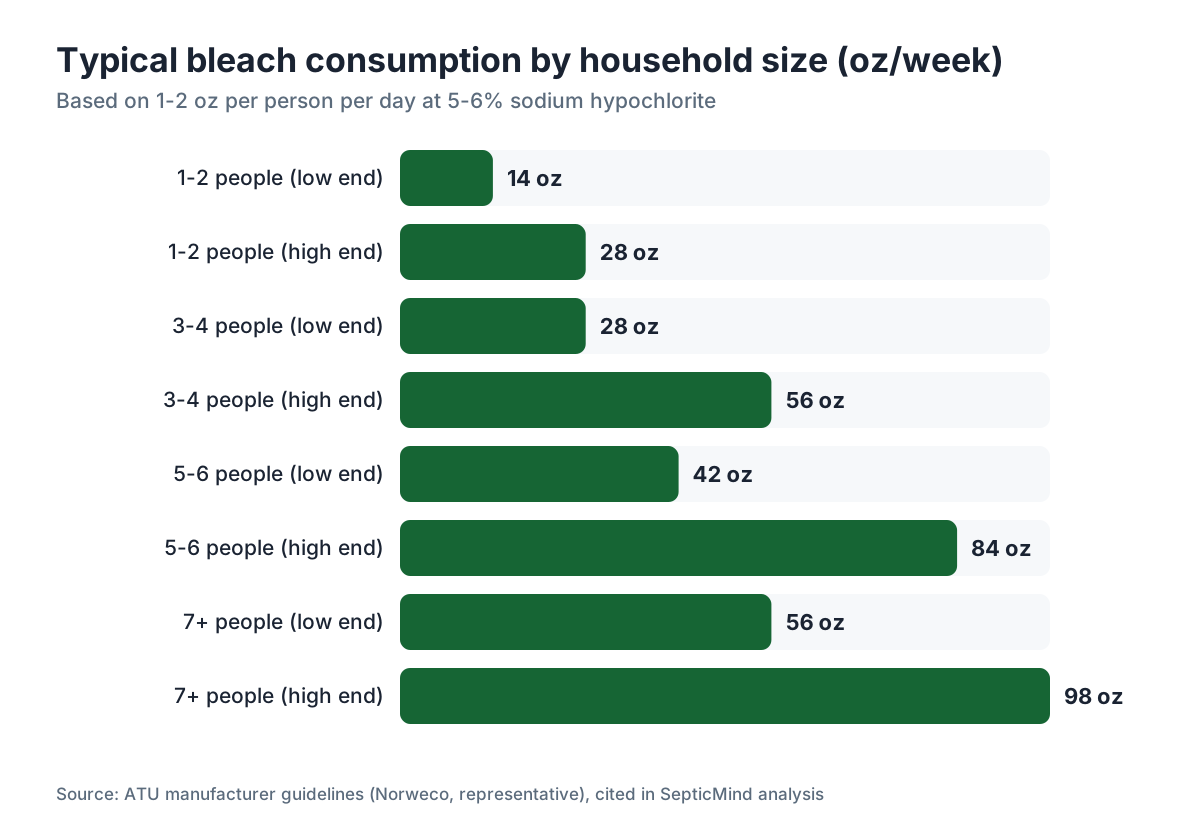
Most ATU manufacturers, Norweco and others, publish guidelines around 1 to 2 oz of standard household bleach (5 to 6% sodium hypochlorite) per person per day [2]. A family of four burns roughly 4 to 8 oz a day, or about a gallon of bleach every two to four weeks.
The range comes down to dilution. A house that uses a lot of water dilutes the effluent, so you need more chlorine to hit the target residual. A house that conserves has more concentrated effluent, and a smaller dose does the job. Nobody has clean data on this because flow rates swing wildly even between two households of the same size.
The real target is the free-chlorine residual in the effluent, not a fixed bleach volume. If your technician tests effluent and finds residuals above 2 to 3 mg/L, you are overdosing. Below 0.5 mg/L, you are underdosing. Adjust from there. Most state inspection programs require effluent testing at maintenance visits for exactly this reason.
Never use bleach with thickeners, scent, or "splash-less" formulas. Those additives foul the dispenser and were never meant for wastewater. Plain unscented bleach at 5 to 6% hypochlorite is the correct product, full stop.
How does an aerobic septic system bleach dispenser work?
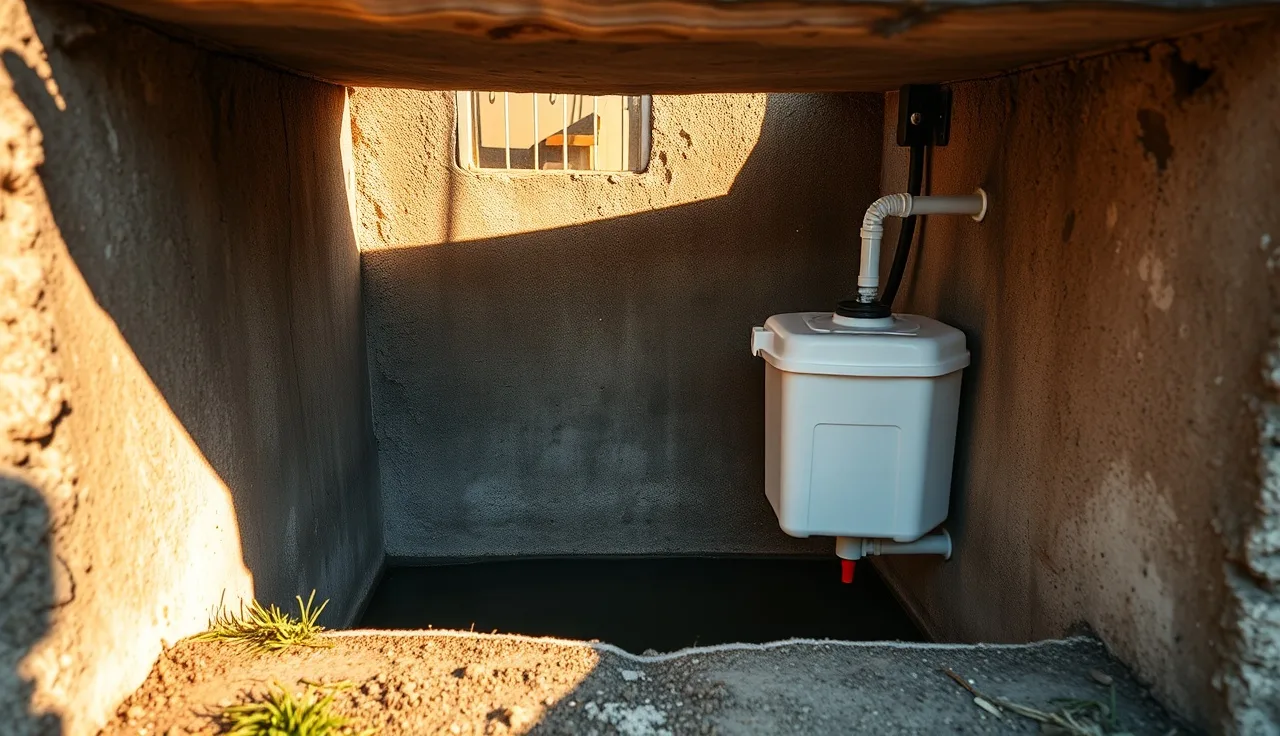
The dispenser is a small container, usually 1 to 4 gallons, that sits in or above the dosing chamber and feeds bleach into the effluent at a controlled rate. The simplest design is a gravity-drip tube that lets liquid bleach trickle in. A better version ties a float or dosing mechanism to the pump cycle so bleach only enters when effluent is actually being pumped, which is more accurate and wastes less product.
Some older systems use a "chlorinator" that holds pool-style tablets. Effluent passes through or around the tablet and picks up dissolved chlorine on the way. Tablets need refilling less often than liquid, but their dissolution rate shifts with temperature and flow, so residual levels get harder to predict.
For liquid dispensers, the standard setup runs a small-diameter tube from the reservoir into the dosing chamber below the pump intake level. Gravity does the work. You refill the reservoir, often a purpose-built poly tank, every one to four weeks depending on household size.
A routine septic tank inspection should always include the dispenser: tube clear, reservoir full, drip rate set right. A clogged or empty dispenser is one of the most common reasons an ATU fails a state inspection.
If you run SepticMind to track maintenance across multiple ATU accounts, the dispenser check and the effluent chlorine residual are two fields worth logging on every visit. State auditors look at both first.
Can too much bleach harm your aerobic system?
Yes. And it does more damage than most homeowners expect.
Aerobic bacteria are sensitive to chlorine. The treatment chamber and the dosing chamber sit apart for a reason. If high-concentration bleach migrates backward, or the system is plumbed so the two zones connect, you can crash the bacterial population in the aeration chamber. Recovery takes weeks. During that stretch the system passes poorly treated effluent to the spray field or drip lines, which is a regulatory violation in most states and a real health risk if you have surface spray.
Overdosing also chews up the hardware. Chlorine degrades rubber components, seals, and certain plastics over time. The EPA's SepticSmart program warns that harsh chemicals "can kill the good bacteria in your septic system," a principle that lands directly on the ATU aerobic chamber if chlorine reaches the wrong zone [3].
High residuals in the spray field also burn vegetation. Free chlorine above 2 to 3 mg/L is roughly where most turf grasses start showing damage. That is not a real risk under normal dosing. It becomes one fast if a dispenser malfunctions and dumps a slug of bleach at once.
What happens if you don't add bleach to your aerobic system?
Skipping disinfection is the more common problem in the real world, and the fallout is regulatory more than mechanical.
Every state with ATU rules requires a disinfection step for systems that discharge effluent to surface or near-surface application. In Texas, the rules under 30 TAC Chapter 285 require spray-irrigation systems to maintain a chlorine residual and require the homeowner to hold a service contract with a licensed maintenance provider [4]. Skipping disinfection is not a gray area there.
Effluent leaving an ATU without disinfection can carry E. coli levels high enough to be a contact hazard. Kids and pets running through a spray field, or any nearby surface water, are the exposure paths that worry state regulators.
With a service contract, the technician flags a missing or empty dispenser at each quarterly or semi-annual visit. If you self-maintain and your state allows it, checking the dispenser belongs on your monthly list right alongside the air compressor and the alarm light.
If disinfection failures snowball into bigger problems, the septic system repair guide covers the cost range from minor fixes to full component replacement.
What kind of bleach is safe for an aerobic septic system?
Use plain, unscented liquid bleach at 5.25 to 6% sodium hypochlorite. That is the formula most ATU manufacturers test against and write into their manuals.
Avoid these:
- "Ultra" concentrated bleach (8.25% or higher). Not dangerous in small amounts, but the drip rate has to drop to match. Most dispensers are calibrated for 5 to 6% product. Run 8.25% at the same rate and you overdose the system.
- Scented bleach. The fragrance does nothing for disinfection and adds to dispenser fouling.
- "Splash-less" or gel bleach. The thickeners clog a drip-tube dispenser.
- Color-safe bleach. It uses hydrogen peroxide or peracetic acid, not hypochlorite, and gives no reliable wastewater disinfection.
- Pool shock (granular calcium hypochlorite). Fine for tablet chlorinators built for it. Never put granular shock in a liquid dispenser.
Want to run pool tablets instead of liquid? Check your owner's manual first. Many manufacturers spec a preferred tablet size, usually 1-inch or 3-inch trichlor tablets. The wrong tablet can dissolve too fast, overdose the system, and drop effluent pH enough to corrode pump components.
How often should you refill the bleach dispenser?
A family of four at 1 to 2 oz per person per day burns roughly 4 to 8 oz of bleach daily, or 28 to 56 oz a week. A standard 96-oz (3-quart) bottle lasts between 1.7 and 3.4 weeks at that rate.
Most technicians say check the dispenser every two weeks and refill at every monthly walk-around. That cadence runs conservative on purpose. An empty dispenser for even a few days means undetected, undisinfected effluent reaching the spray field.
Bleach also fades. Sodium hypochlorite loses roughly half its available chlorine every six months at room temperature, faster in heat [5]. Do not stockpile it for the ATU. Buy small, use fresh. The manufacturing date is sometimes printed on the bottom, and some brands print a batch code you can decode for age.
Rough refill frequency by household size:
| Household size | Daily bleach use (5 to 6% NaOCl) | 96-oz bottle lasts |
|---|---|---|
| 1 to 2 people | 1 to 4 oz/day | 3 to 6 weeks |
| 3 to 4 people | 3 to 8 oz/day | 1.5 to 4 weeks |
| 5 to 6 people | 5 to 12 oz/day | 1 to 2.5 weeks |
| 7+ people | 7 to 14 oz/day | 1 to 2 weeks |
These are approximations. Actual use depends on water habits, system design, and target residual.
What do state codes and EPA guidance say about ATU disinfection?
Federal law does not directly regulate individual residential ATUs. The EPA's septic guidance is advisory, running through its SepticSmart initiative, which pushes proper maintenance and warns against flushing harsh chemicals [3]. The regulatory teeth are at the state level.
Most states that allow ATUs require:
- A disinfection step before surface or near-surface discharge.
- A minimum free-chlorine residual in the effluent, typically 0.5 to 1.0 mg/L, with some states requiring the higher end at the spray head.
- A service contract with a licensed provider for systems above a certain complexity, usually any ATU with spray irrigation.
Texas is one of the most detailed states. Under 30 TAC Chapter 285, required maintenance for aerobic systems includes checking the chlorinator and testing effluent at each maintenance visit, with records kept for state review [4]. Louisiana, Oklahoma, and much of the Southeast run similar rules.
NSF/ANSI Standard 40, "Residential Wastewater Treatment Systems," sets the performance requirements most state ATU approvals reference, including that approved systems produce effluent meeting secondary treatment standards [6]. NSF/ANSI 245 adds nitrogen-reduction criteria. Disinfection is usually a local add-on to those standards rather than part of NSF 40 itself.
Not sure what your state requires? Your state health department or environmental quality agency posts the onsite wastewater rules online. Search your state name plus "onsite wastewater" or "aerobic treatment unit" and you will land on the right chapter.
Can bleach cause long-term damage to the spray field or drip lines?
At properly dosed residuals (0.5 to 1.0 mg/L), generally no. That concentration dissipates fast once effluent hits soil, and it sits well below the thresholds that damage soil structure or vegetation under normal application rates.
The risk is cumulative overdosing. Set a dispenser too high for months, or load a tablet chlorinator with oversized pucks that dissolve faster than expected, and you push residuals to 3 to 5 mg/L or higher. At those levels, repeated application to the same spray zone starts suppressing soil microbial populations and can bleach or kill grass [7].
Drip emitters are the vulnerable part. The rubber diaphragms in pressure-compensating emitters have a finite life under continuous chlorine exposure. Most drip manufacturers rate their components for the chlorine levels in municipal reclaimed water, typically 0.5 to 2 mg/L, so properly dosed ATU effluent stays in spec. Chronic overdosing is again the problem.
For spray heads, the nozzle orifices are usually ABS plastic or stainless, both of which shrug off normal chlorine. The weak points are the flexible connecting tubing and any rubber check valves, which harden and crack over several years of high-chlorine exposure.
The leach field article covers field maintenance more broadly, including the soil signs that point to application problems.
What are common bleach dispenser problems and how do you fix them?
A handful of failure modes show up over and over on ATU service calls.
Clogged drip tube. Mineral scale from hard water or residue from scented or gel bleach builds up in the small feed tube. Fix: pull the tube, flush with clean water, run a thin wire through if needed. Prevent it by using plain bleach and rinsing the reservoir before refilling.
Empty reservoir between service visits. The homeowner underestimated consumption or forgot. Fix: check more often, or upsize the reservoir. Some techs swap the original 1-gallon container for a 2.5-gallon poly jug to stretch refill intervals.
Air lock in the feed line. Mount the dispenser so the tube runs up over a high point and a trapped bubble can stop flow cold. Fix: reroute to kill the high point, or drill a small vent hole just below the reservoir to break the vacuum.
Wrong bleach concentration. Someone switched to concentrated bleach and kept the same drip rate, doubling the dose. Effluent residual spikes and the system shows bacterial stress. Fix: cut the drip rate or go back to standard 5 to 6% product.
Cracked or leaking dispenser. UV light degrades most plastic containers over time, especially in direct sun with the lid off. A cracked reservoir can dump a big volume of bleach at once. Fix: inspect the reservoir every visit, keep the lid closed, and replace it every few years as insurance.
For system-level troubleshooting that a dispenser problem sometimes triggers, the septic tank repair guide covers component-level diagnosis.
Does bleach affect the bacteria in your aerobic system?
It depends entirely on where the chlorine ends up.
The aerobic bacteria doing the treatment live in the aeration chamber. They are just as sensitive to chlorine as the pathogens the bleach is meant to kill. The whole design leans on the disinfection stage sitting downstream and physically separated from the treatment stage.
In a properly plumbed ATU, the dispenser feeds the pump or dosing chamber, which comes after the aeration chamber. Effluent moves one direction. Bleach does not travel back upstream under normal conditions.
Where it goes wrong: a broken baffle, a cross-connection from a sloppy repair, or an air compressor pushing bubbles backward through the effluent flow can put chlorinated water in contact with the treatment bacteria. Sustained exposure at even 0.5 mg/L in the aeration chamber starts thinning the bacterial population. At 2 mg/L, the kill is fast.
If your system suddenly puts out effluent with elevated BOD (biological oxygen demand), or the technician notes a cloudy treatment chamber, one of the first questions should be whether chlorine is reaching the aeration zone. An effluent test for chlorine residual at the aeration chamber outlet confirms it or rules it out.
For a wider look at what routine maintenance covers, the how often to pump septic tank guide lays out the full schedule for ATUs and conventional systems.
Is there an alternative to bleach for disinfecting an aerobic system?
Yes, though bleach dominates because it is cheap, everywhere, and proven.
Pool tablets (trichlor or calcium hypochlorite) are the main alternative, and some operators prefer them for a slower, steadier chlorine release than gravity-drip liquid gives. The tradeoff is that dissolution rate rides on temperature and flow, making residuals less predictable. Some tablet chlorinators also drop effluent pH, which speeds corrosion on pump components.
UV disinfection is a real technical alternative, standard in commercial and municipal systems. A few residential ATU makers offer UV modules. Upsides: no effect on effluent pH, no chemical residual to manage, no threat to spray-field vegetation. Downsides: higher upfront cost, a UV lamp that needs annual replacement (typically $100 to $250 per lamp), and a requirement for clear effluent, because turbidity blocks UV penetration. If your ATU effluent clarity is not consistently high, UV performance drops.
Hydrogen peroxide comes up now and then. It is gentler on soil biology than chlorine and breaks down to water and oxygen. The catch is that it is far less effective at pathogen kill within the concentration and contact-time limits of a residential dosing chamber. The EPA has not approved it as an equivalent substitute for chlorine in onsite wastewater disinfection under any state code I know of.
For most homeowners, plain unscented bleach is the right call. It is what your system was designed and permitted around, and straying from it just raises questions at inspection.
Frequently asked questions
How much bleach do I put in my aerobic septic system per week?
For a household of four, plan on roughly 28 to 56 oz of plain 5 to 6% sodium hypochlorite bleach per week. That is a 96-oz bottle every one to three weeks. The actual amount depends on water use and your target effluent chlorine residual, which most state codes set between 0.5 and 1.0 mg/L. Your service technician can test the residual and adjust the dispenser drip rate to match.
Can I use regular Clorox bleach in my aerobic septic system?
Yes, standard unscented Clorox Regular Bleach (5.25 to 6% sodium hypochlorite) works fine. Do not use Clorox Splash-less, Clorox Plus, scented versions, or any concentrated formula above 8.25% without dropping your drip rate. The additives in non-standard formulas clog dispenser tubes and do nothing for disinfection.
What happens if I put too much bleach in my aerobic septic system?
Chronic overdosing can kill the aerobic bacteria in the treatment chamber if chlorine migrates upstream, and the system then underperforms. High residuals in spray-field effluent, above 2 to 3 mg/L, damage turf and harm soil microbes over time. A single over-dose is unlikely to cause lasting harm, but test your effluent residual and reduce the drip rate if readings stay above 1.5 mg/L.
How often should I check my aerobic septic system bleach dispenser?
Check it monthly at minimum. Look for a full reservoir, a clear drip tube, and no cracks or leaks. Most service contracts have a technician check the dispenser at every quarterly or semi-annual visit, but an empty dispenser between visits means days of undisinfected effluent reaching your spray field, so the homeowner monthly check matters.
Can I use pool chlorine tablets instead of liquid bleach?
Yes, if your system has a tablet chlorinator built for it. Most take 1-inch or 3-inch trichlor or calcium hypochlorite tablets. Do not put pool tablets in a liquid bleach dispenser; they will not dissolve correctly and cause erratic dosing. Tablet systems refill less often but need a flow-calibrated chlorinator housing. Check your owner's manual for the manufacturer's exact recommendation.
Does bleach kill the good bacteria in my aerobic system?
Only if it reaches the aeration chamber. The disinfection compartment is supposed to sit downstream and separated from the treatment bacteria. In a properly plumbed system, bleach dosed into the pump chamber does not travel backward. If your system has a broken baffle or cross-connection, chlorine can reach the aeration zone and kill treatment bacteria. Have your technician check the baffles if you see signs of poor treatment quality.
My aerobic system alarm went off and the bleach reservoir was empty. What do I do?
Refill the dispenser right away with plain unscented bleach. The alarm most likely fired for a different reason (float switch, pump fault, or timer) since most ATU alarms are not wired to the chlorine dispenser. But an empty dispenser is a compliance issue on its own. Call your service provider the same day. If the system ran without chlorine for more than 24 to 48 hours, ask for an effluent test.
How do I know if my aerobic system is actually disinfecting properly?
The only reliable answer is effluent testing. A licensed technician tests free chlorine residual in the dosing chamber with a colorimetric kit, and can send a sample to a lab for fecal coliform counts if you want the full picture. Most state maintenance contracts require this testing at each visit. The target free-chlorine residual is typically 0.5 to 1.0 mg/L; a result below that means the disinfection step is failing.
Will bleach from my aerobic system harm my yard or garden?
At properly dosed levels (0.5 to 1.0 mg/L residual), the chlorine in spray-field effluent dissipates fast in soil and sunlight and is unlikely to cause lasting harm. The concentration is comparable to or lower than municipal tap water. The risk is chronic overdosing. If you see bleached or burned grass in your spray zones, test the residual and cut the dose. Do not spray ATU effluent directly on vegetable gardens regardless of chlorine level.
Does my state require me to use bleach in my aerobic septic system?
States require a disinfection step, not specifically bleach. Liquid chlorine and tablet chlorinators are the most common approved methods. UV disinfection is allowed in a few states with specific equipment approvals. Texas under 30 TAC Chapter 285, Louisiana, Oklahoma, and most southeastern states mandate disinfection for ATUs with surface spray. Check your state's onsite wastewater rules or ask your service provider for your jurisdiction's exact requirement.
How long does bleach stay active in the dosing chamber?
Free chlorine in wastewater has a short half-life; most of the residual dissipates within hours as it reacts with organic matter in the effluent. That is why continuous slow-dose delivery beats a once-a-week large addition. A single big dump creates a brief spike followed by near-zero residual for days. The drip-tube or tablet approach holds a steady, low residual through each pump cycle.
Can I install a bleach dispenser myself or do I need a licensed contractor?
Most states let homeowners refill an existing dispenser without a license. Installing a new one or modifying the chlorination setup often requires a licensed onsite wastewater technician and may need a permit. Some states require any ATU modification to be reported to the county. When in doubt, contact your county environmental health office before making changes. Unauthorized modifications can void your service contract and system warranty.
What concentration of bleach should I buy for my aerobic system?
Buy standard household bleach at 5.25 to 6% sodium hypochlorite. That is what most ATU manufacturer guidelines and state-approved service protocols are based on. If you can only find 8.25% concentrated bleach, cut your drip rate by about 30 to 40% to compensate. Verify the math with your service technician before adjusting, and test the effluent residual after any change in product concentration.
What is the difference between an aerobic septic system and a conventional one for disinfection purposes?
Conventional septic tanks send effluent to a drain field underground, where soil treatment handles pathogens passively. Aerobic systems produce cleaner effluent that often goes to surface spray or shallow drip fields, which creates a direct human contact path. That is why aerobic systems require active disinfection and conventional tanks generally do not. The leach field guide explains conventional field design and how it compares to ATU spray fields.
Sources
- U.S. EPA, Onsite Wastewater Treatment Systems Manual (EPA/625/R-00/008): State onsite wastewater codes commonly require a measurable free-chlorine residual in ATU effluent, typically 0.5-1.0 mg/L, before surface or near-surface discharge.
- Norweco Inc., Singulair Bio-Kinetic System Owner's Manual (representative ATU manufacturer guideline): ATU manufacturer guidelines commonly specify approximately 1-2 oz of standard household bleach (5-6% sodium hypochlorite) per person per day for chlorination.
- U.S. EPA, SepticSmart Program: The EPA SepticSmart program states that harsh chemicals 'can kill the good bacteria in your septic system.'
- Texas Administrative Code, Title 30, Chapter 285 (On-Site Sewage Facilities): Texas rules under 30 TAC Chapter 285 require spray-irrigation aerobic systems to maintain a chlorine residual and require a service contract with a licensed maintenance provider.
- American Chemistry Council, Sodium Hypochlorite Fact Sheet: Sodium hypochlorite loses approximately half its available chlorine every six months at room temperature, with degradation accelerating at higher temperatures.
- NSF International, NSF/ANSI Standard 40: Residential Wastewater Treatment Systems: NSF/ANSI 40 sets performance requirements that most state ATU approvals reference, requiring systems to produce effluent meeting secondary treatment standards.
- University of Florida IFAS Extension, Aerobic Treatment Units for Onsite Sewage Treatment: Chronic chlorine overdosing at levels above 3-5 mg/L in spray-field effluent can suppress soil microbial populations and cause visible burning or bleaching of turf grass.
- Texas A&M AgriLife Extension, Aerobic Septic Systems: A Homeowner's Guide: Most ATU service contracts require quarterly or semi-annual maintenance visits including chlorine residual testing and dispenser inspection.
- Water Research Foundation, Performance of Aerobic Treatment Units in Onsite Systems: ATU effluent residuals above 2-3 mg/L are associated with increased risk of spray-field vegetation damage and soil microbial suppression under repeated application.
- U.S. EPA, SepticSmart: Protect Your Investment: EPA SepticSmart recommends regular maintenance inspections including checking disinfection components to keep systems operating properly and protect public health.
Last updated 2026-07-10