Whatcom County septic inspection: what homeowners need to know
By the SepticMind Editorial Team
TL;DR
- Whatcom County requires a septic inspection for most real estate transfers.
- A licensed O&M specialist or engineer conducts the inspection, which covers the tank, distribution system, and drainfield.
- Expect to pay $250 to $600 for a basic inspection, more if pumping is included.
- Failed systems must be repaired before title transfers in most cases.
What is a Whatcom County septic inspection and when is one required?
A septic inspection in Whatcom County is a formal evaluation of your onsite sewage system to verify it's working the way it was designed to work. The inspector checks the tank condition, inlet and outlet baffles, the distribution system, and the drainfield. They look for signs of failure: surfacing effluent, spongy ground over the field, backups, or structural damage to the tank.
Whatcom County Environmental Health runs onsite septic rules under the Washington State Board of Health's Chapter 246-272A WAC, which governs all conventional and alternative septic systems in the state [1]. County code adds local requirements on top of that baseline, including point-of-sale inspection requirements for most properties.
Three situations trigger an inspection. The biggest one is a real estate sale. Whatcom County requires an inspection when a property with an onsite sewage system changes ownership. The second is a significant remodel or addition that increases the number of bedrooms or the projected sewage flow. The third is any permit application that requires the health department to confirm the existing system is adequate for the proposed use. Refinancing and staying put usually doesn't force a mandatory inspection unless your lender demands one on its own.
Who is allowed to perform a septic inspection in Whatcom County?
Washington State licenses the people who can inspect and maintain septic systems. Most residential inspections need either a licensed Operations and Maintenance (O&M) specialist or a licensed professional engineer with experience in onsite systems [2]. Home inspectors who aren't separately licensed for septic work can't perform the official inspection that Whatcom County Environmental Health accepts for a real estate transfer.
Whatcom County Environmental Health keeps a list of approved O&M specialists and designers on its website. The county health department also employs sanitarians who can conduct inspections, though most point-of-sale inspections go to private licensed professionals.
Here's the distinction that matters. A general home inspector walking around your yard and looking at a cleanout lid is not a licensed septic inspection. Buyers who accept that as due diligence are taking real risk. For a property sale, you want a Washington State-licensed professional who files the inspection report with Whatcom County Environmental Health directly.
What does the inspection actually cover?
A standard Whatcom County septic inspection follows a set sequence. The inspector starts at the house and works outward.
First, they locate the tank. Older systems may not have accurate as-built drawings on file with the county, so finding the tank can take time. Whatcom County Environmental Health keeps septic as-built records, and the inspector pulls those before arriving. If records are missing or wrong, the time to locate and expose the tank adds cost.
Once the tank is located, the inspector opens or accesses the lids and checks the liquid level, the condition of the inlet and outlet baffles (or tees), and any sign of structural cracking or deterioration. They measure the sludge and scum layers to decide whether pumping is overdue. EPA SepticSmart guidance recommends pumping when the combined sludge and scum layers take up more than one-third of the tank volume [3].
Next, the distribution system. This includes the distribution box (D-box) if one exists, any pump or dosing chamber for pressure systems, and the lateral lines running to the drainfield. The inspector checks for level distribution across laterals, evidence of backflow, and any alarm conditions on pump floats.
Then the drainfield itself. The inspector walks the field looking for surfacing effluent, wet or unusually lush patches, and odors. Some inspectors probe the soil above the laterals. A hydraulic load test, where water goes into the system to see how it responds, is sometimes done but isn't universally required. Ask your inspector upfront whether they include it.
The whole process takes one to three hours depending on system complexity and whether the lids are already exposed. If the tank needs pumping as part of the inspection, add another 30 to 60 minutes and budget for the pump-out cost separately. See our guide to septic tank pump out for what that typically costs.
How much does a Whatcom County septic inspection cost?
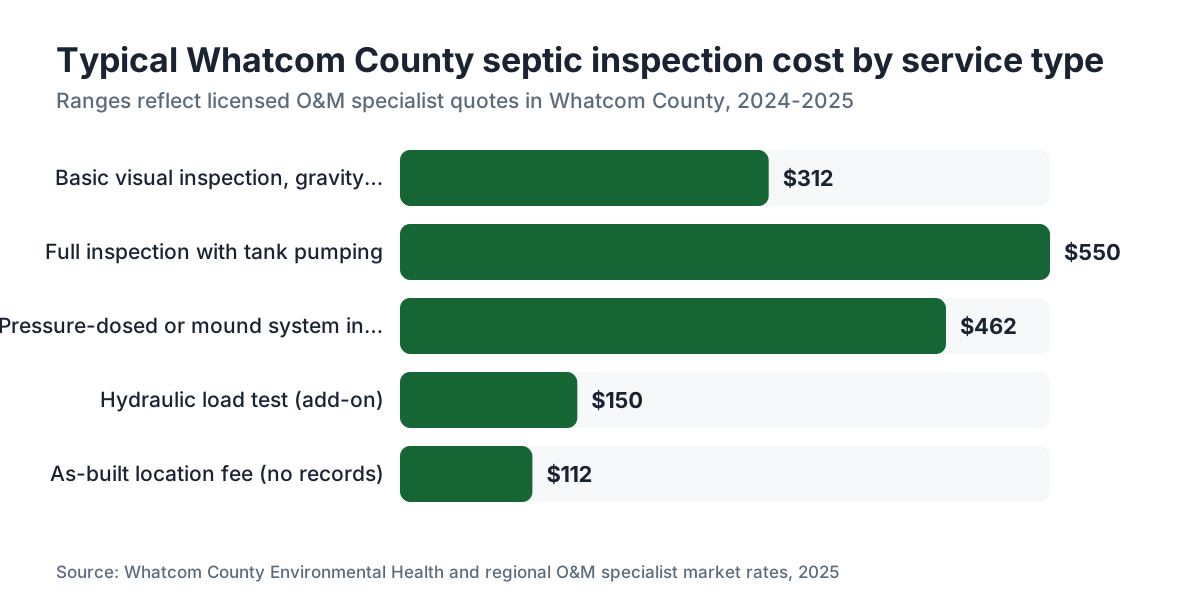
A basic Whatcom County septic inspection runs $250 to $375 for a gravity system with lids already exposed. Bundle in pumping and you're looking at $450 to $650. Costs move with system type, access difficulty, and whether pumping is included. Here's a realistic breakdown for 2025:
| Service | Typical Range |
|---|---|
| Basic visual inspection (gravity system, lids exposed) | $250, $375 |
| Full inspection with tank pumping | $450, $650 |
| Inspection of pressure-dosed or mound system | $375, $550 |
| As-built location fee (no records on file) | Add $75, $150 |
| Hydraulic load test | Add $100, $200 |
| Report filing with county health | Usually included |
Those ranges reflect what licensed O&M specialists in Whatcom County and nearby markets were quoting in 2024 and early 2025. If a quote comes in well below $200, ask exactly what's included. A real inspection with documentation shouldn't be cheap.
Who pays is negotiable in a sale. Sellers often pay because they control scheduling and want a clean result on record. Buyers sometimes insist on ordering and paying themselves so they know the inspector's allegiance runs to them. Either approach is fine. The key is that a licensed professional files the report with Whatcom County Environmental Health so it becomes part of the official record.
If your system fails inspection, repair costs swing wildly. A failed baffle might cost $200 to fix. A failed drainfield that needs full replacement can run $15,000 to $40,000 or more in this county, depending on soil conditions and system type [4]. Reading up on the cost to install a septic system helps frame what you're risking if you skip a real inspection.
What are the most common reasons a Whatcom County septic system fails inspection?
Failed inspections happen more than most buyers expect. The Pacific Northwest climate is part of the reason: high seasonal groundwater, clay-heavy soils across much of the county, and older systems sized for smaller households than now occupy the property.
The common failure points:
Missing or deteriorated outlet baffles. The outlet baffle keeps floating scum out of the drainfield. Older concrete tanks often have baffles that have rotted away entirely, especially if the tank was never pumped on schedule. Cheap to repair, but it matters a lot.
Hydraulic overload of the drainfield. The drainfield can only accept so much effluent per day, based on the soil absorption rate set during the original perc test or soil evaluation. If the household has grown or the system was undersized from the start, the field saturates. Signs include slow drains, wet spots over the field, and sewage odors in the yard. This is the failure mode that leads to the expensive outcomes.
Pump failures on pressure-dosed systems. Many Whatcom County properties run alternative systems with dosing pumps. If the pump hasn't been maintained under an annual O&M contract (which state law requires for most alternative systems), inspectors frequently find failed floats, corroded wiring, or a burned-out pump [1].
Cracked or offset tank sections. Concrete tanks settle over decades, and seams crack or offset. Ground movement, tree roots, and freeze-thaw cycles speed this up in parts of the county. A cracked tank doesn't always fail an inspection outright, but significant structural damage does.
If your system fails, the county generally requires documented repair before a deed transfer can close. The health department issues a compliance letter once repairs pass re-inspection. Septic system repair options depend heavily on what failed and whether the drainfield is repairable or needs full replacement.
How do you find septic records for a Whatcom County property?
Whatcom County Environmental Health keeps as-built records for septic systems permitted in the county. Request records through their online portal or by visiting their office in Bellingham. Records for older systems (pre-1975 especially) may be incomplete, on paper only, or gone entirely.
For a property you're buying, request the as-built before scheduling the inspection. Hand that drawing to the inspector so they know the expected tank location, system type, and drainfield layout. If records show a recent inspection or pump-out, get copies of those reports too.
Some systems in the county went in before permitting requirements existed. In those cases, the inspector may need a more thorough physical search, which adds time and cost. It also means the system's design loading (how many bedrooms it was sized for) may be unknown, which can complicate an upgrade or bedroom-addition permit later.
The Washington State Department of Health also keeps some records for alternative system types and can be a backup resource if county records are thin [2].
What is the O&M (operations and maintenance) program and does it apply to your system?
Washington State requires that most alternative septic systems run under a formal Operations and Maintenance program, administered locally by Whatcom County Environmental Health. Alternative systems include mound systems, pressure-dosed systems, drip irrigation systems, aerobic treatment units, and similar designs that don't rely on simple gravity flow to a conventional drainfield.
Under the O&M requirement, the system owner keeps a service contract with a licensed O&M specialist who inspects the system on a schedule set in the county's approval. That schedule is usually annual, though some high-performance systems need quarterly visits. The O&M specialist files inspection reports directly with the county. Fall behind, and the county can cite you and, in bad cases, require system upgrades.
For a home buyer, the O&M status of the system is a material disclosure item. Ask whether the system has an active O&M contract and request copies of the last two or three filed service reports. Those reports are the best window into how the system has actually run. A gap in annual reports on a pressure-dosed system is a red flag.
Conventional gravity systems (the majority of rural Whatcom County properties) carry no mandatory O&M program, but that doesn't mean you ignore maintenance. The EPA recommends pumping a conventional septic tank every three to five years, though the real interval depends on household size and tank volume [3]. Our guide on how often to pump a septic tank walks through how to calculate the right schedule for your household.
What happens after the inspection: passing, failing, and the escrow process
When a system passes inspection, the licensed inspector files a report with Whatcom County Environmental Health. The county issues a compliance letter, which the escrow or title company usually requires before closing. Timeline from inspection to letter is usually five to fifteen business days, though it varies with the health department's workload.
When a system fails, the seller has a few options. Repair the system, get it re-inspected, and obtain the compliance letter. Negotiate with the buyer to adjust the purchase price and have the buyer take responsibility for repairs after closing (this needs careful contract language and a willing buyer). Or walk away from the transaction, which is unusual.
One thing that wrecks transactions: sellers who schedule the inspection very late in the due diligence period, leaving no time to repair a failed system before the closing date. If you're a buyer, push for the septic inspection in the first ten days of due diligence, not the last.
For sellers, pumping the system before inspection is almost always worth it. An inspector can't properly judge the tank condition or measure sludge and scum accurately without pumping if the tank is due. Showing up with an unpumped tank that's years overdue just invites a failed report. A septic tank pumping appointment costs a few hundred dollars and can save you thousands at the negotiating table.
How do Whatcom County septic rules compare to neighboring counties?
Every Washington county operates under the same state baseline, Chapter 246-272A WAC, so the fundamental requirements match [1]. The differences show up in local overlay rules, O&M program administration, fee structures, and how hard point-of-sale inspections get enforced.
Skagit County to the south has a similar point-of-sale inspection requirement. San Juan County, which covers the islands and has very limited drainfield replacement options, enforces O&M programs harder than most. Island County's inspection requirements sit close to Whatcom's.
Where Whatcom County stands apart is geography. The county runs from the lowland Nooksack River floodplain (high seasonal groundwater, frequent system stress) to the foothills of the Cascades (shallow soils over bedrock, tough perc conditions) to the Bellingham urban fringe where some lots are smaller than ideal for conventional systems. Those soil and hydrology variables mean a system that's technically code-compliant can still be marginal in wet years. Inspectors who know the local soil types are worth more than those who don't.
How often should you maintain your Whatcom County septic system between inspections?
Between required inspections, a few habits make a big difference.
Pump the tank on schedule. For a typical three-bedroom home with a 1,000-gallon tank and a household of four, pumping every three to four years fits. Septic tank cleaning and pumping keeps the tank from dumping solids into the drainfield.
Protect the drainfield. Don't park vehicles on it, don't plant trees or shrubs with aggressive roots near it, and divert surface water away from it. The Whatcom County wet season pushes a lot of water into the ground, and a saturated drainfield that's also handling household effluent gets no recovery time.
Watch what goes down the drain. This sounds basic. It matters anyway. Grease, wipes labeled "flushable", pharmaceuticals, and heavy antibacterial products all disrupt the biological process in your tank or field. EPA SepticSmart materials give a plain household rule: "Only flush the three Ps: pee, poop, and (toilet) paper" [3].
For alternative systems with pumps, check the alarm panel monthly and keep the O&M contract current. A pump failure that goes unnoticed for weeks stresses the drainfield hard.
SepticMind's maintenance tracking tools give homeowners one place to keep pump-out dates, inspection reports, and O&M service records, which is genuinely useful when you go to sell.
Know your drainfield location. Mark it on a site map and share it with any contractor working on your property. One backhoe cut through a lateral line adds a repair bill that easily beats a year's worth of careful maintenance. See our leach field guide for more on protecting and extending drainfield life.
What if your system is old, unknown type, or never permitted?
Whatcom County, like most rural counties in Washington, has properties where septic systems went in before modern permitting. People call these "legacy" systems. They may be cesspool-style pits, old seepage pits, or systems built to standards that are now outdated.
An unpermitted or unknown system doesn't automatically make a property unsellable, but it complicates things. Whatcom County Environmental Health generally requires that any system without records be inspected and evaluated by a licensed engineer or designer to determine its current condition and whether it meets minimum standards for the current use. If it doesn't, the county may require upgrade or replacement as a condition of the compliance letter needed for sale.
Cesspool systems (pits without a tank) are prohibited under current state rules and must be replaced. Older drywells used for household sewage are also non-compliant. If you're buying a property where the seller isn't sure what's underground, resolve that uncertainty before you're committed to the purchase. Replacement cost swings widely with soil conditions and system type. Our guide to the cost to put in a septic tank and septic tank installation covers the current range of replacement costs in the Pacific Northwest.
Where can you get official help and who enforces the rules?
Whatcom County Environmental Health is the primary authority. Their Environmental Health Division handles septic permits, as-built record requests, compliance letters, O&M program oversight, and complaints about malfunctioning systems. Their office is in Bellingham at 509 Girard Street, and they have an online portal for record requests and permit applications.
The Washington State Department of Health provides the regulatory framework and licensing oversight for O&M specialists and designers [2]. If you have a dispute about whether a licensed professional is meeting their obligations, the Department of Health is the licensing board.
EPA's SepticSmart program (epa.gov/septic) offers homeowner education materials that are genuinely useful and aren't filler [3]. Their resources on system types, maintenance intervals, and what not to flush are worth bookmarking.
For installers and service operators in Whatcom County who manage O&M contracts and inspection scheduling across many properties, SepticMind's operations software tracks compliance deadlines, service histories, and county filing requirements without losing things in spreadsheets.
If you find a system you believe is actively failing and creating a public health hazard (sewage surfacing near a well, a neighbor's system discharging to a waterway), file a complaint directly with Whatcom County Environmental Health. They are required to investigate and have authority to mandate repairs.
Frequently asked questions
Is a septic inspection required to sell a home in Whatcom County?
Yes. Whatcom County requires an inspection by a licensed O&M specialist or engineer before most residential property sales close. The inspector files the report with Whatcom County Environmental Health, and the county issues a compliance letter that escrow typically requires before closing. Schedule the inspection early in the due diligence period to leave time for any needed repairs.
How long is a Whatcom County septic inspection valid for?
Whatcom County generally treats an inspection report as current for the specific transaction it was ordered for. There is no fixed countywide expiration period, but a report more than one year old often won't satisfy a new buyer or lender. If a sale falls through and the property relists, a fresh inspection is usually required. Confirm the current policy with Whatcom County Environmental Health before relying on an older report.
Can the buyer order the septic inspection, or does the seller have to?
Either party can hire the inspector, and Washington State law doesn't specify who must order it. In practice, sellers often schedule it because they control access. Buyers sometimes prefer to order and pay themselves so the inspector's obligation runs to them. Either way, the inspector must be licensed and must file the report with Whatcom County Environmental Health for the compliance letter to be issued.
What does a failed septic inspection mean for a real estate closing?
A failed inspection means the system doesn't meet current standards in its present condition. Closing can still happen if the seller repairs the system, passes re-inspection, and receives a compliance letter before the closing date. Alternatively, the buyer and seller can negotiate a price adjustment with the buyer accepting the system as-is, though lenders (especially FHA and VA) may not allow this. Talk to your real estate attorney about the contract language.
How do I find the as-built record for a Whatcom County septic system?
Whatcom County Environmental Health maintains as-built records for permitted systems. Request them through the county's online portal or in person at their Bellingham office. Bring the parcel number or property address. Records for systems installed before the mid-1970s may be incomplete or missing. If records can't be located, an inspector or designer may need to physically locate and document the system, which adds cost.
Does Whatcom County require an O&M contract for conventional gravity septic systems?
No. Washington State's mandatory O&M program applies to alternative systems: pressure-dosed systems, mound systems, aerobic treatment units, drip irrigation systems, and similar designs. Conventional gravity systems flowing to a gravity-fed drainfield don't require a formal O&M contract under state or county rules. The county still recommends regular pumping every three to five years and periodic inspections to catch problems before they become failures.
How much does it cost to repair a failed septic system in Whatcom County?
Repair costs range from under $300 for a simple baffle replacement to $15,000 to $40,000 or more for a full drainfield replacement. The range is wide because it depends on what failed, the soil conditions on the property, the system type needed, and permit fees. Mound systems or systems on sites with high groundwater or poor soil often land at the higher end. Get multiple quotes from licensed designers before committing to a replacement approach.
Can a home inspector perform a septic inspection in Washington State?
A general home inspector can visually note obvious issues, like wet spots over a drainfield or an alarm light on a pump panel, but cannot perform the official inspection accepted by Whatcom County Environmental Health for a real estate transfer. That inspection requires a Washington State-licensed O&M specialist or professional engineer. Accepting a home inspector's septic note in place of a licensed septic inspection is a real risk for buyers.
What soil conditions in Whatcom County make septic systems harder to install or maintain?
Much of the lowland Whatcom County floodplain has seasonally high groundwater and clay-rich soils that restrict drainage and cut the effective capacity of drainfields during wet months. Some foothill and mountain areas have shallow soils over fractured bedrock, which also limits options. These conditions often require engineered alternative systems like mounds or drip irrigation rather than conventional gravity systems, and they mean stressed drainfields have less recovery capacity between wet seasons.
How do I prepare my septic system before a point-of-sale inspection?
Get the tank pumped if it's been more than two to three years since the last pump-out. Expose or mark lid locations so the inspector can access the tank without excessive digging. Pull the as-built record from Whatcom County Environmental Health and give it to your inspector ahead of the appointment. Clear vegetation from the drainfield area so the inspector can walk and probe it. For alternative systems, make sure the pump alarm panel is accessible and you have the most recent O&M service report.
Does Whatcom County require a septic inspection for a remodel or home addition?
Adding bedrooms or significantly increasing projected sewage flow typically triggers a review by Whatcom County Environmental Health to confirm the existing system can handle the increased load. If the system is undersized for the new design loading, the county may require an upgrade before issuing the building permit. The threshold is usually adding one or more bedrooms, but check with Environmental Health for the current trigger criteria, since they can update the thresholds.
What is the phone number or website for Whatcom County Environmental Health?
Whatcom County Environmental Health is part of the Whatcom County Health Department, located at 509 Girard Street, Bellingham, WA 98225. Their main website is whatcomcounty.us, where you can navigate to the Health Department and Environmental Health Division for septic records, permit applications, and contact information. Phone numbers and online request forms are listed there. For Washington State licensing of O&M specialists, the Washington State Department of Health website is doh.wa.gov.
How long does the Whatcom County compliance letter take after a passed inspection?
After the inspector files a passing report with Whatcom County Environmental Health, the compliance letter typically takes five to fifteen business days to issue. That timeline varies with the health department's workload and whether there are any questions on the report. Build at least three weeks into your closing timeline after the inspection date to account for the inspection itself, report filing, and compliance letter issuance.
What happens if a septic system fails in Whatcom County and the owner can't afford repairs?
Washington State and some local agencies offer loan or grant programs for low-income homeowners facing required septic repairs. The Washington State Department of Commerce has administered onsite septic loan programs in the past, and some water quality protection areas have grant funds. Whatcom County Environmental Health can point you toward current assistance options. A payment agreement for repairs, rather than immediate full replacement, is sometimes negotiable with the county depending on the severity of the failure.
Sources
- Washington State Legislature, Chapter 246-272A WAC: On-Site Sewage Systems: Washington State Board of Health regulations governing all conventional and alternative septic systems, including O&M program requirements for alternative systems
- Washington State Department of Health: Washington State Department of Health licensing and oversight of O&M specialists and onsite sewage system professionals
- U.S. EPA, SepticSmart: Protect Your Investment: EPA recommends pumping when combined sludge and scum layers exceed one-third of tank volume; flush only the three Ps guidance
- Whatcom County Health Department, Environmental Health Division: Whatcom County Environmental Health administers septic permits, as-built records, O&M program oversight, and point-of-sale compliance letters
- Washington State Department of Health: State requirement for annual or more frequent O&M inspections of alternative septic systems, with reports filed with the local health jurisdiction
- U.S. EPA, Types of Septic Systems: Description of conventional, pressure-dosed, mound, and drip-irrigation system types and their maintenance needs
- Washington State Department of Health: Three-to-five year pumping recommendation for conventional residential septic systems based on household size and tank volume
- Washington State Legislature, RCW 70A.305: Onsite Sewage System Program: State statutory authority for local health jurisdiction administration of onsite sewage programs including real estate transfer inspection requirements
- U.S. EPA, SepticSmart Homeowner Resources: EPA SepticSmart homeowner guidance on system inspection frequency, maintenance, and protecting the drainfield
- Washington State Department of Commerce: Washington State has administered loan and assistance programs for low-income homeowners required to repair or replace septic systems
Last updated 2026-07-09