Septic tanks for sale: what to buy, what it costs, and what not to skip
By the SepticMind Editorial Team
TL;DR
- A septic tank alone costs $500 to $4,500 depending on material and size.
- Concrete is the default choice; poly and fiberglass make sense on high-water-table lots.
- The tank is one line item.
- Installation, permits, and the drain field add $3,000 to $15,000 more.
- Buy a tank that meets your state's onsite wastewater code before you spend a dollar.
What types of septic tanks are for sale, and which one should you buy?
Three materials own the market: precast concrete, polyethylene (plastic), and fiberglass. Each carries a different price, lifespan, and set of site demands.
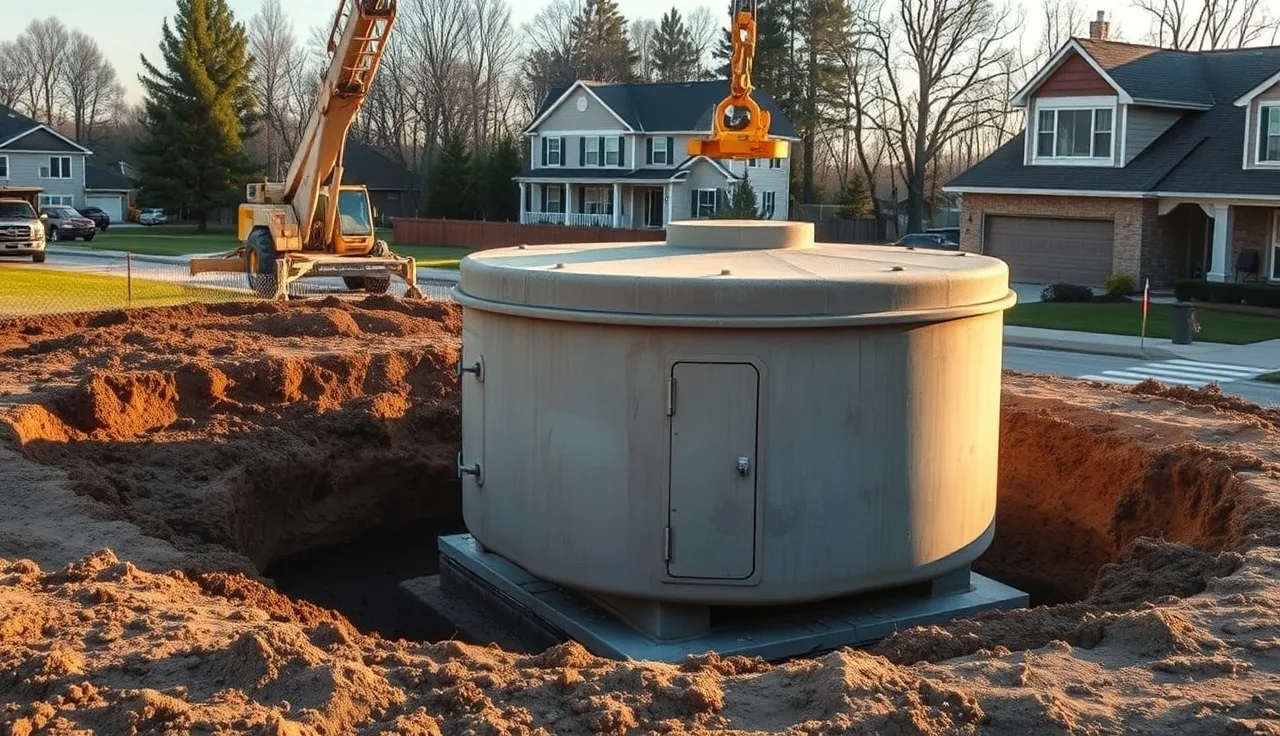
Concrete is the default, and for good reason. It's heavy enough to stay put in most soil, precast suppliers stock it in nearly every state, and licensed installers already know how to set it. A quality precast tank lasts 40 years or more if it doesn't crack and gets pumped on schedule. The catch is weight. A 1,000-gallon concrete tank runs 8,000 to 10,000 pounds, so delivery and placement need a crane or heavy equipment. [1]
Polyethylene tanks weigh a fraction of that. That makes them easy to haul to remote or tight lots, and they shrug off corrosion. The tradeoff is buoyancy. In high-groundwater areas, an empty poly tank can float right out of the ground during a wet season. Installers fight this with anchor straps or concrete collars, but it's a real cost to plan for. Poly tanks typically run $600 to $2,000 for common sizes. [2]
Fiberglass sits in the middle. Lighter than concrete, stiffer than poly, and highly corrosion-resistant. It fits coastal or acidic-soil sites where concrete breaks down faster. Prices match poly at the low end but climb past $2,500 for larger tanks.
For most residential lots on average-depth soil, precast concrete is still the smart first pick. If your installer pushes something else, make them explain the site-specific reason before you agree.
What sizes of septic tanks are available, and how big do you need?
Septic tanks are sized in gallons, and the size you need tracks your home's bedroom count, not the number of people living there. Codes use bedrooms as a stand-in for peak daily flow. Most state codes follow EPA guidance or the model standards from the National Environmental Services Center.
The EPA SepticSmart program figures a typical household makes about 70 gallons of wastewater per person per day. [3] Most states set a 1,000-gallon minimum for a 3-bedroom home, though some want 1,250 gallons for 3 bedrooms and 1,500 for 4. Check your specific state or county code first. [11]
Common sizes you'll find from suppliers:
| Tank Size (gallons) | Typical Use | Approx. Tank-Only Price (concrete) |
|---|---|---|
| 500 | Small cabin, 1 bedroom | $500 to $900 |
| 750 | 1 to 2 bedrooms | $700 to $1,200 |
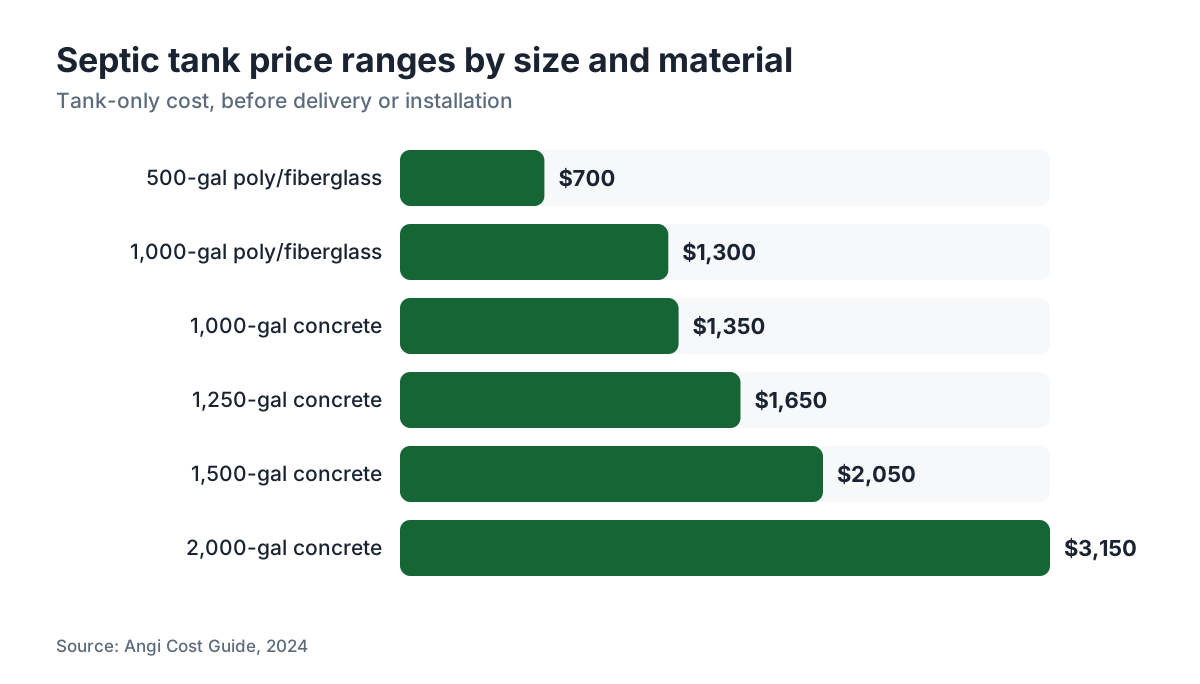
| 1,000 | 2 to 3 bedrooms (minimum most states) | $900 to $1,800 |
| 1,250 | 3 to 4 bedrooms | $1,100 to $2,200 |
| 1,500 | 4 to 5 bedrooms | $1,300 to $2,800 |
| 2,000 | 5+ bedrooms or light commercial | $1,800 to $4,500 |
These are tank-only prices, before delivery, labor, or permitting. [4] Region moves the number a lot. The Southeast tends to run cheaper on precast because supplier networks are dense, while mountain and coastal markets can run 30 to 40% higher.
Sizing up one step past code is rarely a mistake. A 1,250-gallon tank where code wants 1,000 costs maybe $300 more and buys you real buffer if the household grows or you add a garbage disposal. That $300 is cheap insurance against pumping twice as often.
How much does a septic tank for sale actually cost, from tank to finished install?
The tank price is the first layer, not the whole bill. Here's how the numbers stack for a typical 3-bedroom install:
1,000-gallon concrete tank (purchase): $900 to $1,800
Delivery and crane placement: $200 to $600
Excavation and backfill: $500 to $2,500 depending on soil and depth
Permit fees: $50 to $500 (widely variable by county) [5]
Drain field installation: $2,000 to $10,000 depending on soil test results
Inspection fees: $100 to $400
Total installed cost for a basic system on a typical lot lands between $5,000 and $15,000. The range is wide because soil drives everything. A lot that needs a mound system or drip-irrigation field because the ground won't percolate can push the total past $20,000.
The cost to install a septic system article breaks those soil-type variables down in detail.
Replacing a failed tank only, with a healthy existing drain field, runs roughly $3,000 to $7,000 all-in. See the septic tank repair and septic system repair guides for what that work involves.
Want the full line-item breakdown before you buy anything? The cost to put in a septic tank article covers every one.
Where can you buy a septic tank, and what should you look for in a seller?
You can buy septic tanks from precast concrete manufacturers, plumbing supply houses, farm supply stores, and a handful of online retailers that arrange freight. Each source suits a different situation.
Precast concrete suppliers are the most common source. Search "precast concrete supplier" plus your county name and you'll usually turn up two or three within 50 miles. Many deliver and set with their own equipment. Buying straight from the manufacturer cuts a middleman and often lowers delivery cost, because the truck is already leaving their yard anyway.
Plumbing supply warehouses (Ferguson, Consolidated Supply, and regional equivalents) stock poly tanks and can order fiberglass. They help when you need a specific size fast or you're in an area with no nearby precast yard.
Online marketplaces (Amazon, various agricultural suppliers) sell smaller poly tanks and ship by freight. That can work for a rural property where a precast truck is expensive or hard to route. Verify any online tank is certified for below-grade septic use, not surface rainwater storage. The two look alike and are rated differently.
Used tanks call for caution. A used concrete tank with documented pumping history from a reputable company can be fine. A tank with unknown history, visible cracks, or shot baffles is a liability, not a deal. Many states require a new tank during a system replacement, so read your code before you buy used. [6]
Three things to confirm before you pay any seller:
- Does the tank carry NSF/ANSI 46 certification (or your state's equivalent) for onsite wastewater use?
- Is the size on the spec sheet liquid capacity in gallons, not total volume?
- Does the seller deliver, or are you arranging your own freight?
What permits and inspections are required before you install a tank you bought?
Every state requires a permit for septic system installation or replacement. No exceptions. Skipping it isn't just legal exposure. It can void your homeowner's insurance, create disclosure problems when you sell, and leave you with a failed system and no recourse against whoever installed it. [5]
The process usually runs like this. You apply with your county health department or environmental agency. They review soil test results (a perc test or soil evaluation), approve a system design, and then a licensed installer pulls the permit and does the work. A final inspection happens before the system gets covered and put into service.
Some states let homeowners install their own systems on their own property. Many require a licensed contractor for all of it. The EPA notes that regulations vary significantly by state and directs homeowners to their state environmental or health agency for specific requirements. [7]
If you're buying a tank and planning to hire out the install, confirm with the contractor first that they'll work with owner-supplied materials. Some won't. They prefer to supply the tank themselves, which is how they control quality and liability, and that's a fair position. Don't buy a tank and then learn your installer won't touch it.
Permit fees run from under $100 in some rural counties to over $500 in others. Plan for $200 to $400 as a reasonable baseline.
What is a septic tank pump truck for sale, and who needs one?
A septic tank pump truck (also called a vacuum truck or honey wagon) is the vehicle licensed pumpers use to empty tanks. Homeowners don't need one. If you run or want to start a pumping business, this is a big capital buy that deserves real research before you sign anything.
New vacuum trucks built for septic service cost $80,000 to $250,000 or more depending on tank capacity, chassis (usually a medium-duty truck like a Freightliner M2 or International MV), pump type, and add-ons like a pressure jetter for line cleaning. [8] A 2,500-gallon tank is typical for residential routes. Municipal or industrial operators run 3,500 to 5,000-gallon units.
Used septic pump trucks show up regularly on equipment marketplaces like IronPlanet, Machinery Trader, and TruckPaper. A functional used unit runs from about $20,000 for a high-mileage older truck to $120,000 for a low-hours truck from the last decade. Pump condition and tank condition matter more than chassis age. Before you buy used, have an independent mechanic inspect the vacuum pump, the tank for corrosion or weld failures, and every hose connection.
Running a pump truck legally takes a commercial driver's license (CDL) in most states, a liquid waste hauler permit, and an approved disposal site (a municipal treatment plant or land application site that accepts septage). The National Onsite Wastewater Recycling Association (NOWRA) and your state environmental agency are the right places to start on licensing. [9]
Operators who want to run a tight route, manage service intervals, and track customer history across a fleet use tools like SepticMind built for that workflow. Running the business side without route software gets painful as volume climbs.
Deciding whether to buy or subcontract? Do the math cold. Financing a $120,000 used truck against typical residential pumping rates ($250 to $500 per pump-out) takes a real monthly job count just to cover payments, fuel, disposal fees, and maintenance. Run those numbers hard before you commit.
What's the difference between a septic tank and a complete septic system?
The septic tank is the first stage of a two-stage system. Wastewater flows from the house into the tank. Solids settle to the bottom as sludge, grease floats up as scum, and the clarified liquid in the middle (effluent) flows out to the drain field, where it percolates into the soil and soil bacteria finish treating it. [3]
A tank alone does nothing useful without the drain field. A tank in perfect shape connected to a dead drain field is still a dead system. The septic drain field article covers what a well-designed leach field looks like and what kills one.
Some properties also need a pump chamber and effluent pump between the tank and the field, especially on flat lots or where the field sits uphill. That adds another $800 to $2,000 to the hardware cost. Two-compartment tanks are often required or preferred because they hold solids back better before effluent reaches the field.
One detail people miss: tank risers. Older systems bury the access lids 12 to 24 inches down, which means digging every time the tank needs pumping. Precast risers bring the access point up to grade and save real money across the life of the system. Buying a new tank? Buy risers at the same time. The septic tank riser guide explains sizing and installation.
How long does a septic tank last, and when does a tank need replacement?
A well-installed concrete tank on neutral-pH soil can last 40 years. Fiberglass and poly tanks, absent physical damage, can reach 30 to 40 years. None of those numbers is a guarantee. Soil chemistry, groundwater, maintenance history, and install quality all move them. [1]
The common reasons a tank needs replacing before its time:
Concrete cracks. Ground movement or heavy vehicle traffic over the tank can crack the walls or lid. Small cracks sometimes patch with hydraulic cement or epoxy. Large structural cracks usually mean replacement.
Corroded concrete. Hydrogen sulfide gas from anaerobic decomposition eats at the top of concrete tanks over time. You'll see it as a powdery, degraded surface on the interior ceiling. In acidic soil, some tanks fail this way at 20 to 25 years.
Collapsed baffles. The inlet and outlet baffles direct flow and keep scum from leaving the tank. Concrete baffles crumble; plastic tee baffles can pop loose. A tank with failed baffles feeds solids straight to the drain field and can destroy it within a few years.
For a tank that's sound but just dirty, see the septic tank cleaning and septic tank pump out guides. A tank that smells or backs up doesn't automatically need replacement. It might just need pumping, covered in the septic tank pumping article. The EPA recommends pumping every 3 to 5 years for most households. [3]
Not sure whether yours needs repair or full replacement? A licensed inspector can camera the interior and give you a straight answer. That inspection runs $100 to $300 and is worth every dollar before you buy a new tank you might not need.
What should you check before buying any septic tank?
Print this list before you talk to any supplier. It's the short version of what separates a tank that passes inspection from one you buy twice.
Code compliance first. Your state's onsite wastewater code sets acceptable materials, minimum sizes, and construction standards. Many states require tanks to meet NSF/ANSI Standard 46 (for septic tanks specifically) or a state equivalent. A tank that misses that standard can get rejected at inspection. [6]
Wall thickness and reinforcement. For precast concrete, ask for the structural specs. Minimum 4-inch walls with reinforcing steel is typical for residential tanks. Thinner walls crack sooner.
Number of compartments. Two-compartment tanks are required in many states and worth it everywhere else. The first compartment holds solids; the second settles the effluent further before it exits. Single-compartment tanks let more solids through. [12]
Lid and access design. Will the tank take standard risers? Are the lids rated for traffic loading if the tank sits near a driveway? A residential lid is typically rated for 150 psf; a traffic-rated lid for driveways is 300 psf or higher.
Delivery logistics. Who delivers, what equipment do they use, and what happens if the tank cracks in transit? Get the damage policy in writing before it leaves the yard.
Warranty. Precast makers typically warranty structural defects for a year. Poly and fiberglass makers often warranty 25 to 30 years against structural failure. Read the terms. Most exclude improper installation, which is where a lot of failures actually start.
Are there septic tanks designed for specific situations, like high water tables or commercial use?
Yes, and putting the wrong tank on the wrong site is an expensive mistake. Match the tank to the site, in that order.
High water table sites need tanks engineered to resist buoyancy when empty. That means a heavy concrete tank set at a verified depth, a poly tank with anchor straps and concrete deadman anchors, or fiberglass with the same anchoring. Some jurisdictions require a calculation showing empty tank weight plus ballast beats the buoyant force at the design groundwater level. Your engineer or installer should hand you that math.
Commercial or high-flow uses need larger tanks and often a grease trap upstream to protect the septic tank from fats, oils, and grease. A restaurant on septic, for example, typically needs both a grease interceptor and an oversized tank. Commercial suppliers stock 3,000 to 10,000+ gallon precast units.
Mound systems and drip irrigation systems, used where soil won't percolate, pair with standard tanks but add a pump chamber downstream. The tank stays the same. The complexity lives after it.
Aerobic treatment units (ATUs) are a different product category. An ATU is more than a tank. It's a treatment system with aeration, a settling chamber, and sometimes a disinfection stage. ATUs cost more, $3,000 to $8,000 for the unit alone, but produce cleaner effluent and are required on sensitive sites in many states. [10]
For anything outside a standard residential install, get a licensed site evaluator or engineer involved before you buy. The tank choice follows the site design. It never drives it.
Once the system is in the ground and running, tracking pump-out schedules and history matters for long-term performance. SepticMind is one tool operators and homeowners use to stay ahead of that maintenance calendar.
How do you maintain a septic tank you just installed to make it last?
The maintenance rules are the same whether the tank is new or 20 years old. Starting right on a new install gives you the best shot at that 40-year mark.
Pump on schedule. The EPA recommends pumping every 3 to 5 years for a household of four with a 1,000-gallon tank. [3] Smaller households or bigger tanks can stretch longer; bigger households or smaller tanks need service sooner. The how often to pump septic tank guide has the full sizing table. A new tank takes time to build the bacteria that break down solids, so some installers suggest a first inspection pump-out at 2 to 3 years to see how sludge is stacking up.
Protect the drain field. Don't park on it, don't plant trees within 20 to 30 feet of the trenches, and don't route roof runoff or sump pump discharge toward it. Waterlogging a drain field is one of the fastest ways to kill it.
Watch what goes down the drain. Wipes (even the "flushable" ones), grease, medications, and harsh chemical drain cleaners all hurt the system. EPA SepticSmart guidance specifically warns against flushing anything other than human waste and toilet paper. [3]
Walk the tank lid and riser area each spring. Soft ground, odors, or standing water near the tank are early warnings worth chasing before they turn expensive. The septic tank emptying guide covers what to expect during a service visit and how to read the technician's findings.
Frequently asked questions
Can I buy a septic tank and install it myself?
Some states let homeowners install septic systems on their own property; many require a licensed contractor. Either way, you need a permit, an approved design from a licensed designer or engineer, and a final inspection before the system gets covered. Check your state's department of environmental quality or health department for the exact rule. Buying a tank with no permit plan in place puts the cart before the horse.
What is the cheapest septic tank I can buy that will still pass inspection?
A 1,000-gallon polyethylene tank from an agricultural supplier can cost as little as $600 to $900, and many meet NSF/ANSI 46 or state equivalents. Whether it passes depends entirely on your state's approved materials list. Some states specify precast concrete only. Confirm what's approved in your county before buying the cheapest option, because a rejected tank means you buy twice.
How much does a 1,000-gallon concrete septic tank cost?
A 1,000-gallon precast concrete tank runs $900 to $1,800 for the tank itself, before delivery. Delivery and crane placement typically add $200 to $600. Regional pricing varies: dense precast markets in the Southeast run cheaper; mountain West and coastal markets run higher. Always get at least two quotes from local suppliers, because freight distance moves the price a lot.
What size septic tank do I need for a 3-bedroom house?
Most state codes require a minimum 1,000-gallon tank for a 3-bedroom home, with some requiring 1,250 gallons. The EPA SepticSmart program uses 70 gallons per person per day as the design flow baseline. Buying a 1,250-gallon tank where 1,000 is the minimum costs $200 to $400 more and gives meaningful headroom. Verify your specific state or county minimum before ordering.
How long does a new septic tank last?
A well-installed precast concrete tank lasts 40 years or more on neutral-pH soil with regular pumping. Poly and fiberglass tanks can also reach 30 to 40 years absent physical damage. Acidic soils, high groundwater, vehicle traffic over the tank, and skipped pump-outs all shorten that life. The baffles usually fail before the walls do, so inspect them every time the tank is pumped.
Can I buy a used septic tank?
You can, but check your state code first. Many states require a new tank for system replacements. If used tanks are allowed, demand documented pumping records, inspect for cracks and baffle condition, and confirm the tank's certified capacity. A concrete tank with unknown history and efflorescence on the exterior is not a bargain. The savings rarely justify the risk without a thorough inspection.
What does a septic pump truck cost to buy?
New vacuum trucks for septic service cost $80,000 to $250,000 depending on tank size, chassis, and equipment. Used units in working condition sell for $20,000 to $120,000 on equipment marketplaces like IronPlanet and TruckPaper. Beyond the truck price, operating legally takes a CDL, a liquid waste hauler permit, and an approved septage disposal site. Pump and tank condition matter more than chassis age when you evaluate used trucks.
Do I need a permit to buy and install a septic tank?
The permit is for the installation, not the purchase. You can legally buy a tank without a permit. You cannot legally install it without one in any U.S. state. Permit applications go to your county health department or state environmental agency, and they require a soil evaluation and approved design before they issue anything. Installing without a permit creates liability on resale and can void your homeowner's insurance.
What is the difference between a septic tank and an aerobic treatment unit?
A conventional septic tank is a passive settling chamber; solids sink, liquid flows to the drain field. An aerobic treatment unit (ATU) injects air into the wastewater to support aerobic bacteria, producing cleaner effluent. ATUs cost $3,000 to $8,000 for the unit alone and need electricity plus more maintenance. They're required on environmentally sensitive sites or where soil can't handle conventional effluent.
Where can I find septic tanks for sale near me?
Search for precast concrete suppliers or ready-mix concrete companies in your county first; most precast yards sell tanks direct. Plumbing supply houses carry poly and fiberglass. Farm supply stores stock smaller poly units. For remote properties, freight-delivered tanks from online agricultural suppliers are an option. Always confirm the seller's tank meets your state's approved materials list before you buy.
What is an NSF/ANSI 46 certification and why does it matter for a septic tank?
NSF/ANSI Standard 46 covers components used in onsite wastewater treatment systems, including septic tanks. Certification means the tank has been independently tested for structural integrity, material composition, and capacity accuracy. Many state codes require NSF 46 certification or an equivalent for any tank in a permitted system. A tank without it may fail inspection no matter how well it's built.
Should I buy a one-compartment or two-compartment septic tank?
Buy a two-compartment tank if you have any choice. The first compartment captures solids and scum; the second settles the effluent further before it reaches the drain field. Two-compartment tanks send significantly less suspended solids downstream, which extends field life. Many state codes now require two compartments for new installs. Even where a single compartment is still legal, the upgrade cost is minor next to a drain field replacement.
What happens if I buy a septic tank that's too small for my house?
An undersized tank fills with solids faster and needs pumping more often. Worse, it passes more solids to the drain field, clogging the soil and shortening field life fast. A failed drain field can cost $5,000 to $20,000 to replace. The tank is a small fraction of that. Getting the size right the first time is one of the highest-return calls in the whole system.
Sources
- National Precast Concrete Association, Precast Septic Tanks: Properly installed precast concrete septic tanks can last 40 years or more; wall thickness and reinforcement specifications for residential tanks.
- University of Tennessee Extension, Septic System Owner's Guide: Polyethylene tanks are lighter than concrete and resist corrosion but require anchoring in high-water-table conditions to prevent buoyancy.
- U.S. EPA, SepticSmart Program: Typical household generates approximately 70 gallons of wastewater per person per day; EPA recommends pumping every 3 to 5 years for most households.
- Angi, Septic Tank Installation Cost Guide: Septic tank-only purchase prices by size and material, ranging from approximately $500 for small tanks to $4,500 for large concrete units.
- U.S. EPA, Septic Systems Overview: All states require permits for septic system installation or replacement; permit fees and processes vary by state and county.
- NSF International, NSF/ANSI Standard 46: Evaluation of Components and Devices Used in Wastewater Treatment Systems: NSF/ANSI 46 certification establishes testing and material standards for septic tanks and components used in onsite wastewater treatment systems.
- U.S. EPA, Septic Systems: Regulations and Standards: Septic system regulations vary significantly by state; EPA directs homeowners to state environmental or health agencies for jurisdiction-specific requirements.
- Pumper Magazine (COLE Publishing), Vacuum Truck Coverage: New vacuum trucks for septic pumping service cost $80,000, $250,000 depending on tank capacity, chassis, and pump configuration.
- National Onsite Wastewater Recycling Association (NOWRA), Licensing and Certification Resources: Operating a septic pump truck requires state liquid waste hauler permits; NOWRA provides state-by-state licensing resources for pumpers.
- U.S. EPA, A Homeowner's Guide to Septic Systems: Aerobic treatment units (ATUs) produce higher-quality effluent than conventional septic tanks and are required on environmentally sensitive sites in many states.
- National Environmental Services Center (NESC), West Virginia University: Minimum tank size requirements by bedroom count; most states require 1,000 gallons for a 3-bedroom home, with many requiring 1,250 gallons.
- University of Florida IFAS Extension, Onsite Sewage Treatment and Disposal Systems: Two-compartment septic tanks provide better solids retention and reduce suspended solids reaching the drain field compared to single-compartment designs.
Last updated 2026-07-09