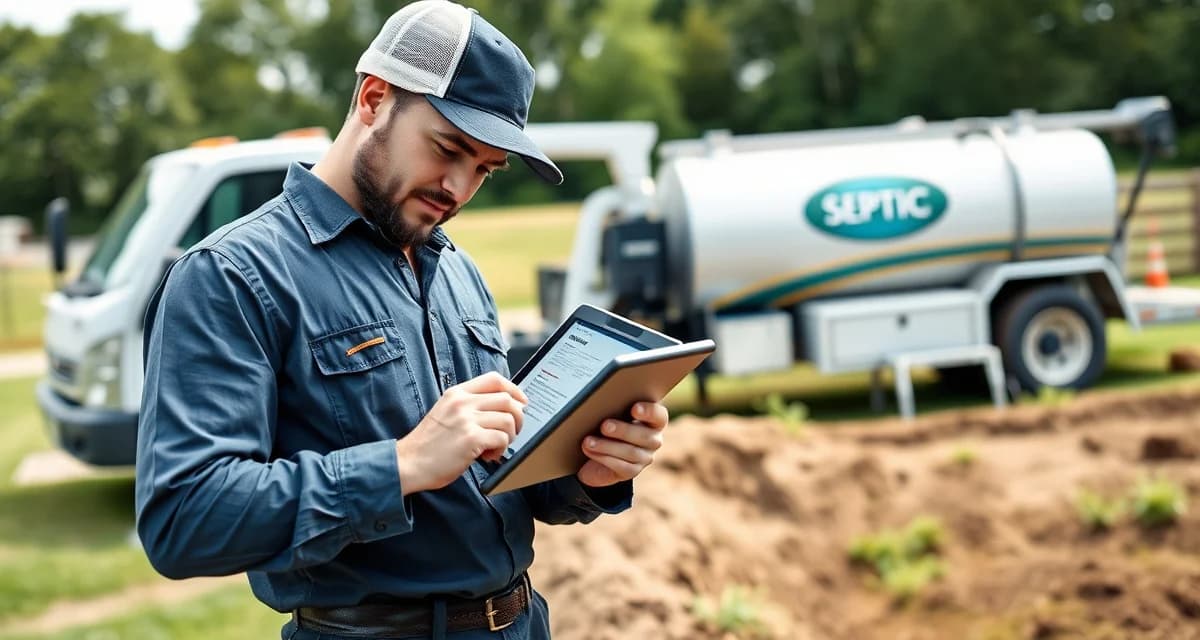
Septic Technician Mobile App: What Field Techs Need in the Field
By the SepticMind Editorial Team
If your technicians are still calling the office mid-job to ask basic questions, the problem isn't your staff. It's the information gap. The right mobile app closes that gap before the truck even pulls in the driveway.
TL;DR
- Septic Technician Mobile App: What Field Techs Need in the Field is designed to address the specific workflow and compliance requirements of septic service operations.
- Purpose-built septic software handles permit tracking, state inspection report templates, and tank data management that generic platforms do not offer.
- Companies managing ATU contracts, multi-county permit portfolios, or real estate inspection volume need software designed around those workflows.
- Mobile access allows field technicians to complete and submit inspection reports before leaving a property.
- Cloud-based platforms ensure records are accessible from any device and backed up automatically.
- Switching costs from generic software are real, so evaluating septic-specific platforms early saves migration pain later.
The data is hard to argue with: techs without mobile access to job data make an average of 2.8 avoidable calls to the office per job. For a 5-truck company running 10 jobs each per day, that's 140 interruptions a day eating into your office manager's time and your techs' productivity.
The Information a Tech Needs Before They Knock on the Door
Think about what your tech needs to do the job correctly. They need to know the tank size so they bring the right equipment. They need to know the system type so they know what to inspect. They need the permit status so they don't show up for work that isn't cleared. They need the job history so they're not asking the homeowner questions the homeowner expects you already know.
Without a mobile app, that information lives in the office. The tech either calls to get it or shows up guessing.
SepticMind's tech app provides full job context including tank specs, location pin, and permit status on-site, so by the time your tech is walking up to the house, they already know what they're dealing with.
Core Features That Actually Matter
Not every "mobile app" delivers the same value. Some are basically glorified job assignment lists. What a septic tech actually needs is more specific.
Tank and System Specs at a Glance
Tank size, material (concrete, fiberglass, poly), estimated age, lid locations, and system type should all be visible the moment the job opens. Techs who arrive without this information routinely bring the wrong pump truck or underestimate job time.
Permit Status and Required Documentation
If a job requires a permit, the tech should see it. If that permit isn't active yet, they need to know before they start work, not after. Real-time permit status on the mobile app prevents techs from inadvertently performing unpermitted work.
Complete Job History
Previous service notes, past inspection findings, photos from prior visits, and any documented customer concerns should be right there. Techs shouldn't have to call the office to find out when the system was last pumped or what a prior tech flagged.
GPS Navigation and Location Pin
Tank location on the property matters. Many homeowners don't know exactly where their tank is, especially on larger properties. A pinned location from a prior visit saves your tech from spending 20 minutes probing the yard.
Digital Inspection Forms
For inspection jobs, the tech should be able to complete the full report from the app. That means selecting findings from structured checklists, entering measurements, noting conditions, and capturing photos, all before they leave the site.
The Case for Offline Functionality
Rural septic work is real. Your techs are going to end up in areas with weak or no cell signal. If the app requires a live connection to load job details, it fails at the worst possible time.
Digital septic inspection forms should work offline and sync when the tech re-enters coverage. This isn't a nice-to-have for rural service areas. It's a requirement.
SepticMind's tech app works without an internet connection. Job data loads when the tech opens the route in the morning, and completed forms sync when connectivity is restored.
How the App Affects Office Operations
The benefit isn't just for techs. When field staff have everything they need on their phone, the office phone stops ringing with questions. Companies with mobile field apps resolve 91% of on-site questions without office callbacks. That frees your dispatcher to focus on scheduling rather than answering "what size is the tank at this address?" for the fourth time that morning.
It also speeds up invoicing. When the tech marks a job complete in the app and photos are already attached to the record, billing can happen the same day rather than waiting for paper forms to come back to the office.
Getting Your Team on Board
Most techs adapt faster than you'd expect, especially if the app genuinely makes their day easier. The ones who push back are usually those who've been through software transitions that made their jobs harder, not simpler.
The best approach is a short demo on a real job before full rollout. Have the tech pull up a job they actually know, walk through what the app shows them, and let them ask questions. When they see their own customer records and tank data right there on the screen, the skepticism usually fades quickly.
Keep the onboarding focused on the three tasks they'll do every day: opening a job, completing a form, and marking a job done. Once those are smooth, everything else follows naturally.
What to Look for When Evaluating Field Apps
If you're evaluating options, here are the questions worth asking:
- Does job data load offline, or does the app require cell service?
- Can technicians complete full inspection reports from the app?
- Does the app show permit status for each job?
- Are customer service history and tank specs visible at the job level?
- Can techs capture and attach photos from within the app?
- How long does onboarding a new tech typically take?
The answers tell you whether the app was built for septic field work specifically or adapted from a generic field service template.
Get Started with SepticMind
The right software for a septic company handles compliance and documentation alongside scheduling and billing. SepticMind is built specifically for septic operations, from county permit tracking to ATU maintenance management. Start a free trial to evaluate it against your workflow.
Frequently Asked Questions
What information does a septic tech need on a mobile app to complete a job efficiently?
At minimum: tank size and system type, permit status, job history and prior service notes, GPS location pin for the tank, and digital forms for completing the inspection or service record. The goal is that the tech can answer every common on-site question without calling the office.
Does the SepticMind tech app work without an internet connection?
Yes. Job data loads when the tech opens their route, and the app functions offline. Completed records and photos sync back to the platform when the device reconnects to the network.
Can technicians complete inspection reports on the mobile app?
Yes. SepticMind's mobile app includes full digital inspection forms with structured checklists, photo capture, and measurement fields. Techs can complete and submit a finished report from the field before leaving the job site.
What makes Septic Technician Mobile App: What Field Techs Need in the Field different from general field service software?
The primary differences are septic-specific features: county permit databases, state inspection report templates formatted for regulatory submission, tank size and system type records that drive service interval calculations, and ATU maintenance contract management. General field service platforms can handle scheduling and invoicing but require manual workarounds for every compliance and documentation task that purpose-built septic software handles automatically.
Is there a free trial available to test the software?
SepticMind offers a free trial period so you can evaluate the platform with your actual workflow before committing. The trial includes access to the permit database, inspection report templates, and scheduling tools. Most companies complete their evaluation within two to three weeks and have a clear picture of how the platform fits their operation before the trial ends.
Try These Free Tools
Sources
- National Onsite Wastewater Recycling Association (NOWRA)
- US EPA Office of Wastewater Management
- NSF International
- Water Environment Federation
- National Environmental Services Center (NESC)