Septic tank pumping in Lakeland, FL: costs, rules, and timing
By the SepticMind Editorial Team
TL;DR
- Septic tank pumping in Lakeland, FL runs $250 to $500 for a standard residential tank, and most homeowners need it every 3 to 5 years.
- Polk County regulates onsite systems under Florida's Chapter 64E-6 code.
- Pump before sludge and scum fill more than a third of the tank.
- Budget extra for buried lids, big tanks, or grease traps.
What does septic tank pumping cost in Lakeland, FL?
Most Lakeland homeowners with a standard 1,000- to 1,500-gallon tank pay $250 to $500 for a straightforward pump-out. That range holds across Central Florida, from the Lakeland suburbs south to septic tank pumping Hollywood FL jobs and east into the denser septic tank pumping Miami market, where tight truck routing nudges prices up.
Several things move the price. Tanks buried deeper than 18 to 24 inches need a riser or hand digging to expose the lid, and that adds $50 to $150 depending on the depth. A two-compartment tank (common in homes built after Florida's mid-1990s code updates) may carry a small surcharge because the pumper has to service both chambers. Emergency or weekend calls often run 25 to 50 percent over the standard rate. Grease traps get priced separately, usually $100 to $200 extra.
Tank size is the biggest cost driver after location. A 1,000-gallon residential tank is the baseline. Step up to a 1,500- or 2,000-gallon system and you're looking at $350 to $600. Commercial tanks of 3,000 gallons or more get quoted individually and can top $1,000 per pump-out.
Get at least two quotes. Prices across Polk County vary more than you'd expect, because fuel surcharges, disposal tipping fees at local septage receiving facilities, and driver availability all differ by company.
See a national cost breakdown at septic tank pump out and a closer look at septic tank cleaning to understand what's actually in a service call.
How often should you pump a septic tank in Lakeland?
The EPA's SepticSmart program tells households to pump every 3 to 5 years as a baseline [1]. That's a sensible start, but it's a wide window. Your real interval depends on four things: tank size, how many people live in the house, whether you run a garbage disposal, and how much grease or non-biodegradable junk goes down the drains.
The rule experienced pumpers actually use is a sludge-and-scum check. Once the bottom sludge layer plus the top scum layer fill more than a third of the tank's liquid capacity, it's time. A pumper can measure this during a service call, or you can buy a Sludge Judge measuring tool and check it yourself once a year.
Take a Lakeland family of four on a 1,000-gallon tank: every 3 to 4 years is normal. Add a garbage disposal and that tightens to 2 to 3 years. A retired couple on the same tank can sometimes stretch to 5 or 6 years, though going past 5 without a sludge check is a gamble.
Florida's climate adds a wrinkle. High water tables in low-lying parts of Polk County, plus warm year-round temperatures, speed up biological activity in the tank, which helps digestion. But the same wet ground keeps drain field soil saturated longer in wet season, which stresses the whole system.
For a breakdown of pumping intervals by household size, see how often to pump septic tank.
What are Polk County and Florida's rules for septic systems?
Florida regulates onsite sewage treatment and disposal systems under Florida Administrative Code Chapter 64E-6, administered by the Florida Department of Health [2]. Permits, inspections, and contractor licensing all run through that framework. In Lakeland and across Polk County, the local authority is the Polk County Health Department's Environmental Health section [7].
New installations and repairs need a permit from the county health department before any work starts. Pumping an existing system for routine maintenance does not need a permit, but the contractor doing the work must be licensed under Florida Statute Chapter 381 as a septage disposal service [3]. That license requires trucks to haul waste only to an approved septage receiving facility. If you're hiring a pumper in Lakeland, ask for the license number. Good operators print it on the invoice.
Florida law also requires that any septic inspection tied to a real estate transaction be done by a licensed inspector or contractor. The state does not set a single mandated inspection cycle for existing systems outside a property sale, which is different from some northern states that force periodic pump-outs by ordinance.
One thing to know: if your system sits near a waterbody or inside a designated priority area under Florida's Springs Protection or Basin Management Action Plans, extra rules can apply, including tighter inspection cycles or upgrade requirements. Polk County has several priority areas tied to Lake Hancock and other water bodies in the Upper Peace River watershed [4].
The statute language from Chapter 64E-6 is blunt: "No person shall install, modify, repair, or abandon an onsite sewage treatment and disposal system without first obtaining a permit from the department" [2].
What actually happens during a septic pump-out?
A professional pump-out is faster than most homeowners expect. From truck arrival to departure, a clean job on an accessible 1,000-gallon tank takes 30 to 60 minutes.
The pumper starts by finding the access lid. If you've had the system pumped before and kept records, that's easy. If not, they probe the yard with a rod or use a locating device. Plenty of Lakeland homes have tanks buried under grass or landscaping with no visible lid, which is why a riser (a plastic access extension that brings the lid up to grade) is one of the best $150 to $300 investments you can make. You get it back in excavation fees within a pump-out or two.
Once the lid is open, the pumper drops a large vacuum hose into the tank and removes the liquid waste, sludge, and scum. A good pumper also backwashes, pushing clean water in and vacuuming again to break up stubborn sludge cakes and get a cleaner pull. Not every company does this on its own. Ask before you book.
After pumping, the pumper should look inside the empty tank. They're checking the inlet and outlet baffles, hunting for cracks, and noting how thick the scum mat was before pumping. They should be able to tell you roughly when the tank needs service again based on what they saw.
The waste goes to a licensed septage receiving facility, usually a municipal wastewater treatment plant that accepts septage. In Polk County, the City of Lakeland's wastewater operations and several private facilities handle this.
Want to know what separates a pump-out from a full cleaning? The septic tank emptying article lays out the difference.
How do you find a licensed septic pumping company in Lakeland?
Start with Florida's Department of Health, which keeps a searchable license lookup for registered septage disposal services and septic contractors [3]. Search 'Polk County' or 'Lakeland' and confirm any company you're considering holds a current, active license before you let them near your tank.
Beyond licensing, here's what to look for. A good pumper gives you a written price before starting, documents what they found (baffle condition, tank level, anything odd), and hands you a receipt that lists the volume pumped and the disposal facility used. If a company won't tell you where they're hauling the waste, walk away. Illegal septage dumping is a real problem, and the homeowner can share liability if the waste gets traced back to your property.
Review sites help, but they aren't the whole story. A company with 50 reviews and a 4.6 rating is probably fine. Skip the lone one-star rant and the gushing five-star review that reads like the owner's cousin wrote it. Look for reviews that mention whether the crew showed up on time, found the lid without a fight, and left a detailed receipt.
For operators running multiple properties or fleets across Polk County and Central Florida, scheduling and documentation are where the wheels come off. Tools like SepticMind help service companies track pump-out records, set reminders for commercial accounts, and keep license and disposal paperwork organized across the whole customer base.
Also ask whether the pumper can inspect the drain field lines and distribution box while they're on site. Not everyone offers it, but many licensed contractors will do a basic drain field check for an added fee, and catching a problem early saves you thousands. See leach field for what to watch for.
What are the signs your Lakeland septic tank needs pumping now?
Some signs are impossible to miss. Sewage backing up into your lowest drains (often a toilet or floor drain in a bathroom near the tank) means the system is full or blocked. Wet, spongy ground over the drain field with a foul smell is another. Both mean you're already past the point where routine pumping would have saved you.
The earlier signs matter more. Slow drains with no obvious clog, a gurgle in the pipes when you flush, or a sulfur smell around the cleanout access points all say the tank is filling and the system is under stress. Act on these before you have a backup.
In Lakeland, watch the wet season, roughly June through September. Heavy rain raises the water table and can flood drain fields, putting back-pressure on the tank. If your drains crawl every summer, it may be a temporary hydraulic issue rather than a full tank. But if it hangs around after the rain stops, get the tank checked.
Here's what surprises homeowners: even when the tank isn't overflowing, a full tank lets partly treated solids push into the drain field, and that clogs the soil over time. That's how drain fields die. Regular pumping is cheap insurance against a drain field replacement that runs $5,000 to $15,000 or more in Polk County [8].
Already seeing drain field symptoms? Start with septic system repair and septic tank repair to see what the fix looks like.
How does Lakeland's soil and water table affect septic systems?
Polk County sits on the Lake Wales Ridge and the flatwoods around it, with soils that swing from well-drained sands (great for drain fields) to poorly drained flatwoods soils with clay subsoils or shallow seasonal water tables (trouble). That variability inside a few miles means two neighbors can have very different luck with the same size system.
Florida's setback rules under Chapter 64E-6 require at least 24 inches of unsaturated soil below the drain field bottom [2]. Where the wet-season water table sits close to the surface, that limits what size and type of system can go in and often forces a mound system or another alternative design. The Polk County Soil Survey, maintained by the USDA Natural Resources Conservation Service, maps these soil types in detail [5].
For homes near lakes, wetlands, or low ground, the mix of a shallow water table and warm temperatures can let a drain field fail with no obvious surface sign. The effluent slides sideways into the water table instead of backing up where you'd see it. That's one reason Florida has pushed hard for septic-to-sewer conversion in sensitive watersheds.
For routine pumping, soil type doesn't change what you do. But if you're buying a Lakeland property with a septic system, spend the money on a full septic tank inspection before closing. A basic inspection tells you whether the system is sized right and whether the drain field shows signs of hydraulic stress.
What's the difference between pumping, cleaning, and inspecting a septic tank?
These three terms get thrown around loosely, and the confusion costs homeowners money.
Pumping (a pump-out) means vacuuming the liquid waste, sludge, and floating scum from the tank. This is the core maintenance service. A straight pump-out without backwashing leaves some sludge on the walls and floor, which is normal and even helpful, because it keeps the bacterial population that drives digestion.
Cleaning goes further. A thorough cleaning adds backwashing with pressurized water to break up hardened sludge mats, clears buildup off the inlet and outlet baffles, and sometimes scopes the outlet pipe. It's the better call if the tank hasn't been serviced in 7 to 10 years, or if a prior pump-out found heavy sludge. Expect to pay $100 to $200 more for a full cleaning than a basic pump-out.
Inspection is a separate job. A licensed inspector checks the structural condition of the tank, the operability of the inlet and outlet tees or baffles, the distribution box, and the drain field. An inspection doesn't always include pumping, though many inspectors want the tank pumped first so they can see inside. For a real estate transaction in Polk County, you want a licensed inspection, not a pumper who takes a quick look.
Knowing what you're paying for prevents the common trap where a homeowner buys a "full service" and gets a basic pump-out with a cursory lid peek. Ask the company to itemize the work.
What happens after pumping, and what routine maintenance helps?
Right after pumping, the tank refills fast with household wastewater and the bacterial colony rebuilds itself within a few days. You do not need to add any bacterial starter product. This is one of the stubbornest myths in the trade. The bacteria that process sewage come from the waste itself and populate the tank on their own. Products sold as septic starters or accelerators have no documented benefit and can, in some cases, upset the system [1].
The maintenance habits that actually protect your system in Lakeland's climate are simple. Spread out high-water-use activities: run the dishwasher and washing machine at different times rather than back to back. Flush nothing but toilet paper: no wipes (even the 'flushable' ones), no feminine hygiene products, no paper towels. Keep grease out of the drains. Go easy on the garbage disposal if your tank runs small.
Keep a record of every pump-out: date, volume removed, contractor name and license number, and any notes on tank condition. This log protects you during a property sale, helps you time the next service, and comes in handy if an insurer or regulator ever wants proof of maintenance.
For properties with multiple rental units, commercial spaces, or any operation that produces higher-than-average wastewater, the pump-out schedule has to be tighter and better documented. SepticMind's scheduling and recordkeeping tools are built for that kind of multi-property work, and they run across service areas spanning Polk, Hillsborough, and Pinellas counties.
For the full set of maintenance steps, septic tank pumping covers the national baseline.
How much does it cost to replace a septic system in Lakeland if pumping isn't enough?
Sometimes a pump-out turns up a problem maintenance can't fix: a cracked tank, failed baffles, or a drain field saturated past recovery. Knowing the cost stakes helps you make a clear repair-versus-replace call instead of panicking.
A new septic system in Polk County runs roughly $5,000 to $15,000 for a conventional gravity system on a good site [6]. The range is wide because lot size, soil percolation rate, required capacity, and equipment access all swing hard. Poor soils or a high water table that forces a mound system or drip irrigation can push $20,000 to $30,000.
Partial repairs are often on the table. A new tank alone runs $1,500 to $4,000 installed. Baffle replacement is $150 to $400. Drain field restoration products and aerobic pretreatment add-ons run $500 to $3,000 depending on scope. Worth pricing these before you commit to a full replacement.
Florida does offer some financial help for lower-income homeowners needing septic repairs in priority water quality areas. The Florida Department of Environmental Protection runs grants through its Onsite Sewage Treatment and Disposal System Improvement Grant program in certain basins [4]. Check with the Polk County Health Department to see whether your address qualifies [7].
For detailed installation cost data, cost to put in a septic tank and cost to install septic system lay out the full picture.
How does septic tank pumping in Lakeland compare to Miami and Hollywood, FL?
Prices and rules are broadly similar across Florida because the state code (Chapter 64E-6) applies statewide and every operator works under the same licensing framework. But there are real local differences.
Septic tank pumping in Miami tends to run $300 to $600, a bit higher than Lakeland, because urban operating costs (fuel, disposal fees, insurance) are higher in Miami-Dade County. Miami-Dade has also pushed septic-to-sewer conversion hard under its One Water Miami initiative, which has shrunk the pure-residential septic footprint in the urban core. Many remaining Miami systems are older, installed before 1960s code updates, and can have more complex pump-out needs.
Septic tank pumping Hollywood FL (Broward County) sits close to Miami, roughly $280 to $550. Broward has a high water table in many areas, which drives more mound and aerobic systems that need maintenance contracts instead of simple periodic pump-outs.
Lakeland's edge: lower truck operating costs, more room for equipment, and a straightforward conventional-system market. Most Lakeland residential pump-outs are routine gravity-tank jobs, which keeps prices predictable.
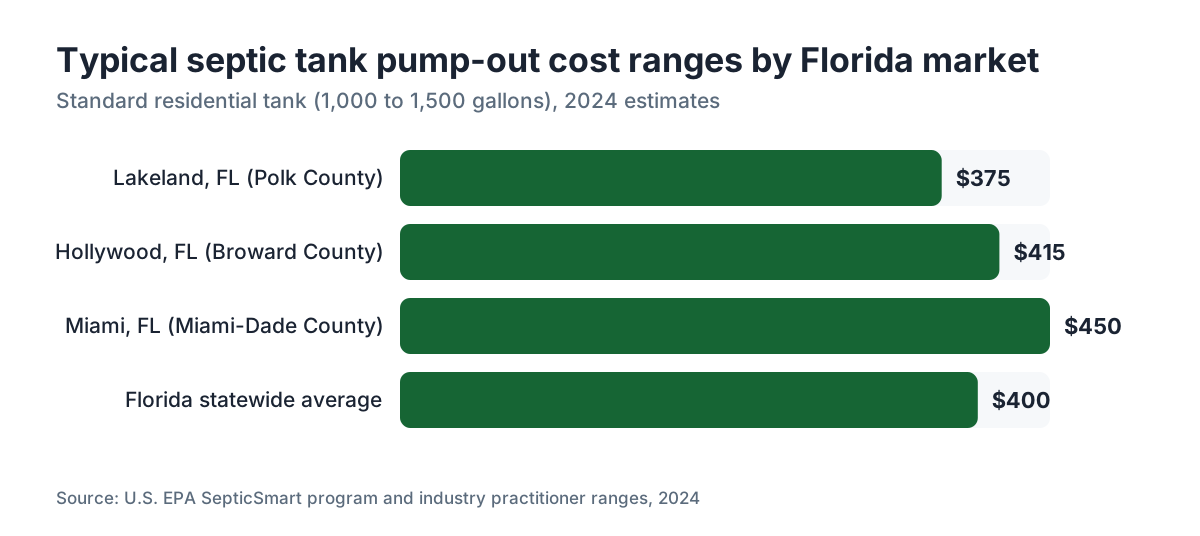
The table below shows typical cost ranges by Florida market.
| Market | Typical Pump-Out Range | Notes |
|---|---|---|
| Lakeland (Polk County) | $250 to $500 | Mostly conventional gravity tanks |
| Hollywood, FL (Broward) | $280 to $550 | High water table, more aerobic systems |
| Miami (Miami-Dade) | $300 to $600 | Urban cost premium, older stock |
| Statewide average | $250 to $550 | EPA/industry estimate baseline |
Frequently asked questions
How much does septic tank pumping cost in Lakeland, FL?
Most Lakeland homeowners pay $250 to $500 for a standard residential pump-out on a 1,000- to 1,500-gallon tank. Larger tanks, deep lids, or emergency weekend calls push prices higher. Get two written quotes and confirm the contractor holds a current Florida septage disposal license before booking.
How often do I need to pump my septic tank in Polk County?
The EPA recommends every 3 to 5 years as a baseline. A family of four with a 1,000-gallon tank typically lands at 3 to 4 years. Heavy garbage disposal use shortens that to 2 to 3 years. A sludge-and-scum check during any service call tells you the exact condition and when the next pump-out is warranted.
Do I need a permit to pump my septic tank in Lakeland?
No permit is required for routine pump-outs. The pumping contractor must hold a valid Florida septage disposal service license under Chapter 381. Any repair, modification, or new installation on the system does require a permit from the Polk County Health Department before work begins.
What licensed septic pumping companies serve Lakeland, FL?
Use the Florida Department of Health's online license lookup to verify any contractor you're considering. Search by county or city for current, active septage disposal service licenses. Confirm the company provides a written invoice showing volume pumped and the name of the approved disposal facility they use.
What are the signs my septic tank is full and needs pumping?
Early signs include slow drains, gurgling pipes, and a sulfur smell around outdoor cleanout access points. More urgent signs are sewage backing up into low fixtures or wet, foul-smelling ground over the drain field. Catch it at the early signs. Waiting for a backup means solids may already be pushing into the drain field.
What should I do to prepare for a septic pump-out?
Locate your tank access lid and clear any landscaping or obstacles above it. If the lid is buried, note where it is on a simple yard sketch so the pumper doesn't have to probe the whole yard. Have your last pump-out record available if you have one. Nothing else is required from you; the pumper handles the rest.
Can I add bacteria additives to my tank after pumping?
No. Bacterial starter products aren't necessary and have no documented benefit. The EPA's SepticSmart program notes that additives do not eliminate the need for regular pumping. The bacterial colony in your tank re-establishes naturally within days of a pump-out, straight from the waste itself.
How deep are septic tanks typically buried in Lakeland?
Most residential tanks in Polk County sit 12 to 24 inches below the surface, though depth varies by lot grading and installation era. Tanks deeper than 24 inches benefit from a riser, a plastic extension that brings the access lid to grade. Risers cost $150 to $300 installed and pay for themselves in excavation fees within two pump-outs.
What is the difference between a septic pump-out and a septic system inspection?
A pump-out removes the waste from the tank. An inspection assesses structural condition, baffle integrity, and drain field performance. They're separate services with different licensing requirements. For a real estate transaction in Polk County, you need a licensed inspection, not a pump-out. Many inspectors want the tank pumped first so they can see inside clearly.
How much does it cost to replace a septic system in Lakeland if the tank or drain field fails?
A full replacement of a conventional gravity system in Polk County runs roughly $5,000 to $15,000. Poor soils or a high water table site requiring a mound system can reach $20,000 to $30,000. Partial repairs like a new tank or baffle replacement cost far less and are worth pricing before you commit to full replacement.
Does Florida require septic systems to be inspected on a set schedule?
Florida does not mandate a universal periodic inspection cycle for existing systems outside of a real estate transaction. Some sensitive watershed areas carry additional requirements. The Polk County Health Department can confirm whether your address falls in a priority area with enhanced maintenance or inspection obligations.
What happens to the waste after a septic tank is pumped in Lakeland?
Licensed pumpers haul waste to an approved septage receiving facility, usually a municipal wastewater treatment plant that accepts septage. Polk County has several approved facilities. Ask your pumper which one they use. Disposal at an unapproved location is illegal, and the homeowner can share liability if the waste gets traced back to the property.
Is septic tank pumping in Lakeland more or less expensive than in Miami or Hollywood, FL?
Lakeland tends to run slightly less than South Florida markets. Typical Lakeland pump-outs are $250 to $500. Septic tank pumping Miami runs $300 to $600 and septic tank pumping Hollywood FL runs $280 to $550, reflecting higher urban operating costs, fuel, and disposal fees in Miami-Dade and Broward counties.
What can damage a septic system in Lakeland's climate?
Florida's wet season (June through September) raises the water table and can temporarily saturate drain fields. Warm year-round temperatures speed up bacterial activity, which helps digestion but also ages systems faster under hydraulic stress. Avoid flushing non-biodegradable items, use water efficiently during wet season, and don't park vehicles or plant deep-rooted trees over the drain field.
Sources
- U.S. EPA SepticSmart program: Households should pump septic tanks every 3 to 5 years; additives do not eliminate the need for regular pumping
- Florida Department of Health, Florida Administrative Code Chapter 64E-6, Onsite Sewage Treatment and Disposal Systems: Florida's onsite sewage code requires permits for installation, modification, or repair, and mandates minimum 24 inches of unsaturated soil below drain fields
- Florida Department of Health, Environmental Health licensing and regulation: Septage disposal service contractors must hold a current license under Florida Statute Chapter 381
- Florida Department of Environmental Protection, Onsite Sewage Treatment and Disposal System Improvement Grant: FDEP administers grants for septic system improvements in priority water quality basins including portions of the Upper Peace River watershed
- University of Florida IFAS Extension, EDIS onsite sewage and septic system publications: New conventional septic system installation in Florida typically costs $5,000 to $15,000 depending on site conditions and system type
- Florida Department of Health in Polk County, Environmental Health Services: Polk County Environmental Health administers septic system permits and inspections under Chapter 64E-6 for the Lakeland area
- U.S. EPA, How Your Septic System Works: Regular pumping prevents solids from pushing into the drain field and causing premature field failure
- Florida Statute Chapter 381, Public Health: General Provisions, Onsite Sewage Programs: Licensing and regulation of septage disposal services in Florida is governed by Chapter 381
- University of Florida IFAS Extension, Septic System Maintenance for Homeowners (EDIS): Florida's warm climate and variable soils affect septic system performance; regular pumping every 3 to 5 years is recommended for residential systems
Last updated 2026-07-09