Septic system inspection in Upton MA: what to expect and what it costs
By the SepticMind Editorial Team
TL;DR
- A full Title 5 septic inspection in Upton, MA costs $400 to $700, takes two to four hours, and is required within two years before most home sales.
- The inspector pumps the tank, checks every component, and files a report with the Upton Board of Health.
- Systems that fail must be repaired or replaced, usually within two years of the inspection date.
What is a Title 5 septic inspection and does it apply in Upton?
Yes, it applies. Every private septic system in Massachusetts falls under 310 CMR 15.000, the State Environmental Code that everyone calls Title 5 [1]. Upton is no exception. The local authority is the Upton Board of Health, which enforces Title 5 and can add stricter local rules, though Upton's local regulations mostly track the state code.
A Title 5 inspection is not a tune-up. It's a formal evaluation of your whole onsite wastewater system, from the outlet pipe leaving the house through the septic tank, distribution box, and leach field. The inspector checks each component against defined pass/fail criteria, documents what they see, and files a written report with the Board of Health.
The law exists because septic failures spent decades contaminating Massachusetts groundwater. Failing systems were a leading source of nitrogen pollution in the state's coastal and inland waters [1]. Title 5 gave regulators a systematic way to catch bad systems before the damage spreads.
Here's the practical version for an Upton homeowner. If you're selling your home, refinancing with certain lenders, or answering a Board of Health complaint, you almost certainly need a Title 5 inspection. You also need one if you expand the house in a way that increases the sewage design flow.
When is a septic inspection required in Upton, MA?
The main trigger is a real estate sale. Title 5 requires an inspection within two years before the closing date [1]. If the tank was pumped in the previous 12 months and the inspector thinks the results still hold, the window can stretch to three years, but that's the inspector's judgment, not the seller's wish.
Other triggers under state law:
- A change in use that raises design flow (adding bedrooms, converting single-family to two-family, adding a commercial kitchen).
- A facility change order from a state agency.
- A direct order from the Upton Board of Health after a complaint or a visible failure sign.
Here's what does NOT trigger a fresh inspection: routine maintenance, septic tank pumping on schedule, or cosmetic renovations that never touch plumbing. Plenty of homeowners assume any building permit forces a Title 5. It doesn't, unless the project increases flow or the Board flags it specifically.
One nuance saves people money. If your property passed a Title 5 within the last two years and the sale falls through, that same report usually works for a new buyer inside the original two-year window, as long as nothing changed. Keep the paperwork.
What does a Title 5 inspector actually check in Upton?
A real Title 5 inspection goes well past a walk around the yard. Here is the sequence a licensed inspector follows:
- Reviews the records. The inspector should pull the original system design and any prior Title 5 reports from the Upton Board of Health files before showing up.
- Pumps the septic tank. The tank gets pumped during the inspection so the inspector can look inside, check the baffles, measure the scum and sludge layers, and confirm the tank holds together [1]. This is why the inspection price always includes or assumes a septic tank pump out.
- Checks the distribution box. The D-box splits effluent among the leach field trenches. A cracked, flooded, or tilted D-box is an automatic failure signal.
- Evaluates the leach field. The inspector looks for sewage breaking out at the surface, saturated soil, and backup into the D-box. They may run a hydraulic loading test.
- Inspects the inlet and outlet pipes, baffles (tees), risers, and covers. A missing or rotted outlet baffle is one of the most common findings in older Upton systems.
- Checks setbacks where possible. Title 5 sets minimum horizontal distances from wells, property lines, and water bodies. The inspector notes any as-built system that violates current setbacks, even one that was legal on install day.
The on-site work runs two to four hours. It goes longer when the tank location is a mystery and needs probing, or when landscaping and additions block access to the components.
How much does a septic inspection cost in Upton, MA?
Expect $400 to $700 for a standard Title 5 inspection around Upton, based on central Massachusetts market rates. That range already includes the pump-out, which is required. If a company quotes an inspection fee with no pump-out, add $150 to $300 for the pump truck.
A few things push you toward the top of that range:
- The tank isn't marked and has to be located and dug up.
- The property has multiple structures or a large tank (over 1,500 gallons).
- Access for the pump truck is tight.
- The system is complex (pump chamber, pressure-dosed leach field, tight tank).
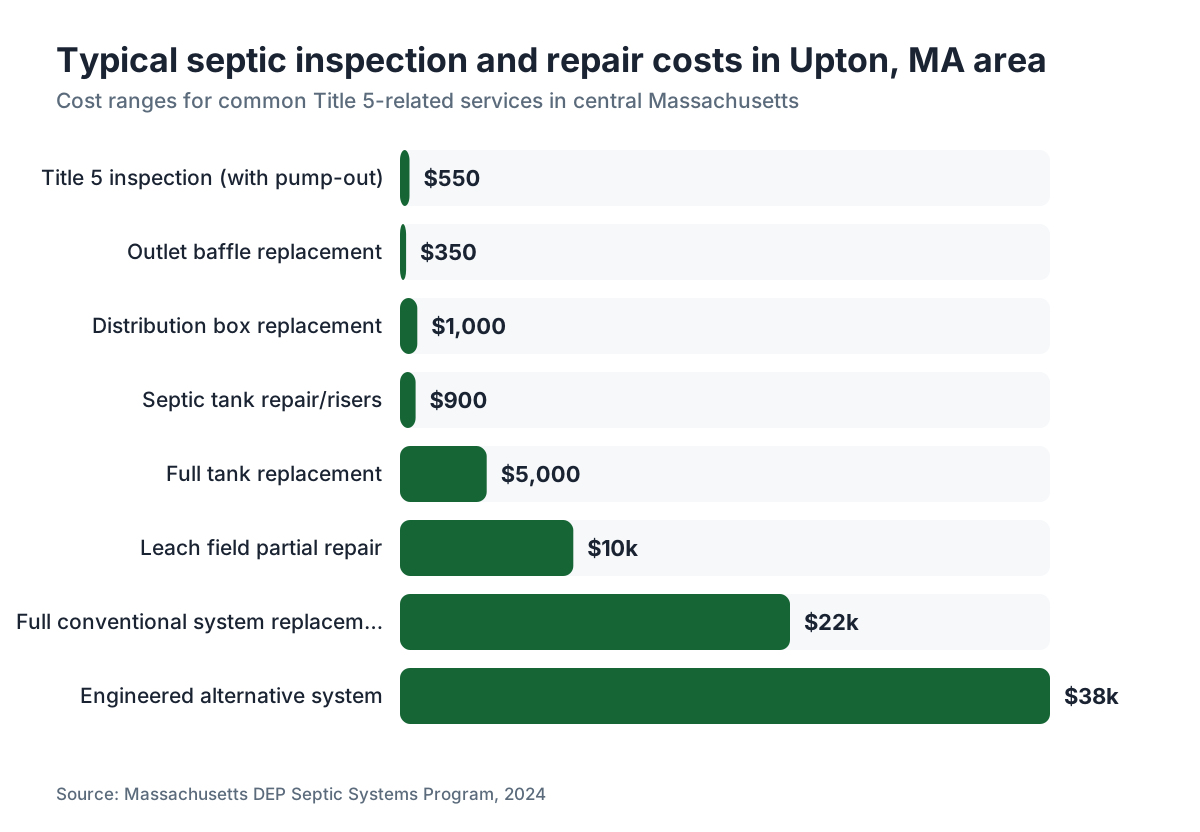
If the system fails or gets a conditional pass, more work follows. A D-box repair runs $500 to $1,500. A full replacement in central Massachusetts runs $20,000 to $40,000 or more, depending on soil, lot constraints, and whether the leach field needs an engineered alternative system [2]. The cost table below breaks it all down.
The Board of Health filing fee is separate from the inspector's fee. Upton charges to review and record the Title 5 report. Check with the Upton Board of Health for the current amount, because it changes.
Before you talk to any contractor about replacement versus repair, read the cost to install a septic system and cost to put in a septic tank guides. They'll keep you from getting talked into the wrong scope.
What does pass, fail, or conditional pass mean on a Title 5 report?
Title 5 gives three outcomes: pass, conditional pass, and fail. A pass is valid for two years, a conditional pass means you fix a specific defect on a deadline, and a fail means the system gets repaired or replaced, usually within two years of the inspection date [1].
Pass. The system meets current standards or qualifies for an exemption. The report gets filed and nothing stops the sale. The pass holds for two years from the inspection date, or three years if the tank was pumped within 12 months before the inspection.
Conditional pass. The system has a specific problem you can repair instead of replace. Common ones: a dead pump in a pump chamber, a cracked distribution box, a missing outlet baffle. You have to finish the repair inside a stated timeframe. The property can still transfer before the repair is done if buyer and seller agree and funds are held in escrow [1].
Fail. The system no longer protects public health or the environment. Sewage breaking out at the surface, direct discharge to groundwater, confirmed hydraulic failure of the leach field, or a watertight tank that's overflowing all mean a fail. You repair or replace within two years of the inspection date [1]. If the failure is an immediate health threat, the Board of Health can shorten that to months or weeks.
Inspectors sometimes mark a component "not evaluated" when it's inaccessible. That's not an automatic fail, but it's a warning sign that deserves a closer look before you buy a property.
One honest note. Inspectors read borderline cases differently, especially leach field saturation in a wet spring. If a conditional pass or fail catches you off guard, a second opinion from another licensed inspector is fair game and fully allowed.
Who can perform a Title 5 inspection in Upton, and how do you find one?
Only a Massachusetts-certified Title 5 inspector can do this job. The state issues the license through the Massachusetts Department of Environmental Protection (MassDEP) [3]. Plumbers, home inspectors, and real estate agents can't perform a Title 5 unless they hold that specific certification.
To find one near Upton:
- Ask the Upton Board of Health for a referral list. Many boards keep one, though they won't endorse a specific company.
- Use MassDEP's searchable database of licensed inspectors [3]. Filter by county (Worcester) or by zip code.
- Ask a real estate attorney or your listing agent. They know who files clean reports and who the Board staff have had headaches with.
Get at least two quotes. The same service in the same town can vary by $100 to $200. Past price, ask how long the inspector has done Title 5 work, whether they've handled older systems (Upton has a lot of pre-1995 systems that predate Title 5), and how fast they file the report. In a home sale, filing speed matters.
Walk away from anyone who offers to inspect without pumping the tank. Title 5 requires the pump-out. An inspector who skips it is either not doing a real Title 5 or cutting a corner that surfaces at closing.
What happens after the inspection report is filed with Upton's Board of Health?
The inspector files the completed Title 5 form with MassDEP's online system (eDEP) and with the Upton Board of Health within 30 days of the inspection [10]. You get a copy. The report is now public record.
If the system passed, you're done. Keep the report. You need it for the sale and for your own files, and it's a handy baseline if you ever have to prove the system worked on a specific date.
If you got a conditional pass, your repair contractor and the Board of Health need to talk. The repair needs a permit from the Board before anyone starts digging. When the work is done, the Board inspects it, then the report gets updated.
If the system failed, the Board of Health sends a formal notice with action timelines. You'll need a licensed site evaluator or engineer to design the fix, pull a permit, do the work under inspection, and get a final sign-off. The engineering design alone can eat several weeks, so build that into any closing schedule [2].
Operators running inspections and repair jobs across towns like Upton can use software like SepticMind to track permit status, filing deadlines, and customer messages in one place instead of chasing spreadsheets and email threads across every jurisdiction.
How often should you get a septic inspection in Upton if you're not selling?
Title 5 only requires inspections at the transfer triggers. That doesn't mean skipping them the rest of the time is smart. The EPA's SepticSmart program recommends an inspection every three years as part of normal maintenance [4].
Systems with mechanical parts (pumps, floats, alarms) earn an annual check. The EPA is blunt about the baseline: "Have your system inspected (pumped out if necessary) every 3 to 5 years by a licensed contractor" [4].
A workable schedule for an Upton home:
- Pump the tank every three to five years. How often you pump depends more on household size and tank volume than on the calendar.
- Walk the leach field after heavy rain each year. Wet spots, a strip of extra-green grass over the field, or odors are early warnings.
- Get a full inspection every five to seven years even without a trigger, especially on older systems.
Catch a failing outlet baffle, a $200 to $400 fix, before it wrecks the leach field, a $15,000 to $40,000 replacement, and you've made the whole argument for proactive maintenance. The math isn't close.
What are the most common septic problems found during inspections in Upton, MA?
Upton sits on a mix of glacial till and sandy soils typical of central Worcester County. Many properties went in during the 1970s and 1980s with concrete tanks and conventional gravity leach fields. That history shapes what inspectors keep finding.
The five most common findings around here:
- Failed or missing outlet baffle. Concrete baffles in older tanks break down over time. Lose the outlet baffle and solids run straight into the leach field. This is the single most common preventable field killer.
- Leach field saturation. High groundwater in spring or after heavy rain can flood a field temporarily. Saturation that never recovers is a fail. Saturation that's clearly seasonal and drains out may earn a conditional pass with monitoring.
- Distribution box problems. A cracked or settled D-box sends flow unevenly, drowning some trenches while others never get loaded. Uneven distribution is a slow, reliable road to field failure.
- Tank structural issues. Old concrete tanks crack, often at the seam between top and bottom. A cracked tank leaks untreated sewage into the soil before it reaches the field, and it lets groundwater in, which hydraulically overloads the field.
- Setback violations from wells. Upton has a lot of private wells. A system installed before current setback rules gets noted by the inspector. That doesn't automatically fail the system, but it goes on the record and can complicate future permits.
For systems that need septic tank repair or broader septic system repair, the scope depends entirely on what the inspection finds and how long the problem has been building.
What should Upton homeowners do to prepare for a Title 5 inspection?
A little prep saves time and money. Start with the records, uncover your access points, and don't pump the tank the week before.
Find your system records. Ask the Upton Board of Health for the original design plan and any prior Title 5 reports. Hand the inspector an as-built showing tank and D-box locations and you cut out the yard probing, which can cost extra.
Uncover or mark access points. If your tank has risers or lids at grade, make sure they're reachable. If they're buried, the crew has to dig, which adds cost and time. Installing risers after this inspection is a cheap upgrade that pays off at the next one.
Don't pump the tank right before the inspection. Some homeowners think pumping ahead of the inspector helps. It hurts. The inspector needs to see the normal scum and sludge layers to judge how the system performs. Pumping that same day during the inspection is fine. Pumping the week before is not.
Use water normally in the days before. The inspector wants realistic conditions. Don't run ten loads of laundry the day before, but don't starve the system either.
Be there if you can. The inspector can show you what they're seeing in real time. Watching them find a cracked baffle or a questionable D-box beats reading about it in a report three days later.
After the inspection, pass or not, regular septic tank cleaning and septic tank emptying on a steady schedule is the single simplest thing you can do to stretch the system's life.
How does Upton's Board of Health handle Title 5 enforcement and variances?
The Upton Board of Health receives Title 5 reports, issues permits for septic repair and installation, and responds to complaints about failing systems. It works under MassDEP oversight but keeps real discretion over how it enforces the code and how fast it acts [2].
Variances are worth understanding. Title 5 lets owners apply for local upgrade approvals when a system can't hit every current standard because of lot size, setback conflicts, or soil limits. Under 310 CMR 15.401 through 15.405, the Board of Health can approve a system that doesn't fully comply as long as it still protects public health [8]. That matters in Upton, where older lots may have tight setbacks or shallow groundwater that make a fully code-compliant replacement geometrically impossible.
Engineered alternative systems are the other tool when a conventional system won't fit. Chamber systems, drip irrigation, and advanced treatment units all cost more to design and install, but they can save a lot from being written off as unbuildable or unrestorable.
If your situation is complicated, a licensed site evaluator (LSE) does the soil testing and site work that any new design rests on. LSEs are licensed separately from inspectors in Massachusetts [3]. At a larger firm your inspector and your LSE might be the same person, or they might not.
To keep permit applications, Board approvals, inspection scheduling, and follow-up filings straight across several jobs, septic operators in towns like Upton increasingly run SepticMind so the paperwork stops slipping through the cracks.
What do Upton-area septic inspections cost compared to system repair or replacement?
The inspection is almost never the expensive part. Here's how the numbers stack up, using central Massachusetts market ranges and state cost guidance [2]:
| Item | Typical Cost Range |
|---|---|
| Title 5 inspection (including pump-out) | $400 to $700 |
| D-box replacement | $500 to $1,500 |
| Outlet baffle replacement | $200 to $500 |
| Tank repair (crack sealing, riser install) | $300 to $1,500 |
| Full septic tank replacement | $3,000 to $7,000 |
| Leach field repair (partial) | $5,000 to $15,000 |
| Full conventional system replacement | $15,000 to $30,000 |
| Alternative/engineered system replacement | $25,000 to $50,000+ |
The spread on replacement is real, and it comes from lot size, depth to groundwater, distance from wells, whether ledge or hardpan blocks the field, and regional contractor pricing.
Massachusetts runs a septic loan program through its State Revolving Fund, managed by the Massachusetts Clean Water Trust, that lets homeowners finance repairs and replacements at below-market rates [5]. Funding is allocated to towns and not every town joins every cycle, so Upton homeowners should check with the town or MassDEP for current availability before counting on it.
Frequently asked questions
How long does a Title 5 inspection take in Upton, MA?
Plan for two to four hours on site. That covers pumping the tank, inspecting all components, testing the distribution box, and evaluating the leach field. Older properties where the tank location is unknown run longer, because the inspector has to probe and sometimes dig to find access points. The written report usually follows within a few days to two weeks.
Can a home inspector do a septic inspection in Upton?
No. A standard home inspector isn't licensed to perform a Title 5 inspection in Massachusetts. Only a Massachusetts-certified Title 5 inspector can legally do the evaluation and file the report with the Board of Health and MassDEP. Some inspectors hold both home inspection and Title 5 certification, but they must use the Title 5 license for the septic portion. Always confirm the license before hiring.
What happens if my septic system fails a Title 5 inspection in Upton?
The inspector files the failed report with the Upton Board of Health and MassDEP. You get a formal notice with required timelines, usually two years to complete repair or replacement, though immediate threats shorten that. You need a licensed engineer or site evaluator to design the fix, then a permit from the Board before work starts. The property can still sell with a failed system if the buyer agrees and money is escrowed for the repair.
Does Upton, MA require a septic inspection for refinancing?
Title 5 doesn't automatically require an inspection for refinancing, but some lenders, especially FHA and VA lenders, require a passing inspection as a loan condition. Conventional lenders vary. Check with your specific lender early. If your existing Title 5 report is less than two years old and the system passed, most lenders accept it without ordering a new one.
How do I find my septic system records in Upton?
Contact the Upton Board of Health directly. They keep records of permitted systems, original design plans, and prior Title 5 reports. Many towns have digitized older records. If your system went in before the town's record-keeping got systematic, a licensed inspector or site evaluator can often reconstruct the as-built layout through probing and observation during the inspection.
What is the difference between a Title 5 inspection and a home inspection for septic?
A home inspection gives a general overview: the inspector notes whether the system looks functional but rarely pumps the tank or tests components. A Title 5 inspection is a formal evaluation required by state law, includes pumping, uses defined pass/fail criteria, and produces a report filed with the government. For a property transfer in Massachusetts, a home inspection's septic notes carry no legal weight. Only the Title 5 report does.
How far in advance should I schedule a septic inspection before closing in Upton?
Schedule at least three to four weeks before your target closing date. That gives the inspector time to file the report, gives you time to handle any conditional items, and leaves buffer if the first inspection surfaces something that needs further evaluation. In busy spring and summer real estate markets in central Massachusetts, inspectors book up fast, so six weeks of lead time is safer.
Does Upton have any local septic rules beyond state Title 5?
Upton's Board of Health can and does adopt local regulations at least as strict as Title 5. These can include extra setback requirements, specific rules for systems near wetlands or water supply protection areas, and local fees. Before any system work, confirm current local rules directly with the Upton Board of Health, because local amendments don't always show up in the state code documents you find online.
How long is a Title 5 inspection report valid in Upton, MA?
A passing Title 5 report is valid for two years from the inspection date. If the system was pumped within 12 months before the inspection, the validity extends to three years. Once the report expires, a new inspection is required for a property transfer. There's no way to extend or renew the report. A new inspection has to be performed.
What is the Massachusetts septic loan program and can Upton homeowners use it?
The Massachusetts Title 5 septic repair loan program, run through the Massachusetts Clean Water Trust and the state Revolving Loan Fund, offers below-market interest loans to homeowners who need to repair or replace a failing septic system. Eligibility depends on town participation. Upton homeowners should contact the town or MassDEP to confirm whether Upton is an active participant in the current funding cycle.
Can I sell my Upton home with a failed septic system?
Yes, with conditions. Massachusetts allows a property to transfer with a failed Title 5 report if buyer and seller sign an agreement and funds enough to cover the repair or replacement are held in escrow. The repair has to finish within a defined period after closing, usually spelled out in the Board of Health notice. Both parties need a clear picture of scope and cost before agreeing to this.
What soil types in Upton affect septic system performance and inspection outcomes?
Upton sits on glacial till and glaciofluvial deposits common to central Worcester County. Sandy, well-drained soils support good leach field performance. Areas with clay lenses, hardpan, or shallow depth to seasonal high groundwater can restrict field placement and may force engineered alternative systems. An inspector notes conditions that affect performance, and a licensed site evaluator does formal soil testing if a new system is needed.
Sources
- Massachusetts DEP, Title 5 of the State Environmental Code (310 CMR 15.000): Title 5 requires inspection at property transfer, defines pass/fail/conditional outcomes, requires tank pumping during inspection, and sets two-year validity for passing reports.
- Massachusetts DEP, Septic Systems Program Overview: MassDEP administers Title 5 and provides guidance on system replacement costs, variances, and Board of Health enforcement authority.
- Massachusetts DEP, Certified Title 5 Inspectors and Site Evaluators Licensing: Massachusetts requires Title 5 inspectors to hold state certification; MassDEP maintains a searchable database of licensed inspectors.
- U.S. EPA SepticSmart Program: EPA recommends septic system inspection every three years; direct quote: 'Have your system inspected (pumped out if necessary) every 3 to 5 years by a licensed contractor.'
- Massachusetts Clean Water Trust, Title 5 Septic Repair Loan Program: Massachusetts offers below-market-rate loans to homeowners for Title 5 septic system repair and replacement through the state Revolving Loan Fund.
- U.S. EPA, How Your Septic System Works: EPA describes the components of a conventional septic system including tank, distribution box, and leach field, and explains how failures affect groundwater.
- Massachusetts DEP, Local Upgrade Approvals under 310 CMR 15.401-15.405: Under 310 CMR 15.401 through 15.405, local Boards of Health can approve systems that do not fully meet current standards when lot constraints make full compliance impossible.
- University of Massachusetts Extension: UMass Extension provides guidance on septic maintenance schedules, pump-out frequency, and system longevity for Massachusetts homeowners.
- Massachusetts DEP, eDEP Online Reporting System: Title 5 inspectors are required to submit inspection reports to MassDEP through the eDEP online system within 30 days of the inspection.
Last updated 2026-07-09