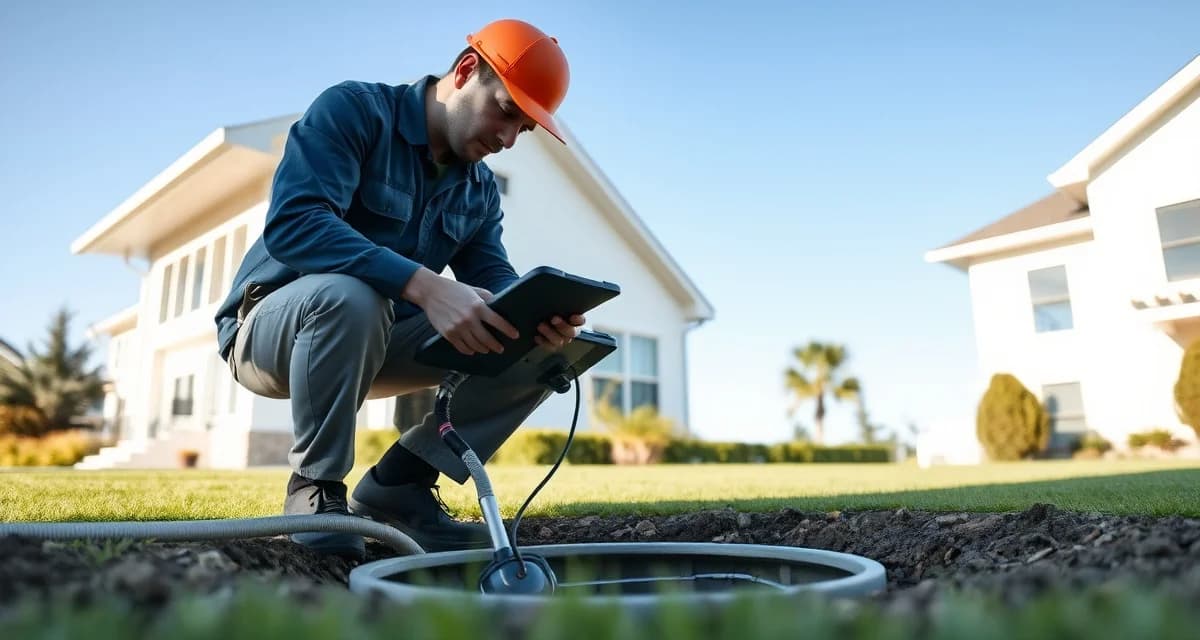
Septic Service Software for Vacation Rental Properties
By the SepticMind Editorial Team
Vacation rental septic systems fail at three times the rate of primary residences due to variable high-occupancy use. A system designed for a two-person household that spends eight weeks as a 10-person vacation rental is operating well outside its design parameters for a notable portion of the year. A septic failure at a vacation rental property results in an average $4,200 loss in rental income from cancellations and emergency remediation, not including the cost of repair.
TL;DR
- Vacation Rentals facilities have distinct wastewater loading patterns that affect septic system sizing, service frequency, and permit requirements.
- Commercial and institutional properties like vacation rentals typically require more frequent pumping than residential systems due to higher daily usage.
- Some vacation rentals operations generate waste streams (grease, chemicals, or high-volume flow) that require pre-treatment before reaching the septic system.
- Service contracts for vacation rentals provide predictable recurring revenue and are easier to manage with a platform that tracks commercial account schedules.
- Health department inspections for vacation rentals properties may require septic system condition documentation as part of facility licensing.
- Septic companies specializing in vacation rentals service build referral networks with property managers, architects, and health inspectors in that niche.
Vacation rental properties are a growing and high-value service category for septic companies. The owners are often remote, the properties are frequently short-staffed during turnover, and the financial stakes of a system failure are high enough that well-prepared owners are willing to pay for professional service agreements.
Why Vacation Rental Septic Fails More Often
The failure mechanics are straightforward: septic systems are sized based on bedroom count and estimated daily water use. The estimate assumes a household use pattern, moderate use, overnight rest periods, predictable water use windows.
Vacation rentals break this model:
Variable high occupancy. A 3-bedroom house might have 2 residents year-round, then host parties of 8-10 people for consecutive weeks during peak rental season. The system was designed for the 2-person baseline, not the 8-person peak.
Guest behavior. Vacationers use more water than residents (more showers, larger laundry loads, more dishwasher cycles, longer stays in hot tubs if present. Guests also flush things that residents know not to) wipes, paper towels, cotton swabs.
No maintenance culture. A primary resident knows their system. They've heard the conversations about what not to flush, they call when they notice something, they follow up when service is due. Guests don't have any of that context. Renters aren't going to notice the slow drain that signals a drainfield problem.
Inconsistent service intervals. Many vacation property owners service their system on a fixed calendar interval (every three years) without adjusting for the actual use their property sees. A property with 40 weeks of rental occupancy per year needs service more frequently than a property that sits empty most of the year.
Adjusting Service Intervals for Rental Occupancy
SepticMind adjusts service intervals for vacation properties based on estimated weekly occupancy. This is the core operational difference between managing a vacation rental account and a standard residential account.
The practical calculation involves converting rental occupancy into an equivalent household size for service interval purposes:
- A 3-bedroom property designed for 6 occupants
- Rented for 30 weeks per year at average 6 guests, plus owner use of 8 weeks at 2 people
- Annual equivalent: (30 × 6) + (8 × 2) = 196 person-weeks vs. a primary residence of (52 × 2) = 104 person-weeks
- This property generates roughly twice the wastewater of a standard 2-person household
A system that would normally be serviced every three years under standard residential use should probably be serviced every 12-18 months for this occupancy profile.
When SepticMind holds the occupancy data for a property, it can adjust the service interval recommendation accordingly and flag accounts that are due for service earlier than a standard interval would suggest.
What Vacation Rental Owners Need From a Service Company
Remote ownership of vacation rental properties creates a specific set of needs that differ from local primary residence owners:
Proactive scheduling. The owner isn't going to remember to call you every 18 months. They need you to track the interval and reach out when service is due, ideally with enough advance notice to schedule around their peak rental calendar.
Pre-season service. A pump-out and brief inspection before peak rental season (typically April for summer rentals or September for ski properties) gives the system the best chance of handling the season without problems.
Remote-accessible documentation. When something goes wrong, the owner needs to be able to check on service history from their phone. A customer portal that shows recent service dates, system condition notes, and upcoming service schedule gives remote owners the visibility they need without having to call your office.
Emergency response. When a system fails during a rental, the owner needs to know you can respond quickly. A service agreement with an emergency response commitment is worth the premium to an owner who's managing rental income from a distance.
Clear communication about property access. Vacation rental properties may have property management companies, rental agencies, lockbox access codes, or guest contacts who need to be coordinated for tank access. Document the access protocol for every vacation rental account clearly.
Setting Up Vacation Rental Accounts
When you create a vacation rental account in SepticMind, the information you collect upfront drives the quality of service over time:
Property information:
- Property address and GPS coordinates for tank access
- Tank location notes with diagram or coordinates
- System type and tank size
- Last service date and condition observed
- Access method (lockbox code, key holder, property manager contact)
Occupancy information:
- Estimated annual rental weeks
- Average occupancy per rental
- Peak season timing
- Owner use periods
Owner information:
- Primary owner contact (often remote, good cell phone contact is critical)
- Property management company if applicable
- Emergency contact for access and decision-making when owner is unreachable
Service preferences:
- Pre-season service preference
- Preferred scheduling windows (around turnover gaps)
- Emergency response priority level
This information allows septic customer management software to serve these accounts proactively rather than reactively, the difference between a customer who appreciates you and a customer who calls you only when there's a crisis.
Get Started with SepticMind
Vacation Rentals facilities need a service provider who understands the specific wastewater challenges of their operations. SepticMind makes it easy to manage commercial service contracts, track inspection schedules, and document service visits for every account in your portfolio. See how it supports commercial account management.
Frequently Asked Questions
How often should a vacation rental property septic tank be pumped?
More often than a comparable primary residence with lower occupancy. A vacation rental property with 30+ weeks of rental occupancy per year should typically be serviced every 1-2 years rather than the standard 3-year interval for primary residences. The calculation depends on rental volume (weeks per year), average guest count, and tank size. A 1,000-gallon tank serving a property that operates effectively as a full-time high-occupancy household during peak season accumulates sludge notably faster than a tank serving a 2-person household year-round. Properties in year-round rental markets with consistent occupancy may need annual service. Properties with short seasonal rental periods may be fine on standard intervals. Service companies should adjust the interval recommendation based on actual occupancy data for each property.
What documentation should vacation rental property owners have for their septic system?
Vacation rental owners should maintain: a complete service history showing all pump-outs with dates and volumes, inspection reports from any formal condition assessments, the system's original permit documentation and tank size, and notes on tank location and access procedures. This documentation serves multiple purposes: it's the baseline record for your service company to provide appropriate care, it's needed if a renter complains about a system problem, it demonstrates to inspectors or health departments that the property is properly maintained, and it's required if the property is listed for sale or refinanced. Owners who don't have this documentation can often obtain historical records from the county health department or from the service company that has historically maintained the property.
Does SepticMind track service intervals based on rental occupancy patterns?
Yes. SepticMind allows occupancy data (estimated rental weeks per year and average guest count) to be stored in the customer property record. Using this data, the system calculates an adjusted service interval that reflects the actual wastewater generation of the property rather than applying a standard residential interval. A vacation property with high annual occupancy will trigger a service reminder notably earlier than a standard residential interval would. The service interval recalculates when occupancy data is updated, if a property transitions from occasional rental to full-time rental platform listing, the interval adjusts accordingly. Owners can be notified of upcoming service through automated reminders to their email or phone, which is particularly valuable for remote vacation property owners who aren't physically present to notice when service is due.
How often should a septic system serving a vacation rentals property be inspected?
Septic systems at vacation rentals properties should be inspected at least annually and pumped more frequently than residential systems, since commercial-scale daily water usage accelerates sludge and grease accumulation. The exact frequency depends on the specific activities at the facility, peak occupancy, any food service or chemical use on-site, and local regulatory requirements. A service provider familiar with vacation rentals operations can recommend an appropriate inspection and pumping schedule based on the system's actual usage profile.
What septic system issues are most common at vacation rentals properties?
The most common septic problems at vacation rentals properties are rapid sludge accumulation from high occupancy, grease trap failure if food service is involved, hydraulic overloading during peak-use periods, and non-biodegradable waste disposal from cleaning or maintenance activities. Regular inspection and a service contract with clear maintenance intervals are the most effective ways to catch these problems before they cause system failure or regulatory violations.
Try These Free Tools
Sources
- National Onsite Wastewater Recycling Association (NOWRA)
- US EPA Office of Wastewater Management
- NSF International
- Water Environment Federation
- National Environmental Services Center (NESC)