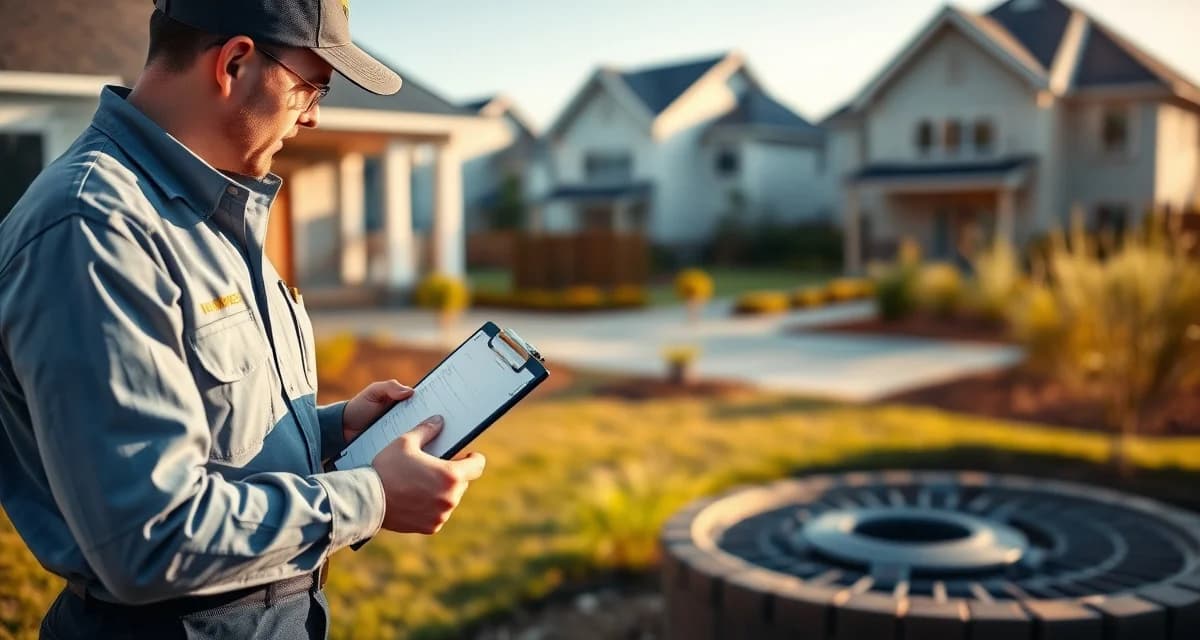
Septic Service for Vacation Ownership and Timeshare Properties
By the SepticMind Editorial Team
Timeshare and vacation ownership properties have complex shared ownership that complicates septic maintenance responsibility. Unlike a standard HOA or apartment building where one entity owns everything, vacation ownership properties have multiple owners with fractional interests in individual units, shared by a management company that may have separate contractual obligations. When a shared septic system needs service, deciding who authorizes it, who pays for it, and who's accountable for compliance is less obvious than at a conventionally owned property.
TL;DR
- Vacation Ownership facilities have distinct wastewater loading patterns that affect septic system sizing, service frequency, and permit requirements.
- Commercial and institutional properties like vacation ownership typically require more frequent pumping than residential systems due to higher daily usage.
- Some vacation ownership operations generate waste streams (grease, chemicals, or high-volume flow) that require pre-treatment before reaching the septic system.
- Service contracts for vacation ownership provide predictable recurring revenue and are easier to manage with a platform that tracks commercial account schedules.
- Health department inspections for vacation ownership properties may require septic system condition documentation as part of facility licensing.
- Septic companies specializing in vacation ownership service build referral networks with property managers, architects, and health inspectors in that niche.
Vacation ownership property septic failures create liability across all unit owners through HOA structures. Every owner has a stake in the shared infrastructure, and every owner is potentially affected by its failure.
Ownership Structure and Maintenance Responsibility
In most vacation ownership or timeshare arrangements, a management company or homeowner association manages and maintains the common areas and shared infrastructure. Individual unit owners own a fractional interest in their unit but share common systems with all other owners. The management company's responsibility for septic maintenance should be spelled out in the management agreement and the HOA governing documents.
If you're a property manager or HOA board member responsible for a vacation ownership property's shared infrastructure, your job includes ensuring septic systems serving common areas and multiple units are properly maintained and compliant. This includes:
- Central septic systems serving common pool facilities, clubhouses, and resort amenities
- Shared systems serving clusters of units
- Any central wastewater management infrastructure for the entire property
Individual unit owners who have private systems attached to their specific units may have their own maintenance obligations under the HOA documents. Clarify which systems are HOA responsibility and which are individual unit owner responsibility before assuming one or the other.
Service Intervals for Multi-Unit Properties
A 50-unit vacation ownership property has a complex occupancy profile. Unlike an apartment building where residents live year-round, timeshare occupancy is concentrated in peak vacation periods. Occupancy during summer, holidays, and peak tourism periods may reach near-100%, while off-season weeks may see much lighter use.
Service intervals for shared systems at vacation ownership properties should account for peak-season loading:
- Calculate annual total guest-nights across all units
- Divide by 365 to get average daily guest count
- Use peak-season average (which will be higher) as the baseline for system sizing and service interval
A 50-unit property averaging 70% annual occupancy with 2.5 guests per unit generates 87.5 daily guest equivalents on an average day, and significantly more during peak periods. Service intervals need to reflect that load.
SepticMind's vacation ownership account type tracks shared infrastructure with individual unit owner records. Each common system and each unit-specific system has its own record, and the management company sees compliance status across the entire property.
Compliance During Property Sales
Vacation ownership property sales, whether of individual fractional interests or of the management company itself, trigger due diligence reviews that include facility compliance. A buyer or investor conducting due diligence will want to see:
- Current permits for all septic systems on the property
- Service history showing regular maintenance
- No outstanding compliance issues with the county health department
- Current maintenance agreements with licensed service providers
Properties with complete, organized septic records move through due diligence faster and with fewer questions. Properties with gaps in documentation create concerns that slow transactions and may reduce valuations.
Commercial real estate lenders also scrutinize facility compliance for vacation properties. A refinancing request for a timeshare resort with a spotty septic maintenance record may face conditions or delays.
For property managers handling similar multi-unit residential compliance obligations, the same documentation framework applies.
For vacation rental properties that differ from timeshare ownership structure, parallel septic management considerations apply.
Get Started with SepticMind
Managing service contracts for vacation ownership properties is easier with a platform built for the septic trade. SepticMind tracks commercial service schedules, documents every inspection visit, and keeps your compliance records organized by property. See how it handles your commercial account portfolio.
Frequently Asked Questions
Who is responsible for septic compliance at a timeshare or vacation ownership property?
In most vacation ownership arrangements, the property management company or HOA is responsible for maintaining common area and shared infrastructure septic systems. This responsibility should be documented in the management agreement and the HOA governing documents. Individual unit owners may be responsible for any septic systems serving only their specific unit, as defined in the governing documents. For compliance purposes, the management company or HOA board is the accountable party for all common systems, and they need to ensure proper permits, regular service, and documentation are in place. Individual unit owners should review their governing documents to understand their specific obligations.
How do I manage septic service across a 50-unit vacation ownership property?
Start with a complete infrastructure inventory: map every septic system on the property, identify which units or facilities each serves, confirm system sizes and current permit status, and compile whatever service history exists. Set service intervals for each system based on the units or facilities it serves and the expected occupancy load. For shared systems serving common amenities, calculate peak-season load as the baseline. Establish formal service agreements with licensed providers for all systems. Use a management platform that tracks each system separately but gives you a unified compliance view, so you can confirm all systems are current at any given time.
Does SepticMind support shared ownership property account structures?
Yes. SepticMind's vacation ownership account type is designed for properties where shared infrastructure serves multiple unit owners under a management company or HOA structure. Individual systems throughout the property have their own service records, and the management account sees all of them in a unified view. Unit owner information can be associated with specific systems for documentation purposes. Service records are stored in a format suitable for HOA annual reports, due diligence packages, and county health department inspections. Automated reminders account for peak-season occupancy patterns so service is scheduled before high-demand periods rather than after the season ends.
How often should a septic system serving a vacation ownership property be inspected?
Septic systems at vacation ownership properties should be inspected at least annually and pumped more frequently than residential systems, since commercial-scale daily water usage accelerates sludge and grease accumulation. The exact frequency depends on the specific activities at the facility, peak occupancy, any food service or chemical use on-site, and local regulatory requirements. A service provider familiar with vacation ownership operations can recommend an appropriate inspection and pumping schedule based on the system's actual usage profile.
What septic system issues are most common at vacation ownership properties?
The most common septic problems at vacation ownership properties are rapid sludge accumulation from high occupancy, grease trap failure if food service is involved, hydraulic overloading during peak-use periods, and non-biodegradable waste disposal from cleaning or maintenance activities. Regular inspection and a service contract with clear maintenance intervals are the most effective ways to catch these problems before they cause system failure or regulatory violations.
Try These Free Tools
Sources
- National Onsite Wastewater Recycling Association (NOWRA)
- US EPA Office of Wastewater Management
- NSF International
- Water Environment Federation
- National Environmental Services Center (NESC)