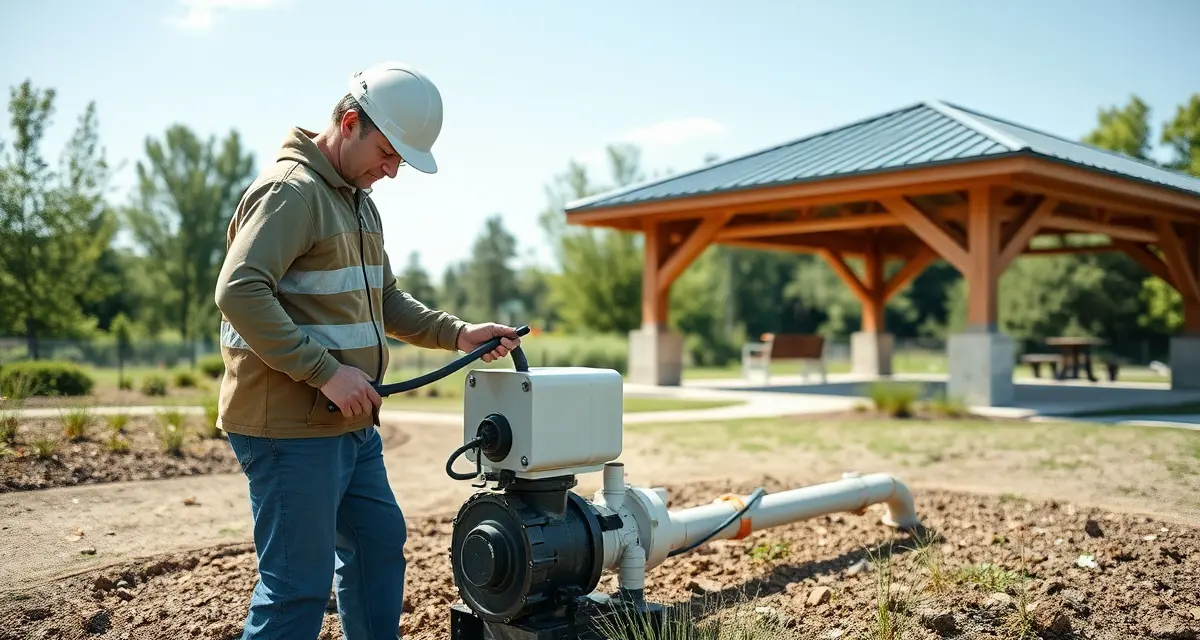
Septic Service for Parks and Recreation Departments
By the SepticMind Editorial Team
Parks department septic failures during peak season affect hundreds of constituents and create political liability that elected officials and department directors work hard to avoid. Parks and recreation departments managing facilities with onsite septic face government compliance requirements, seasonal demand variation, and the logistical challenge of maintaining multiple facilities across a geographic service area with a single departmental budget.
TL;DR
- Parks And Recreation facilities have distinct wastewater loading patterns that affect septic system sizing, service frequency, and permit requirements.
- Commercial and institutional properties like parks and recreation typically require more frequent pumping than residential systems due to higher daily usage.
- Some parks and recreation operations generate waste streams (grease, chemicals, or high-volume flow) that require pre-treatment before reaching the septic system.
- Service contracts for parks and recreation provide predictable recurring revenue and are easier to manage with a platform that tracks commercial account schedules.
- Health department inspections for parks and recreation properties may require septic system condition documentation as part of facility licensing.
- Septic companies specializing in parks and recreation service build referral networks with property managers, architects, and health inspectors in that niche.
SepticMind's parks department account type manages multiple facility systems under one government account, giving facilities managers organized records and service schedules for every park facility without the administrative complexity of managing each as a separate account.
The Parks and Recreation Septic Challenge
Parks departments face a set of management challenges that most commercial accounts don't share:
Portfolio of diverse facilities: A parks department may manage restroom buildings at 10 different parks, a recreation center, athletic fields, a community pool, and a senior center -- each with different use patterns, different system ages, and different service requirements. Managing all of these under one budget requires organized account management.
Seasonal demand concentration: Most parks facilities see their highest use in summer and during specific events. The septic systems need to be fully ready before the summer season opens, regardless of when funding for service was approved.
Public accountability: Parks facilities serve the entire community. A restroom closure at a popular park during summer creates constituent complaints, social media attention, and pressure on the parks director that a private facility failure doesn't generate.
Government budget cycles: Service spending for parks department accounts is subject to municipal budget processes. Service reminders that arrive in September may not result in approved spending until January, which can create a gap between when service is needed and when it's authorized.
Aging infrastructure: Many parks departments manage facilities with septic systems installed in the 1970s-1990s that are approaching or past service life. Budget pressures mean replacements are deferred longer than they should be.
Types of Parks Facilities and Their Service Profiles
A parks department portfolio typically includes several distinct facility types:
Park restroom buildings: The most common parks department septic account. Seasonal use concentrated in the summer, with peak use on summer weekends and holidays. Restroom buildings at popular parks may see hundreds of users per day during peak summer. Pre-season service before Memorial Day weekend and post-season service after Labor Day are the anchor events in the service calendar.
Athletic field restrooms and concession buildings: High-event-load pattern similar to sports complexes. Service before league opening day and before major tournament weekends is more important than fixed calendar intervals.
Recreation centers: Year-round facilities with fairly consistent weekday use and higher weekend use. Standard commercial service intervals apply, adjusted for any special event programming.
Community pools: Pool facilities with public restrooms and shower areas have concentrated summer use. Pre-season pump-out before the pool opens and post-season service after closing are the critical events.
Pavilions and picnic shelters: Seasonal facilities used for picnics, family reunions, and community events. Service frequency depends on reservation activity -- a heavily-booked pavilion shelter may need mid-season service; a lightly-used remote picnic area may need only pre- and post-season service.
Boat launches and waterfront facilities: Facilities near water bodies face both high seasonal use and stricter environmental requirements for any septic discharge near water.
Managing a Multi-Facility Parks Account
The organizational challenge for parks department accounts is tracking multiple facilities, each with its own service schedule, age, and condition history, without losing track of any of them.
SepticMind's parks department account type handles this by:
- Maintaining a separate facility record for each park location within the departmental account
- Tracking service schedules, last service date, and system condition for each facility independently
- Generating a consolidated service status view across all facilities for the facilities manager's planning
- Producing a portfolio service history report when the department needs documentation for budget justification or regulatory inspection
This structure means the facilities director sees one account with 15 facilities, not 15 separate accounts -- but each facility still has its own complete history.
Pre-Season Service Planning for Parks Departments
Parks departments need their pre-season service completed before public use begins in earnest. For summer-dominant parks facilities, the window is typically May -- before Memorial Day weekend, which is typically the first major-use weekend of the summer season.
Service planning challenges for parks departments:
Multiple facilities need service simultaneously. If the department has 12 park restroom buildings, they all need pre-season service within a few weeks of each other. Schedule this work in advance and lock in the service dates before the spring schedule fills.
Budget approval timing. If the department's annual maintenance budget is approved in January or February, pre-season service can be scheduled as soon as the budget is approved. If budget approval is delayed, communicate with the facilities director about the timing implications.
Access coordination. Some park facilities require advance coordination with park staff for access -- locked gates, seasonal road conditions, or areas that aren't accessible until specific seasonal infrastructure (boat docks, restroom buildings) is set up for the season.
Get Started with SepticMind
Parks And Recreation facilities need a service provider who understands the specific wastewater challenges of their operations. SepticMind makes it easy to manage commercial service contracts, track inspection schedules, and document service visits for every account in your portfolio. See how it supports commercial account management.
Frequently Asked Questions
How should a parks department manage septic service across multiple park facilities?
The most effective approach is managing all park facilities under a single departmental account with separate facility records rather than managing each park as an independent account. This gives the facilities director a consolidated view of which facilities are current on service, which are approaching service due dates, and what the condition history is for each system. Service should be scheduled seasonally around the department's programming calendar -- pre-season service in May before summer use, post-season service in September or October after peak season ends, and mid-season service for high-use facilities that accumulate volume quickly during the summer. SepticMind's parks department account type supports this multi-facility management structure with consolidated scheduling and reporting.
What government compliance requirements apply to parks department septic systems?
Parks department septic systems face oversight from state environmental agencies (for the onsite treatment systems themselves), county and local health departments (for public restroom facilities open to the public), and any relevant water body protection programs for facilities near lakes, streams, or wetlands. Environmental agency operating permits for systems above certain daily flow thresholds specify inspection and service intervals. Health department oversight of public restroom facilities requires functioning, properly maintained septic systems as a condition of keeping those facilities open. Some states have mandatory inspection programs for public facility septic systems on a defined periodic schedule. Document service and inspections in formats that meet each regulatory body's requirements.
Does SepticMind support multi-facility government account management for parks departments?
Yes. SepticMind's parks department account type organizes all park facilities under one government account, with individual facility records maintaining separate service histories, system profiles, and compliance notes. The facilities manager sees a dashboard view of all facilities and their current service status. Service reminders are generated for each facility based on its individual service schedule, consolidated into the facilities manager's account view rather than generating separate communications for each park location. When the parks department needs to document maintenance history for a budget justification or regulatory review, SepticMind generates reports by individual facility or across the entire department portfolio, formatted for government record submission.
How often should a septic system serving a parks and recreation property be inspected?
Septic systems at parks and recreation properties should be inspected at least annually and pumped more frequently than residential systems, since commercial-scale daily water usage accelerates sludge and grease accumulation. The exact frequency depends on the specific activities at the facility, peak occupancy, any food service or chemical use on-site, and local regulatory requirements. A service provider familiar with parks and recreation operations can recommend an appropriate inspection and pumping schedule based on the system's actual usage profile.
What septic system issues are most common at parks and recreation properties?
The most common septic problems at parks and recreation properties are rapid sludge accumulation from high occupancy, grease trap failure if food service is involved, hydraulic overloading during peak-use periods, and non-biodegradable waste disposal from cleaning or maintenance activities. Regular inspection and a service contract with clear maintenance intervals are the most effective ways to catch these problems before they cause system failure or regulatory violations.
Try These Free Tools
Sources
- National Onsite Wastewater Recycling Association (NOWRA)
- US EPA Office of Wastewater Management
- NSF International
- Water Environment Federation
- National Environmental Services Center (NESC)