Septic Service for Mobile Home Parks: Compliance and Management
By the SepticMind Editorial Team
EPA has flagged mobile home park onsite wastewater as an area of elevated enforcement focus. Mobile home park septic failures affect dozens of residents and trigger immediate health department action -- making proper management of these systems both a compliance obligation for park operators and a major opportunity for septic service companies that can handle community-scale complexity.
TL;DR
- Mobile Home Parks facilities have distinct wastewater loading patterns that affect septic system sizing, service frequency, and permit requirements.
- Commercial and institutional properties like mobile home parks typically require more frequent pumping than residential systems due to higher daily usage.
- Some mobile home parks operations generate waste streams (grease, chemicals, or high-volume flow) that require pre-treatment before reaching the septic system.
- Service contracts for mobile home parks provide predictable recurring revenue and are easier to manage with a platform that tracks commercial account schedules.
- Health department inspections for mobile home parks properties may require septic system condition documentation as part of facility licensing.
- Septic companies specializing in mobile home parks service build referral networks with property managers, architects, and health inspectors in that niche.
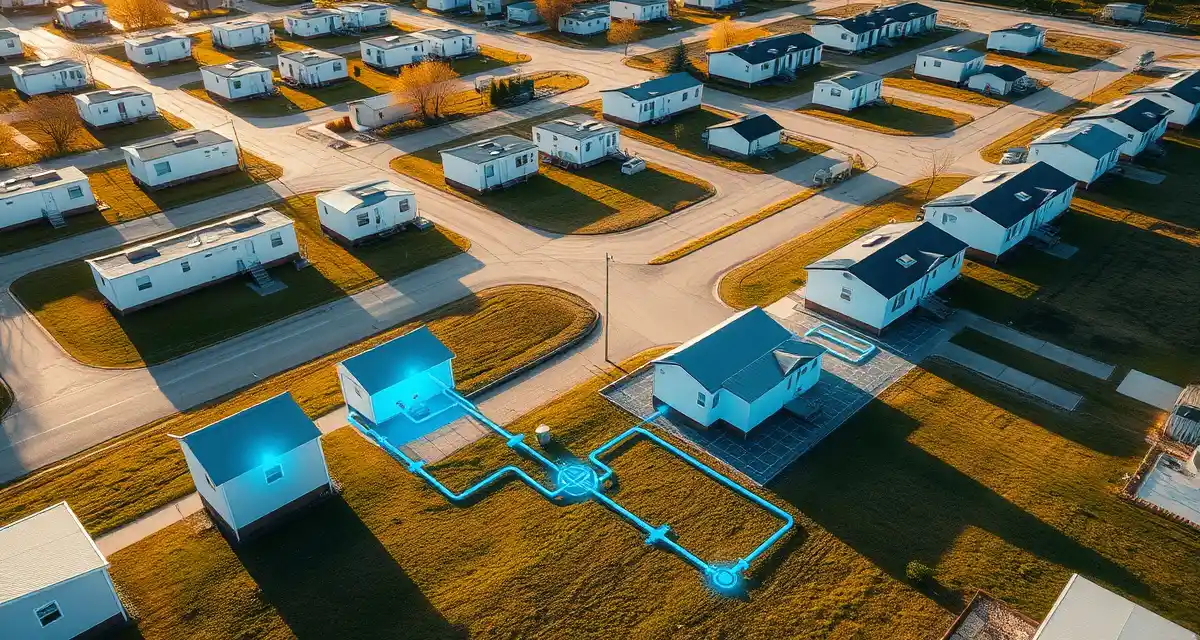
Mobile home parks can have individual septic systems for each lot, a shared community system, or a hybrid combination of both. SepticMind's community account type tracks all individual and shared systems across a mobile home park, giving you the organized account structure these properties require.
The Two Types of Mobile Home Park Septic
The structure of the wastewater system determines the management approach:
Individual lot septic systems: Each home has its own septic system, typically owned and maintained by the lot resident or the park owner depending on the lease terms. These systems function like residential systems but are clustered on a development where failures can affect adjacent lots.
Community (shared) systems: A central septic system or multiple shared systems serve multiple homes. The park operator is responsible for system maintenance and compliance. Failures affect many residents simultaneously.
Hybrid configurations: Common in older parks -- some lots have individual systems while others, often clustered in a newer section, share a community system. Managing these hybrids requires tracking which lots use which system.
Understanding the configuration before you establish a service program is essential. A park with 50 individual systems and 3 shared systems is a completely different account than a park with 2 community systems serving all 50 lots.
Compliance Requirements for Mobile Home Park Operators
Mobile home park operators face a compliance framework that combines residential landlord obligations, commercial property wastewater regulations, and in some states, specific manufactured housing community regulations:
State and local septic permits: Community systems at mobile home parks require commercial-scale permits. Individual lot systems may be permitted as residential, but the park operator (not the resident) is typically the responsible party for permit compliance.
Health department oversight: Park operators are required to maintain functional sanitation for all residents. A septic failure that affects multiple homes triggers immediate health department response and potentially resident displacement obligations under landlord-tenant law.
EPA enforcement focus: EPA and state environmental agencies have specifically identified manufactured housing communities as an area of elevated oversight, citing the prevalence of aging and undersized systems serving lower-income populations without adequate maintenance resources.
Resident notification requirements: When a shared system fails or is taken offline for service, park operators often have legal obligations to notify residents and provide alternative sanitation if necessary.
Knowing these requirements positions your company as a valuable compliance partner to park operators who are managing these obligations.
Individual System Tracking at Scale
A mobile home park with 80 individual lots has 80 septic systems. Managing service records, service intervals, and condition history for 80 systems at one property requires organized account structure.
SepticMind's community account type allows you to maintain:
- Property-level account for the park operator (one account, one invoice for the service contract)
- Individual system records for each lot (separate service history, separate system notes, separate tank location)
- Community system records for shared infrastructure
- Combined service history view across the entire park
When the park operator needs a summary of service history across all lots for a health department inspection, it's a report, not a file box of individual invoices to sort through.
Service Programs for Mobile Home Parks
The service program for a mobile home park depends on the system configuration and the park operator's preference for how service is billed and managed:
Full-park service contracts: The park operator contracts for service across all lots. You schedule the entire park on a rotating basis, bill the operator at a package rate. This is the most efficient approach for the service company and the most predictable for the operator.
Per-call service with system tracking: The park operator calls when individual systems need service. You maintain records of all service calls across the park to build a picture of system health. Lower upfront commitment for the operator but less efficient and less proactive.
Community system service with individual system referrals: You manage the shared community system(s) on a contract basis and handle individual lot systems when residents call with problems. The park operator refers residents to you for individual system service.
The full-park service contract is the highest-value account structure for a septic company. It guarantees consistent work at the park, builds your knowledge of every system on the property, and positions you as the park's wastewater infrastructure partner.
Community System Management
Shared community septic systems at mobile home parks require the same management approach as other community-scale systems with one important addition: tenant expectations. When a system serves 30 or 40 households simultaneously, service scheduling and communication require more coordination than a single-occupant property.
Best practices for community system management at mobile home parks:
- Schedule service during low-use periods (early morning, or times when most residents are at work)
- Communicate scheduled service to the park manager in advance so residents can be notified
- Document all service visits with condition notes, since community system performance directly affects dozens of residents
- Report any concerning system condition indicators immediately to the park operator, not just at the next scheduled visit
Get Started with SepticMind
Mobile Home Parks facilities need a service provider who understands the specific wastewater challenges of their operations. SepticMind makes it easy to manage commercial service contracts, track inspection schedules, and document service visits for every account in your portfolio. See how it supports commercial account management.
Frequently Asked Questions
What compliance requirements apply to mobile home park septic systems?
Mobile home park operators are responsible for maintaining functional sanitation for all residents, which includes compliant and maintained onsite wastewater systems. Community systems require commercial-scale septic permits and are subject to state health department oversight. Individual lot systems may be permitted as residential but the park operator is typically the responsible party for permit compliance under state landlord and health code requirements. EPA has specifically identified manufactured housing community wastewater as an enforcement priority, and state environmental agencies have increased inspection frequency at these properties. Park operators who lack documentation of regular maintenance face higher regulatory risk when enforcement attention increases.
How often should a mobile home park's shared septic system be inspected?
Annual inspection is the minimum for shared community systems serving mobile home parks, with more frequent service visits depending on the number of homes served. A community system serving 20-30 homes should be pumped quarterly and inspected at minimum annually. Systems serving more than 30 homes may need monthly or more frequent service depending on tank capacity and the residency rate (percentage of lots currently occupied). Health departments in some states require more frequent inspections for systems serving manufactured housing communities. The service company managing the system should also perform visual condition checks at each service visit, not just pump-out visits.
Does SepticMind support tracking both individual and shared systems in a mobile home park?
Yes. SepticMind's community account type maintains separate records for individual lot systems and community shared systems within a single park account. The park operator has one account and receives consolidated service documentation across the entire property, while individual system records are maintained at the lot level for health department compliance purposes. Service reminders are set independently for each system or system group based on appropriate intervals. When the park operator needs a complete service history report -- for a health department inspection, for a financing audit, or for sale due diligence -- SepticMind generates it from the consolidated account record.
How often should a septic system serving a mobile home parks property be inspected?
Septic systems at mobile home parks properties should be inspected at least annually and pumped more frequently than residential systems, since commercial-scale daily water usage accelerates sludge and grease accumulation. The exact frequency depends on the specific activities at the facility, peak occupancy, any food service or chemical use on-site, and local regulatory requirements. A service provider familiar with mobile home parks operations can recommend an appropriate inspection and pumping schedule based on the system's actual usage profile.
What septic system issues are most common at mobile home parks properties?
The most common septic problems at mobile home parks properties are rapid sludge accumulation from high occupancy, grease trap failure if food service is involved, hydraulic overloading during peak-use periods, and non-biodegradable waste disposal from cleaning or maintenance activities. Regular inspection and a service contract with clear maintenance intervals are the most effective ways to catch these problems before they cause system failure or regulatory violations.
Try These Free Tools
Sources
- National Onsite Wastewater Recycling Association (NOWRA)
- US EPA Office of Wastewater Management
- NSF International
- Water Environment Federation
- National Environmental Services Center (NESC)