Septic Service Software for Farms and Agricultural Properties
By the SepticMind Editorial Team
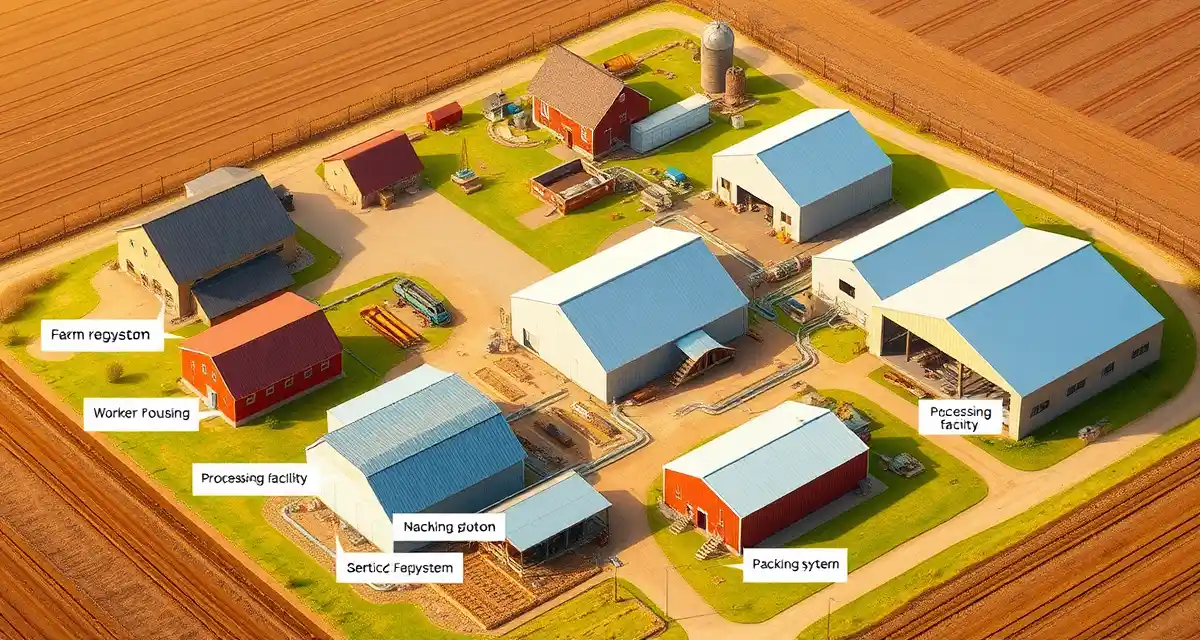
Farm properties can have three to six separate septic systems requiring individual service records and permits. The farmhouse has its own system. The farmworker housing has another. The processing facility may have a third. The packing shed with an employee restroom has a fourth. Each system has different use patterns, different tank sizes, and potentially different regulatory requirements.
TL;DR
- Farms facilities have distinct wastewater loading patterns that affect septic system sizing, service frequency, and permit requirements.
- Commercial and institutional properties like farms typically require more frequent pumping than residential systems due to higher daily usage.
- Some farms operations generate waste streams (grease, chemicals, or high-volume flow) that require pre-treatment before reaching the septic system.
- Service contracts for farms provide predictable recurring revenue and are easier to manage with a platform that tracks commercial account schedules.
- Health department inspections for farms properties may require septic system condition documentation as part of facility licensing.
- Septic companies specializing in farms service build referral networks with property managers, architects, and health inspectors in that niche.
Agricultural septic compliance violations carry penalties up to three times higher than residential violations in many states. That's not a hypothetical risk, agricultural operations face heightened scrutiny from state environmental agencies because of the proximity of septic systems to crops, soil, and water sources that enter the food supply or the watershed.
Managing septic service for farms requires tracking multiple systems on a single property, understanding both residential and agricultural wastewater rules, and maintaining the kind of documentation that holds up under regulatory inspection.
Why Agricultural Properties Are Different
Residential septic rules are designed for homes with predictable waste streams. Agricultural properties break those assumptions in several ways:
Variable use patterns. A farmhouse with seasonal hired workers goes from 2 people to 15 people in the summer months. A system sized for the farmhouse's base occupancy may be overwhelmed during peak labor season. Service intervals need to account for actual use, not just household size.
Agricultural processing wastewater. Wash water from produce cleaning, processing waste, dairy wash water, and other agricultural process streams may not be appropriate for a standard residential septic system. Some types of agricultural wastewater require pre-treatment before entering a septic system, or require an entirely separate agricultural wastewater management system.
Employee facilities. Farms with hired labor are often required by OSHA and state labor regulations to provide sanitation facilities for workers. Those facilities (portable units, permanent restroom buildings, or hookups to a septic system) need to be maintained and documented.
Setback requirements near crops. Drainfield effluent that reaches growing crops or irrigation water is a food safety concern. Some states have specific setback requirements between septic system drainfields and irrigated agricultural land.
Dual regulatory oversight. Agricultural properties with septic systems may be subject to both the state health department's onsite sewage rules and the state environmental agency's agricultural waste rules. These agencies sometimes have overlapping or conflicting requirements.
Tracking Multiple Systems on a Single Property
The operational challenge for service companies working on farms is that a single account (the farm) may have multiple discrete systems, each needing its own service record.
If a technician goes to a farm and pumps the farmhouse system, that service record should be attached to the farmhouse system, not a generic "farm account" record that lumps all systems together. When you go back three months later to service the employee housing system, that service record is distinct.
SepticMind's multi-system property view tracks all systems on a farm parcel under one customer account, with individual records for each system. The account view shows the farm as a whole, all systems, all recent service dates, all upcoming service needs. The job view shows the specific system being serviced, with its own history.
This matters when a health department inspector asks: "When was the last time the employee housing system was serviced?" You need to be able to answer that question about a specific system, not just the farm in general.
Agricultural Compliance Documentation
Farms with wastewater management responsibilities face specific documentation requirements that general residential service records don't capture.
CAFO and non-CAFO rules. Concentrated Animal Feeding Operations (CAFOs) have their own EPA permitting requirements for manure and process wastewater management. Most farm septic systems serve residential and employee facilities, not the agricultural operation itself, but the distinction matters for regulatory purposes. If a farm's septic system is receiving any agricultural process waste, that changes the compliance picture notably.
Worker housing compliance. Agricultural worker housing is subject to state and federal habitability standards that include sanitation requirements. Some states require annual inspection of worker housing septic facilities. Documentation of pump-out frequency and system condition supports compliance with labor authority inspections.
State agricultural wastewater rules. In some states, farms are required to have a written wastewater management plan that includes their onsite sewage systems. Service records that demonstrate adherence to the plan's scheduled maintenance component are part of regulatory compliance.
Food safety documentation. Farms producing produce for commercial sale (particularly those subject to FSMA (Food Safety Modernization Act) regulations) may need to document that their septic systems are not creating food safety risks through proximity to growing areas or irrigation sources.
Service Agreements for Farm Accounts
Agricultural customers tend to be excellent long-term service agreement clients. Farms are not going anywhere, their systems need regular service, and farm operators who understand the compliance stakes are motivated to have a reliable service partner rather than calling around for the lowest price every time they need a pump-out.
For farm accounts with multiple systems, a service agreement that covers all systems on the property (with individually scheduled service intervals) is both administratively simpler for the farm operator and more revenue-predictable for your company.
An annual service agreement for a farm with four septic systems, each pumped once per year, might represent $1,200-1,800 in annual recurring revenue from a single account. Add an annual inspection for each system, and the number grows further.
Onsite wastewater installer software handles the installation side for farms that are adding worker housing or expanding facilities, coordinating from permit application through installation and final sign-off.
Get Started with SepticMind
Managing service contracts for farms properties is easier with a platform built for the septic trade. SepticMind tracks commercial service schedules, documents every inspection visit, and keeps your compliance records organized by property. See how it handles your commercial account portfolio.
Frequently Asked Questions
What septic compliance rules apply specifically to agricultural properties?
Agricultural properties are subject to the same state health department onsite sewage rules as residential properties for systems serving homes and employee facilities. On top of those, farms may face additional requirements from state environmental agencies regarding proximity of septic systems to agricultural activities, setback requirements from irrigated cropland, restrictions on which types of agricultural process wastewater can enter a residential-type septic system, and in some states, written agricultural wastewater management plan requirements. Farms with notable hired labor may face additional sanitation facility requirements under OSHA or state agricultural labor regulations, which typically require documented maintenance of worker sanitation systems. The compliance picture varies by state and by the type and scale of the agricultural operation.
How do I track service records for multiple systems on a large farm property?
The key is organizing records by individual system rather than by property or account alone. Each system needs its own service history (tank size, location, service dates, technician notes, gallons removed) that's linkable to the farm account but distinct from other systems on the same property. SepticMind's multi-system property view handles this by attaching individual system records to a single customer account, so you can see the whole farm's service history at the account level or drill down into any individual system. When a health inspector asks about the employee housing system specifically, you can pull that system's record without wading through records for the farmhouse or processing facility.
Does SepticMind handle agricultural property septic inspection reporting?
Yes. SepticMind's job creation supports multiple system types on a single property, with inspection reports generated for individual systems or combined for the whole property account. For farm properties where different systems may require different inspection templates (residential for the farmhouse, commercial for the worker housing, specialty documentation for systems subject to agricultural compliance requirements) SepticMind's template system accommodates those variations. Field technicians can document tank condition, setback observations, and system-specific notes for each system independently during the same property visit. The resulting records support both routine service documentation and the regulatory compliance documentation that agricultural operations require.
How often should a septic system serving a farms property be inspected?
Septic systems at farms properties should be inspected at least annually and pumped more frequently than residential systems, since commercial-scale daily water usage accelerates sludge and grease accumulation. The exact frequency depends on the specific activities at the facility, peak occupancy, any food service or chemical use on-site, and local regulatory requirements. A service provider familiar with farms operations can recommend an appropriate inspection and pumping schedule based on the system's actual usage profile.
What septic system issues are most common at farms properties?
The most common septic problems at farms properties are rapid sludge accumulation from high occupancy, grease trap failure if food service is involved, hydraulic overloading during peak-use periods, and non-biodegradable waste disposal from cleaning or maintenance activities. Regular inspection and a service contract with clear maintenance intervals are the most effective ways to catch these problems before they cause system failure or regulatory violations.
Try These Free Tools
Sources
- National Onsite Wastewater Recycling Association (NOWRA)
- US EPA Office of Wastewater Management
- NSF International
- Water Environment Federation
- National Environmental Services Center (NESC)