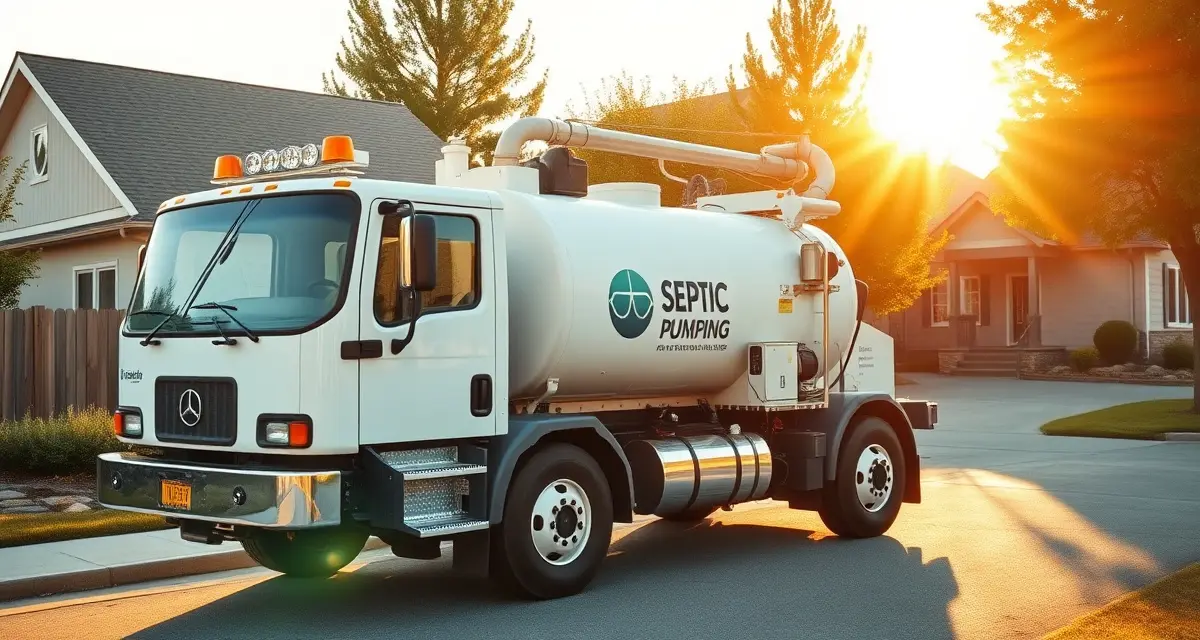
Maximizing Truck Utilization for Septic Pumping Companies
By the SepticMind Editorial Team
Every idle truck hour is lost revenue. Not potential revenue, not hypothetical revenue. Real jobs that could have been scheduled, driven to, completed, and billed but weren't because the truck was sitting.
TL;DR
- Maximizing Truck Utilization for Septic Pumping Companies requires balancing field operations, customer relationships, compliance obligations, and administrative management.
- Recurring service agreements provide the most predictable revenue base in the septic trade and should be a priority for growing businesses.
- Digital tools that automate scheduling, reminders, invoicing, and reporting reduce administrative overhead without adding staff.
- Tracking key performance metrics by route, technician, and service type identifies the most profitable and least profitable parts of the operation.
- Customer retention improvement through systematic follow-up typically generates more revenue than equivalent spending on new customer acquisition.
- Building commercial and institutional accounts alongside residential pumping creates revenue stability that supports equipment and hiring decisions.
Septic companies without route optimization average 62% truck utilization versus 87% for optimized operations. A single percentage point increase in truck utilization adds approximately $400 per month per truck in revenue. Moving from 62% to 87% is 25 points, or roughly $10,000 per truck per year in additional revenue from the same overhead.
That's the scale of the opportunity. Here's how to get there.
Understanding Truck Utilization Rate
Truck utilization rate is the percentage of available working hours that a truck is either in transit to a job or actively completing a job. A truck sitting at the yard, waiting for a dispatched job that hasn't been assigned yet, or idle during a no-show is not utilized.
How do I calculate truck utilization rate for my septic fleet?
The formula is straightforward:
Utilization Rate = (Hours Generating Revenue / Total Available Hours) x 100
Available hours are the hours you have the truck and tech scheduled for work. If you run an 8-hour day for 5 days, that's 40 available hours per truck per week. If the truck is actively working (driving to or completing jobs) for 33 of those 40 hours, your utilization is 82.5%.
Track this at the truck level, not just company-wide. One high-utilization truck can mask a low-utilization truck in an aggregate number.
What a Realistic Target Looks Like
What is a realistic truck utilization target for a septic pumping company?
For a well-run septic operation, 80-87% utilization is achievable and sustainable. That leaves 13-20% for the non-revenue time that's genuinely unavoidable: pre-trip inspections, refueling, disposal facility drop-off (if not counted as a job), and minor administrative tasks.
Pushing above 88-90% utilization consistently means either the routing is very tight (which leaves no buffer for anything unexpected) or you're not counting some non-revenue time accurately. A sustainable target is around 82-85%.
Companies below 70% have real opportunity to improve through dispatch and routing changes before adding any trucks.
Scheduling Changes With the Biggest Utilization Impact
Which scheduling changes have the biggest impact on truck utilization?
1. Evening-before route planning. Building routes the night before rather than the morning of consistently produces tighter, more geographically efficient routes. When dispatch is reactive, jobs get added in order of call-in rather than in an order that makes geographic sense. Morning-built routes are always less efficient than evening-built routes.
2. Clustering jobs by geography. Every unnecessary mile driven is a cost with no corresponding revenue. Geographic clustering means the truck spends more time on site and less time between sites. Route optimization software applies this automatically. Manual scheduling can apply it consistently if dispatchers are trained to cluster.
3. Filling schedule gaps proactively. When you see a 90-minute gap in a truck's schedule, don't leave it empty. Call overdue customers, pull from a waitlist, or slot in a flexible job that doesn't have a time window commitment. Proactive gap-filling is where good dispatchers earn their pay.
4. Appointment confirmation to reduce no-shows. A no-show is zero utilization for however long that slot was. Confirmation calls or texts 24 hours out cut no-show rates notably. A confirmed appointment still has a no-show rate, but it's much lower than an unconfirmed one.
5. Reducing time-to-dispatch. The time between a customer scheduling and the truck leaving the yard shouldn't include a call-back to the customer for missing information, a hunt for the customer's tank size, or a conversation about what permit is needed. All of that should be in the system before dispatch. Septic dispatch management software pre-populates work orders so dispatch happens without information gaps.
Identifying Where Your Utilization Is Lost
Most companies with utilization under 80% lose it in three places:
Long gaps between jobs. Caused by poor routing, last-minute cancellations without immediate backfill, or accepting jobs spread too far apart geographically.
Tech downtime for information. Calls to the office, waiting on permit confirmation, or uncertainty about access at a property. All of these show up as time on site that wasn't spent doing work.
No-shows and cancellations. Without a waitlist and a quick-fill protocol, these become empty hours.
Run a one-week audit where you track what your trucks are doing in 30-minute increments. You'll see exactly where the utilization is going and which of the three categories is your biggest issue.
Utilization and Revenue Per Truck
The end goal of improving truck utilization is better revenue per truck, which is the key metric for fleet health. The septic company KPI guide covers revenue per truck benchmarks, but a well-run 5-truck company with 85% utilization will notably out-earn a 5-truck company at 62% utilization at any given price point.
Better utilization also means you delay the capital investment of adding trucks. Every point of utilization improvement from an existing truck is revenue without additional truck cost, insurance, or driver.
Get Started with SepticMind
Running a profitable septic business means managing compliance, customer relationships, and field operations without letting any of them slip. SepticMind handles the operational and compliance infrastructure so you can focus on growing the business. See what the platform can do for your operation.
Frequently Asked Questions
How do I calculate truck utilization rate for my septic fleet?
Divide active hours (time driving to jobs or completing jobs) by total available hours and multiply by 100. If your truck is scheduled for an 8-hour day and actively working for 6.5 of those hours, utilization is 81.25%. Track this by individual truck, not just company-wide averages, so you can identify which trucks or routes have the most room for improvement. Run this calculation weekly rather than monthly so you can respond quickly to utilization drops.
What is a realistic truck utilization target for a septic pumping company?
A sustainable target for a well-run operation is 82-87%. This allows time for the non-revenue activities that are genuinely necessary (pre-trip inspection, refueling, disposal drop-off, minor administrative tasks) while keeping the truck productive during available hours. Companies consistently above 90% are typically either running very tight routes with no buffer for the unexpected, or they're not accounting for all non-revenue time accurately. Below 75% suggests notable room for dispatch and routing improvement before considering adding capacity.
Which scheduling changes have the biggest impact on truck utilization?
The highest-impact changes are: evening-before route planning instead of morning-of routing (consistently produces 8-12% tighter routes), geographic job clustering to minimize drive time between stops, proactive gap-filling using a customer waitlist when schedule holes appear, confirmation calls or texts 24 hours before appointments to reduce no-shows, and ensuring complete job information is in the dispatch system before trucks leave the yard to eliminate time lost to information callbacks.
What metrics matter most for managing a septic service business?
The most important operational metrics for a septic service company are route utilization rate (percentage of available truck capacity actually booked), customer retention rate (percentage of customers who return for the next service visit), revenue per truck per day, cost per job including labor, disposal, fuel, and overhead allocation, and recurring revenue percentage from service agreements versus one-time calls. Companies that track these metrics by route and by technician identify improvement opportunities faster than those looking only at total revenue.
How does field service software reduce administrative costs for septic companies?
Field service software eliminates manual steps in scheduling, dispatching, invoicing, permit tracking, and inspection report preparation. Tasks that take an office manager 2-4 hours per day on spreadsheets and phone calls are handled automatically: reminders go out, reports generate, invoices are sent, and permit deadlines are flagged without human intervention. The hours saved are redeployed to customer service, sales, and higher-value work that grows the business.
Try These Free Tools
Sources
- National Onsite Wastewater Recycling Association (NOWRA)
- US EPA Office of Wastewater Management
- National Environmental Services Center (NESC)
- Water Environment Federation
- Occupational Safety and Health Administration (OSHA)