Septic drain field maintenance: the complete homeowner guide
By the SepticMind Editorial Team

TL;DR
- A septic drain field lasts 25 to 50 years with proper care.
- The four things that kill it fastest are overloading it with water, driving over it, planting trees near it, and skipping tank pumping.
- Pump your tank every 3 to 5 years, spread water use across the week, keep roots away, and never park on it.
- Repairs run $5,000 to $20,000, so prevention is the only smart play.
What does a drain field actually do?
The drain field (also called a leach field or absorption field) is the second half of your septic system. Wastewater flows from your house into the septic tank, where solids settle out and anaerobic bacteria break down the sludge. The liquid that remains, called effluent, travels out through a distribution box and into a network of perforated pipes buried in gravel trenches, usually 18 to 36 inches below grade [1].
Once inside those trenches, effluent seeps through the gravel and into a thin biological layer called the biomat. That biomat, made of microbial communities, does the final treatment: it filters pathogens, absorbs nutrients, and lets clean water percolate into the native soil. The whole process depends on that soil staying loose, oxygenated, and never saturated.
When the field works right you never think about it. When it fails, sewage backs up into your house or pools in your yard. Replacing a failed drain field runs $5,000 to $20,000 depending on soil type, local permitting, and system size [2]. That number should motivate everything in this guide.
For more on how the tank side works alongside the field, see our guide to septic tank pumping.
How do you find your septic drain field?
Start with your county's septic permit. It usually includes a site plan showing tank and field locations, and it's the fastest way to find your drain field. If records come up empty, you fall back on visual clues, a probe rod, tracing the outlet pipe, or a paid locate. Here's how each method works, in order of reliability.
Check your property records first. Most county health departments keep the original septic permit on file, and that permit usually maps out the tank and drain field. Call them, bring your parcel number, and ask for the onsite wastewater permit. Many states now post these online.
Look for visual clues. Trench lines often show up as parallel strips of slightly greener or slightly browner grass, depending on season and soil moisture. In spring the area may be softer underfoot. In drought it may stay green longer. Anywhere that feels spongy or smells faintly of sewage is a sign of a failing field, more than a locating clue.
Probe the yard. A metal probe rod (a rebar stake works) lets you feel the gravel-filled trenches below. Push it in every foot or so across the suspected area. Gravel feels loose and crunchy. Native soil feels solid. It works, but it takes patience.
Trace the pipe from the tank. Find the tank first (look for a slight depression or two lids, usually 5 to 20 feet from the house). Then trace the outlet pipe direction by probing, or hire a plumber to run a sewer camera with a locator beacon. The drain field starts where that outlet pipe ends.
Hire a locating service. Septic inspection companies use electronic locating gear. A locate-only visit runs $75 to $200, though many bundle it with an inspection.
Once you find it, mark the boundaries with small stakes or flags and sketch it on a site map. Keep that map with your home's records. You'll want it before every landscaping project, fence install, or driveway expansion.
What are the most important drain field maintenance tasks?
Drain field maintenance is mostly about what you don't do. There's no additive to pour in, no annual service call, no filter to replace. The field maintains itself as long as you protect it. A handful of active steps still matter.
Pump your septic tank on schedule. This is the single most important thing you can do for the drain field. When the tank isn't pumped, solids and scum overflow into the distribution lines and clog the gravel. The EPA's SepticSmart program recommends pumping every 3 to 5 years for a typical household [1]. Homes with garbage disposals, large families, or high water use may need it every 2 to 3 years. See our guide on how often to pump a septic tank for a breakdown by household size.
Spread water use across the day and week. The soil under your field can only absorb so much water per day. Six loads of laundry on Saturday, plus two dishwasher runs, plus everyone showering before a party, and you can hydraulically overload the field. Stagger laundry loads. Fix dripping faucets and running toilets right away. A running toilet can waste 200 gallons a day, and all of it goes straight to your field [3].
Get a septic tank inspection every 3 to 5 years. A proper inspection checks the baffles and effluent levels and can catch solids reaching the field before a full failure.
Divert surface water away from the field. Roof downspouts, sump pump discharge, and yard runoff that crosses the drain field keep the soil saturated and stop effluent from absorbing. Grade the yard so water flows away, and run downspouts well past the field boundary.
Keep a simple grass cover. Grass is the ideal plant for a drain field. It holds soil, wicks moisture through transpiration, and has roots too shallow to threaten pipes. That's the whole job. Nothing else belongs there.
What should you never do near a drain field?
Plenty of things kill a drain field faster than plain neglect. These are the common ones.
Park or drive on it. Vehicle weight compacts the soil, crushes the gravel trenches, and collapses the perforated pipes. One pass with a heavy truck can do permanent damage. This includes riding mowers on soft ground, delivery trucks cutting corners, and guests parking on the lawn during a party. Mark the field boundaries if you entertain outdoors.
Plant trees or shrubs on or near it. Roots follow moisture and nutrients straight into perforated pipes. Willow, poplar, and maple are the worst offenders, but no tree is safe near a field. The generally accepted setback is 10 to 20 feet for small ornamentals and 50 feet for large trees, though your state code may set a different distance [4]. If you want cover near the area, shallow-rooted ground covers beat anything woody.
Pour grease, chemicals, or antibacterial products down the drain. The bacteria in your tank and biomat are what make the system work. Bleach cleaners in normal amounts are fine, but paint thinner, prescription medications, or gallons of antibacterial soap can knock back the bacterial population. Never pour cooking grease down any drain. It builds up in the tank and speeds sludge accumulation.
Run a garbage disposal without pumping more often. Disposals send food solids into the tank that would otherwise hit the trash. The EPA notes this can nearly double the rate of sludge buildup [1]. If you use one, pump every 2 years instead of every 3 to 5.
Send water softener backwash to the septic system. High-salinity backwash can disrupt soil structure and harm the microbes in the field. Most state codes now require softener discharge to a separate drywell or the storm sewer. Check your local onsite wastewater rules before connecting any new appliance.
Cover it with anything solid. Patios, decks, sheds, and asphalt block oxygen exchange and keep rainfall from helping flush the system. They also hide early warning signs like soft ground and odors.
How long does a drain field last, and what affects its lifespan?
A well-maintained field in decent soil lasts 25 to 50 years, and some go longer. Poor soil or a field overloaded from day one may fail in 10 to 15. The honest answer is that nobody has good aggregate data on median lifespans, because most counties don't track failure dates. The closest reliable figure comes from EPA guidance, which uses a 25-year median design life as the planning assumption for conventional systems [1].
Soil type is the biggest thing you can't control. Sandy loam drains well and supports a healthy biomat. Heavy clay or a high water table forces the system to work harder from the start. Buying a home? Ask for the original perc test results. That tells you what the soil could handle when the system went in.
Pumping history matters more than almost anything else. A field that got properly treated effluent for 30 years outlasts one that got solids overflow after just 10 years of a neglected tank.
| Factor | Effect on lifespan |
|---|---|
| Tank pumped every 3-5 years | Maximizes lifespan, prevents solids loading |
| Tank never pumped | Can fail field in under 10 years |
| Sandy loam soil | Longer life, faster absorption |
| Clay or high water table | Shorter life, slower absorption |
| No roots or vehicles on field | Full design life achievable |
| Tree roots in lines | Can fail within 5 years of tree maturity |
| Hydraulic overloading | Premature biomat clogging |
The table above is based on general engineering principles in EPA's onsite wastewater guidance [1] and matches what state extension programs report.
What are the warning signs that your drain field is failing?
Catch it early and you might save a failing field. Ignore the signs and you'll be writing a check for a full replacement. Here's what to watch.
Slow drains throughout the house. One slow fixture is a local clog. Several drains running slow at the same time usually means the septic system is backing up.
Gurgling in the pipes. When the system can't move the outflow, air gets trapped and gurgles as water tries to push through.
Sewage odors indoors or out. A working system is nearly odor-free at the surface. Any persistent sewage smell near the field or inside the house is worth an immediate inspection.
Wet or spongy ground over the field. Effluent surfacing means the soil can't take any more liquid. It's a public health hazard. Keep kids and pets off the area and call a licensed septic contractor the same day.
Unusually lush green grass over the field. A little extra green is normal. Bright, fast-growing grass in a strip over the trench lines means excess nutrients are reaching the surface.
Sewage backing up into the lowest drains. This is the end stage. The field is saturated or blocked and has nowhere to push effluent.
See any of these? A septic system repair consultation is the next step. A field can sometimes be rested, aerated, or partially repaired instead of fully replaced, but only a site inspection tells you which path you're on.
Can you restore a failing drain field, or do you always need to replace it?
Restoration works in some cases, and it's worth exploring before you commit to a full replacement. Which option fits depends entirely on why the field failed.
Resting the field. If the problem is hydraulic overloading rather than physical clogging, the field may recover with 3 to 6 months of reduced use, or temporary diversion to a second field if one exists. This works best on early-stage failures with no pipe damage.
Hydro-jetting the lines. High-pressure water jetting clears partial blockages and breaks up biomat buildup. It's not permanent unless you fix the underlying cause, but it can buy several years. Figure $300 to $600 per line.
Aerobic treatment upgrades. Adding an aerobic treatment unit (ATU) upstream of the field switches the system to aerobic processing, which produces cleaner effluent with less biomat-forming material. That can rehab a marginally failing conventional field. ATU installation runs $3,000 to $8,000.
Terralift or aeration injection. These services inject compressed air or biostimulants into the soil to fracture compacted areas and put oxygen back. Results are inconsistent and the evidence is thin. Some contractors report good short-term outcomes, others see nothing lasting. No rigorous controlled study backs a specific success rate. It costs $1,000 to $3,000 and might be worth a try before replacement if the field is otherwise structurally sound.
Full replacement. When pipes are crushed, soil is beyond saturated, or the system never had enough capacity, replacement is the only fix. It runs $5,000 to $20,000 depending on soil, system type, and local labor [2]. If your soil requires an alternative system like a mound or drip design, costs can reach $30,000 or more on hard sites.
For cost context on a new system, our cost to install septic system guide has current regional ranges.
Do septic additives actually help your drain field?
This one comes up constantly, and the honest answer is probably not, and some may cause harm.
The EPA's position is direct: biological additives have not been shown to improve septic performance and are no substitute for regular pumping [1]. University extension research largely agrees. A review by the University of Minnesota Extension found no consistent evidence that enzyme or bacterial additives cut solids accumulation enough to matter in practice [5].
A working septic tank already holds billions of anaerobic bacteria doing exactly what the additives claim to add. The tank doesn't lack bacteria. What it lacks when it fails is mechanical capacity, proper hydraulics, or a recent pump-out.
Chemical additives are worse. Products with sulfuric acid, solvents, or strong surfactants can damage the microbial community, corrode concrete tanks, and shove partially treated material into the drain field.
Save the $20 to $50 per treatment and put it toward a pump-out. That actually works.
If you track system health across multiple properties, tools like SepticMind help operators log service history and flag overdue pumping before it turns into a field problem.
How does landscaping affect your drain field, and what can you plant on it?
Landscaping is one of the top three controllable causes of early field failure, right behind skipped pump-outs and hydraulic overloading. The right plants protect the field. The wrong ones destroy it.
What to plant. Turf grass is the best cover. Shallow roots, good soil stabilization, no excess moisture held, and it lets you spot changes in the field's appearance. Native grasses and low ground covers like creeping thyme or sedum are fine if you want something more ornamental, as long as they don't need irrigation that adds water to an already-loaded field.
What to avoid. Trees are the obvious risk, but large shrubs are nearly as dangerous. Shrub roots extend 2 to 3 times the plant's canopy width chasing water. A lilac planted 10 feet from the field edge can reach the trenches within a few years. Vegetable gardens are a bad idea for a different reason: produce grown in effluent-irrigated soil carries a public health risk.
Setback guidelines. The EPA suggests keeping trees at least 30 feet from septic components as a rule of thumb [1]. State codes get more specific. California's water board guidance and local county codes often require 10-foot setbacks for certain shrubs and 50-foot setbacks for large trees from absorption trenches [4]. Check your state's onsite wastewater rules for exact distances.
Irrigation. Never irrigate a drain field. The field already gets liquid from the house. Adding sprinkler water on top of a normal daily load can saturate the soil and trigger failure in an otherwise healthy system.
Planning a landscaping project? Go back to the locating section above and get that sketch done before you dig.
What do state and EPA regulations say about drain field maintenance?
Septic systems are regulated at the state and local level, not federally. The EPA sets guidance and runs programs like SepticSmart, but the rules you actually follow come from your state health department or environmental agency [1].
Most states require a permit for any drain field installation or repair. Many now require periodic inspections, especially at the point of sale. Massachusetts requires a Title 5 inspection whenever a property changes hands, and the drain field's condition is central to that inspection [6]. Washington State requires inspection every 1 to 3 years for alternative systems [7].
The EPA's SepticSmart program, run through the Office of Water, is the most widely cited federal guidance. Its core recommendation, in the program's own words: "Have your septic system inspected every three years by a professional and have your septic tank pumped every three to five years." [1] That's the standard the industry points to, and it's what most state extension publications repeat.
Local codes add rules on setbacks from wells, property lines, wetlands, and surface water. The typical minimum setback from a private well is 50 to 100 feet, but it ranges widely by state. Before any construction near your field, check with your county health department. Violating a setback on a repair or addition can void your permit and create liability if a neighbor's well is affected.
A good starting point for your state's rules is the EPA's septic systems section, which links to state onsite wastewater programs [1].
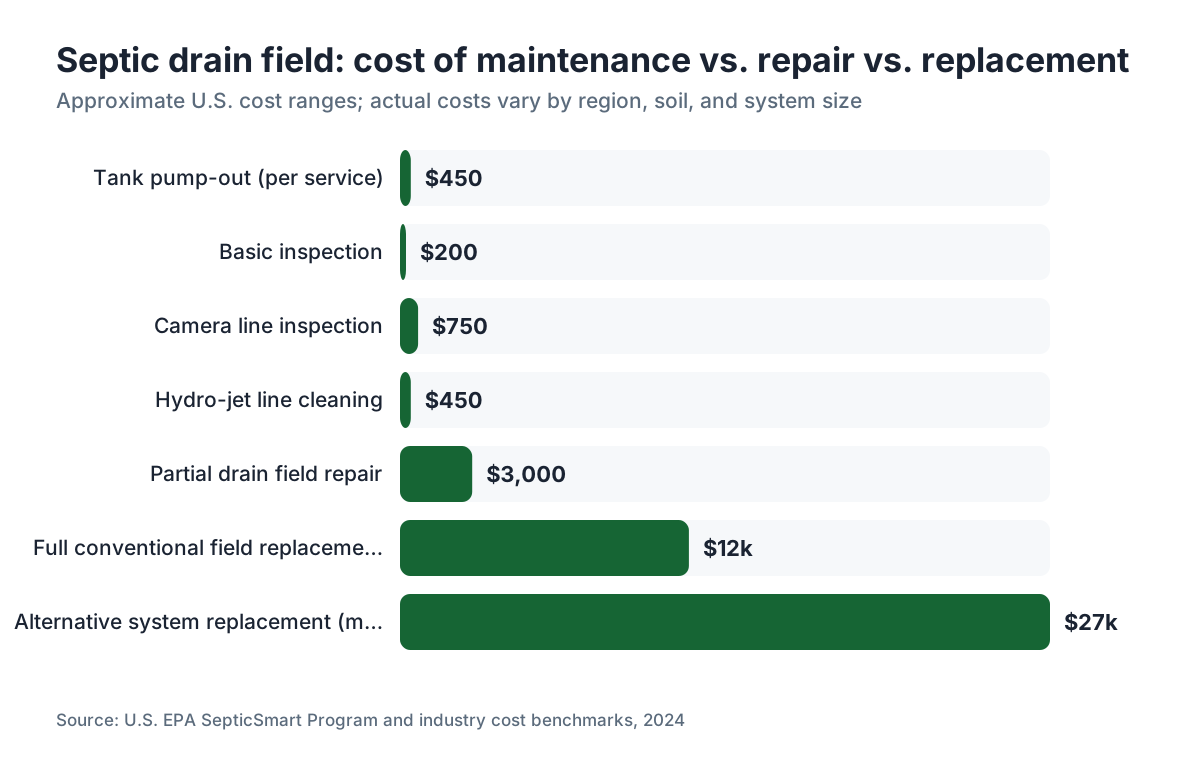
How much does drain field maintenance cost, versus replacement?
Maintenance is nearly free. Replacement is brutal. That gap is the entire argument for doing this right.
Regular pump-outs cost $300 to $600 for a typical 1,000-gallon tank, depending on region and access [2]. At a 3-to-5-year interval over 30 years, that's roughly $2,100 to $6,000 total. That's the main recurring cost of keeping a drain field alive.
Inspections run $100 to $300 for a basic visit, up to $600 to $900 for a full camera inspection of the lines [2].
A field repair (partial trench replacement, new distribution box, regrading) runs $1,500 to $5,000 depending on scope.
Full replacement runs $5,000 to $20,000 for a conventional system in adequate soil. Alternative systems in poor soil push that to $15,000 to $40,000 [2].
The math is stark. Skipping one $400 pump-out to save money, then facing a $15,000 replacement, is a terrible trade. And the EPA estimates roughly 10 to 20 percent of U.S. septic systems are currently failing or showing signs of failure, mostly from neglect [1].
For a full breakdown of pump-out pricing, see our septic tank pump out guide. Dealing with a tank that needs more than a pump? Septic tank repair covers the component-by-component costs.
What's a simple annual drain field maintenance checklist?
You don't need anything complicated. This checklist covers everything a homeowner should do on a regular basis.
Every year:
- Walk the drain field and look for wet spots, odors, or unusually lush grass.
- Check that roof downspouts and sump pumps discharge away from the field.
- Make sure no new trees, shrubs, or structures have crept into the setback area.
- Confirm nothing has been parked or driven over the field.
- Fix any running toilets or dripping faucets promptly.
Every 3 to 5 years:
- Schedule a tank pump-out with a licensed septic contractor.
- Have the baffles and inlet/outlet inspected at the same visit.
- Ask the contractor to check effluent clarity as a proxy for field loading.
Any time you see warning signs:
- Call a licensed inspector if you notice slow drains, odors, or wet ground over the field.
- Don't add water to the system (laundry, dishwasher, long showers) until you know what's wrong.
If you're selling the home:
- Check whether your state requires a pre-sale inspection. Many do.
- Gather your service records and site map. Buyers and their inspectors will ask.
SepticMind's tracking tools help service operators and homeowners keep these intervals logged and get reminders before schedules slip, but the checklist above works fine on paper too.
For a deeper look at how absorption works and what soil testing tells you, our leach field overview is a good companion read.
Frequently asked questions
How do I find my septic drain field if I have no records?
Start by calling your county health department and requesting the original septic permit by parcel number. If that comes up empty, look for visual clues: parallel strips of greener or drier grass, slight depressions, or soft ground. Locate the tank first (usually 5 to 20 feet from the house), then trace the outlet pipe direction with a probe rod or a septic inspector's sewer camera and locating wand.
How often should I pump my septic tank to protect the drain field?
The EPA recommends every 3 to 5 years for a typical household. Homes with garbage disposals, more than 4 people, or high water use should pump every 2 to 3 years. Skipping pump-outs lets solids overflow into the field lines, the leading cause of premature failure. A pump-out costs $300 to $600, far cheaper than the $5,000 to $20,000 it takes to replace a failed field.
Can I plant a garden over my drain field?
No. Root vegetables and edible plants grown in effluent-irrigated soil carry pathogens that can contaminate produce. Beyond the health risk, garden soil gets tilled regularly, which damages the perforated pipes and disrupts the biomat. Stick with shallow-rooted turf grass or low ground covers. Never plant trees or large shrubs anywhere near the field.
What kills a drain field the fastest?
Solids overflow from a tank that hasn't been pumped is the most common killer. Close behind: driving or parking vehicles over the field (compaction crushes trenches), planting trees near the lines (roots block and break pipes), and hydraulically overloading the field by cramming all household water use into a short window. Any one of these can cause failure in just a few years.
Do septic tank additives protect the drain field?
No. The EPA and multiple university extension programs have found no consistent evidence that biological or enzyme additives improve performance or reduce the need for pumping. A healthy tank already has abundant bacteria. Chemical additives can harm the microbial community and push partially treated solids into the field. Regular pumping is the only proven maintenance that protects the field from solids damage.
How much does it cost to replace a drain field?
Expect $5,000 to $20,000 for a conventional replacement in soil that perc tests acceptably. Alternative systems required in poor or high-water-table soils, like mound systems or drip irrigation, can run $15,000 to $40,000 or more. Costs vary by region, soil type, system size, and permit requirements. Getting two or three bids from licensed septic contractors before committing is standard practice.
Is it normal for grass to grow greener over the drain field?
Slightly greener grass over trench lines is common and usually not a problem, especially in spring when soil moisture is higher. Bright, fast-growing strips of grass warn that effluent is surfacing or very near the surface. That warrants a professional inspection. Grass that's dying or bare over the field may point to compaction or drainage problems instead.
Can a failing drain field be repaired, or does it always need full replacement?
Partial repair is sometimes possible. If the failure is early-stage hydraulic overloading, resting the field or cutting water use may help. Hydro-jetting can clear partial blockages. An aerobic treatment unit upgrade can extend a marginally failing field's life. Full replacement is needed when pipes are crushed, soil is irreparably clogged, or the system was undersized from the start. A site inspection by a licensed contractor tells you which path applies.
How close can I build a deck or shed to my drain field?
You can't build any solid structure over the drain field. Setbacks for structures from septic components are set by state and local codes and typically run 5 to 20 feet from the field boundary, though some jurisdictions require more. Solid surfaces block oxygen exchange and prevent inspection. Before any construction near the field, pull the permit and check with your county health department.
Does a water softener hurt a drain field?
Potentially, yes. Softener backwash carries high salt concentrations that can disrupt soil structure and harm the biomat in the field. Many state codes now require softener discharge to a drywell or storm sewer rather than the septic system. Check your local onsite wastewater code before connecting any new appliance that produces high-salinity discharge.
How deep are drain field lines buried?
Most conventional field lines sit 18 to 36 inches below grade, with the perforated pipe on a gravel bed 6 to 12 inches deep inside the trench. Depth varies by climate (deeper in cold climates to prevent freezing), soil type, and local code. In mound systems, the absorption field is built above grade and then covered, so the pipes may sit at or near the original ground surface.
What happens if my neighbor's runoff flows over my drain field?
Surface water crossing your field keeps the soil saturated and cuts its ability to absorb effluent, which speeds failure. If a neighbor's grading, driveway, or sump pump discharge sends water toward your field, you have both a practical problem and possibly a legal one. Document the source, talk to your neighbor first, and if needed consult your local health department. Regrading or a French drain to redirect the flow are the usual fixes.
Do I need a permit to repair my drain field?
In most states, yes. Any repair that involves excavating, replacing, or rerouting field components requires a permit from your county health department or state environmental agency. Unpermitted repairs cause problems when you sell and may not meet current setback or capacity rules. The permit process also gets a licensed professional to sign off on the work, which protects you if problems come up later.
How do I know if my drain field is in the right location to maintain it?
Once you locate the field using permit records, probing, or a professional locate, mark its corners with small stakes. Note what's around it: trees within 30 to 50 feet, structures overhead, low areas where water pools nearby. If trees already grow over the lines, get a camera inspection to check for root intrusion. If surface water pools near the field, fix the grading before it compounds existing saturation.
Sources
- U.S. EPA, SepticSmart: Protect Your Investment: EPA recommends pumping every 3 to 5 years, notes garbage disposals increase sludge, estimates 10-20% of systems failing, and advises keeping trees 30 feet from system components
- U.S. EPA, A Homeowner's Guide to Septic Systems: Drain field replacement costs and pump-out cost ranges used as planning benchmarks
- U.S. EPA, WaterSense: Fix a Leak Week: A running toilet can waste approximately 200 gallons of water per day
- California State Water Resources Control Board, Water Quality Programs: California codes specify setback distances for trees and shrubs from absorption trenches
- University of Minnesota Extension: No consistent evidence that enzyme or bacterial additives reduce solids accumulation enough to substitute for pumping
- Massachusetts Department of Environmental Protection, Title 5 Septic Systems: Massachusetts requires a Title 5 inspection when a property changes hands, including evaluation of the drain field
- Washington State Department of Health: Washington State requires inspection every 1 to 3 years for alternative onsite systems
- Penn State Extension: Design life of conventional drain fields cited as 25 years median planning assumption; soil type as primary lifespan variable
- NC State Extension: Recommended setbacks for trees and shrubs from drain field trenches; root intrusion described as a leading cause of pipe failure
- U.S. EPA, Decentralized Wastewater Treatment Systems: EPA design guidance for onsite systems describes conventional drain field trench depth of 18 to 36 inches and gravel bed specifications
Last updated 2026-07-09