How to tell if your drain field is failing (and what to do next)
By the SepticMind Editorial Team

TL;DR
- A failing drain field shows up as soggy or spongy grass over the leach lines, sewage odors outdoors, slow drains throughout the house, or sewage backing up into fixtures.
- Any one of these warrants a professional inspection within days, not weeks.
- Catch it early and you might pay $500.
- Wait until sewage surfaces and you're looking at $20,000.
What does a failing drain field actually look like?
The clearest sign is ground you can feel. Walk the area above your leach lines on a dry day. If the soil squishes, holds standing water, or feels noticeably warmer than the rest of the yard, effluent is surfacing instead of soaking in. That's a public-health problem more than a lawn problem.
Beyond the yard, look for a cluster of symptoms rather than one in isolation. Slow drains throughout the house (more than one fixture, which points past a simple clog) plus gurgling in the pipes plus a sewage smell drifting up through floor drains or toilets all point to the downstream side of your system being overloaded. When the field can't accept effluent, pressure backs up through the whole system.
Lush, dark-green grass in a distinct strip over the leach lines is a subtler sign most homeowners miss. Nitrogen-rich effluent fertilizes the turf above it. In a dry summer when the rest of your lawn is stressed and brown, a suspiciously healthy stripe is worth investigating.
The EPA's SepticSmart program lists "lush green grass over the drainfield" and "wet or mushy ground" among the primary indicators of system failure [1]. See two or more of these at once? Treat it as an emergency, not a wait-and-see.
What are the 8 warning signs of drain field failure?
Here they are, roughly from most to least obvious.
- Standing water or soggy soil directly above the leach lines, present even without recent rain.
- Sewage odor outside the house, especially near the tank lid or over the field.
- Sewage odor inside, through floor drains, basement toilets, or rarely-used sinks.
- Multiple slow drains throughout the house at the same time.
- Sewage backing up into tubs, showers, or floor drains. This is the most urgent one.
- Abnormally lush, dark-green grass in a stripe over the field.
- High nitrate readings in a nearby well (you need a water test to catch this).
- Gurgling in the plumbing when nobody is running water.
One of these alone could mean something else. Two or more at once almost always means the drain field. Sewage backup is the exception: even by itself, that needs a service call today.
Got a pump chamber or dosing system? A pump alarm light that won't reset is a ninth sign. It means effluent isn't moving to the field the way it should, which can mimic or speed up field failure.
What causes a drain field to fail?
Hydraulic overload is the culprit most of the time, by a wide margin. The field gets more water than the soil can absorb. This happens when a tank goes too long between pumpings and solids carry over into the field, clogging the soil pores [2]. It also happens when a household adds occupants overnight, installs a water softener that dumps brine into the system, or starts running laundry every day instead of every few.
The biomat is the physical mechanism behind most failures. Bacteria in the effluent form a black, slimy layer at the soil-trench interface. A thin biomat is normal and actually helps treatment. A thick one seals the trench floor and walls completely and stops percolation cold. Once a biomat fully consolidates, no amount of resting or additives reliably breaks it down, though resting the field for six to twelve months sometimes gives partial recovery in lightly clogged systems.
Soil compaction is the second big cause. Driving vehicles over the field crushes the soil structure that effluent needs to move through. Tree roots from nearby trees find perforated pipes and block them the same way. Grease and fats poured down the drain build biomat faster than almost anything else.
Age matters too. The EPA puts the design life of most conventional systems at 25 to 30 years [1], though well-maintained systems regularly beat that. Undersized systems, common in homes built before modern perc-test rules, can fail inside 10 years under heavy use.
Seasonal soil saturation is the sneaky one. It causes temporary symptoms that look exactly like failure. If your yard floods every spring and your drains slow down only in February and March, the field may be fine. The soil just can't take more water when it's already full. A licensed inspector can tell seasonal saturation from a true biomat failure.
How do you check your drain field yourself before calling a professional?
Start with the record search. Find your system's as-built drawing (called a site plan or permit drawing). Your county health department holds these for most systems permitted after roughly 1975. Knowing exactly where the trenches run tells you where to look.
Once you have the layout, walk the field on a dry day with no rain in the previous 48 hours. Press firmly on the soil at several points along each trench line. Healthy field soil is firm. Failing field soil sponges back under your boot.
Check the cleanout risers or inspection ports if your system has them. Many modern systems have small caps you can open to see whether effluent is ponding inside the trench. Effluent sitting at or above the distribution pipe confirms a problem.
Lift the tank lids carefully and look at the outlet side. If scum or solids are pushing through the outlet baffle, the tank is overdue and is almost certainly sending solids to the field. Schedule a septic tank pump out right away.
Don't mistake a wet distribution box for a failing field. A cracked D-box can send all the flow to one section of the field and starve the rest, which looks a lot like failure. A professional confirms this with a simple probe test.
When should you call a professional and how urgent is it?
Call the same day if sewage is surfacing where people or animals could touch it, or if it's backing up inside the house. These are public-health violations in every state and can contaminate drinking water if your well is close. Many state codes require reporting a surfacing failure to the county health department within 24 to 72 hours [3].
For soggy soil and odors without active surfacing or backup, you have a few days to a week. Don't stretch it. The longer effluent saturates the soil beyond the trenches, the larger the biomat grows and the more the fix costs.
Slow drains only, nothing outdoors? Start by scheduling a septic tank inspection within two to four weeks. It could be a simple full tank or a partial clog at the outlet tee, both cheap fixes.
A licensed septic inspector (called a Registered Onsite Wastewater Treatment System Professional, or ROWTS, in many states) uses visual inspection, probe testing, and sometimes a dye test to sort out a full tank from a broken pipe, a failing D-box, or a real biomat failure. The inspection runs $150 to $500 depending on system complexity and region [4].
Can a failing drain field be repaired, or does it need full replacement?
Everyone asks this, and the honest answer is that it depends on how far the failure has gone and what caused it.
Catch it early with a full tank as the cause, and a thorough septic tank pumping plus a field-rest period (diverting flow to an alternate field section if you have one) sometimes lets the biomat partly recover. Some contractors run a process called soil fracturing, or "terralift," to mechanically break up compacted soil and inject air channels. Results are genuinely mixed. The manufacturer claims success in specific soil types, but independent studies are thin.
If the trench soil is thoroughly sealed, recovery without physical work is unlikely. Your options then are:
- Pipe jetting and trench excavation: dig up the affected lines, remove the biomat, replace the aggregate, reinstall. Works when the trench length is short.
- Field expansion: add new trench runs into virgin soil if your lot has room and zoning allows it. Often the cheapest real fix.
- Alternative systems: replace the conventional trench with a mound system, drip irrigation field, or aerobic treatment unit (ATU) when site limits rule out a conventional replacement. These cost a lot more.
- Full replacement: worst case, the whole field is abandoned and a new one goes in somewhere else on the lot.
For the full picture on major system work, the cost to install a septic system guide covers the numbers.
One place I'd never spend money: biological additives sold to "restore" a failed field. The EPA's technical manual states there's no peer-reviewed evidence these products recover a biomat-sealed field [2]. Keep the $30 to $200 per bottle for the actual repair.
How much does drain field repair or replacement cost?
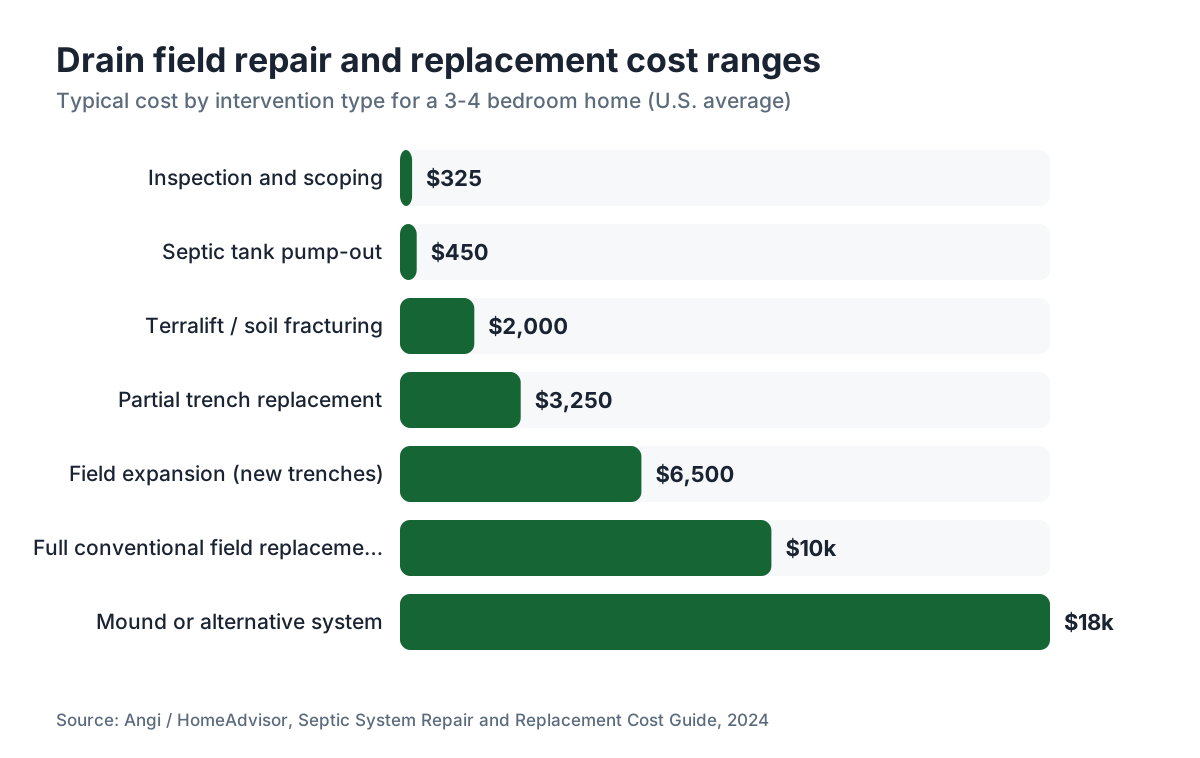
Costs swing hard with region, soil type, system size, and permit rules, so read these as ranges, not quotes.
| Repair type | Typical cost range | Notes |
|---|---|---|
| Septic tank pump-out (often first step) | $300 to $600 | Needed before any field repair |
| Inspection and scoping | $150 to $500 | Licensed inspector, probe + camera |
| Terralift or soil fracturing | $1,000 to $3,000 | Mixed evidence of effectiveness |
| Partial trench replacement | $1,500 to $5,000 | Per section, accessible site |
| Field expansion (new trenches) | $3,000 to $10,000 | Depends on footage and soil |
| Full conventional field replacement | $5,000 to $15,000 | Typical 3-4 bedroom home |
| Mound or alternative system | $10,000 to $25,000+ | When soil or space is limited |
Permit fees add $200 to $1,500 in most counties. Engineered systems in difficult soil can push totals above $30,000 in some markets [10]. The cost to put in a septic tank article breaks down what drives those numbers.
On the low end, catching failure before it matures (full tank plus early biomat) can wrap up for $500 to $1,500 all in. Wait until sewage surfaces and regulators get involved, and you routinely add $2,000 to $5,000 in emergency fees, expedited permits, and fines depending on the state.
How long does a drain field last, and can you extend its life?
A conventional trench-and-gravel leach field, designed and installed to current standards, should run 25 to 30 years under normal use, and many hit 40 with good maintenance [1]. The things that cut that short are almost all controllable.
Pump the tank on schedule. For a three-bedroom home with a 1,000-gallon tank and average use, that's every 3 to 5 years [5]. The EPA's SepticSmart program recommends inspecting the system at least every 3 years and pumping based on what the inspection finds rather than a fixed calendar. Our guide on how often to pump a septic tank has household-size math.
Watch what goes down the drain. Fats, oils, grease, and non-flushable wipes are field killers. Garbage disposals dump a big solids load and should be used sparingly on septic. Antibacterial soaps and heavy bleach doses can knock out the tank's bacteria.
Protect the field physically. No vehicles, no heavy equipment, no large trees within 20 feet of the trenches. Roots from willows, maples, and poplars will find perforated pipe every time.
Send surface water somewhere else. Roof downspouts and yard grading that drain toward the field saturate the soil and eat the absorption capacity you need for effluent. It's a simple landscaping fix and one of the most common mistakes homeowners make.
Service operators running many client systems can use tools like SepticMind to track pump intervals, flag overdue accounts, and log field observations across a territory, catching early patterns before they turn into emergency calls.
Does homeowner's insurance cover drain field failure?
Almost never. Standard homeowner's policies exclude drain field failure from wear and tear, neglect, or gradual deterioration, and that's the bucket most failures fall into. A sudden, accidental event, like a vehicle crushing a pipe, might get covered under some policies, but that's the rare exception.
A separate home warranty or a specialized septic warranty can cover repair or replacement, but read the exclusions closely. Many require documented proof of regular pumping, and some exclude systems over a certain age.
One practical money move: if your system is older than 15 years, get a written inspection report from a licensed pro now, even with no symptoms. That documented baseline matters if you need to file a claim or negotiate with a buyer during a sale.
Some states run cost-share or low-interest loan programs for septic repair, especially for failing systems near water. State environmental agencies and the USDA Rural Development program both handle relevant programs [6]. Check your state's department of environmental quality or health for what's available now.
Will a failing drain field contaminate your well?
Yes, and that's what makes field failure a real public-health emergency instead of just a nuisance. Untreated or undertreated effluent carries pathogens (bacteria, viruses, parasites) and nitrates that can travel through soil into groundwater.
The EPA reports that failing septic systems contribute to disease outbreaks from pathogens including E. coli, hepatitis A, and norovirus, and that septic systems are a significant source of nitrate in rural groundwater [2]. Separation distances between fields and wells exist in state code precisely so soil can treat effluent before it reaches a water source. In most states the minimum runs 50 to 100 feet, but exact requirements vary [3].
If your well and field sit closer than your state requires, or you have a shallow dug well (rather than a drilled well cased below the water table), the risk from a failing field climbs. Test your well for coliform bacteria and nitrates every year if you have any reason to suspect field trouble. Many county health departments offer low-cost testing kits.
Surface water is at risk too. A surfacing field near a stream, pond, or wetland can trigger regulatory action and fines even if nobody in your house feels sick.
What should you do right now if you suspect your drain field is failing?
Here's the practical sequence.
- Stop laundry and large water loads immediately. Cutting hydraulic input gives the field whatever absorption capacity it has left and slows the emergency.
- Don't pump the tank as a knee-jerk first move without professional guidance. Pumping without fixing the field buys you a day or two before it backs up again, and it can sometimes let dry soil collapse into old trenches.
- Call a licensed septic inspector or your county health department. If sewage is surfacing, call the health department the same day. Most counties have an emergency process.
- Pull your system records. Ask the county health department for the as-built drawing. Design capacity, trench layout, and install date all help the inspector and any contractor price the repair right.
- Get at least two written quotes for any repair. Drain field repair costs vary a lot between contractors in the same market. A quote that includes a soil evaluation and permit filing beats a number tossed out over the phone.
- If the leach field is confirmed failed and needs replacing, ask specifically whether your lot has room for a repair area. Most modern permits require a designated repair area held in reserve. If yours has one, replacement may be simpler than you expect.
Homeowners who want a digital record of maintenance going forward can use SepticMind's homeowner tools to log pump dates, inspection reports, and contractor notes in one place. Handy documentation if you ever sell or file a warranty claim.
What will an inspector look for during a drain field evaluation?
A thorough field evaluation catches several things a visual walkover can't.
The inspector probes the soil above and around each trench line with a metal rod. Healthy trench soil resists the probe. Saturated, biomat-sealed soil lets the rod sink easily and may release gas or visible effluent. Probing also shows how far the saturation has spread beyond the intended trench.
Inspection ports or cleanout standpipes let the inspector measure the static effluent level inside the trench. If liquid sits within two to three inches of the top of the gravel bed, the trench is backed up and failing.
A dye test means introducing a non-toxic fluorescent dye at the tank and watching for it to show up at the surface, in a nearby ditch, or in surface water. It confirms surfacing but can miss sub-surface failures.
Camera scoping of the distribution lines shows root intrusion, pipe separation, and crushed laterals. It adds cost but pays for itself when it finds a repairable mechanical problem instead of a biomat failure.
The inspector also checks the system design against current code to flag undersizing. A 1,000-gallon tank serving a house that now holds five people instead of the three it was designed for is a systemic problem, more than a field problem. A septic system repair quote that ignores design capacity is incomplete.
Frequently asked questions
How do I know if it's my septic tank or the drain field that's causing the problem?
If pumping the tank clears slow drains and gurgling within a day or two, the tank was it. If drains stay slow or back up again within days after pumping, the field isn't accepting effluent. A professional confirms this by checking effluent levels in the distribution box or probing the trench soil. A backed-up D-box paired with a full tank points hard at the field.
Can you fix a drain field without replacing it?
Sometimes. Early failure caused by a full tank sending solids to the field can partly recover after thorough pumping and a rest period. Mechanical problems like crushed pipes or a cracked distribution box are straightforward repairs. A full biomat seal, the most common cause of true failure, rarely recovers without excavation or a new trench in different soil. An inspection tells you which situation you're in.
How long does it take for a drain field to fail completely?
It varies widely. A severely overloaded system sending raw solids to the field can fail in one to three years. A system taking normal loads but never pumped usually takes 10 to 20 years to build a biomat bad enough to back up. Catching failure early, when symptoms are soggy grass and odor rather than sewage backup, can mean a $10,000 difference in repair costs.
Does pumping the septic tank help a failing drain field?
It helps temporarily and is almost always the right first step, but pumping alone doesn't fix the field. It cuts the hydraulic load and gives the field a brief rest. If overflowing solids were feeding biomat formation, clearing the tank stops new damage. Pump without addressing the underlying cause and symptoms come back fast, often within weeks.
Is it safe to use your house if the drain field is failing?
For a partial failure with no sewage backup inside, normal use is okay short term if you cut water use hard. If sewage is backing up into fixtures or surfacing outdoors where people or animals can reach it, stop non-essential water use immediately and call a professional the same day. Surfacing effluent carries pathogens and is a health risk, especially for kids and pets.
What's the difference between a drain field and a leach field?
They're the same thing. Leach field, drain field, absorption field, and soil treatment area all name the network of perforated pipes buried in gravel-filled trenches that spread tank effluent into the soil for final treatment. States and contractors use different terms, but the system is identical. See our full overview of how a leach field works for more.
Can tree roots cause drain field failure?
Yes. Roots hunt moisture and will get into perforated distribution pipes and even solid inlet pipes over time. Willows, maples, poplars, and silver maples are the most aggressive. Once roots enter the pipe, they grow fast and block flow. Camera scoping confirms root intrusion. Affected pipes can sometimes be jetted and root-killed, but if roots have badly damaged the pipe, it needs replacing.
How do I find my drain field if I don't know where it is?
Start with your county health department or permitting office. Any system installed after roughly 1970 to 1975 should have a permit drawing on file showing the tank and trench layout. If no records exist, a septic inspector can use a pipe-locating transmitter inserted into the cleanout to trace the lines. Some areas also have companies that map buried infrastructure with ground-penetrating radar.
What should you not put in a septic system to protect the drain field?
Fats, oils, and grease are the worst; they build biomat in the trench faster than anything. Non-flushable wipes, feminine products, and paper towels add solids the tank wasn't built for. Heavy bleach doses and antibacterial soaps can disrupt tank bacteria. Water softener brine adds a salt load that can damage soil structure in the field. Garbage disposals sharply raise the solids load and should be used minimally.
How many years does a drain field typically last?
A properly designed and installed conventional trench-and-gravel drain field should last 25 to 30 years, and many hit 40 with regular pumping and careful water use. The EPA uses 25 to 30 years as its standard design-life estimate. Systems in poor soil, undersized for their household, or neglected on pumping commonly fail in 10 to 15 years.
Does a home inspection include checking the drain field?
A standard home inspection does not include a septic evaluation. A general inspector may note obvious signs like odors or soggy ground, but won't probe trenches, open tank lids, or scope pipes. If you're buying a home on septic, hire a licensed septic inspector separately. Many states now require a septic inspection at time of sale; check your state's rules before closing.
Can heavy rain cause drain field failure?
Heavy rain can cause temporary saturation that looks like failure: slow drains, soggy field area, mild odors. If symptoms clear fully within a few days of dry weather, the field is likely fine but may be undersized for your site's drainage. If symptoms persist after two weeks of dry weather, the rain exposed a failure that was already developing. Consistent seasonal saturation warrants a full site drainage evaluation.
What permits are required to repair or replace a drain field?
Almost every state requires a permit for any drain field repair or replacement, and most require an engineered design above a certain size. Permit fees usually run $200 to $1,500. Work done without permits can bring fines, mandatory removal of the unpermitted work, and headaches when you sell. Your county health department or environmental agency handles septic permits; requirements vary by state and sometimes by municipality.
How do I find a qualified septic inspector or contractor for drain field problems?
In most states, septic work requires a license: look for terms like Registered Onsite Wastewater Treatment System Professional (ROWTS), licensed septic system contractor, or certified inspector, depending on your state. Your state's department of environmental quality or health department usually keeps a public directory of licensed contractors. The National Onsite Wastewater Recycling Association (NOWRA) also runs a contractor locator on its website.
Sources
- EPA SepticSmart, Homeowner Education Program: Signs of a failing drain field include lush green grass over the drainfield and wet or mushy ground; EPA design life for conventional systems is 25 to 30 years.
- EPA, Onsite Wastewater Treatment Systems Manual (EPA/625/R-00/008): Biological additives have no peer-reviewed evidence of recovering a biomat-sealed field; failing septic systems contribute to groundwater pathogen and nitrate contamination.
- National Environmental Services Center, West Virginia University: Most states require minimum 50 to 100 foot separation between leach fields and drinking water wells; many states require reporting of surfacing failures within 24 to 72 hours.
- Angi, Septic Inspection Cost Guide: Typical septic inspection costs range from $150 to $500 depending on system complexity and region.
- EPA SepticSmart, How to Care for Your Septic System: EPA recommends inspecting septic systems at least every 3 years and pumping based on inspection findings; typical pump interval for average household is 3 to 5 years.
- USDA Rural Development, Water and Environmental Programs: USDA Rural Development administers cost-share and loan programs for septic system repair in eligible rural areas.
- North Carolina State Extension: Hydraulic overload and biomat formation are the most common causes of conventional trench-type drain field failure.
- National Onsite Wastewater Recycling Association (NOWRA): NOWRA maintains a public directory of licensed septic system contractors and inspectors by state.
- Angi, Septic System Repair and Replacement Cost Guide: Full drain field replacement typically costs $5,000 to $15,000 for a standard home; mound and alternative systems range from $10,000 to $25,000 or more.
Last updated 2026-07-09