How to fix a septic drain field: what works and what doesn't
By the SepticMind Editorial Team
TL;DR
- A failing drain field can sometimes come back through biomat treatment, field resting, or aeration, but crushed pipe or dead soil means replacement.
- Costs run from a few hundred dollars for a distribution box swap to $10,000-$20,000 for a new field.
- Almost anything past pumping the tank needs a licensed contractor and a permit.
- Diagnose the cause first, then pick the fix.
How do you know your drain field is actually failing?
Pump the tank first. A full or neglected tank fakes a dead drain field almost perfectly, so rule that out before you spend a dollar on field work. Get it pumped, then wait 24 to 48 hours and watch what the system does.
Signs that point at the field itself: sewage surfacing over the leach lines (wet, spongy grass, sometimes a sulfur smell), slow drains all over the house that don't clear after pumping, and gurgling in the lowest fixtures even with an empty tank. A foul smell near the distribution box or along the trench lines is telling too.
Two diagnostic steps cost almost nothing. Walk the field after rain, then walk it again after a dry week. Ground that stays saturated through several dry days is a strong sign. Second, have a licensed inspector run a camera down the outlet line from the tank to the distribution box. A collapsed or offset pipe there is cheap to fix and gets misdiagnosed as field failure constantly.
If the tank is healthy and the outlet pipe is intact, you have a real field problem. Now the question is which kind. The EPA's SepticSmart program points to two root causes behind most failures: hydraulic overload from too much water entering the system, and biological clogging of the soil interface, called a biomat [1]. The fix changes completely depending on which one you have.
What are the main causes of drain field failure?
Biomat is the usual culprit. Anaerobic bacteria and the sludge they make coat the soil pores at the bottom of the trench and choke off the field's ability to percolate effluent into the ground. Biomat builds when too much organic matter reaches the field, usually because the tank goes too long between pumpings or the system was undersized to begin with. The EPA recommends pumping every 3 to 5 years, and skipping that is the straight line to biomat [1].
Hydraulic overload is the second big one. Six loads of laundry in a day, a dishwasher running nonstop, or a new bathroom added without resizing the system pushes more water through the field than the soil can take. Saturated soil can't treat effluent. The water backs up and breaks out at the surface.
Physical damage is less common and harder to fix. Roots from nearby trees crack and clog the distribution pipes. Heavy vehicles (delivery trucks, riding mowers on soft ground, a car parked over the trenches) compact the backfill and crush the pipe. In cold climates, frost heaves and offsets pipe joints.
Then there's soil aging. Over decades the soil chemistry around the leach lines can shift, and some soils build a hardpan layer from calcium and magnesium precipitates in the effluent. That's rare. It's also effectively permanent without mechanical intervention.
The cause tells you which repair is worth trying. Biomat is sometimes reversible. Crushed pipe needs excavation. Soil aging almost always means a new field.
Can you fix a drain field yourself, or do you need a permit?
The free work is fair game without a permit: cut your water use, inspect distribution box lids, clear surface vegetation, and rest the field. Bacterial additives are also unregulated, though the evidence for them is thin. None of that requires digging.
Touch the soil, the pipes, or the system components and you almost certainly need a permit and a licensed contractor. Every state has an onsite wastewater code. Many are built on the EPA's Onsite Wastewater Treatment Systems Manual, which sets the design standards for soil loading rates and setback distances [2]. Skirting those codes with unpermitted work carries real risk. Your homeowner's insurance can deny a claim, you may not be able to sell the house, and fines are on the table.
Here's the practical order. Do the free stuff yourself first: pump the tank, cut water use, rest the field. Then hire a licensed contractor for anything that involves digging or modifying the system. A septic system repair contractor pulls the permits too, which covers you.
A handful of states let homeowners do their own repairs on a primary residence with a permit. Check your state environmental agency directly. The National Onsite Wastewater Recycling Association (NOWRA) keeps a directory of state regulatory contacts that's a good place to start [3].
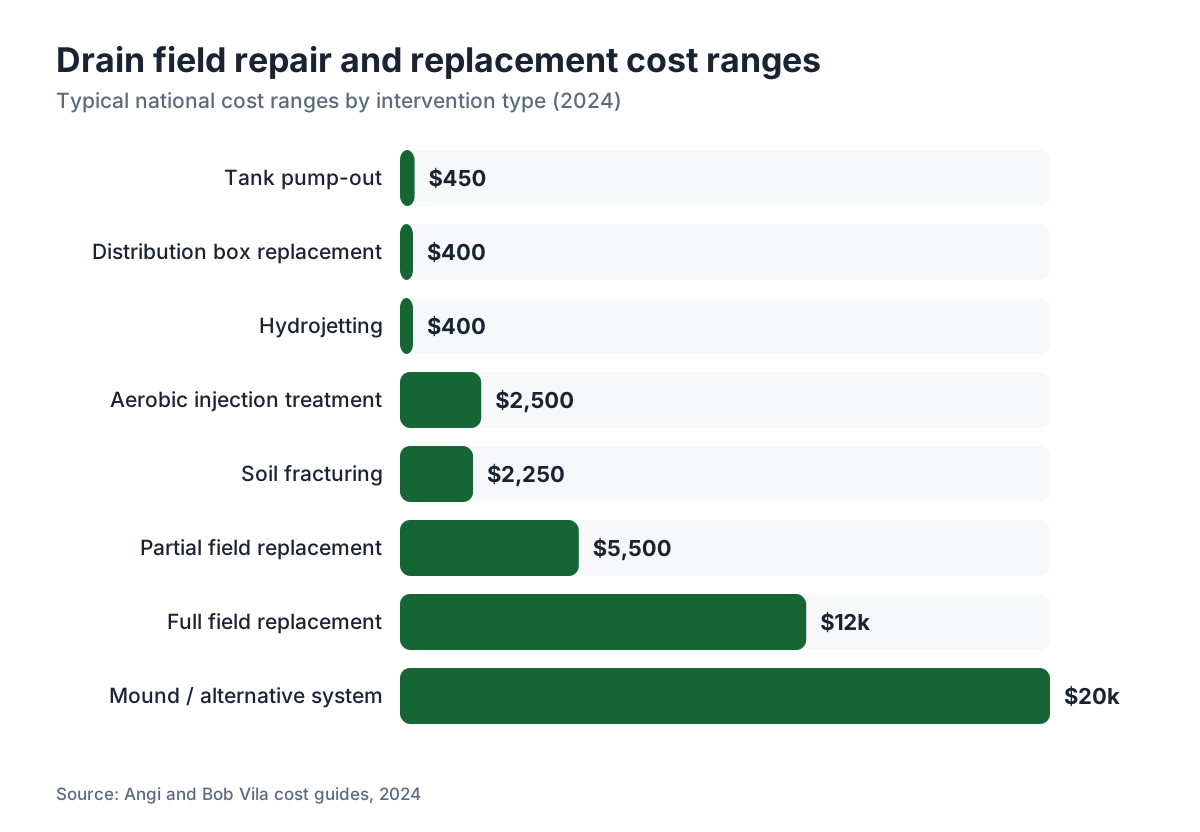
What are the repair options for a failing drain field, and how much does each cost?
Here's an honest breakdown of what's out there and what each one actually fixes.
Rest cycling (field resting)
You divert flow to a second field if you have one, or you cut water use hard, and let the biomat dry out and break down aerobically. Give it 6 to 12 months. It works when biomat is the cause and the soil isn't permanently wrecked. Cost: basically free if a second field is already plumbed in, or a few hundred dollars to have a contractor reroute flow.
Hydrojetting and pipe cleaning
A contractor runs a high-pressure water jet through the distribution pipes to clear roots and sediment. It doesn't touch soil clogging, but it restores flow through the pipe. Typical cost: $200 to $600 depending on how many laterals you have [4]. If tree roots are the problem, jetting buys time. It doesn't end the fight.
Septic tank pump-out and inspection
Step one before any field work. A septic tank pump out clears the solids that would otherwise keep loading the field. National average is $300 to $600 [4].
Aeration (aerobic injection)
Specialized contractors inject air into the field soil with a compressor and perforated pipe, creating aerobic conditions that kill off the anaerobic biomat bacteria. Studies have measured real hydraulic conductivity gains in some soils. This is one of the more legitimate biomat treatments. Cost: $1,000 to $4,000 depending on field size.
Fracturing (soil fracturing or Terralift)
A probe drives into the soil near the trenches and pneumatically fractures the compacted zone, in theory restoring permeability. Results in the literature are mixed. Some contractors swear by it. Independent research is limited. Cost: $1,000 to $3,500.
Distribution box replacement
A cracked or settled d-box loads the field unevenly and burns out whichever lateral catches all the flow. Replacing it is a targeted, cheap fix: $200 to $600 for parts and labor in most markets [4].
Full drain field replacement
When the soil is genuinely dead, you excavate the old field, haul off the contaminated gravel, and install new trenches with new perforated pipe, drain rock, and fabric. This is the definitive fix. Cost: $5,000 to $20,000 depending on soil, site access, permit fees, and field size [5]. On difficult sites (rock, high water table) you may need a mound system or drip irrigation instead, which runs higher.
Alternative system installation
When the original site is unusable and no adjacent land is available, you're looking at mound systems ($10,000 to $30,000), drip irrigation, or constructed wetlands. All of these need a full site evaluation and engineering.
| Repair type | Typical cost | Best for |
|---|---|---|
| Tank pump-out | $300-$600 | First step, always |
| Distribution box swap | $200-$600 | Uneven flow, cracked d-box |
| Hydrojetting | $200-$600 | Root intrusion, sediment |
| Field resting | $0-$300 | Early biomat, mild failure |
| Aerobic injection | $1,000-$4,000 | Biomat, confirmed soil clogging |
| Soil fracturing | $1,000-$3,500 | Compaction, uncertain results |
| Partial replacement | $3,000-$8,000 | One failed lateral |
| Full field replacement | $5,000-$20,000 | Complete soil or pipe failure |
| Mound/alternative system | $10,000-$30,000+ | No usable land, poor perc |
These ranges come from national contractor surveys and EPA cost guidance [4][5]. Your local market can swing 30 to 40 percent either way.
What are septic drain field domes and do they actually help?
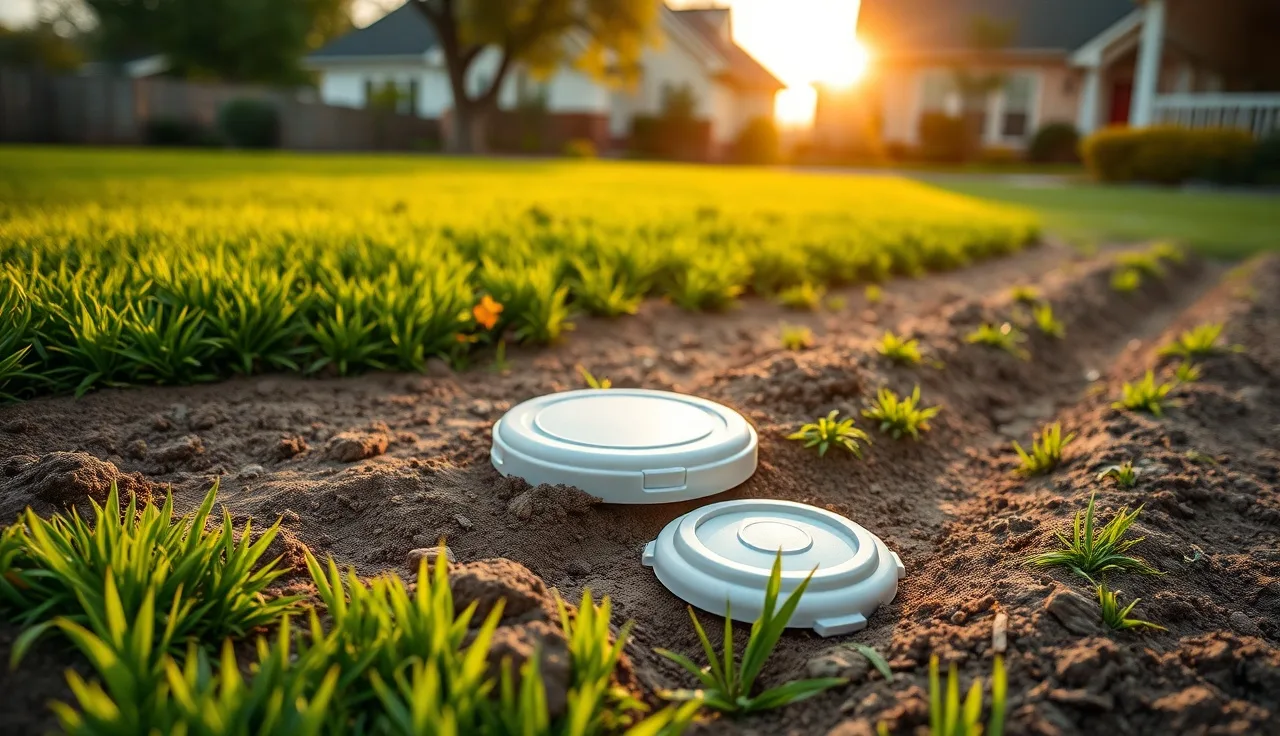
Septic drain field domes (also called gravelless chamber systems or leach field chambers) are semicircular arched plastic chambers that take the place of pipe-and-gravel trenches in new or replacement fields. Infiltrator is the best-known brand. Instead of perforated pipe packed in drain rock, you snap the chambers together in a trench, and effluent disperses from their open bottoms straight into the native soil.
The advantage is real. Chambers give a larger soil interface than a gravel trench of the same footprint, so you can sometimes install a smaller field for the same loading rate. They go in faster because there's no drain rock to haul and place. Many state codes now approve chamber systems as equivalent to or better than gravel trenches [8].
Do they help an existing failing field? Not on their own. If you're replacing a failed gravel trench system, chambers are a legitimate and often preferred choice for the new field. They don't fix the underlying soil, but they give the new field a better start. Some contractors offer them in a full replacement at about the same price as conventional gravel.
If a contractor pitches drain field domes as a retrofit cure for a failed system without excavating the old one, walk away. That's not how they work. The failed soil underneath still has to be dealt with. Chambers work in fresh native soil, not on top of a saturated biomat zone.
How do you fix a failed drain field step by step?
This is the sequence a good contractor follows, and what you should expect if you're running the project.
Step 1: Pump the septic tank.
Every time. A full tank dumps solids into the field around the clock, and you can't evaluate or fix anything with the tank loaded. Schedule a septic tank pumping before you do anything else [1].
Step 2: Locate and inspect the distribution box.
The d-box is the first piece of the field. Lift the lid (a metal rod finds it if it's buried) and check the outlet weirs. Clogged weirs, or a box that's settled so one side sits lower, send all the flow to one lateral and overload it. Leveling or replacing the d-box sometimes restores the whole field.
Step 3: Camera the outlet line and laterals if you can.
A sewer camera shows collapsed sections, root intrusion, and offset joints. It runs $150 to $300 and can save you from excavating for no reason.
Step 4: Try conservative measures if the damage isn't catastrophic.
Cut household water use 25 to 30 percent for 60 to 90 days. Fix any running toilet (a single running toilet can add 200 gallons a day to the system [1]). Spread laundry across the week. Sometimes that's enough to let a stressed field recover.
Step 5: Get a permit and hire a licensed contractor.
Anything past the steps above, your state onsite wastewater program requires a permit and an evaluation by a licensed designer or soil scientist. They run a perc test or soil morphology evaluation on the replacement area, which decides what type of system you're allowed to install [2].
Step 6: Do the repair.
For a full replacement, the contractor excavates the old field (usually 3 to 4 feet deep), hauls off the contaminated gravel, installs new distribution pipe or chambers, backfills with clean drain rock or sets gravelless chambers, and covers with fabric and soil. A septic tank inspection of the full system afterward, including a dye test, confirms it works before the permit closes.
Step 7: Protect the new field.
Sow grass over it. Never plant trees or shrubs; roots destroy lines. Keep vehicles off it for good. Commit to pumping the tank every 3 to 5 years. The whole point of the EPA SepticSmart message is that routine maintenance is what stops repeat failures [1].
If you run a service company managing many client systems, tracking inspection history, pump schedules, and repair permits across a portfolio is where software like SepticMind earns its keep. The record-keeping alone is a liability shield.
How long does a drain field last after it's repaired or replaced?
A well-designed, well-installed field lasts 20 to 30 years with good maintenance [2]. Plenty last longer. The field that dies at 8 years usually died from chronic neglect: no pumping, water overloading, or a sizing mistake baked in at install.
After a full replacement with proper soil prep, you reset the clock. After a treatment like aeration or field resting, the honest answer is it depends. If the soil wasn't permanently altered, you might get 5 to 15 more years. If the damage ran deep, you may be back to a permanent fix sooner than you'd like.
Some jurisdictions require a percolation test before they'll approve a replacement, and the results set both the system type and its design life. The EPA's manual says "a properly sited, designed, installed, and maintained system can provide reliable wastewater treatment for generations" [2]. That word "maintained" is carrying the whole sentence.
What should you not do to a failing drain field?
A few common moves make things much worse.
Don't pour septic additives into the field instead of pumping. Most are enzyme or bacterial blends sold as miracle cures. The peer-reviewed evidence that commercial additives improve soil permeability is weak. The EPA's position is that "commercial septic tank additives do not eliminate the need for periodic pumping" [1]. Some surfactant products can actually mobilize suspended solids and drive them deeper into the soil, which makes recovery harder.
Don't run a rototiller or backhoe over the field without a plan. Breaking the soil cap exposes effluent and creates a health hazard. Any excavation near the system means knowing exactly where the lines run.
Don't route extra gray water (laundry, sink drainage) around the tank straight to the field. That's illegal in most states and floods the field with untreated water.
Don't plant trees or shrubs on or near the field. Willow, poplar, and even ornamental shrubs send roots 30 to 40 feet hunting for water. Once roots are in the pipe, they come back every year, even after jetting.
Don't ignore a surfacing failure. Sewage at the surface is a public health problem, not a nuisance. It carries pathogens including E. coli and can contaminate groundwater and nearby wells. Several states require you to report active surface breakout to the local health department [11].
How much does drain field repair vs. replacement cost in total?
The full bill is more than the repair line item. Permit fees, soil testing, engineer design (required for alternative systems), and site restoration all stack up.
A minor fix (d-box swap or jetting) usually lands under $1,000 out of pocket. A full conventional field replacement on a standard suburban lot runs $8,000 to $15,000 all in. If your soils fail perc and you need a mound, $15,000 to $30,000 is realistic, and tough sites go higher [5].
Financing exists. FHA Title I loans and USDA Rural Development loans both cover septic work in qualifying areas. Some states run low-interest revolving loan funds specifically for onsite wastewater repairs. USDA's Rural Development program has funded septic repairs in rural areas under Section 504 [6].
Get at least three bids. Drain field pricing swings hard by contractor, site conditions, and local labor rates. A contractor who bids half of everyone else deserves a very careful conversation about what got left out of the number.
For the full picture on a brand-new system, the cost to install septic system and cost to put in a septic tank guides break it down.
How do you find and hire a qualified drain field repair contractor?
Start with your state licensing board for plumbers or onsite wastewater professionals. Most states require a separate license for septic installation and repair. A plumber's license alone doesn't cut it in a lot of jurisdictions.
NOWRA's contractor directory and the National Environmental Health Association both keep searchable databases [3][7]. State health departments often list licensed contractors too.
Ask this before you hire. Are you licensed for onsite wastewater work in this state? Will you pull the permit? Do you carry liability insurance and workers' comp? Can you give me references from field replacements specifically, more than tank pumping?
A contractor who tells you permits aren't necessary, or offers to move faster by skipping the inspection, is waving a red flag. The permit protects your property value and your family's health.
If you're running a septic service company and managing crews across multiple sites, SepticMind's scheduling and job-tracking tools make permit documentation and work order management a lot easier, which matters the day a regulator asks for records.
For a wider view of what septic repairs cover, the septic tank repair guide explains the tank-side work that often rides along with field repairs.
What maintenance prevents drain field failure from happening again?
The drain field is the most expensive part of the system to fix and the cheapest to protect. The maintenance list is short.
Pump the tank on schedule. A typical 3 to 4 person household with a 1,000-gallon tank needs it every 3 to 5 years. Heavy-use homes or those with garbage disposals should go every 2 to 3 years. Skipping pumps is the single biggest predictor of field failure. The guide on how often to pump septic tank has household-specific schedules.
Conserve water. The EPA estimates the average American uses 70 gallons per person per day indoors [1]. High-efficiency toilets and fixtures cut system loading in a way you can feel. Spreading laundry over several days, holding off on heavy washing when the soil is already saturated from rain, and fixing leaking toilets fast all take stress off the field.
Protect the field physically. No vehicles, no heavy equipment, no garden beds. Mow it and let the grass roots hold the soil structure together. Keep gutters and sump pump drains aimed away from the field; soaking the soil from above while you load it from below shortens field life fast.
Keep a record. Log every pump-out, every septic tank cleaning, every repair. A documented service history helps resale value and helps the next contractor read the system.
EPA's SepticSmart Week, run every September, publishes a one-page homeowner checklist that covers all of this [1].
Frequently asked questions
Can a drain field be repaired without replacing it?
Sometimes yes. If biomat buildup caused the failure and the soil itself isn't permanently damaged, aerobic injection, field resting, or fixing the distribution box can restore function. If the soil's permeability is gone or the pipes are crushed, physical replacement is the only real answer. A licensed inspector with a camera can usually tell which situation you're in before you spend money on treatments.
How long does it take to fix a drain field?
A d-box replacement or pipe jetting takes a day or less. A full field replacement takes 2 to 5 days of active work, but the permit process ahead of it can take 2 to 8 weeks depending on your county. If you're trying a field-resting approach, you're waiting 6 to 12 months before you know if it worked. Start the permit timeline early; it's almost always the longest part.
What happens if you don't fix a failing drain field?
Sewage backs up into the house, surfaces in the yard, and can contaminate groundwater and nearby wells with pathogens including E. coli and with nitrates. Many states require you to report active surface breakout and can set repair deadlines. Homeowner's insurance typically won't cover gradual system failure, so the cost stays yours. The problem doesn't stabilize on its own. It gets worse.
How do you know if your drain field is saturated or permanently failed?
A saturated field that dries out completely during a week of no water use and dry weather may still be recoverable. A field that never dries out, even after the tank is pumped and water use is cut hard, is more likely permanently failed. A percolation test or soil morphology evaluation by a licensed soil scientist is the definitive answer, and it's required before most states will permit a new system anyway.
Do septic tank additives fix a clogged drain field?
The evidence is weak. The EPA's position is that commercial additives don't eliminate the need for periodic pumping, and independent research hasn't shown reliable field recovery from biological additives alone. Some surfactant products may drive solids deeper into the soil. Save the money for a pump-out and a professional inspection. If the field recovers after pumping and water reduction, it wasn't the additive.
Can tree roots destroy a drain field, and how do you fix it?
Yes. Willow, poplar, and many ornamental trees send roots 30 to 40 feet hunting for water. Roots crack distribution pipes, clog perforations, and can shatter chambers. Hydrojetting clears roots from pipes for a while, but they return within a season or two. The permanent fix is removing the tree and replacing damaged pipe sections. If the root mass is extensive, partial or full field replacement may be needed.
What is a distribution box and how does fixing it help the drain field?
The distribution box (d-box) sits between the septic tank and the lateral lines and splits flow evenly across the field trenches. If it cracks, settles unevenly, or clogs, one lateral gets most of the effluent and fails while the others sit nearly unused. Replacing or leveling a d-box costs $200 to $600 and sometimes restores an apparently failed field completely, with no work on the trenches at all.
How much does it cost to replace a drain field?
A full conventional drain field replacement typically runs $5,000 to $20,000 depending on field size, soil conditions, site access, and local permit fees. Mound systems or drip irrigation for poor soils or high water tables cost $10,000 to $30,000 or more. Those ranges come from EPA cost guidance and national contractor surveys. Local markets vary 30 to 40 percent. Get three bids.
Can you put a mound system in if there's no room for a conventional field?
A mound system needs less horizontal footprint than a conventional trench system but requires vertical clearance and enough adjacent land for the mound itself. If lot size is the constraint, drip irrigation has an even smaller footprint. Both require a full site evaluation and engineer design. Your county's onsite wastewater program can tell you which alternative systems are approved for your soil type and lot size.
Does homeowner's insurance cover drain field repair or replacement?
Most standard homeowner's policies exclude gradual or sudden underground system failure, which covers most septic scenarios. Some insurers sell a separate sewer or septic rider that covers sudden and accidental failures. Read your policy closely and ask your agent directly. Unpermitted or improperly installed systems almost always void coverage. Documented maintenance records help if you do file a claim.
How do septic drain field domes (chambers) compare to gravel systems?
Chamber systems like Infiltrator provide a larger soil interface per linear foot of trench than gravel-pipe systems, which can allow a smaller overall footprint. They install faster since there's no drain rock to move. Many state codes approve them as equivalent to or better than gravel. They work best in new or replacement installations in native soil, not as a retrofit over an existing failed gravel system.
What permits do you need to repair a drain field?
Almost every state requires a permit for any drain field work beyond basic tank pumping. Typical requirements include a site evaluation or soil test, a system design by a licensed designer or engineer, permit approval from the county health or environmental department, and a final inspection after construction. Permit fees run $100 to $500 or more depending on the jurisdiction. Your contractor should pull these permits as part of the job.
How do you protect a new or repaired drain field from future failure?
Pump the septic tank every 3 to 5 years, or more often with heavy household use. Spread laundry loads across the week. Fix running toilets immediately. Keep all vehicles and heavy equipment off the field for good. Don't plant trees or shrubs within 30 feet of the lines. Divert gutters and sump pumps away from the field. Keep a written record of every service visit for maintenance and resale purposes.
Sources
- EPA SepticSmart Program, US Environmental Protection Agency: EPA identifies biomat and hydraulic overload as main failure causes, recommends pumping every 3-5 years, and states commercial additives do not eliminate the need for periodic pumping. Average American uses 70 gallons per person per day indoors.
- EPA Onsite Wastewater Treatment Systems Manual (EPA/625/R-00/008): Properly sited, designed, installed, and maintained systems can provide reliable wastewater treatment for generations; sets design standards for soil loading rates and setback distances; 20-30 year design life for conventional drain fields.
- National Onsite Wastewater Recycling Association (NOWRA): NOWRA maintains a directory of state regulatory contacts and licensed contractor listings for onsite wastewater systems.
- Angi Cost Guide: Septic System Repair and Drain Field: Tank pump-out national average $300-$600; hydrojetting $200-$600; distribution box replacement $200-$600; repair cost ranges for various drain field interventions.
- Bob Vila Cost Guide: Septic System and Drain Field Replacement: Full conventional drain field replacement runs $5,000-$20,000; mound and alternative systems $10,000-$30,000 depending on soils, site access, and permitting.
- USDA Rural Development Single Family Housing Programs (Section 504 Home Repair): USDA Rural Development provides grants and loans for home repairs including septic systems under Section 504 in qualifying rural areas.
- National Environmental Health Association (NEHA): NEHA maintains professional certification and directory resources for environmental health practitioners including onsite wastewater professionals.
- Infiltrator Water Technologies: Chamber System Technical Resources: Gravelless chamber systems provide larger soil interface area per linear foot of trench than conventional pipe-and-gravel systems; approved as equivalent or superior in many state codes.
- EPA: How Your Septic System Works and Failure Symptoms: Surface breakout of sewage constitutes a public health hazard with potential groundwater contamination from pathogens including E. coli; state reporting requirements apply.
Last updated 2026-07-09