How does a leach field work? A complete plain-English guide
By the SepticMind Editorial Team

TL;DR
- A leach field, also called a drain field, is a network of perforated pipes buried in gravel trenches.
- Clarified wastewater from your septic tank flows into those pipes, seeps out through the holes, and filters through soil before rejoining groundwater.
- Soil bacteria destroy pathogens along the way.
- The system lives or dies on soil permeability, on-schedule tank pumping, and keeping heavy loads off the field.
What is a leach field and where does it fit in a septic system?
A leach field is the last treatment stage of a conventional septic system. The tank does the first job. It separates solids from liquid and holds everything long enough for anaerobic bacteria to break down the sludge. The liquid that leaves the tank, called effluent, still carries nitrogen, phosphorus, pathogens, and dissolved organics. The field handles the rest.
The field sits downstream from the tank, connected by a distribution pipe or a distribution box (D-box). From that box, effluent spreads into a series of trenches, each one holding a perforated pipe bedded in gravel or a similar aggregate. The perforations face down or sideways, so liquid seeps out gradually instead of flooding one spot. Below the gravel sits native soil, which does the real treatment. The field is less a disposal area than a slow-release biological filter.
Most systems pair a single- or two-compartment tank with a gravity-fed field. No pump. Effluent flows downhill and that's it. That plainness is why millions of these systems work quietly for decades with almost no mechanical parts to fail [1].
For more on the upstream component, see our guide to septic tank pumping.
How does a leach field actually treat wastewater step by step?
Here is what happens from the moment you flush to the moment treated water rejoins the groundwater table.
Step 1: Tank separation. Raw sewage enters the septic tank. Solids sink and form sludge. Fats and oils float and form scum. The clarified middle layer, effluent, is the only thing that moves forward. A working tank holds effluent for roughly 24 to 48 hours before it exits [1].
Step 2: Distribution. Effluent travels through an outlet baffle or effluent filter into the distribution pipe. A D-box splits the flow evenly among the lateral lines. If one line gets more than its share, that trench overloads and fails faster than the others.
Step 3: Percolation into gravel. Inside each trench, perforated pipe sits in 6 to 12 inches of washed gravel or crushed stone. Effluent pools briefly in the pipe, then drips out the holes and percolates down through the gravel. The gravel keeps soil from packing against the pipe and gives the liquid a moment to spread sideways.
Step 4: Soil treatment. This is where the work happens. Effluent moves through the soil in three ways at once. Soil particles strain out suspended solids and pathogens. Clay and organic matter adsorb nitrogen compounds and bind phosphorus. Aerobic and facultative bacteria in the top 12 to 24 inches of soil eat organic matter and kill most pathogens before the water goes deeper [2].
Step 5: Groundwater recharge. Treated water reaches the water table, or plant roots take it up and evaporate it. Codes require a minimum vertical separation between the bottom of the trench and the seasonal high water table. Most states set this at 2 to 4 feet, though it varies [3].
The whole trip from flush to groundwater takes days to weeks, depending on soil type, trench depth, and how much water you send at once.
What is a biomat and why does it matter for leach field health?
A biomat is a thin, dark, jelly-like layer of microbial slime that forms where the gravel meets native soil. It sounds alarming. It is normal, and in small amounts it helps.
The biomat is mostly anaerobic bacteria and their byproducts. It slows the rate at which effluent soaks into soil, which forces the liquid to spread evenly across the whole trench length instead of draining through one spot. That even spread gives the aerobic soil zone more contact time with pathogens and cleans the water better.
The trouble starts when the biomat gets too thick. A thick biomat cuts permeability so far that effluent can't pass through as fast as it arrives. The trench fills, effluent backs into the distribution box, and eventually it backs into the tank or surfaces in your yard. Now you have a failing drain field.
What drives runaway biomat? Overloading, mostly. Too much water too fast leaves the biomat no time to thin between doses. Solids escaping an under-pumped tank coat the trench bottom and feed the biomat far faster than the design ever assumed. The EPA's SepticSmart program is blunt about the fix: pumping your tank every three to five years is the best defense against solids reaching the field [4].
A moderately thickened biomat sometimes recovers if you rest the field, cut water use, or bring a parallel system online. Severely clogged fields rarely come all the way back.
What are the main types of leach fields?
Conventional gravel-trench systems are the most common, but they aren't the only option. Soil, lot size, and local code decide what gets installed.
| System Type | How It Works | Typical Use Case |
|---|---|---|
| Conventional gravel trench | Perforated pipe in gravel, gravity-fed | Most residential sites with adequate soil |
| Chamber system | Plastic arch chambers replace gravel | Sandy soils, high water table, smaller footprint |
| Drip irrigation (low-pressure dose) | Pumped effluent drips through small emitters at root zone | Poor soil, uneven terrain, tight lots |
| Mound system | Raised fill above native soil | High water tables, shallow bedrock |
| Aerobic treatment unit (ATU) + field | Pre-aerates effluent before distribution | Sensitive areas, small lots, poor soil |
| Seepage pit / cesspool | Deep pit, no lateral trenches | Older installs; largely prohibited now |
Chamber systems, sold under brand names like Infiltrator, took off in the 1990s because they cut out the gravel truck and give roughly 30 to 40 percent more infiltrative surface area per linear foot than gravel trenches [5]. Most state codes accept them as equivalent.
Mound systems cost more, often $10,000 to $20,000 above a conventional field, because they need imported engineered fill. But on a lot with only 18 inches of usable separation above the water table, a mound may be the only legal build. See our article on cost to install a septic system for the full breakdown.
Drip fields show up across the western states and anywhere the soil percs too fast (sand) or too slow (clay). They meter effluent precisely and usually include a pump, a timer, and a pressure-compensating emitter network buried 6 to 12 inches down [3].
How big does a leach field need to be?
Field size comes down to two numbers: daily water load and soil percolation rate (perc rate).
Water load is estimated from bedroom count. Most state codes design for 150 gallons per day (gpd) per bedroom, though real household use runs closer to 50 to 100 gpd per person [1]. A 3-bedroom home is designed for 450 gpd.
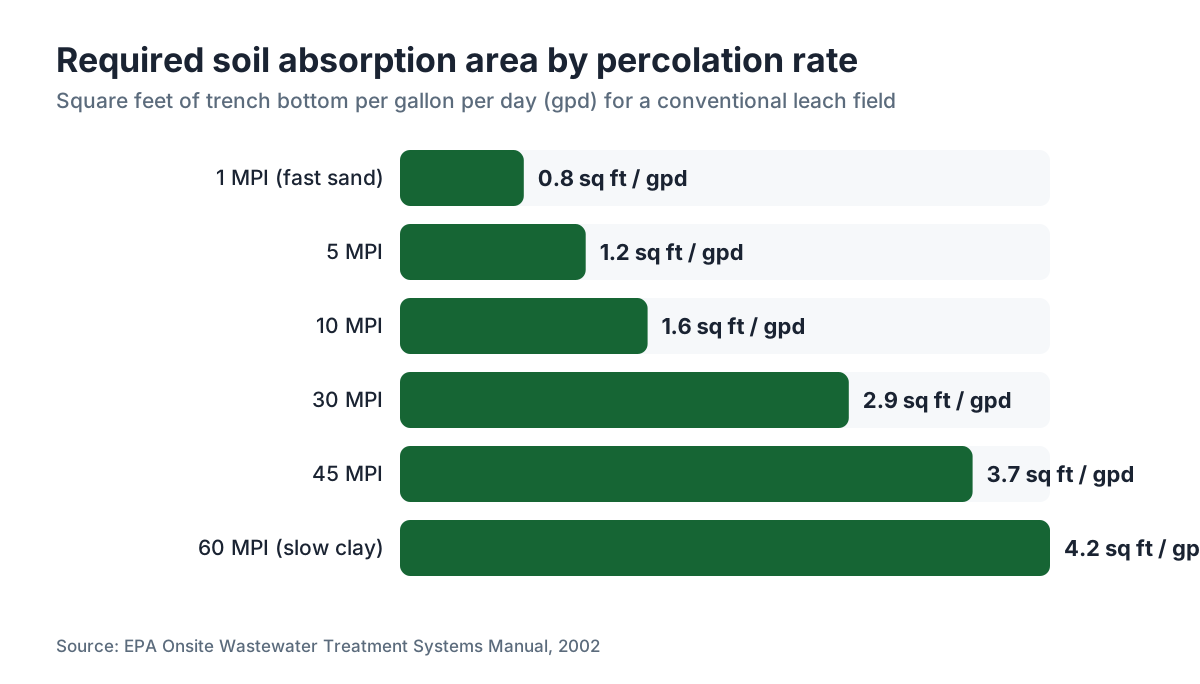
Perc rate is measured in minutes per inch (MPI), the time it takes water to drop one inch in a test hole. Soil that percs at 1 MPI is sandy and fast. Soil at 60 MPI is slow clay. Most codes accept 1 to 60 MPI for a conventional field. Outside that window, you need an alternative system.
From those two numbers, engineers calculate the absorption area in square feet. The EPA publishes a standard table: at 5 MPI you need about 1.2 square feet of trench bottom per gallon per day; at 60 MPI you need about 4.2 square feet per gpd [2]. For a 450 gpd load on 30 MPI soil, that works out to roughly 1,350 to 1,800 square feet of trench bottom, maybe three 100-foot trenches spaced 6 feet apart.
That math is why a perc test matters so much before you buy rural land. A lot that fails a perc test, or that percs outside the acceptable window, may not be legally buildable with a conventional system. Some states now accept a soil morphology evaluation by a licensed soil scientist instead of a perc test, and it often gives a more accurate read of the site [3].
What kills a leach field faster than anything else?
A handful of things kill fields reliably. Knowing them is the most practical section in this article.
Skipped tank pumping. When sludge and scum build past 30 to 33 percent of the tank's liquid volume, solids start escaping with the effluent. Those solids pack the gravel and starve the biomat zone of oxygen. Pumping every 3 to 5 years (more for heavy use) is the cheapest insurance you can buy against field failure [4]. Read more about how often to pump your septic tank.
Hydraulic overload. Ten loads of laundry in a day, a toilet that runs for months, a houseful of guests for a week. Any of these can push daily flow past what the field was built for. Effluent arrives faster than the biomat can pass it, trenches flood, and the field never fully drains. The fix is simple. Spread water use across the week and fix leaks fast. It matters more than people think.
Driving or parking on the field. Trench covers and the void space in gravel are fragile under vehicle weight. Compacted soil loses permeability for good. Even a riding mower over the same track hundreds of times compacts shallow soil above a trench. Mark your field boundaries and keep anything heavier than a person off it.
Tree and shrub roots. Willows, poplars, and maples send roots hundreds of feet chasing water. Roots slip into perforated pipe through the holes, swell, and crack the pipe from the inside. Keep any water-seeking tree at least as far from the field as its mature canopy radius, and usually more. Most extension services recommend 50 to 100 feet for aggressive species [6].
Flushing the wrong things. Grease, "flushable" wipes (they are not), medications, and harsh chemical drain cleaners either clog the system or kill the bacteria the biomat depends on. A little household bleach is fine. A gallon of disinfectant down the drain is not. Virginia Cooperative Extension puts it plainly: "Avoid putting any substance that kills bacteria into your system" [6].
Bad original install. A field put in without a real perc test, at the wrong depth, or with pipes graded wrong will fail early no matter how well you maintain it. Buying a property? A septic tank inspection that includes a load test and a dye check of the field is money well spent.
How do you know if your leach field is failing?
Field failure usually announces itself in stages, roughly in order of how bad things have gotten.
The first sign most people notice is slow drains or gurgling in the house. The field backs up, the tank fills higher than normal, and that back-pressure slows every drain. This can also come from a clogged inlet baffle or a full tank, so get the tank checked before you assume the worst.
Next comes wet, spongy ground over the field, even in dry weather. Sewage-saturated soil feels different from rain-wet soil, and it may carry a faint odor. The grass over the field often looks greener than the rest of the yard, because effluent is fertilizing it.
Severe backup produces surfacing effluent, a public health hazard. Surface sewage can carry Salmonella, E. coli, hepatitis A virus, and other pathogens. Keep children and pets away, call a septic professional right away, and cut water use in the house to the bare minimum.
Indoor backup, sewage coming up through floor drains or the lowest fixtures, is the end-stage sign. By then the tank and field are both overwhelmed.
A professional confirms field failure with a few checks: pump the tank and watch how fast it refills (a fast refill means the field is rejecting effluent), run a camera through the distribution lines, and do a dye test. Some contractors also probe the trench for effluent saturation.
If you suspect a problem, our septic system repair guide covers what comes next.
Can a failing leach field be repaired or restored?
Sometimes. It depends on why it's failing.
If the tank simply never got pumped and solids migrated into the field, resting the field (rerouting effluent to a portable tank or cutting use hard) plus pumping the tank can let the biomat thin out over several months. This works best when the clogging is moderate and the soil started healthy. Nobody has strong controlled-trial data on field resting; the closest guidance comes from university extension publications that call it "sometimes effective" rather than reliable.
Hydrojetting the lateral lines can clear clogged pipe, but it won't fix a fully mineralized trench bottom. It helps when the clog is in the pipe rather than at the soil interface.
Chemical or biological field restorers have a poor track record. The EPA has stated that research has not shown these products to be effective [4]. Save the money.
In a lot of cases, especially once a biomat has gone impermeable over years of overload, the only real fix is replacement. A new conventional field runs roughly $3,000 to $15,000 depending on size, soil, and local labor, and alternative systems go higher [7]. Many lots have room for a designated reserve field area. Find it before you need it.
Mechanical failures are easier. A broken D-box is a $200 to $500 fix. Collapsed lateral pipe can sometimes be spot-repaired without rebuilding the whole field. See our septic tank repair article for cost guidance on common repairs.
What rules and setbacks govern leach field installation?
Leach fields are regulated at the state level, and counties or towns often stack stricter rules on top. There is no single federal installation standard, but the EPA publishes guidance through its Onsite Wastewater Treatment Systems Manual, and most states have written it into their codes [2].
Common setbacks (distances from the field edge to nearby features) vary by state but follow familiar patterns:
| Feature | Typical Setback Range |
|---|---|
| Private drinking water well | 50 to 100 feet |
| Public water supply well | 100 to 200 feet |
| Property line | 5 to 25 feet |
| Foundation / basement | 10 to 25 feet |
| Surface water (stream, pond) | 25 to 100 feet |
| Seasonal high water table (vertical) | 2 to 4 feet |
These numbers come from state codes. Always check your own state's onsite wastewater regulations before you design or change a system. Most states, including North Carolina, Florida, and California, publish their rules online through the state environmental or health department [9].
Permits are required everywhere for new installation, replacement, or major modification of a drain field. Running a septic system without a required permit can bring fines and mandatory removal at the owner's expense. If you're building new or replacing a failed field, plan for the permit process. It commonly takes 2 to 8 weeks depending on the jurisdiction and whether a perc test or soil evaluation has to come first.
If you run a septic service company juggling permit workflows and inspection scheduling across many jobs, tools like SepticMind can track permit status and inspection deadlines alongside job scheduling, which takes some of the paperwork load off small crews.
How do you maintain a leach field to make it last 25 or more years?
A well-maintained field on good soil can outlast the house. The habits that get you there aren't complicated.
Pump the tank on schedule. Every 3 to 5 years for a typical household, more for large families or heavy use. Septic tank cleaning is cheap next to field replacement. This is the highest-leverage thing you can do.
Spread your water use. Run the dishwasher and washing machine on different days. Fix running toilets fast. A running toilet can add 100 to 200 gallons a day to your load and you'd never hear it.
Protect the surface over the field. Mow it, but don't drive on it. Don't build on it. Don't plant trees or aggressive-rooted shrubs over it. Grass is the ideal cover.
Watch the drains. No grease, no "flushable" wipes, no medications, no paint or solvents. Go easy on the garbage disposal, since food solids build sludge fast.
Keep runoff off the field. Divert roof downspouts, sump pump discharge, and surface drainage away from the field. Waterlogged soil can't accept effluent.
Know where your system is. Get a copy of your as-built drawing from the county health department if you don't have one. Knowing where the tank, D-box, and laterals sit makes inspection and emergency access much faster.
Inspect on a schedule. The EPA's SepticSmart program recommends inspecting the whole system every 3 years, timed with pumping [4]. An inspection catches early problems, like a cracked distribution box or a saturated end on one lateral, before they cascade into full failure. Our septic tank inspection guide explains what inspectors actually check.
The field is a living system. Treat it that way and it pays you back with decades of quiet, invisible service.
How much does it cost to replace a leach field?
Replacement costs swing widely, wide enough that a local quote beats any national average. Here is an honest picture from industry pricing data.
A conventional gravel-trench replacement for a 3-bedroom home runs roughly $5,000 to $12,000 in most of the country [7]. That covers permitting, excavation, pipe, gravel, and backfill. If the old field area is compacted or setback rules have changed, the contractor may need a different spot on the lot, which adds excavation cost.
Chamber systems (Infiltrator and similar) often cost 10 to 20 percent less than gravel because they skip the gravel material and the truck to haul it, and the labor is similar or a touch faster.
Mound systems run $15,000 to $30,000 or more because they need engineered fill, extra permitting, and sometimes a pump and control panel.
ATU systems paired with a small drip field or spray irrigation run $15,000 to $25,000 installed, plus maintenance contracts that typically cost $200 to $500 a year for required inspection and disinfection.
None of these figures include tank repair or replacement if the tank is also shot, or landscaping to fix up the yard after excavation. Before you sign, compare at least two quotes and have each contractor walk you through their permit and soil evaluation process. A contractor who skips a perc test or soil evaluation to save time is a red flag.
For more detail, see our articles on leach field costs and septic tank installation.
What is the difference between a leach field, drain field, and seepage field?
These are mostly regional names for the same thing. "Leach field" and "drain field" both mean the perforated-pipe-in-trench system described throughout this article. Which term a contractor or code uses depends on geography and habit. New England and the Mid-Atlantic lean toward "leach field." The Southeast leans toward "drain field." The EPA uses both in its guidance [2].
"Seepage field" is an older term you mostly find in literature from before 1980 or in codes that never got updated. It means the same thing in most contexts.
"Seepage pit" or "cesspool" is a different animal. A seepage pit is a large buried pit with perforated or stacked unmortared block walls, built to let raw sewage seep straight into surrounding soil with little treatment. Most states banned new cesspools and seepage pits through the 1970s and 1980s as groundwater contamination risks became clear. If you're buying an older property and the inspection report mentions a cesspool, that's a real issue, usually one that triggers disclosure and often replacement [8].
"Absorption field" is another accurate name, common in engineering and regulatory documents. It describes the function exactly: the field absorbs and disperses effluent into soil.
Frequently asked questions
How long does a leach field last?
A conventional leach field on suitable soil, with regular tank pumping and reasonable water use, commonly lasts 25 to 40 years. Some last longer. Fields fed overloaded or poorly clarified effluent fail in 10 years or less. The biggest driver of longevity is how consistently the septic tank gets pumped. Neglecting that one task accounts for most premature field failures.
Can you have a septic system without a leach field?
Yes. Some systems use other dispersal methods instead of a conventional trench: drip irrigation, spray heads, mound systems, or constructed wetlands. In rare cases, composting toilets and greywater systems cut sewage generation almost to zero. But for a standard home on septic, some form of soil-based dispersal is required by code in nearly every U.S. jurisdiction. There is no legal option that just stores sewage indefinitely without treatment.
What should you never put down the drain if you have a leach field?
Grease and cooking oils, "flushable" wipes (they don't break down), prescription medications, household chemicals like paint or solvents, heavy bleach or antibacterial cleaners, and coffee grounds. Garbage disposal waste isn't prohibited but builds sludge and should be minimized. Anything that kills tank bacteria or clogs the trench bottom shortens field life.
How do you find where your leach field is buried?
Start with your as-built drawing, which your county health or environmental department recorded when the system was permitted. If it isn't there, a septic professional can locate the tank with a probe, then trace the outlet pipe to the distribution box and field lines. Electronic pipe locators work on some systems. Most states require this drawing at permit issuance, so the record usually exists even for older homes.
Does a leach field smell?
A working leach field shouldn't produce a noticeable odor at ground level under normal conditions. Faint earthy smells near vent stacks are normal. Strong sewage odors on the surface above the field, or in the yard generally, point to surfacing effluent or a failed area. Indoor sewage smells during field trouble usually come from gases backing up through fixtures because the system can't accept more flow.
What is a perc test and do you always need one before installing a leach field?
A percolation test measures how fast water absorbs into soil in a test hole, in minutes per inch. Most states require either a perc test or a soil morphology evaluation by a licensed soil scientist before permitting a new or replacement system. The result sets field size and whether a conventional system is even feasible on the lot. Skipping this step isn't legal for permitted work and leads to undersized or mislocated fields.
Can you plant a garden over a leach field?
Grass is ideal. Shallow-rooted annuals like flowers are generally fine. Root vegetables, fruit, or any edible plant that touches soil is strongly discouraged, because effluent (even partly treated) can carry pathogens that contaminate produce. Trees and shrubs are a problem for root intrusion. Never plant anything that needs deep tilling over the field, since that breaks pipes. Check your local extension service for specific plant lists.
How does cold weather affect a leach field?
In cold climates, shallow trenches can freeze if snow cover gets stripped off (by heavy equipment or clearing) or if winter flow drops so low the effluent stops carrying heat into the ground. Biomat activity slows in cold soil, which can briefly cut permeability. Most cold-climate systems are built with enough depth and insulating cover. Leaving the system dormant through a long winter, like at a seasonal cabin, can freeze pipes that aren't winterized.
What happens to a leach field during heavy rain?
Long heavy rain raises the water table and saturates the soil around the trenches. When soil is already full of water, it can't take more effluent. Effluent backs up in the trenches, into the distribution box, sometimes into the tank. That's why vertical separation from the seasonal high water table is required. Repeated flooding can accelerate biomat growth. During multi-day rain, cutting indoor water use helps the system cope.
Do leach field additives and treatments actually work?
The evidence is poor. The EPA has stated that research has not shown commercial additives to be effective at restoring field function. Some biological products may keep tank bacteria healthy, but a working tank does that on its own. Chemical treatments claiming to dissolve biomat or unclog trenches lack peer-reviewed support. Money spent on additives is consistently better spent on tank pumping.
How far does a leach field need to be from a well?
Most state codes require 50 to 100 feet between a conventional leach field and a private drinking water well. Some require 100 feet or more. The real distance depends on soil permeability, slope, and how deep the well is cased. If the well and field share a small lot, a licensed engineer may need to certify an alternative design. Always check your state's onsite wastewater code for the exact setback.
Is a larger leach field always better?
Generally yes, up to a point. A field with more absorption area handles surges better, lets the biomat rest between doses, and stretches the life of the system. Oversizing is rarely a problem. Undersizing causes most failures. The limits are lot size, setbacks, and cost. If your lot has room for a reserve area, identify it and protect it from development even if you don't need it now.
Sources
- EPA, Septic Systems Overview: Septic tanks provide 24 to 48 hours of retention; 150 gpd per bedroom design load; approximately 20 percent of U.S. homes use septic systems
- EPA, Onsite Wastewater Treatment Systems Manual (EPA/625/R-00/008): Soil absorption area requirements by percolation rate; aerobic soil treatment of pathogens in top 12 to 24 inches; conventional system design standards
- EPA, Septic Systems (onsite wastewater technology guidance): Description of drip irrigation, mound, and chamber system alternatives; vertical separation requirements from seasonal high water table
- EPA SepticSmart Program: Pumping your tank every three to five years is recommended; research has not shown commercial additives to be effective; inspect system every three years
- Infiltrator Water Technologies, Chamber System Technical Overview: Chamber systems provide approximately 30 to 40 percent more infiltrative surface area per linear foot compared to conventional gravel trenches
- Virginia Cooperative Extension, Septic System Maintenance (Publication 448-213): "Avoid putting any substance that kills bacteria into your system"; tree root setback guidance of 50 to 100 feet for aggressive species
- Angi, Drain Field Replacement Cost Guide: Conventional leach field replacement costs roughly $5,000 to $12,000 for a typical residential system; mound systems $15,000 to $30,000
- EPA, Septic Systems (cesspool guidance): Most states prohibited new cesspools starting in the 1970s and 1980s due to groundwater contamination risk
- North Carolina Department of Environmental Quality: State-level setback and design requirements for septic system installation including well setbacks and vertical separation distances
- University of Minnesota Extension: Biomat formation, field resting as sometimes effective, and hydraulic overload as primary driver of field failure
Last updated 2026-07-10