Gravel for drain fields: what type, size, and depth you actually need
By the SepticMind Editorial Team
TL;DR
- Drain field gravel must be clean, washed, angular crushed stone between 3/4 inch and 2.5 inches across.
- Most state codes want at least 6 inches of stone below the distribution pipe and 2 inches above it.
- Rounded river rock, limestone, and stone with fines all fail inspection.
- Budget $30 to $80 per ton delivered.
- A typical home needs 15 to 30 tons.
What does gravel actually do in a drain field?
Drain field gravel is not decorative fill. It does three jobs at once: it holds the perforated pipe in place, it creates void space so effluent can spread sideways before it soaks into native soil, and it gives the biomat (the living bacterial layer that treats the wastewater) a rough, high-surface-area place to grow.
Without enough void space, effluent pools around the pipe and never reaches the soil interface where treatment happens. The EPA's SepticSmart program treats the soil under the field as the real treatment engine, which means everything above it exists only to deliver effluent slowly and evenly [1]. Get the gravel wrong and you choke that delivery.
The biomat deserves a moment. Over months of use, a gel-like layer of bacteria and biological byproducts forms right at the gravel-soil boundary. Properly sized stone keeps that mat permeable. Gravel that's too fine, or coated with silt because nobody washed it, mats the biofilm into a crust and the trench floods. That is the number-one cause of early drain field failure that installers blame on bad soil when the real culprit is cheap stone.
What size gravel is required for a drain field?
The stone must be between 3/4 inch (19 mm) and 2.5 inches (63.5 mm) across. That is the range in the EPA Design Manual and it is what most state and local codes copy [2]. Some states tighten the top end to 1.5 inches. A few name 1 to 2 inch as the target.
Why does size matter this much? Too small and the aggregate packs tight and kills the void space. Too large and the gaps between stones get wide enough that the biomat can't bridge them, so effluent channels straight through without treatment. The range is physics, not paperwork.
Your permit documents list the size. Never assume the regional norm is close enough. North Carolina code specifies "washed, crushed stone or gravel, 3/4 to 2 1/2 inches" [3]. Florida's Chapter 64E-6 reads the same way [7]. If your state code isn't on the front page of your permit application, call your county health department before you order aggregate.
Here is a practical tip. Ask the quarry for a sieve analysis (also called a gradation report). It should show less than 3% passing the 3/4-inch sieve and nothing held above 2.5 inches. If the quarry can't produce that document, find another supplier.
Does the gravel need to be washed, and why?
Yes, and washed is non-negotiable. Unwashed stone carries a coating of fines: fine sand, clay, and crusher dust that pack into the void spaces the moment the stone gets wet. University of Minnesota Extension research on onsite systems found that fine contamination in the aggregate sharply cuts the rate water moves through the bed compared to clean washed stone [4].
Washed stone goes through a water spray at the quarry to strip off particles smaller than the target gradation. The runoff comes out muddy for a reason. When you buy it, it should look dusty-dry or slightly damp, never muddy. If it clumps in your hand after it dries, it isn't clean enough.
The contamination usually happens at the job site. Washed stone gets stockpiled on bare dirt, equipment tracks mud through it, or it sits too long before it goes in. Installers who care tarp the pile and set a clean base layer under it. It sounds fussy. A contaminated pile that fails inspection means pulling the whole trench and starting over, so fussy is cheap.
What types of stone are acceptable, and what fails inspection?
Acceptable:
- Crushed granite (the default across most of the country)
- Crushed trap rock or basalt (very angular, great void space)
- Crushed river gravel, if washed and angular (not all river gravel is angular; specify "crushed", not "natural")
- Crushed recycled concrete in some jurisdictions (check your code; some states allow it, others don't)
Fails inspection:
- Round river rock or pea gravel: smooth stones roll and re-pack, and the void space collapses under backfill load
- Limestone: reacts with acidic effluent over time and breaks down, throwing off fines that clog the bed
- Slag: inconsistent hardness and chemistry
- Any stone with visible clay, dirt, or a fines coating
- Crushed concrete with rebar fragments (structural problem, plus pH issues)
Inspectors in states like Texas and Tennessee have started pulling trench sidewall samples during installation to catch limestone and pea gravel substitutions. The penalty isn't just a failed inspection. It's a full reinstall on the homeowner's dime.
For how the drain field ties into the rest of the system, the leach field guide here covers the hydraulic load side of the equation.
How deep does the gravel bed need to be?
Most codes want at least 6 inches of aggregate below the bottom of the distribution pipe and 2 inches over the top of the pipe [2][3]. That gives you a trench cross-section like this:
| Layer | Typical depth |
|---|---|
| Filter fabric or straw barrier | 1 to 2 inches |
| Gravel above pipe crown | 2 inches minimum |
| Perforated pipe (4-inch dia.) | 4 inches |
| Gravel below pipe | 6 inches minimum |
| Native soil (trench floor) | base |
Total stone depth in the trench: 12 inches at minimum, usually 12 to 18 inches depending on the design flow.
Trench width matters too. Most codes call for 18 to 36 inches wide. Wider trenches give more bottom and sidewall infiltration area, which spreads the hydraulic load over more soil. A licensed designer sets the minimum trench length from the perc rate and daily flow. Deepening the gravel bed without widening the trench does less than homeowners expect.
One thing inspectors catch over and over: installers who put less than 6 inches under the pipe to save on stone. The trench looks fine from the surface. It fails in 2 to 5 years.
How much gravel does a drain field need, and what does it cost?
A standard 3-bedroom home makes roughly 300 to 450 gallons per day and needs 250 to 500 linear feet of trench depending on the soil perc rate [1]. With a trench 2 feet wide and 12 inches of aggregate deep, that's about 0.74 tons of stone per linear foot (gravel weighs about 1.4 tons per cubic yard).
A 300-foot system runs about 22 tons. A 500-foot system runs about 37 tons. Add 10% for waste and settling.
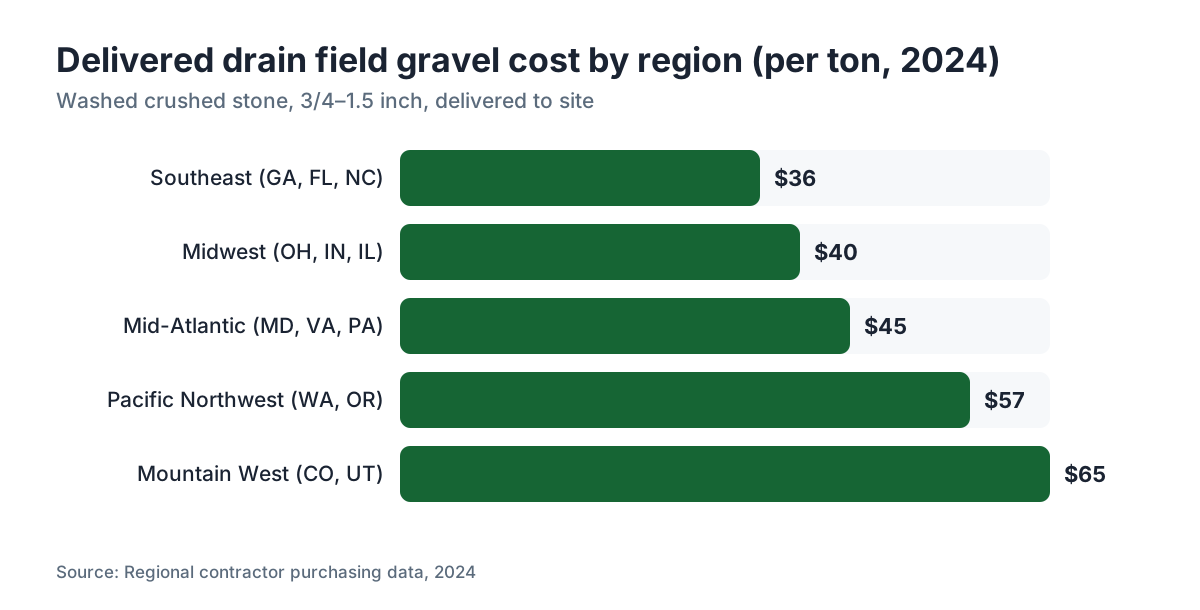
Delivered prices swing by region and haul distance:
| Region | Price per ton (delivered, 2024) |
|---|---|
| Mid-Atlantic (MD, VA, PA) | $35 to $55 |
| Southeast (GA, FL, NC) | $28 to $45 |
| Midwest (OH, IN, IL) | $30 to $50 |
| Mountain West (CO, UT) | $50 to $80 |
| Pacific Northwest (WA, OR) | $45 to $70 |
These are real market ranges from contractor purchasing data. Your quote depends on haul distance and quarry pricing the day you buy. Get three quotes. The stone is a commodity, but the delivery markup is all over the map.
If you're planning a full new system, the cost to install a septic system article breaks down how stone fits into the total installed price.
Can you skip gravel and use gravelless drain field systems instead?
Yes, and on a lot of new installs you should think hard about it. Gravelless systems use engineered chambers, fabric-wrapped pipes, or synthetic aggregate wrapped in geotextile to replace the stone bed entirely [5]. They're approved in most states under specific conditions.
Arguments for going gravelless:
- Lighter to haul and install (no heavy dump trucks on a wet site)
- More consistent quality control (a factory product beats quarry-to-quarry stone variation)
- Equal or better hydraulic performance in studies (the Infiltrator chamber system, for example, is evaluated under NSF/ANSI 40)
- Often faster permitting on replacement jobs
Arguments against:
- Higher material cost per linear foot
- Some soils and health departments still require stone by code
- Less familiar to older inspectors, which can create friction at inspection (friction, not failure)
The EPA's 2002 Onsite Wastewater Treatment Systems Manual reports that alternative chamber designs have shown hydraulic performance comparable to conventional gravel and pipe systems when they're properly designed [2]. The key words are properly designed. A chamber dropped into soil that needed a longer conventional trench fails just as fast.
If you're managing an older stone-bed system, understanding how pumping keeps solids out of the field matters. See how often to pump a septic tank for the maintenance side.
What happens when the wrong gravel is used, and how do you know?
The failure mode is predictable. The gravel bed clogs, effluent backs up in the distribution pipes, the field saturates, and you start seeing wet spots or catching sewage odors in the yard over the trenches. In a bad case it backs up into the house.
Symptoms that point at a gravel problem specifically, rather than a hydraulic overload or a failing tank:
- Wet spots only over the trench lines, not between them
- Field failure within 5 years of install (a healthy bed with proper loading should last 20 to 30 years)
- An inspection camera showing black iron sulfide staining and biomat piled all the way up to the pipe crown
- Core samples from the trench showing compacted, silted stone
Diagnosis usually takes a licensed inspector to pull a trench sample or run a camera through the distribution system. A septic tank inspection can rule out tank-side causes before you excavate the field.
If the field is genuinely clogged from bad gravel, the options run from resting and aerating the field (works sometimes on young systems with good soil under them) to full replacement. Partial replacement, meaning swapping stone in the flooded trenches while leaving good sections alone, is sometimes worth the money. Talk it through with your designer.
SepticMind's field tools let contractors document aggregate specs and installation photos at the time of permit, which builds a defensible record if a homeowner disputes an early field failure years later.
Does the gravel need a fabric barrier on top?
Most codes require a barrier between the top of the gravel and the soil backfill above it. Without one, the fine particles in backfill soil work their way down into the stone over the years and slowly clog it. Your barrier options:
Geotextile filter fabric: Nonwoven polypropylene fabric laid over the whole gravel surface before backfill. This is the standard. It lets water through and blocks soil migration. Specify nonwoven; woven fabric has openings too large and lets fines pass.
Untreated straw: Some codes allow a 2-inch layer of clean, dry straw instead. It biodegrades in 1 to 2 seasons, but by then the soil above has settled and the migration risk drops. It's cheaper. Geotextile is more reliable.
Nothing: A few older codes say nothing about this. Skipping the barrier is a false economy.
The fabric does a second job too. It marks where the gravel layer starts, which helps future inspection or maintenance digs. Contractors who open a 20-year-old system with no fabric often find the top 4 inches of gravel fouled with soil. Add it. It's cheap.
How do you specify and buy drain field gravel correctly?
When you call a quarry or aggregate supplier, be specific. "Drain field gravel" is not a universal product code, and different suppliers use different names. Ask for:
- "Washed, crushed stone, 3/4 inch to 1.5 inch" (or whatever your permit says)
- A sieve analysis (gradation report) for that exact product
- Confirmation the stone is free of crusher fines (less than 3% passing 3/4 inch)
- Delivery in a clean truck (contamination from the last load happens more than suppliers admit)
If your installer is ordering for you (the norm on new construction), ask to see the delivery ticket and the gradation report before the stone goes in the trench. Once it's buried, proving the spec was wrong is close to impossible.
For DIY homeowners doing a repair with county approval, confirm the local requirement with your health department before you order. Some counties want you to submit the gradation report with your permit application. Getting stone that passes gradation is easy. Getting it on time for a permitted install with the right paperwork is where the delays hide.
The septic tank installation guide covers how the tank, pipe, and field tie together, so you're not making gravel decisions in isolation.
Are there special gravel requirements for mound systems or alternative designs?
Mound systems, used when a seasonal high water table or shallow bedrock rules out a conventional in-ground trench, use a similar stone spec in a different layout. The aggregate sits above grade and the mound is built up with fill sand first [6].
For a mound, the stone spec is usually identical (3/4 to 1.5 inch washed, crushed), but the volume is smaller because the trench network is compressed into a shallow bed. The bigger variable is the fill sand spec, which sets how fast effluent moves from the stone bed into the native soil underneath.
Pressure-dosed systems, where effluent gets pumped to the field in timed doses instead of running by gravity, use the same stone but demand tighter pipe placement. The distribution has to be level within 1/8 inch to stop short-circuiting. The gravel inspection on a pressure system runs more detailed than a gravity job because uneven stone placement seats the pipe unevenly.
On any alternative design, your engineer of record sets the stone spec. If that spec differs from the county standard, you'll need a written variance or the engineer's stamp on the design before you order.
What do state codes and EPA guidance say about drain field aggregate?
The EPA's 2002 Onsite Wastewater Treatment Systems Manual (EPA/625/R-00/008) is still the most-cited federal reference. It calls for clean, crushed stone or gravel in a particle size range of 3/4 to 2 1/2 inches for subsurface infiltration systems [2]. The document is old, but the physics hasn't changed, and most state codes trace straight back to it.
State variation is real. A few examples:
| State | Code citation | Size range |
|---|---|---|
| North Carolina | 15A NCAC 18E | 3/4 to 2 1/2 in |
| Florida | 64E-6 FAC | 3/4 to 2 1/2 in |
| Virginia | 12VAC5-610 | 3/4 to 2 1/2 in |
| Minnesota | MN Rules 7080 | 3/4 to 2 1/2 in |
| California | Title 27 CCR | Varies by county |
California is the outlier. It delegates heavily to county environmental health departments, which is why the aggregate spec in Humboldt County can differ from San Diego County.
The EPA's SepticSmart program, updated every year, stresses that the physical parts of a drain field have to be maintained to protect groundwater [1]. That's the regulatory frame: a gravel failure is more than a homeowner's expense. It's a water quality problem, which is exactly why permits and inspections exist.
For operators running systems at scale, tools like SepticMind can log the aggregate spec, permit number, and installation photos in one job record so the documentation outlives staff turnover.
Frequently asked questions
Can I use pea gravel for a drain field?
No. Pea gravel is too round and too small. Smooth, round stones re-pack under load and collapse the void space effluent needs to move sideways. Most state codes require angular, crushed stone 3/4 inch or larger specifically because rounded gravel fails this job. Using pea gravel will almost certainly fail inspection and cause early system failure.
How deep should drain field gravel be?
Most codes require 6 inches of gravel below the perforated pipe and 2 inches above the pipe crown, for a total minimum of 12 inches of stone in the trench. Some designs call for 12 to 18 inches depending on hydraulic load. Less than 6 inches below the pipe is a code violation and a common cause of early field failure found at inspection.
What is the difference between drain field gravel and regular crushed stone?
Washing and gradation. Regular crushed stone may carry crusher fines that clog a drain field within a few years. Drain field gravel is washed to remove particles smaller than 3/4 inch and graded so every stone falls in the 3/4 to 2.5-inch range. Ask your supplier for a gradation report to confirm the spec before you accept delivery.
How many tons of gravel does a typical drain field need?
A typical 3-bedroom home needs 250 to 500 linear feet of drain trench depending on soil perc rate. At 2 feet wide with 12 inches of aggregate, that's roughly 22 to 37 tons of stone. Add 10% for waste and settling. Delivered cost runs $28 to $80 per ton depending on your region and haul distance from the quarry.
Does drain field gravel need to be washed?
Yes, always. Unwashed stone carries a coating of fine particles that pack into the void spaces the moment they get wet, cutting the rate water moves through the bed by half or more. University of Minnesota Extension research documented this effect from fine contamination. If the stone clumps in your hand or arrives muddy, reject the load.
Can you use recycled concrete instead of gravel for a drain field?
Some states permit it, others don't. Where it's allowed, the crushed concrete has to be clean, free of rebar, meet the same 3/4 to 2.5-inch gradation, and be tested for pH stability in effluent. Check your specific state or county code before you specify it. Don't assume it's acceptable without written confirmation from your permit office.
What is a gravelless drain field and is it better?
Gravelless systems use engineered plastic chambers, fabric-wrapped pipes, or synthetic aggregate in place of stone. They're approved in most states, and studies show hydraulic performance comparable to conventional gravel and pipe systems when properly designed. They cost more per linear foot for materials but install faster and cut out quarry-to-quarry quality variation. They're a legitimate option, not a shortcut.
Does the gravel in a drain field ever need to be replaced?
A properly installed stone bed with the right aggregate should last 20 to 30 years or more. Replacement becomes necessary when the biomat goes impermeable, usually from hydraulic overloading, skipped tank pumping, or poor original stone quality. Resting the field for 6 to 12 months sometimes restores function on younger systems. Full replacement means excavating and rebuilding the whole trench, which is expensive but sometimes the only fix.
Does drain field gravel need a fabric barrier on top?
Most modern codes require a nonwoven geotextile filter fabric laid over the gravel surface before backfill goes on. Without it, fine soil particles migrate down into the stone over the years and slowly clog the bed. Some codes allow untreated straw instead. Skipping the barrier is a false economy that shortens system life noticeably.
What kind of gravel does a mound septic system need?
Mound systems use the same stone spec as conventional trenches: washed, crushed stone in the 3/4 to 1.5-inch range. The volume is usually smaller because the trench network is shallow and compact. The bigger spec variable in a mound is the fill sand under the stone bed, which controls how fast effluent moves into the native soil.
How do I know if my existing drain field gravel has failed?
Look for wet spots over the trench lines, sewage odors in the yard, or slow drains and backups in the house. Field failure within 5 years of installation strongly suggests a gravel quality problem. A licensed inspector can pull trench samples or camera the distribution pipes. Rule out tank problems first with a septic tank inspection before you excavate the field.
Can I add more gravel on top of an existing drain field to fix it?
No, and this is a common mistake. Adding gravel on top of a clogged system does nothing for the clogged stone or biomat below. The problem is in the trench, not above it. Covering the field with surface stone can actually trap moisture and make the soil conditions worse. A failing field needs diagnosis and, usually, trench-level work.
Is limestone acceptable for drain field gravel?
Most experienced installers avoid it and many codes prohibit it. Limestone reacts with the slightly acidic effluent from a typical household septic system and breaks down over time, producing fine particles that slowly clog the gravel bed. Crushed granite, basalt, or trap rock hold up far better in the chemical environment of a drain field.
Who inspects the gravel in a drain field, and when?
Your county health department or local code enforcement office runs a pre-backfill inspection after the stone is placed and the pipes are set but before soil goes over the trench. That's the only point where the inspector can physically verify stone size, depth, and quality. Missing this inspection window is a serious problem that can force re-excavation.
Sources
- EPA SepticSmart Program, U.S. Environmental Protection Agency: Soil beneath the drain field is the real treatment engine; the field components exist to deliver effluent slowly and evenly for groundwater protection.
- EPA Onsite Wastewater Treatment Systems Manual (EPA/625/R-00/008), U.S. Environmental Protection Agency: Aggregate for subsurface wastewater infiltration systems should be clean, crushed stone or gravel with a particle size range of 3/4 to 2 1/2 inches; alternative chamber systems have demonstrated comparable hydraulic performance to conventional gravel/pipe systems.
- North Carolina Administrative Code 15A NCAC 18E, NC Department of Health and Human Services: North Carolina code specifies washed, crushed stone or gravel 3/4 to 2 1/2 inches for subsurface drain field aggregate.
- University of Minnesota Extension, Septic System Owner's Guide: Fine contamination in drain field aggregate sharply reduces the rate water moves through the bed compared to clean washed stone in onsite system research.
- NSF International, NSF/ANSI 40 Standard for Residential Wastewater Treatment Systems: Gravelless chamber systems are evaluated for hydraulic performance under NSF/ANSI 40 and are approved alternatives to conventional gravel/pipe drain fields.
- Florida Department of Health, Chapter 64E-6 Florida Administrative Code, Onsite Sewage Treatment and Disposal Systems: Florida code Chapter 64E-6 specifies washed crushed stone 3/4 to 2 1/2 inches for drain field aggregate.
- Virginia Department of Health, Sewage Handling and Disposal Regulations 12VAC5-610: Virginia regulations 12VAC5-610 specify crushed stone aggregate in the 3/4 to 2 1/2-inch range for conventional drain field systems.
- Minnesota Pollution Control Agency, MN Rules Chapter 7080, Individual Sewage Treatment Systems: Minnesota Rules 7080 specify aggregate sizing of 3/4 to 2 1/2 inches for subsurface soil treatment systems.
- EPA Design Manual: Onsite Wastewater Treatment and Disposal Systems, U.S. Environmental Protection Agency: Properly sized and washed drain field aggregate supports the biomat formation that provides secondary treatment of septic effluent; fine contamination is a leading cause of premature field failure.
Last updated 2026-07-09