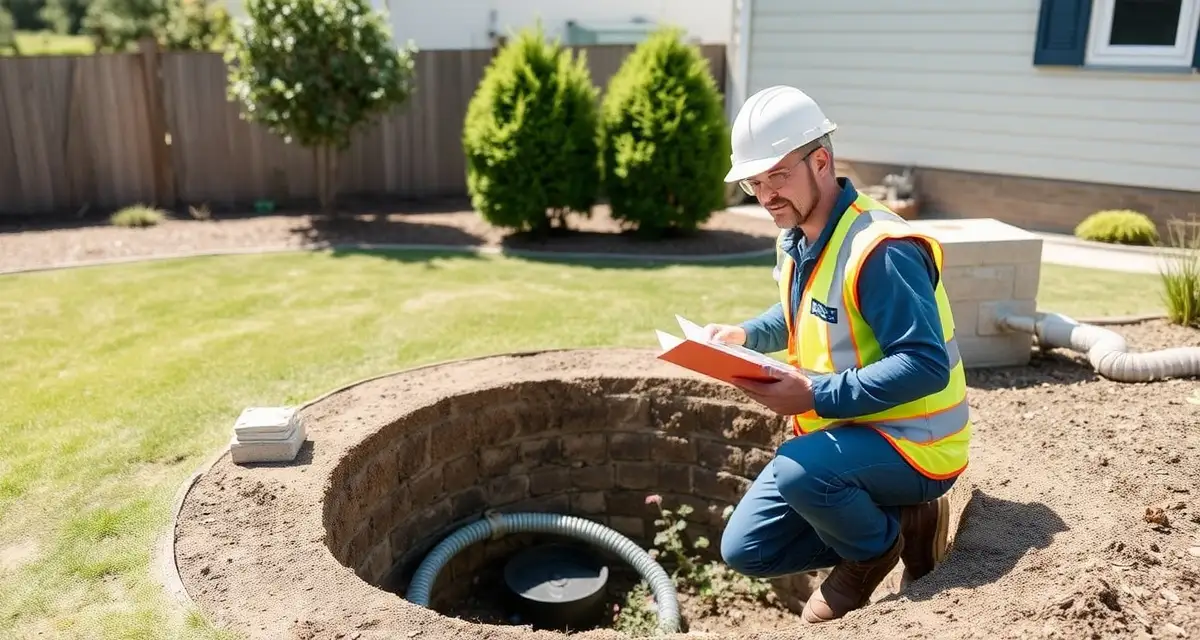
Septic Technician Field Guide: Everything a Tech Needs to Know
By the SepticMind Editorial Team
Untrained or undertrained technicians create compliance incidents at four times the rate of trained counterparts. That's not a commentary on intelligence or effort, it's a documentation and procedure problem. Technicians who haven't been trained on what to observe, what to record, and what to flag create gaps in the record that cause headaches later. Septic companies with structured technical training programs have 34% lower callback rates.
TL;DR
- Septic Technician Field Guide: Everything a Tech Needs to Know is designed to address the specific workflow and compliance requirements of septic service operations.
- Purpose-built septic software handles permit tracking, state inspection report templates, and tank data management that generic platforms do not offer.
- Companies managing ATU contracts, multi-county permit portfolios, or real estate inspection volume need software designed around those workflows.
- Mobile access allows field technicians to complete and submit inspection reports before leaving a property.
- Cloud-based platforms ensure records are accessible from any device and backed up automatically.
- Switching costs from generic software are real, so evaluating septic-specific platforms early saves migration pain later.
This field guide covers the core knowledge every septic technician needs: how to approach a job, how to document what you find, how to recognize problems, and how to complete work that holds up to compliance review.
Before You Arrive: Job Preparation
Good field work starts before the truck reaches the property. When you receive a job assignment, review the job card for:
Customer and property information. Address, contact name, phone number. Confirm you have what you need to find the property and reach the customer if access is unclear.
System type. Conventional gravity, mound, pressure distribution, ATU, drip dispersal, cesspool, the system type determines what you're working with and whether you need any specialized equipment or documentation.
Tank location notes. Check for GPS coordinates, diagrams, or notes from previous service visits describing where the tank access is. Properties with no previous service record may require locating the tank on arrival.
Service history. What was the condition at the last service? If previous notes mention a cracked baffle, damaged riser, or distribution box concern, you need to know that before you open the tank.
Special instructions. Does the customer need a call before arriving? Is there a dog? Are there access gate codes? Is this a real estate inspection that requires a specific report format?
Safety notes. Check for any flagged safety hazards at this property, aggressive dogs, unstable tank covers, confined space concerns, or documented H2S odor at previous visits.
Tank Location and Access
Finding the tank is often the first challenge at an unfamiliar property.
Work from the house. The main sewer line leaves the house within a few feet of the foundation and runs in a relatively straight line to the tank. Standing at the point where the main line exits the basement or crawlspace gives you a direction. The tank is typically 10-25 feet from the house.
Look for visual clues. A slight depression, a green rectangle of grass in a dry summer, a concrete riser lid visible at or near grade, disturbed soil from previous service, or a clearly installed cleanout pipe near the foundation, all are indicators.
Use the previous service diagram. If a previous technician drew a diagram or noted the distance and direction from the house corner, use it. GPS coordinates linked to the property record in SepticMind's field app are the fastest method.
Probe carefully. If you need to probe for the tank, use a thin steel rod and probe gently. Concrete tanks are sturdy, but fiberglass tanks can crack if probed aggressively. Never probe in locations where buried electrical or gas lines might be present.
Be aware of buried components. Distribution boxes, pump vaults, and drainfield inspection ports are also buried. Probing could hit any of these.
Pre-Service Safety Protocol
Every service visit requires the same safety checklist, regardless of how routine the job appears.
Personal protective equipment. Nitrile or rubber gloves are the minimum. For tank access, add splash protection for eyes and face, rubber boots that can be decontaminated, and a water-resistant outer layer. Don't skip PPE because the job looks routine.
Gas monitoring. H2S (hydrogen sulfide) is the primary confined-space hazard in septic work. Before opening any tank, have your H2S monitor on and functioning. Hydrogen sulfide gas exposure is responsible for 60% of septic service worker injuries annually. The gas is heavier than air, accumulates in low spaces, and can incapacitate without warning. Test before you open, and keep monitoring throughout the job.
Confined space awareness. A septic tank is a confined space. You are not entering it. There is no residential septic service situation that requires tank entry. If a service situation appears to require tank entry, stop work and contact your supervisor. Confined space entry requires permits, atmospheric testing, a trained attendant, and rescue equipment.
Equipment check. Before hose hookup, check hose integrity. A hose that fails under vacuum or pressure during pumping creates an immediate hazardous situation.
Inform the customer. Let the customer know you're beginning work and approximately how long it will take. If you discover anything that changes the service scope (a failed component, a tank condition that needs attention) communicate before you do additional work.
The Pump-Out Procedure
Once the tank is located, accessed, and the safety checks are done:
Measure before pumping. Before starting the pump, note the liquid level in the tank and the approximate sludge depth at the bottom. This tells you the condition before you disturb it. Some companies record this with a photo through the open access.
Pump until empty. A complete pump-out removes all liquid, sludge, and scum. Partial pump-outs leave behind material that accelerates re-accumulation. Don't stop the pump because it looks mostly empty.
Inspect the baffles. With the tank empty or nearly empty, use a flashlight to inspect both inlet and outlet baffles. The outlet baffle is critical, it prevents solids from passing into the drainfield. Look for cracks, missing sections, or corrosion.
Check the tank walls and bottom. Look for cracks in concrete tanks, delamination in fiberglass tanks, or any sign of structural compromise. Minor cracking at joints may be normal; wide cracks or cracks allowing soil intrusion are a problem.
Flush access risers and pipes. If the tank has risers, flush any accumulated material from them. If there's a distribution box, check that distribution pipes are clear and the box isn't cracked or shifted.
Photograph key findings. Take photos of: the access lid condition, the baffles (before and after cleaning), any conditions requiring attention, and the tank after pumping. These photos attach to the job record and are invaluable if questions arise later.
What to Document
This is where undertrained technicians fall short most often, documentation. What you record protects the customer, protects your company, and creates the service history that has real value.
Tank condition. Structurally sound, minor cracking, requires monitoring, recommend repair, use consistent condition rating language so the record means something.
Baffle condition. Present/absent, intact/damaged, recommend replacement. Never omit baffle condition from a service record.
Liquid level at arrival. High (at or near outlet), normal (mid-range), low (well below outlet). High liquid level with no recent rainfall may indicate drain field problems.
Sludge and scum depth. Estimated depth before pumping. This tracks accumulation rate and helps set the next service interval.
Gallons pumped. Record the actual volume removed. This is often required for state reporting and is useful for establishing service intervals.
Additional observations. Odors outside the tank area, wet spots in the yard above the drainfield, surfacing effluent, unusual sounds from the pump chamber, note anything that doesn't match a healthy, normally functioning system.
Recommended follow-up. If you see something that needs attention (a cracked baffle, a tank lid that should be replaced with a proper riser, a drainfield area showing stress) record the recommendation. This is how your company generates repair and upsell opportunities from routine service.
SepticMind's field app acts as a digital field guide, prompting technicians through every service step so nothing gets skipped. The documentation prompts are built into the job completion workflow, you're not relying on each technician to remember what to record.
Recognizing Problems That Need Escalation
Not every problem you observe during routine service is something you can address on the same visit. Some findings require escalation to a supervisor or a follow-up appointment.
Signs of system failure:
- Sewage surfacing in the yard, especially over the drainfield
- Strong odor near the drainfield when the tank is not being serviced
- Unusually high water level in the tank that doesn't correlate with recent heavy rain
- Distribution box full of liquid with no flow to drainfield
- Roots visible in the tank through cracks or access points
Component failures requiring repair appointment:
- Outlet baffle missing or severely damaged
- Cracked or collapsed distribution box
- Broken or missing pump in a pressure system
- Tank lid that is not properly secured or has compromised integrity
- Alarm on an ATU or pressure system
Situations requiring immediate communication with the customer:
- Sewage surfacing presents a public health risk, you cannot leave without notifying the customer and documenting the condition
- System elements that suggest imminent complete failure
- Any finding that affects the property's compliance status for a pending real estate transaction
Post-Service Cleanup
Leave the property in the condition you found it, or better.
Backfill access. If you dug to access the tank, backfill the hole properly. A hole that collapses after you leave is a liability.
Clean the access area. Hose down any spill or splash around the access point. Septage on the surface is a public health concern.
Decontaminate equipment. Hoses, tools, and gloves that contacted septage should be rinsed before leaving the property.
Restore the customer's yard. If you drove over lawn or damaged landscaping accessing the tank, note it on the job record and communicate to the customer. Most customers are understanding if you're upfront about incidental damage.
Completing the Job in the Field App
Before you leave the property, complete the job record in the field app. Don't wait until you're back at the yard, mobile completion is more accurate because the details are fresh and you can take photos immediately.
Your completed job record should include:
- All documentation fields completed (tank condition, baffle condition, gallons pumped, observations)
- Photos attached (baffles, access, any notable conditions)
- Recommended follow-up noted if applicable
- Job status marked complete
The customer gets the invoice automatically, the service history updates, and the next service interval gets flagged, all from your field app entry. That's what a modern field documentation workflow looks like.
Get Started with SepticMind
The right software for a septic company handles compliance and documentation alongside scheduling and billing. SepticMind is built specifically for septic operations, from county permit tracking to ATU maintenance management. Start a free trial to evaluate it against your workflow.
Frequently Asked Questions
What should every septic technician know about tank access and safety?
Every technician must understand that septic tanks are classified confined spaces and must never be entered without proper confined space entry protocols, which include atmospheric testing, a trained attendant, and rescue equipment. Before opening any tank, confirm your H2S monitor is working and keep it with you throughout the job. Hydrogen sulfide is colorless, heavier than air, and can incapacitate a person within seconds at high concentrations. Always wear gloves and eye protection minimum, and add splash protection for your face during pumping. Know where your gas shutoff is on the vacuum system. Establish where the customer can reach you if there's an emergency. Safety procedures that feel routine eventually save lives.
How does a technician properly document tank condition during a service visit?
Documentation starts before pumping: note the liquid level, estimate sludge depth, and photograph the open tank. After pumping, inspect inlet and outlet baffles with a flashlight, note their condition using your company's standard rating language, and photograph them. Note any structural observations, cracks, root intrusion, evidence of inflow from surface water. Record the volume pumped and any observations about the drain field area visible from the tank location. If you see anything concerning, note it specifically and include a recommendation. Before leaving the property, verify every required field is completed in the job app. The job record you create is the only permanent record of what you found on that visit.
What are the most common technician errors that create compliance problems?
The most common documentation-related errors are incomplete condition records, missing baffle condition, no volume pumped recorded, or no notes when something unusual was observed. Procedurally, the most common errors are performing tank access without gas monitoring, failing to identify and note failing components (assuming someone else will catch it later), and leaving the property without properly backfilling and cleaning the access area. For inspections, the most common errors are not measuring or photographing required components, not addressing proximity to well or water body when applicable, and submitting reports with ambiguous language that doesn't satisfy lender or regulatory requirements. Structured checklists and digital prompts address most of these errors systematically.
What makes Septic Technician Field Guide: Everything a Tech Needs to Know different from general field service software?
The primary differences are septic-specific features: county permit databases, state inspection report templates formatted for regulatory submission, tank size and system type records that drive service interval calculations, and ATU maintenance contract management. General field service platforms can handle scheduling and invoicing but require manual workarounds for every compliance and documentation task that purpose-built septic software handles automatically.
Is there a free trial available to test the software?
SepticMind offers a free trial period so you can evaluate the platform with your actual workflow before committing. The trial includes access to the permit database, inspection report templates, and scheduling tools. Most companies complete their evaluation within two to three weeks and have a clear picture of how the platform fits their operation before the trial ends.
Try These Free Tools
Sources
- National Onsite Wastewater Recycling Association (NOWRA)
- US EPA Office of Wastewater Management
- NSF International
- Water Environment Federation
- National Environmental Services Center (NESC)