Septic Service Software for Great Plains Companies
By the SepticMind Editorial Team
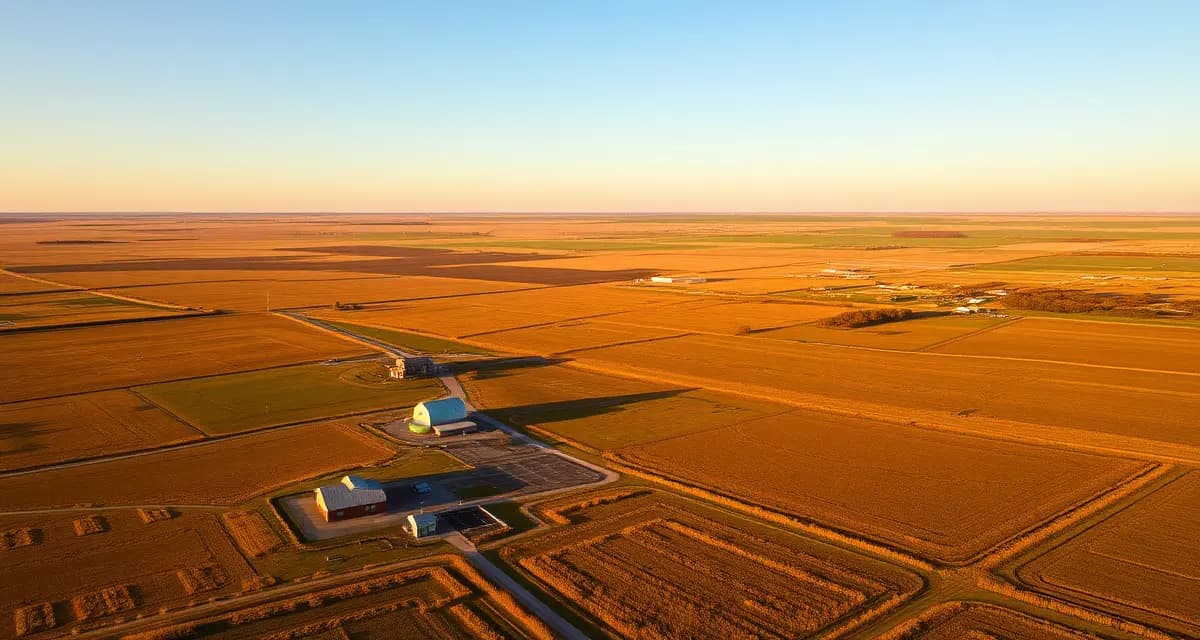
The Great Plains has approximately 600,000 private septic systems serving agricultural and rural communities across Kansas, Nebraska, the Dakotas, Oklahoma, and the eastern portions of Colorado and Wyoming. Great Plains companies serve territories of 3,000 square miles or more, service areas that make route planning the most critical operational variable, and where driving time can consume more of the day than service time if routes aren't optimized.
TL;DR
- Septic Service Software for Great Plains Companies is designed to address the specific workflow and compliance requirements of septic service operations.
- Purpose-built septic software handles permit tracking, state inspection report templates, and tank data management that generic platforms do not offer.
- Companies managing ATU contracts, multi-county permit portfolios, or real estate inspection volume need software designed around those workflows.
- Mobile access allows field technicians to complete and submit inspection reports before leaving a property.
- Cloud-based platforms ensure records are accessible from any device and backed up automatically.
- Switching costs from generic software are real, so evaluating septic-specific platforms early saves migration pain later.
SepticMind's routing tools are tested in Great Plains service areas spanning multiple rural counties so the software reflects the actual operational reality of remote service work.
The Great Plains Service Challenge
The operational challenge of Great Plains septic service isn't system complexity, it's distance. Properties are spread across vast territories with limited population density. A single service day might cover 200 miles between jobs. Counties that would contain dozens of companies in the Northeast contain one or two on the Great Plains.
Route density matters more here than anywhere. When drive time between jobs is 30-60 minutes, the number of jobs per truck per day is directly constrained by route efficiency. Adding one well-positioned job to a route can be the difference between a profitable day and a break-even one. Septic route optimization software built for rural high-distance territories is a different problem than suburban route optimization.
Seasonal access issues. Great Plains winters close roads, make rural access challenging, and create service windows that compress spring and fall demand. Spring thaw conditions on unpaved county roads can make service impossible for weeks. Companies that plan around seasonal access constraints run more efficiently than those that treat the calendar like a flat surface.
Wind and climate vulnerability. Above-ground system components (risers, lids, vent pipes) are subject to damage from severe weather including tornadoes, high winds, and hail. Companies that track system condition histories can spot clients with recurring weather damage and proactively schedule post-storm checks.
County-Level Permit Variation Across the Great Plains
The Great Plains doesn't have a unified regulatory framework. Each state administers its own onsite wastewater program, and within each state, county health departments often have notable implementation authority.
Nebraska's onsite wastewater rules are administered by the Department of Environment and Energy, with county health departments playing an active role in permit administration. Kansas operates through the Department of Health and Environment with county-level implementation. North and South Dakota each have state-level programs administered through their respective health departments.
For companies that cross state lines (serving portions of multiple Great Plains states) the county-level permit tracking challenge multiplies. County permit requirements for septic explains how county-level variation within state frameworks creates documentation requirements that differ from county to county even within a single state.
System Types in Great Plains Markets
Conventional gravity systems remain common in Great Plains markets where soil conditions support them, flat terrain and deep, well-drained soils can be ideal for standard drainfield design. But the region also includes notable areas with high water tables (particularly in Nebraska's Sandhills and the Prairie Pothole region of the Dakotas) and areas with heavy clay soils that require alternative designs.
Aerobic treatment units are used in areas where soil conditions don't support conventional dispersal. Mound systems address high water table conditions. In agricultural areas, system sizing for farm properties with multiple structures and seasonal worker housing creates service complexity beyond standard residential work.
Get Started with SepticMind
The right software for a septic company handles compliance and documentation alongside scheduling and billing. SepticMind is built specifically for septic operations, from county permit tracking to ATU maintenance management. Start a free trial to evaluate it against your workflow.
Frequently Asked Questions
What system types are most common in Great Plains septic service areas?
Conventional gravity systems dominate where flat terrain and well-drained soils allow them, much of Kansas, Nebraska, and the eastern Dakotas has soil conditions that support standard drainfield design. Mound systems are required in areas with high water tables, particularly Nebraska's Sandhills region and the Prairie Pothole areas of North and South Dakota. Aerobic treatment units are used where soil conditions don't support conventional dispersal. Agricultural properties often have larger systems or multiple systems serving different structures on the same property. The relatively simple system type mix compared to mountainous or coastal regions is offset by the route distance challenges that define Great Plains operations.
How do Great Plains companies manage permits across county lines in large rural territories?
The practical challenge is that a large rural territory can span multiple counties in multiple states, each with different permit forms, different fee schedules, and different documentation requirements. A North Dakota job and a South Dakota job 40 miles apart may require entirely different permit applications and documentation packages. Companies that work across county and state lines without county-specific compliance tracking routinely submit incorrect documentation to the wrong county program, causing delays and rework. Tracking each county's specific requirements in a structured system, rather than relying on technician memory or generic forms, is the operational discipline that separates efficient multi-county operators from those who spend time correcting permit errors.
Does SepticMind route optimization work effectively for rural Great Plains service areas?
Yes. SepticMind's route optimization handles the long-distance between-stop routing characteristic of Great Plains territories. The system accounts for actual drive time between stops (not just distance) which matters when rural county roads differ dramatically in speed from paved highways. For companies managing 200-mile service days, the difference between an optimized route and an ad-hoc sequence can be 40-60 minutes of drive time per truck per day. At Great Plains distances, that time savings translates directly to an additional service stop. The routing tool also supports multi-day scheduling for territories too large to cover in a single day, which is a practical necessity for companies serving large sections of sparsely populated counties.
What makes Septic Service Software for Great Plains Companies different from general field service software?
The primary differences are septic-specific features: county permit databases, state inspection report templates formatted for regulatory submission, tank size and system type records that drive service interval calculations, and ATU maintenance contract management. General field service platforms can handle scheduling and invoicing but require manual workarounds for every compliance and documentation task that purpose-built septic software handles automatically.
Is there a free trial available to test the software?
SepticMind offers a free trial period so you can evaluate the platform with your actual workflow before committing. The trial includes access to the permit database, inspection report templates, and scheduling tools. Most companies complete their evaluation within two to three weeks and have a clear picture of how the platform fits their operation before the trial ends.
Try These Free Tools
Sources
- National Onsite Wastewater Recycling Association (NOWRA)
- US EPA Office of Wastewater Management
- NSF International
- Water Environment Federation
- National Environmental Services Center (NESC)