Septic Service for Petting Zoos and Agritourism Facilities
By the SepticMind Editorial Team
Petting zoos and agritourism operations are pulling compliance requirements from two entirely different directions at once. On one side, you have agricultural waste management rules governing the animal areas. On the other, you have public facility restroom compliance requirements for the guests. A septic failure at an agritourism facility during a school field trip creates significant liability from both directions simultaneously.
TL;DR
- Petting Zoos facilities have distinct wastewater loading patterns that affect septic system sizing, service frequency, and permit requirements.
- Commercial and institutional properties like petting zoos typically require more frequent pumping than residential systems due to higher daily usage.
- Some petting zoos operations generate waste streams (grease, chemicals, or high-volume flow) that require pre-treatment before reaching the septic system.
- Service contracts for petting zoos provide predictable recurring revenue and are easier to manage with a platform that tracks commercial account schedules.
- Health department inspections for petting zoos properties may require septic system condition documentation as part of facility licensing.
- Septic companies specializing in petting zoos service build referral networks with property managers, architects, and health inspectors in that niche.
Agritourism facilities combine farm waste management with public facility restroom compliance requirements. The practical result is that you can't manage your petting zoo's wastewater the same way a dairy farm would, because you have members of the public, including children, on-site. And you can't manage it the same way a playground restroom facility would, because you have animal waste in the mix.
Two Distinct Wastewater Streams
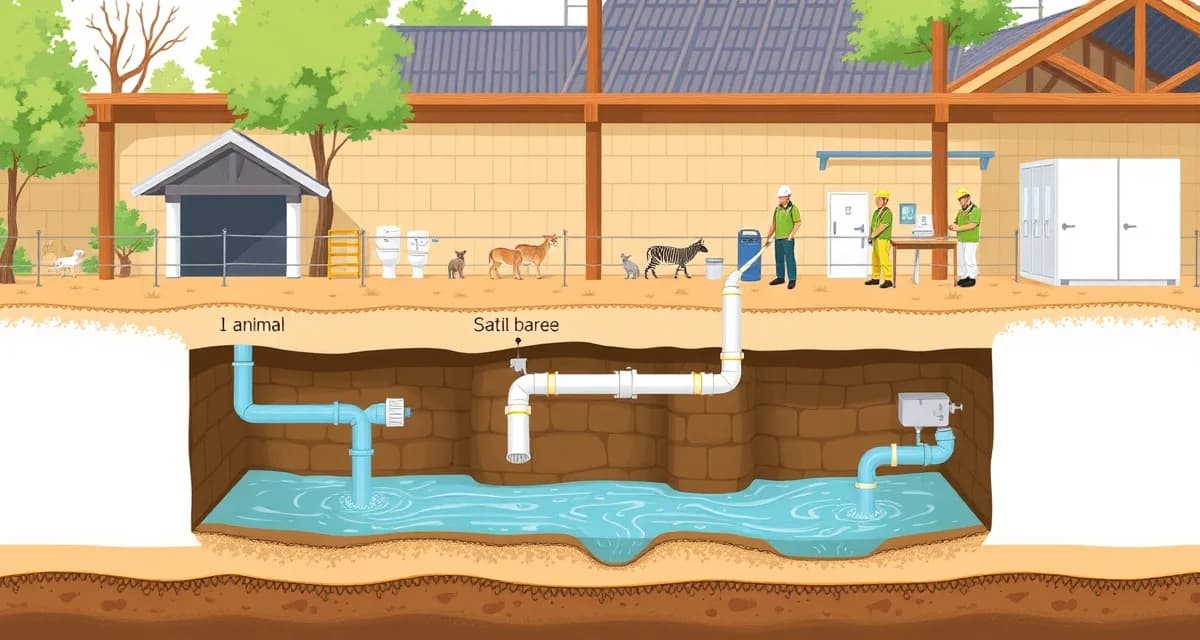
The starting point for agritourism septic management is separating the two wastewater streams conceptually, even if they share some infrastructure in practice:
Animal area waste: Petting zoo animal pens, washing stations, and hoof wash areas produce waste with high pathogen loads. Animal fecal matter, urine, and pen wash water may contain pathogens like Cryptosporidium, E. coli O157:H7, and Salmonella. Most states regulate how this waste is managed, whether through agricultural waste permits, composting programs, or approved disposal methods.
Public restroom and handwashing facilities: The restrooms and handwashing stations you provide for guests are governed by standard public facility rules. These need to meet capacity requirements for your expected visitor count, be maintained in sanitary condition, and connect to a properly functioning septic or sewer system.
The two streams should not mix unless your system is specifically designed to handle both and permitted accordingly. Animal wash water going directly into a system designed only for public restroom gray water is a compliance problem in most states.
Agricultural Wastewater Compliance
Most states require permits for operations that generate agricultural wastewater above certain thresholds. Even a small petting zoo may trigger reporting requirements depending on the number and type of animals you keep and how their waste is managed.
Check with your state department of agriculture and your local county health department. Specifically ask about:
- Whether your animal count triggers a Concentrated Animal Feeding Operation (CAFO) permit, even at small scale
- What methods are approved for managing animal pen wash water on your property
- Whether composting animal waste on-site requires additional permits
- What setback requirements apply to any wastewater disposal area near your animal contact zones
SepticMind's agritourism account type documents both agricultural and public facility septic compliance requirements, keeping both streams organized in a single account rather than having agricultural compliance in one file and public facility compliance in another.
Public Restroom Requirements for Visitor Facilities
When you're open to the public, especially for events like school field trips, birthday parties, and weekend family activities, your public restroom facilities need to meet capacity and sanitation standards. Most county health departments calculate required restroom capacity based on expected visitor count.
For an agritourism facility expecting 200 visitors on a busy weekend day, you need enough restroom capacity to serve that load without overwhelming your septic system. If your permanent restrooms can't handle peak visitor days, you may need to supplement with portable units, which have their own compliance considerations around service frequency and placement.
Handwashing stations near animal contact areas are particularly important. Many state agricultural departments and county health departments require dedicated handwashing facilities adjacent to petting zoo animal areas, separate from the main restroom building.
Liability Considerations
A septic failure during a school field trip creates a scenario with multiple liability layers. You have potential health department violations for inadequate sanitation. You have exposure to parent and school administration complaints. And if any visitor illness is traced to the property, inadequate sanitation records become evidence.
The documentation value of organized service records is higher for agritourism operations than for almost any other facility type. When a county health inspector visits after a complaint, or when an illness investigation requires documentation of your sanitation practices, having complete service history protects you.
Seasonal Demand Planning
Agritourism operations are often highly seasonal. Your petting zoo may have modest visitor counts in winter and hundreds of visitors per weekend in spring and fall. Your septic system needs to be ready for your peak season, not just your average day.
Schedule service before your peak season opens. Don't wait until peak visitor weeks to find out the system is at capacity. For event venues and farms with similar seasonal patterns, the same pre-season planning applies.
Get Started with SepticMind
Managing service contracts for petting zoos properties is easier with a platform built for the septic trade. SepticMind tracks commercial service schedules, documents every inspection visit, and keeps your compliance records organized by property. See how it handles your commercial account portfolio.
Frequently Asked Questions
What septic compliance requirements apply to agritourism operations open to the public?
Agritourism facilities face compliance requirements from multiple agencies simultaneously. Public restroom facilities must meet local county health department sanitation standards for commercial or public-use facilities, including adequate capacity for expected visitor counts. Animal waste management may require agricultural permits from your state department of agriculture, particularly if you're washing animal areas and that water needs to be disposed of or managed. The combination of public access and agricultural waste means you're subject to both frameworks, and each needs to be managed separately with appropriate documentation.
How do I manage septic compliance for both animal areas and public restrooms at an agritourism site?
Start by treating the two wastewater streams as separate compliance responsibilities. Map your property's water sources: public restroom drains, handwashing stations, animal pen washing water, and any other wastewater sources. Confirm with your county health department how each stream needs to be handled. Animal area wash water typically requires either an agricultural permit for on-site management or approved disposal. Public restroom wastewater needs a properly permitted and maintained onsite septic system sized for your peak visitor count. Document both compliance streams separately, even if you use a single management platform like SepticMind.
Does SepticMind track both agricultural and public facility septic compliance for agritourism accounts?
Yes. SepticMind's agritourism account type is designed for operations that face both agricultural wastewater compliance and public facility septic requirements. The account maintains separate records for agricultural waste management and public restroom system service, with each compliance framework tracked independently. Agricultural permit documentation can be noted in the account alongside standard septic service records. When county health or state agricultural inspections come up, you can pull documentation for either compliance stream immediately. Seasonal service reminders help ensure you're properly serviced before peak visitor season opens.
How often should a septic system serving a petting zoos property be inspected?
Septic systems at petting zoos properties should be inspected at least annually and pumped more frequently than residential systems, since commercial-scale daily water usage accelerates sludge and grease accumulation. The exact frequency depends on the specific activities at the facility, peak occupancy, any food service or chemical use on-site, and local regulatory requirements. A service provider familiar with petting zoos operations can recommend an appropriate inspection and pumping schedule based on the system's actual usage profile.
What septic system issues are most common at petting zoos properties?
The most common septic problems at petting zoos properties are rapid sludge accumulation from high occupancy, grease trap failure if food service is involved, hydraulic overloading during peak-use periods, and non-biodegradable waste disposal from cleaning or maintenance activities. Regular inspection and a service contract with clear maintenance intervals are the most effective ways to catch these problems before they cause system failure or regulatory violations.
Try These Free Tools
Sources
- National Onsite Wastewater Recycling Association (NOWRA)
- US EPA Office of Wastewater Management
- NSF International
- Water Environment Federation
- National Environmental Services Center (NESC)