Septic Service Software for Lakefront Property Companies
By the SepticMind Editorial Team
Lakefront property septic setback violations carry fines averaging 3x higher than standard property violations. That penalty premium reflects the regulatory priority given to water quality protection near lakes, ponds, rivers, and coastal waters, the same protection that makes lakefront septic work technically distinct from inland service. Lakefront septic work triggers water quality setback and buffer zone requirements that are missing from generic field service management tools.
TL;DR
- Lakefront Properties facilities have distinct wastewater loading patterns that affect septic system sizing, service frequency, and permit requirements.
- Commercial and institutional properties like lakefront properties typically require more frequent pumping than residential systems due to higher daily usage.
- Some lakefront properties operations generate waste streams (grease, chemicals, or high-volume flow) that require pre-treatment before reaching the septic system.
- Service contracts for lakefront properties provide predictable recurring revenue and are easier to manage with a platform that tracks commercial account schedules.
- Health department inspections for lakefront properties properties may require septic system condition documentation as part of facility licensing.
- Septic companies specializing in lakefront properties service build referral networks with property managers, architects, and health inspectors in that niche.
SepticMind's property records include shoreland zone flags that appear in every work order for lakefront properties so your team sees the applicable requirements before arriving on site.
Why Lakefront Septic Work Is Different
The core issue is proximity to water. Every state with notable lake resources has enacted some form of shoreland or riparian protection that applies to development (including septic systems) within a defined distance of protected water bodies. The distance varies by state (commonly 100-300 feet) and the type of water body, but the effect is the same: lakefront properties face regulatory requirements that inland properties don't.
This matters operationally because the regulations affect what you can do, how you can do it, and what documentation is required. A company that has served inland residential customers for years can expand to lakefront work and immediately encounter:
- Setback requirements they haven't needed to track
- Alternative system requirements on constrained lakefront lots
- Enhanced documentation expectations from state environmental agencies
- Shoreland zone permit requirements for any system alteration work
- Water quality restrictions that affect system type selection and location
Companies that don't recognize the regulatory difference before they take on lakefront work create compliance problems mid-project.
State Shoreland and Riparian Protection Programs
The specific programs vary considerably by state:
Minnesota has a thorough Shoreland Management program under which local governments adopt shoreland ordinances meeting MN DNR minimum standards. Within shoreland districts (typically 300 feet from a lake or 50 feet from certain streams) septic systems face setback and design requirements beyond the standard MPCA onsite sewage rules.
Wisconsin administers shoreland zoning under Chapter NR 115, with setbacks from the ordinary high water mark for both septic tanks and drainfields that exceed inland setbacks. Wisconsin's shoreland program is among the most developed in the Great Lakes region.
New Hampshire protects shoreland through RSA 483-B, the Shoreland Water Quality Protection Act, which creates a protected area within 250 feet of public waters. Septic systems within this area face additional setback requirements and alternative system provisions when conventional systems can't meet those setbacks.
Maine uses its Shoreland Zoning Act to require municipalities to regulate development within 250 feet of lakes, ponds, rivers, and coastal areas. Maine's shoreland rules prohibit new cesspools and require more stringent setbacks from water than standard inland rules.
Minnesota, Wisconsin, Michigan, New York, and the New England states all have developed shoreland programs. States with less extensive lake resources (much of the South and Mountain West) have more limited shoreland-specific programs, though all states have some water quality protection requirements that affect lakefront septic siting.
System Types on Constrained Lakefront Lots
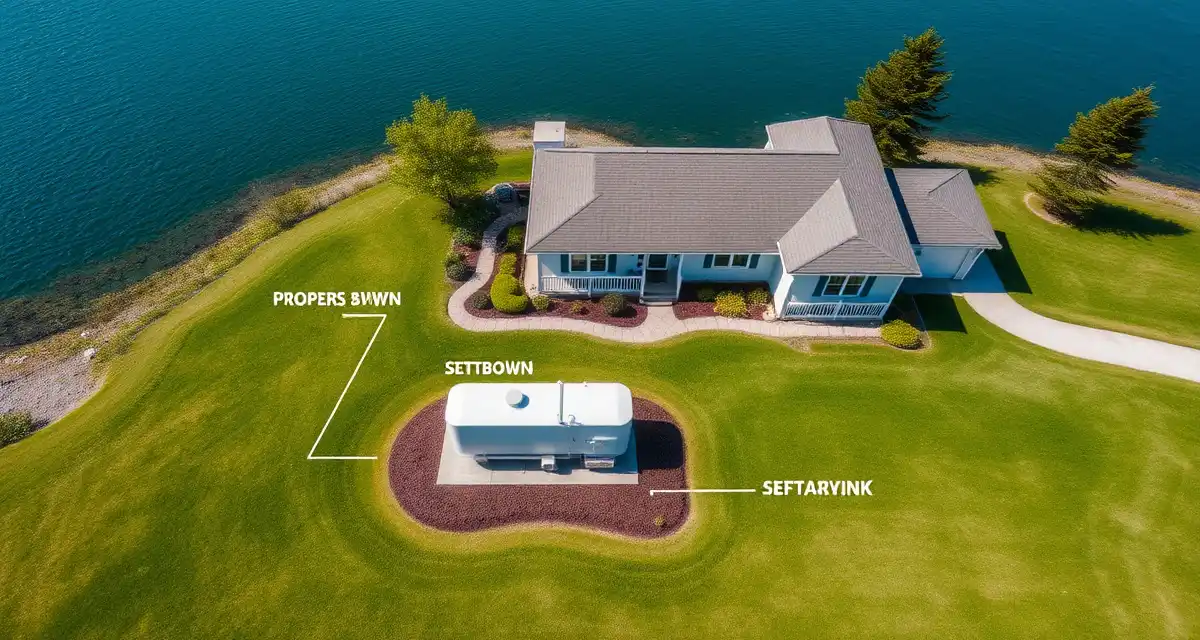
The combination of water setback requirements and often-limited lot depth on lakefront properties creates one of the most technically demanding siting challenges in septic work. A lakefront lot that's 100 feet deep between the water and the road has to fit: the house setback from the water, the septic system setback from the water, the septic system setback from the house, and the septic system setback from the road, on a lot that may not have enough room for all of them simultaneously.
On these constrained lots, alternative system types are often the only path to approval:
Mound systems address situations where the conventional drainfield can't be placed far enough from the water on the available lot area while meeting soil depth requirements. The elevated nature of a mound system provides additional treatment depth.
Drip irrigation systems have a smaller footprint than conventional drainfields and can sometimes be configured to meet setback requirements where conventional systems can't. The subsurface dispersal points can be positioned more flexibly around constraints.
Engineered alternative systems with enhanced treatment may allow reduced setbacks in some states because higher treatment quality reduces the water quality risk that justifies the setback requirements.
Inspection Frequency at Lakefront Properties
The regulatory interest in lakefront property septic systems often results in more frequent inspection requirements than inland properties face. In Massachusetts, Title 5 inspections are required within 5 years for properties on or within a certain distance of water body with shellfish restrictions, a more frequent schedule than the standard 20-year Title 5 requirement for other properties.
Wisconsin's shoreland program has resulted in many county programs with heightened inspection scrutiny for lakefront systems. Minnesota's shoreland ordinances often include local requirements for more frequent inspection or maintenance reporting for systems near water.
Septic preventive maintenance software tracks inspection intervals by property type, allowing you to set different default service intervals for lakefront properties than for inland accounts.
Tracking Setback Compliance in Property Records
Every property in your system should include notation of shoreland or riparian zone status. When you create a work order for a property adjacent to a protected water body, that flag should appear in the work order, not buried in the property detail screen where a technician might miss it.
SepticMind's permit tracking software maintains property-level notes that propagate to work orders. For lakefront accounts, the shoreland zone notation, applicable setback requirements, and any existing permit conditions can be stored in the property record and appear automatically on every work order.
Commercial Lakefront Properties
Lakefront commercial properties (resorts, campgrounds, marinas, restaurants) concentrate the septic service challenges of both lakefront regulations and commercial property scale. High seasonal loading, water quality sensitivity, and often older installed infrastructure make these accounts worth notable effort to serve well.
Commercial lakefront accounts benefit from formal service agreements that commit to inspection frequency matching regulatory requirements, documentation of service visits in formats that satisfy regulatory review, and emergency response commitments for seasonal peak periods.
Get Started with SepticMind
Managing service contracts for lakefront properties properties is easier with a platform built for the septic trade. SepticMind tracks commercial service schedules, documents every inspection visit, and keeps your compliance records organized by property. See how it handles your commercial account portfolio.
Frequently Asked Questions
What shoreland zone rules affect septic work on lakefront properties?
Shoreland zone rules create specific requirements for septic work within defined distances of protected water bodies. Typical requirements include: more stringent setback distances from the ordinary high water mark or shoreline reference point than apply to inland properties; prohibition on new cesspool installation in shoreland zones; requirements for alternative system designs when conventional systems can't meet setback requirements due to lot constraints; potentially more frequent inspection requirements under state or local programs; and permit requirements for any system alteration or repair work within the shoreland zone. The specific distances, restrictions, and permit processes vary notably by state. Minnesota, Wisconsin, New Hampshire, Maine, and other lake-rich states have the most developed programs.
Do lakefront properties need more frequent septic inspections than inland properties?
In many states and jurisdictions, yes. Massachusetts requires Title 5 inspections within 5 years for properties near water bodies with shellfish restrictions, compared to the 20-year standard for other properties. Local shoreland ordinances in Minnesota, Wisconsin, and New Hampshire counties often impose inspection frequency requirements on shoreland-zone systems beyond state minimum requirements. The elevated regulatory scrutiny on lakefront systems reflects the water quality protection priorities of those programs. As a septic service company, the practical implication is that lakefront accounts have shorter typical inspection intervals, creating more frequent service touchpoints and stronger recurring revenue per account than comparable inland properties.
Does SepticMind flag shoreland zone compliance requirements for lakefront job addresses?
Yes. SepticMind's property records allow shoreland or riparian zone designation for lakefront addresses. When this flag is set in the property record, it appears on every work order and job record created for that address. The flag triggers a compliance note that prompts the technician and dispatcher to confirm applicable shoreland requirements before the visit. For states with specific shoreland zone documentation requirements (Maine, New Hampshire, Wisconsin, Minnesota) the applicable state template requirements appear alongside the shoreland zone flag. This prevents the situation where a technician applies standard inland documentation to a lakefront job that has specific regulatory requirements, creating a documentation gap that surfaces during regulatory review.
How often should a septic system serving a facility of this type property be inspected?
Septic systems at lakefront properties properties should be inspected at least annually and pumped more frequently than residential systems, since commercial-scale daily water usage accelerates sludge and grease accumulation. The exact frequency depends on the specific activities at the facility, peak occupancy, any food service or chemical use on-site, and local regulatory requirements. A service provider familiar with lakefront properties operations can recommend an appropriate inspection and pumping schedule based on the system's actual usage profile.
What septic system issues are most common at lakefront properties properties?
The most common septic problems at lakefront properties properties are rapid sludge accumulation from high occupancy, grease trap failure if food service is involved, hydraulic overloading during peak-use periods, and non-biodegradable waste disposal from cleaning or maintenance activities. Regular inspection and a service contract with clear maintenance intervals are the most effective ways to catch these problems before they cause system failure or regulatory violations.
Try These Free Tools
Sources
- National Onsite Wastewater Recycling Association (NOWRA)
- US EPA Office of Wastewater Management
- NSF International
- Water Environment Federation
- National Environmental Services Center (NESC)