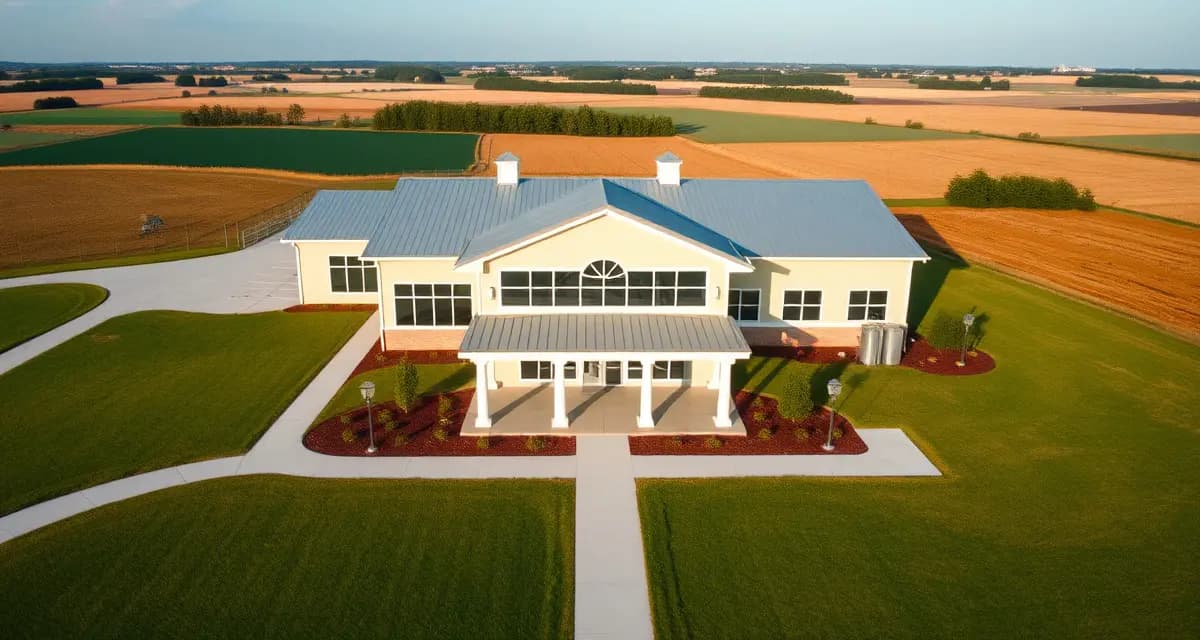
Septic Service for Cooperative Extension Offices and 4-H Centers
By the SepticMind Editorial Team
Extension office facilities serve both daily staff and public programming events with variable occupancy, and 4-H state competition events can bring hundreds of participants to extension facilities in a single day. County extension offices and 4-H program centers are publicly funded educational facilities that serve the agricultural community, and their septic management needs to reflect both the daily staff load and the periodic event loads from public programming.
TL;DR
- Cooperative Extension facilities have distinct wastewater loading patterns that affect septic system sizing, service frequency, and permit requirements.
- Commercial and institutional properties like cooperative extension typically require more frequent pumping than residential systems due to higher daily usage.
- Some cooperative extension operations generate waste streams (grease, chemicals, or high-volume flow) that require pre-treatment before reaching the septic system.
- Service contracts for cooperative extension provide predictable recurring revenue and are easier to manage with a platform that tracks commercial account schedules.
- Health department inspections for cooperative extension properties may require septic system condition documentation as part of facility licensing.
- Septic companies specializing in cooperative extension service build referral networks with property managers, architects, and health inspectors in that niche.
The Extension Office Wastewater Profile
County extension offices have a dual-use pattern that creates wastewater variability:
Regular office days: Extension agents, support staff, and occasional visitor traffic. Load is comparable to a small government office with 5-15 employees and periodic public visitors. Modest daily generation.
Programming event days: 4-H club meetings, agricultural workshops, soil health seminars, Master Gardener classes, and similar programs bring groups ranging from 10 to several hundred participants. On major event days, the facility effectively becomes a public event venue.
Competition and fair preparation events: 4-H county fair preparation, livestock judging events, record book review days, and state competition participants can bring very high traffic to the extension center.
The challenge is that most county extension offices are sized and managed as regular government offices, but they periodically function as event facilities. Service intervals based solely on the office's daily staff count underestimate the load from programming events.
SepticMind's extension office account type schedules around programming calendars for event-driven demand. The event calendar drives service timing, not just the annual staff count.
4-H Events and Peak Loads
4-H activities create the highest single-day occupancy events at most county extension offices. Events that can generate significant loads:
- County fair livestock judging: Dozens to hundreds of 4-H participants with animals
- Record book review days: All county 4-H members and their families
- State project competition: Top county participants competing for state fair opportunities
- Annual 4-H banquet: Large community event with community recognition
For an extension office that normally serves 10 staff per day, a 4-H banquet attended by 300 participants and families is a 30x occupancy event. That's the equivalent of months of regular use in a single evening.
Pre-event service before the 4-H county fair or annual banquet is the kind of proactive maintenance that prevents embarrassing problems at high-visibility community events.
Cooperative Extension and State Agency Context
County extension offices in most states are cooperative institutions involving USDA's National Institute of Food and Agriculture (NIFA), state land-grant universities, and local county governments. Facilities may be county-owned, university-owned, or owned through various partnership arrangements.
The compliance responsibility for septic maintenance typically falls on the county government as the facility owner, even if the extension program is administratively part of the state university system. Confirm the specific ownership and maintenance responsibility arrangement for your facility, since the compliance accountability follows the owner.
Because extension offices are publicly funded, their records may be subject to public records laws in most states. Organized service documentation supports public accountability.
For community centers with similar event-driven public facility use patterns, comparable service scheduling approaches apply. For farms with extension education activities on agricultural land, the farm property framework provides relevant context.
Service Intervals for Extension Facilities
The right service interval for an extension office depends on programming volume:
Low-activity extension offices (primarily staff, minimal public programming): Standard commercial interval, annual inspections with pump-outs every 2-3 years.
High-activity extension offices (weekly programming events, major annual events): More aggressive schedule with pre-event service before major events and annual pump-outs. The 4-H county fair calendar should drive service timing.
Get Started with SepticMind
Managing service contracts for cooperative extension properties is easier with a platform built for the septic trade. SepticMind tracks commercial service schedules, documents every inspection visit, and keeps your compliance records organized by property. See how it handles your commercial account portfolio.
Frequently Asked Questions
What septic management is appropriate for a county extension office with programming events?
A county extension office that hosts regular programming should treat its service schedule as a combination of baseline staff load management and event-calendar management. For baseline staff use, standard commercial service intervals are appropriate. For programming events that bring 50+ participants, add pre-event service to the calendar for events over 100 participants. For major annual events like county fair preparation or 4-H banquets with 200+ attendees, schedule pump-outs 2 weeks before the event. Maintain service records organized for public records production, since extension offices are publicly funded facilities subject to public accountability requirements.
What pre-event service is recommended before a 4-H county fair event at an extension center?
Before a 4-H county fair event or annual banquet expecting 200+ participants, schedule a pump-out 2-3 weeks before the event. Confirm grease trap service is current if the facility has food service for the event. Do a drainfield visual inspection 48 hours before the event. Have your service provider's emergency contact ready for the event day. For livestock-adjacent events where animals are on the property, ensure animal areas drain separately from the public restroom septic system. Document the pre-event service so the service record shows the proactive approach taken before the major annual event.
Does SepticMind support event-calendar-based septic scheduling for extension office accounts?
Yes. SepticMind's extension office account type links service scheduling to the programming calendar. You enter major programming events, 4-H competition dates, and annual events, and the system generates pre-event service reminders at the appropriate lead time. Regular office-based reminders continue on the standard staff-size-based interval. Service history is stored in a public-records-ready format suitable for county government accountability requirements. For state extension systems managing multiple county offices, all facilities can be tracked under a state-level account with compliance status visible across all counties.
How often should a septic system serving a cooperative extension property be inspected?
Septic systems at cooperative extension properties should be inspected at least annually and pumped more frequently than residential systems, since commercial-scale daily water usage accelerates sludge and grease accumulation. The exact frequency depends on the specific activities at the facility, peak occupancy, any food service or chemical use on-site, and local regulatory requirements. A service provider familiar with cooperative extension operations can recommend an appropriate inspection and pumping schedule based on the system's actual usage profile.
What septic system issues are most common at cooperative extension properties?
The most common septic problems at cooperative extension properties are rapid sludge accumulation from high occupancy, grease trap failure if food service is involved, hydraulic overloading during peak-use periods, and non-biodegradable waste disposal from cleaning or maintenance activities. Regular inspection and a service contract with clear maintenance intervals are the most effective ways to catch these problems before they cause system failure or regulatory violations.
Try These Free Tools
Sources
- National Onsite Wastewater Recycling Association (NOWRA)
- US EPA Office of Wastewater Management
- NSF International
- Water Environment Federation
- National Environmental Services Center (NESC)