Septic inspection in Coram, NY: what to expect and what it costs
By the SepticMind Editorial Team
TL;DR
- A septic inspection in Coram, NY runs $250 to $500 for a standard visual-plus-probe check, or $400 to $700 with a full pump-out included.
- The Suffolk County Department of Health Services regulates every on-site sewage system in Coram under Article 6.
- Buyers' attorneys and FHA lenders effectively require one at sale.
- The inspector checks the tank, distribution box, and leach field for failure.
What does a septic inspection in Coram, NY actually involve?
A septic inspection is a structured read on how your system is working right now, tank to field. Coram sits in the Town of Brookhaven, in central Suffolk County. Nearly every property here that isn't on a municipal sewer runs an on-site system, and most of those are conventional cesspools or septic tank-and-leach-field setups built between the 1950s and 1980s.
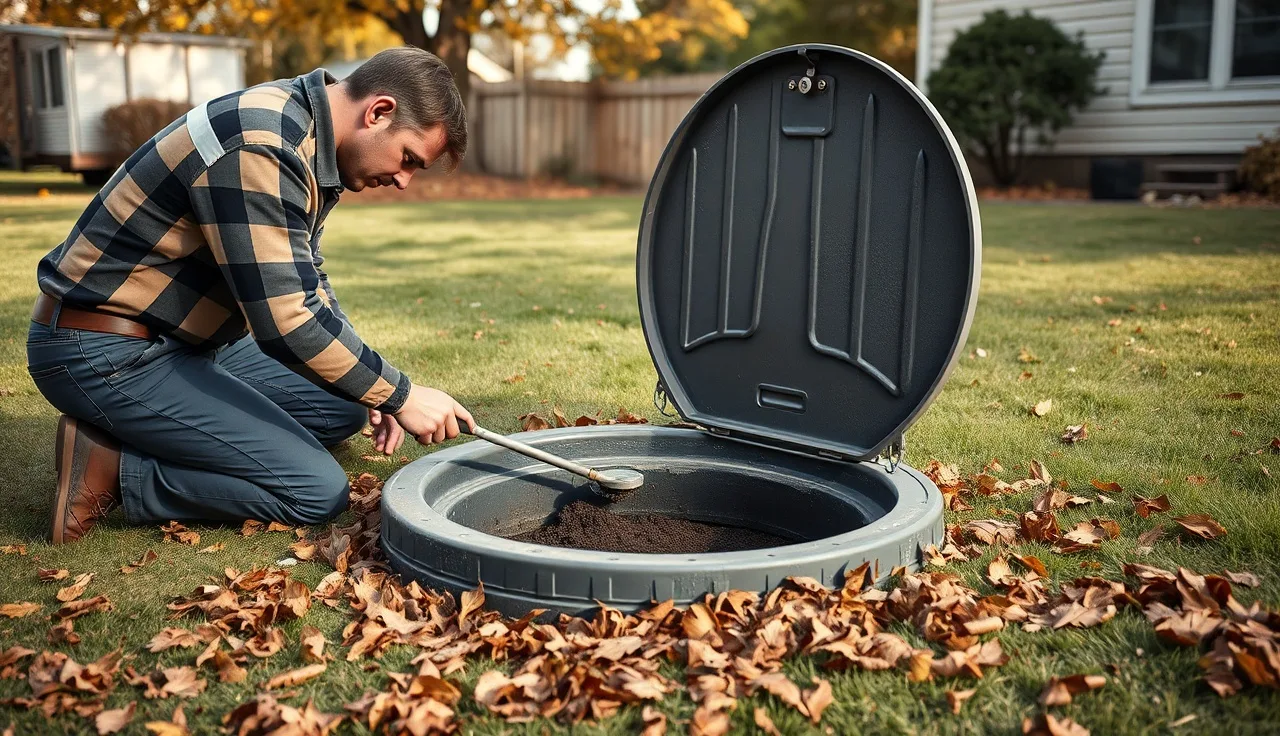
The inspection starts inside the house. A licensed inspector, in New York usually a professional engineer or a technician working under one, checks that fixtures drain properly, that there's no sewage odor, and that the cleanouts are reachable. Then the work moves outside.
The tank gets located first, often by probing the yard when the lid isn't marked, then uncovered. The inspector measures liquid level, looks for solids backing up, checks the baffles (the inlet and outlet fittings that hold solids in and let liquid pass), and notes cracks or corrosion. Working baffles are one of the clearest signs of a tank in decent shape. A missing outlet baffle means solids are running into the leach field, and that's the expensive kind of problem.
Next comes the distribution box. The D-box takes effluent from the tank and splits it evenly across the leach field laterals. Tilted, cracked, or flooded D-boxes turn up constantly in Coram's sandy soil, especially after a few frost cycles. The leach field gets a visual look and a probe: the inspector pushes a steel rod into the soil over each lateral to feel whether the ground is saturated and spongy (bad) or firm and responsive (good). Wet, smelly soil at the surface over the field means it's failing or already failed.
Standard inspections skip the pump-out, but plenty of Suffolk County inspectors push for one so they can see the tank interior, baffle condition, and the actual sludge and scum depths. Sludge plus scum should not exceed 30 percent of tank capacity before you pump [9]. Buying a home? Insist on the pump-out. It's the difference between a guess and a look.
How much does a septic inspection cost in Coram?
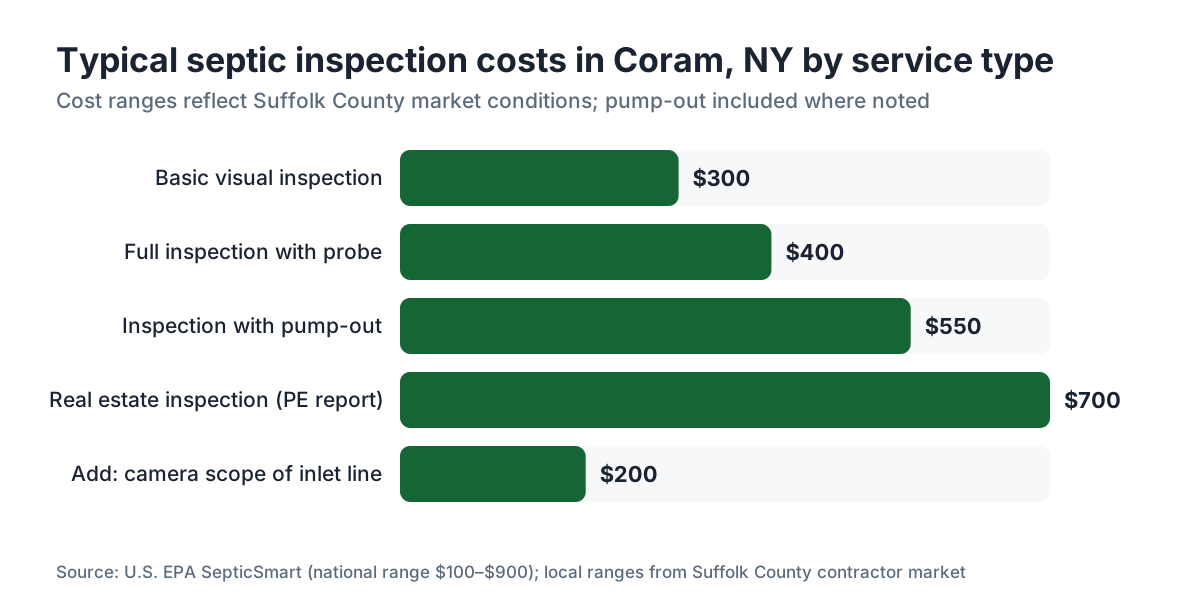
Plan on $250 to $500 for a standard inspection without pumping in Coram and the surrounding Brookhaven area, and $400 to $700 when a full septic tank pump out is part of the visit. Three things move that number.
First, tank access. If the lid is buried under 18 inches of soil, the inspector bills for digging time, usually $50 to $150 extra. Two tanks (common in older Coram homes with additions) mean a second inspection fee. A D-box under a concrete pad or deep fill adds more still.
Second, scope. A real estate transfer inspection that produces a written report your attorney can file costs more than an informal maintenance check. Suffolk County requires licensed engineering sign-off on certain reports, and that professional liability rides along in the price.
Third, who you hire. A solo licensed contractor charges less than a firm that puts a professional engineer's seal on the report. Both are legitimate. For a purchase, get the engineer's letter and don't argue with yourself about it.
| Inspection type | Typical cost in Coram | Includes pump-out? |
|---|---|---|
| Basic visual inspection | $250 to $350 | No |
| Full inspection with probe | $300 to $500 | No |
| Inspection with pump-out | $400 to $700 | Yes |
| Real estate inspection (engineered report) | $500 to $900 | Often yes |
| Camera scope of inlet/outlet lines | Add $150 to $250 | N/A |
Nobody has perfectly clean local price data for this hamlet. The ranges above come from contractor quotes reported in Suffolk County home-buyer forums, and they line up with the EPA's national guidance that septic inspections run roughly $100 to $900 depending on scope [1].
What rules govern septic systems in Coram specifically?
Two layers of government set the rules in Coram, and for sanitation only one of them really matters. Coram is unincorporated, so land use comes from the Town of Brookhaven, but on-site sewage falls under the Suffolk County Department of Health Services (SCDHS). Article 6 of the county sanitary code covers on-site disposal for both homes and commercial property across the county [2].
Article 6 sets minimum lot size, tank sizing, leach field area, and setback distances for every new or replaced system. The part that touches most Coram homeowners is simpler though: pull a permit for a major renovation, sell the property, or draw a failure complaint, and SCDHS can order a full inspection. If the system fails, an upgrade follows.
In 2021 Suffolk County established the Suffolk County Septic Improvement Program (SCSIP), which hands out grants and low-interest loans for swapping conventional systems for nitrogen-reducing innovative/alternative (I/A) systems [3]. Coram properties near the Carmans River or other surface waters may sit in a priority zone. If your inspection turns up an aging cesspool or a failing field, the SCSIP grant (up to $30,000 as of 2023) can make the upgrade close to cost-neutral.
New York State runs a background layer through the State Sanitary Code, Part 75, which sets minimum performance standards local codes have to meet or beat [4]. Suffolk County clears the state minimums in several places, especially setbacks from wells and water bodies.
The EPA's SepticSmart program isn't regulatory, but it lays out in plain English what a working system looks like and what a homeowner should do. Read it alongside the county code [1].
When do you legally need a septic inspection in Coram?
Three situations trigger a formal inspection in Suffolk County: a sale, a permit, or a complaint.
Real estate transactions are the big one. SCDHS requires a seller to disclose the type and approximate age of the on-site system. Most buyers' attorneys make a full inspection a condition of contract, and many mortgage lenders (FHA and VA especially) require proof the system works. FHA single-family guidelines direct the appraiser to note any evidence of system failure, and if it shows up, the lender orders an inspection before closing [5].
Permit-triggered inspections come with adding a bedroom, expanding the footprint, or certain plumbing work. Bedroom count is the one to watch, because Article 6 sizes systems by bedrooms. A two-bedroom system serving a finished four-bedroom house is undersized and potentially illegal.
Complaint-triggered inspections start when a neighbor or code officer reports surface sewage, odors, or a wet patch that looks like a failing field. SCDHS has authority to require both inspection and remediation.
Outside those legal triggers, the EPA's SepticSmart guidance recommends inspecting systems with mechanical parts every 1 to 3 years, conventional systems every 3 years, and pumping every 3 to 5 years [1]. Most Coram contractors I've seen land on every 3 years, given the high water table in the low-lying parts of the hamlet and the age of the systems. It's not a legal requirement. It's just the smart move.
What are the most common septic problems found in Coram homes?
Coram's geology is actually kind to septic systems. Central Suffolk County sits on a sandy, well-draining glacial outwash plain. Age is the real enemy. Most Coram residential systems are 40 to 70 years old, and that age shows up in the same handful of ways.
Cesspool collapse is the most alarming finding. Older Coram properties, especially those built before the county leaned hard on conventional septic tanks in the 1980s, still run block or brick cesspools. The walls break down, and inspectors sometimes find one that has partly collapsed or is close to it. That's not a repair. That's a replacement.
Missing or rotted baffles are everywhere. The original concrete baffles in 1960s and 1970s tanks tend to corrode away. A plastic baffle replacement runs $50 to $150 and fixes the problem, as long as you catch it before migrating solids kill the field.
Distribution box failures show up constantly. D-boxes tilt with frost heave or root pressure, dumping all the effluent into one lateral and starving the rest. The soil over the active lateral saturates while the others stay dry. Fixing a D-box costs $300 to $700 and buys years of field life. The related guide to leach field problems shows what lateral saturation actually looks like underground.
High groundwater is the background condition that makes all of it worse. Parts of Coram along the lower elevations near the Long Island Expressway corridor have a seasonally high water table that can climb to within 2 to 4 feet of the surface in a wet winter. When the water table rises into the leach field, the field stops treating effluent and backs up. Inspections run in March or April, after a wet winter, are the harshest test a system will face.
Root intrusion into older concrete tanks and pipes runs all year. Oak and maple roots chase the moisture and nutrients in septic pipes and pry into any joint gap. A camera scope of the inlet lines during inspection catches this early, before it splits a pipe.
How do you find a qualified septic inspector in Coram?
New York doesn't license "septic inspectors" as their own trade. The people who legally sign off on inspection reports in Suffolk County are licensed professional engineers (PEs) or registered architects, and they often hand the physical inspection to a trained technician working under that license [8].
For a real estate deal, hire a firm that keeps a PE on staff and will send a written report on letterhead with the PE's seal. SCDHS records can point you toward approved engineers. You can also check whether a contractor holds a Suffolk County wastewater treatment system installer's license, which is a different credential but a good sign.
For a maintenance inspection with no legal weight attached, a licensed pumping contractor who probes and visually assesses the system is fine. Most of the established pumping companies in Coram have run thousands of these.
Ask three things before you book. Do you carry liability insurance? Can you give me a written report? Have you worked in Coram or Brookhaven specifically? Local experience matters, because field conditions, typical system ages, and permit processes shift from town to town. A company that mostly works Nassau County won't know Suffolk's permit requirements as well.
SepticMind's operator directory connects homeowners with vetted septic companies and gives operators the scheduling and reporting tools to run jobs like these, which helps if you're juggling several service calls.
One warning. Don't hire whoever your real estate agent suggests without checking independently. Agent-referred inspectors sometimes carry a conflict of interest. Get at least two quotes, and read the Google reviews for the septic inspection jobs specifically, more than the pumping.
What happens if the inspection finds a failing system?
A failing system gives you a few roads, and which one you take depends on severity and timing.
On a pre-sale inspection, the seller can repair before closing, cut the price to cover the buyer's repair cost, or, rarely, watch the deal fall apart. In Coram's current market, most sellers just repair, because the cost usually comes back in the sale price. A septic system repair or septic tank repair in the $500 to $3,000 range for minor fixes is manageable. A full leach field replacement is a different animal.
Full replacement in Suffolk County, moving from a failing cesspool or conventional setup to a modern I/A nitrogen-reducing system, costs $15,000 to $35,000 before SCSIP grants [3]. With the grant (up to $30,000 depending on the project), a qualifying homeowner can end up paying very little out of pocket. The program is income-assisted, not income-limited.
When a routine maintenance visit turns up a failing system, the same options apply, minus the pressure of a closing date. SCDHS issues a notice of violation when a failing system is reported or found during enforcement, and that notice comes with a compliance clock, usually 90 to 180 days to repair or replace depending on severity.
Partial repairs sometimes buy time. Replacing a D-box, adding a riser, fixing a baffle, or pumping an overdue tank can restore function for a few more years on a system that's struggling but not dead. Here's the honest read: a 60-year-old cesspool on borrowed time isn't worth an expensive patch. Put that money toward replacement instead.
For replacement benchmarks, the guide to cost to install septic system breaks down what drives the number in New York.
How should you prepare your property for the inspection?
Good prep saves you money and gets you a more accurate result. Start with the records.
SCDHS keeps files on permitted systems. Request your property's sanitary file from the SCDHS Office of Ecology. Many Coram homes built after 1970 have a permit on record showing tank size, field layout, and D-box location. That file tells the inspector exactly where to dig instead of spending 30 to 60 minutes probing the yard on your dime.
Don't pump the tank right before the inspection to make it look better. Inspectors see sellers try this. An empty tank hides information: you can't read sludge and scum accumulation, and you can't tell whether the liquid level is abnormally high, which is the tell for a failing field. Pump after the inspection if you need to, not before.
Clear the area. Mow the grass over the field and tank. Move deck furniture, firewood, and any vehicles parked over the system. Inspectors can't probe ground they can't reach.
Don't run big water loads the morning of the inspection. Six loads of laundry, a running dishwasher, and long showers flood the system and can make a healthy field read as saturated. Normal household use the day before is fine.
Know your system's age and history. When was it last pumped? Has it ever backed up? Any past repairs? That takes five minutes to gather and it changes the quality of the inspector's read. How often to pump septic tank explains why maintenance history predicts condition so well.
What does the inspection report tell you and how do you read it?
A good report covers five things: tank condition, baffle condition, D-box condition, leach field condition, and whether the whole system is adequate for the household size and bedroom count.
Each component gets a pass/fail or a rating. Some inspectors use "functional", "marginal", and "failed". Others write narrative descriptions. What you're hunting for is which components need immediate attention (failed), near-term attention (marginal or end-of-life), or just routine maintenance (functional).
The liquid level in the tank is one of the most telling single numbers in the whole report. Normal liquid level sits right at the outlet baffle invert. If liquid is above the outlet, water is backing up from the field, which means the field is saturated. If liquid is below normal, the tank may be leaking.
Sludge and scum measurements set your pumping timeline. The EPA recommends pumping when sludge climbs within 12 inches of the outlet baffle or scum within 3 inches [1]. Most inspectors measure both layers with a sludge judge, a clear plastic tube, and report the percentages.
For leach field findings, ask the inspector to show you exactly where they probed and what they felt. "Soft" or "wet" at the surface over laterals means active saturation. "Firm with normal moisture" means the field is working. Wet zones over some laterals and dry over others points straight at a tilted or cracked D-box, which is the cheaper fix.
If the report reads ambiguous, ask for a follow-up call. A good inspector will walk you through the findings out loud. If they can't or won't, that tells you something about the inspection itself.
How does a Coram septic inspection differ for a home purchase versus routine maintenance?
The physical work looks about the same. The documentation and the liability are worlds apart.
For a home purchase, the inspection is a legal document. The buyer's attorney reads it. If the system fails after closing and the report missed something obvious, the inspector owns that liability. That's why purchase inspections from PE-signed firms cost more. You're paying for the professional coverage that stands behind the written assessment.
A purchase inspection usually adds a pump-out so the tank interior can be read fully, measurements of sludge and scum, a written report with photos, and a clear statement on whether the system meets current Suffolk County code for the property's bedroom count. That last line matters more than people expect. An older system might be "functional" in the sense that it isn't failing, but if it's undersized for the bedrooms in the house, it's technically non-compliant and a future headache.
For routine maintenance, the bar drops. A licensed pumping contractor who visually inspects and probes the field every 3 years gives you the ongoing monitoring you actually need. You don't need a written engineer's report for a maintenance visit, though some homeowners keep a log anyway. The septic tank cleaning and septic tank pumping guides cover what a pump-out visit includes when you pair it with a basic inspection.
One practical split: maintenance inspections run on your schedule. Purchase inspections have to land inside the contract's due diligence window, often 10 to 14 days in this market. Book the inspector the day you go under contract, not the day before the deadline.
What does nitrogen reduction have to do with your Coram septic system?
This is where Coram gets specific, and it's the part homeowners most often miss.
Suffolk County has a serious groundwater nitrogen problem. Conventional cesspools and septic systems push nitrate-laden effluent into the glacial aquifer under all of Long Island. That aquifer is both the drinking water source and the ultimate feed for Long Island Sound, the Peconic Estuary, and local surface waters. Nitrogen loading from on-site systems has been tied directly to harmful algal blooms and water quality decline in those waters [6].
The county's answer is the SCSIP program and a county-wide goal of replacing 400,000 conventional systems with I/A units over several decades. Coram, as part of Brookhaven, falls inside that program area. If your inspection shows a failing system, or even a functional but aging one, the SCSIP grant makes the I/A upgrade far more attractive than a like-for-like swap.
I/A systems approved in New York, like the Fuji Clean, Hydro-Action, or Norweco Singulair units, cut nitrogen by 50 percent or more against conventional systems [7]. They need a maintenance contract with a licensed service provider, usually $300 to $600 a year, but that cost is predictable and the system gets monitored.
If the report flags your system for replacement, it should say whether the property is in a SCSIP priority zone. If it doesn't, ask the inspector, then confirm with SCDHS yourself. Leaving a $30,000 grant on the table because nobody mentioned it is a bad way to spend a Tuesday.
Frequently asked questions
How long does a septic inspection take in Coram, NY?
Most inspections take 1.5 to 3 hours on site. Locating an unmarked tank adds time, usually 30 to 60 minutes of probing. If a pump-out is included, add another 30 to 45 minutes for the vacuum truck work. A written report from a PE-signed firm typically follows within 24 to 72 hours after the site visit.
Is a septic inspection required when selling a home in Coram?
Suffolk County doesn't mandate a septic inspection as a universal transfer requirement the way some states do, but sellers must disclose the system type and age. In practice, buyers' attorneys almost always require one, and FHA and VA lenders require evidence that the system is functioning. Treat it as required for any real estate transaction in Coram.
Can a home inspector do the septic inspection, or do I need a specialist?
A general home inspector can note obvious surface signs of septic trouble but cannot probe the field, open the tank, or issue a report that meets Suffolk County or lender standards. For a real estate transaction, you need a licensed professional engineer or a licensed septic contractor working under one. For routine maintenance, an experienced pumping company is enough.
What is the Suffolk County Septic Improvement Program and do Coram homes qualify?
The Suffolk County Septic Improvement Program (SCSIP) offers grants up to $30,000 and low-interest loans to replace conventional cesspools and septic systems with nitrogen-reducing I/A systems. Coram properties in the Town of Brookhaven qualify. Applications run through SCDHS. The program is not income-limited, though income-based assistance tiers exist. Check with SCDHS for current funding availability.
How often should I have my Coram septic system inspected?
The EPA's SepticSmart program recommends inspection every 1 to 3 years depending on system type, and pumping every 3 to 5 years for a typical household. For Coram homes with aging conventional systems or seasonal high-water-table exposure, inspect every 3 years with a pump-out every 3 to 4 years. Systems with mechanical components like I/A units need annual service visits.
What is the difference between a cesspool and a septic system, and does it matter for inspection?
A cesspool is a single covered pit that takes raw sewage and leaches liquid into the surrounding soil with no tank-and-field separation. A septic system uses a tank to split solids from liquid and a leach field that takes clarified effluent. Many older Coram homes have cesspools, not septic systems. Cesspools are non-conforming under current Suffolk County code, and inspection of one often flags it as a candidate for full replacement.
Will the inspector tell me where my septic system is located?
Yes, a thorough inspector documents the tank location, D-box location, and field layout, either from county records or by probing. They should give you a sketch or diagram. Request it even if it isn't offered. Knowing the layout keeps you from driving over the field, planting trees near laterals, or building structures over system components.
What happens if raw sewage is at the surface during a Coram inspection?
Surface sewage is an active failure and a public health hazard. The inspector is required to report it to SCDHS. The county issues a notice of violation with a compliance timeline. You'll need to stop using the system or cut water use hard and arrange emergency pumping and repair. Don't ignore surface sewage; it contaminates soil and groundwater and can create liability for neighboring property owners.
How do I get my property's septic system records from Suffolk County?
Request your property's sanitary file from the SCDHS Office of Ecology. You'll need the property address and tax map parcel number. Records for properties permitted after the mid-1970s are generally available. Older properties may have limited or no records. Your title company may also hold historical records from prior transactions. Having the file before the inspector arrives saves time and money.
Does the septic inspection cover the well if I also have a private well?
No, septic and well inspections are separate. A well inspection tests water quality for coliform bacteria, nitrates, and other contaminants, plus checks the well casing, pump, and pressure system. In Coram, many homes have both private wells and septic systems. Both inspections are worth doing at transfer, but hire a well driller or licensed water quality lab for the well side, separate from the septic inspector.
Can I negotiate the price of a home if the septic inspection comes back with problems?
Yes, and this is one of the most common uses of septic inspection findings in real estate. Get the inspector's written cost estimate for repair or replacement. Present it to the seller and ask for a price reduction equal to that amount or a seller's credit at closing. Sellers generally prefer to negotiate rather than lose the deal. A failing system found during inspection is legitimate grounds for renegotiation in any standard New York purchase contract.
How much does a full septic system replacement cost in Coram after a failed inspection?
A like-for-like conventional system replacement in Suffolk County runs $10,000 to $20,000 depending on tank size, field area, and site conditions. Upgrading to a nitrogen-reducing I/A system costs $15,000 to $35,000 before SCSIP grants. With the grant (up to $30,000), many homeowners pay little out of pocket. Get at least two contractor quotes and confirm SCSIP eligibility before signing any replacement contract.
What is an I/A septic system and why might my Coram inspector recommend one?
An innovative/alternative (I/A) septic system uses extra treatment steps, usually aerobic treatment or fixed-film media, to cut nitrogen in effluent by 50 percent or more before it reaches the ground. Suffolk County encourages or requires I/A systems in nitrogen-sensitive areas and offers SCSIP grants to offset the cost. If your existing system needs replacement, price out an I/A system, because the grant can make it cost-competitive with a conventional swap.
Sources
- U.S. EPA, SepticSmart Program: EPA SepticSmart recommends inspection every 1 to 3 years and pumping every 3 to 5 years; national inspection cost range $100, $900; pump when sludge is within 12 inches of the outlet baffle or scum within 3 inches
- Suffolk County Department of Health Services, Article 6 Sanitary Code: Suffolk County Article 6 governs minimum tank sizing, setbacks, and leach field area for all on-site sewage disposal systems in the county including Coram
- Suffolk County Septic Improvement Program (SCSIP), Suffolk County NY: SCSIP offers grants up to $30,000 and low-interest loans for replacing conventional systems with nitrogen-reducing I/A systems; Coram/Brookhaven properties qualify
- New York State Department of Health, Appendix 75-A (State Sanitary Code Part 75): New York State Sanitary Code Part 75 sets minimum performance standards for on-site sewage disposal that local codes must meet or exceed
- U.S. Department of Housing and Urban Development, FHA Single Family Handbook 4000.1: FHA guidelines require appraisers to note evidence of septic system failure and may require inspection before loan approval
- Suffolk County Comprehensive Water Resources Management Plan, Suffolk County NY: Nitrogen from on-site sewage disposal systems has been linked to harmful algal blooms and water quality degradation in Long Island Sound and the Peconic Estuary
- New York State Department of Environmental Conservation, On-Site Wastewater Treatment: Approved innovative/alternative septic systems in New York reduce nitrogen in effluent by 50 percent or more compared with conventional systems
- New York State Department of Health, Onsite Wastewater Treatment: New York regulates on-site sewage disposal through licensed professional engineers and county health departments; no standalone septic inspector license exists at the state level
- U.S. EPA, How Your Septic System Works: Sludge and scum should not exceed 30 percent of tank working capacity; the outlet baffle keeps solids in the tank and lets clarified effluent reach the leach field
Last updated 2026-07-09