Septic drain field types: which one fits your property
By the SepticMind Editorial Team
TL;DR
- There are seven main types of septic drain fields: conventional gravel trenches, chamber systems, mound systems, drip irrigation, aerobic treatment unit (ATU) dispersal, sand filters, and constructed wetlands.
- The right one depends on your soil's percolation rate, lot size, depth to groundwater, and local code.
- Conventional trenches cost the least, roughly $3,000 to $7,000.
- Mound and drip systems cost the most but work on problem sites.
What is a septic drain field and what does it actually do?
A septic drain field (also called a leach field or soil absorption system) takes partially treated wastewater from the tank and spreads it into the ground, where soil microbes and filtration finish the treatment. No working drain field, no place for the effluent to go. The tank backs up, sewage surfaces in the yard, and you have a health emergency.
The tank settles solids and runs anaerobic digestion. Solids sink, grease floats, and the liquid in the middle (effluent) leaves through an outlet baffle. That effluent still carries pathogens, nutrients, and organic load. The drain field does the final treatment by spreading effluent slowly through a distribution network into a soil absorption zone, where aerobic bacteria and the soil matrix take over [1].
Soil texture is the whole ballgame. Sandy soil drains too fast and filters poorly. Clay drains too slow and floods. The sweet spot is loamy soil with a percolation rate somewhere between 1 and 60 minutes per inch. Your local health department wants a perc test (and often a soil profile evaluation by a licensed soil scientist) before it approves any drain field design [2].
Every type below is a variation on that same idea, engineered to beat a specific problem: shallow bedrock, high water table, poor soil, a tight lot, or tougher effluent standards near water.
How are the different types of septic drain fields classified?
State and county codes sort drain field designs into two buckets: gravity systems and pressure-dosed systems. Gravity systems use elevation to move effluent from the tank through the field. Pressure-dosed systems use a pump to spread effluent evenly and dose the field in timed intervals instead of all at once.
Inside those two buckets, designs vary by the receiving medium (gravel, plastic chambers, sand, soil) and the application method (surface spray, subsurface drip, shallow trenches, raised mounds). The EPA's SepticSmart program flags this range of "alternative" systems directly, noting that many homeowners need alternative systems because of site-specific limitations [1].
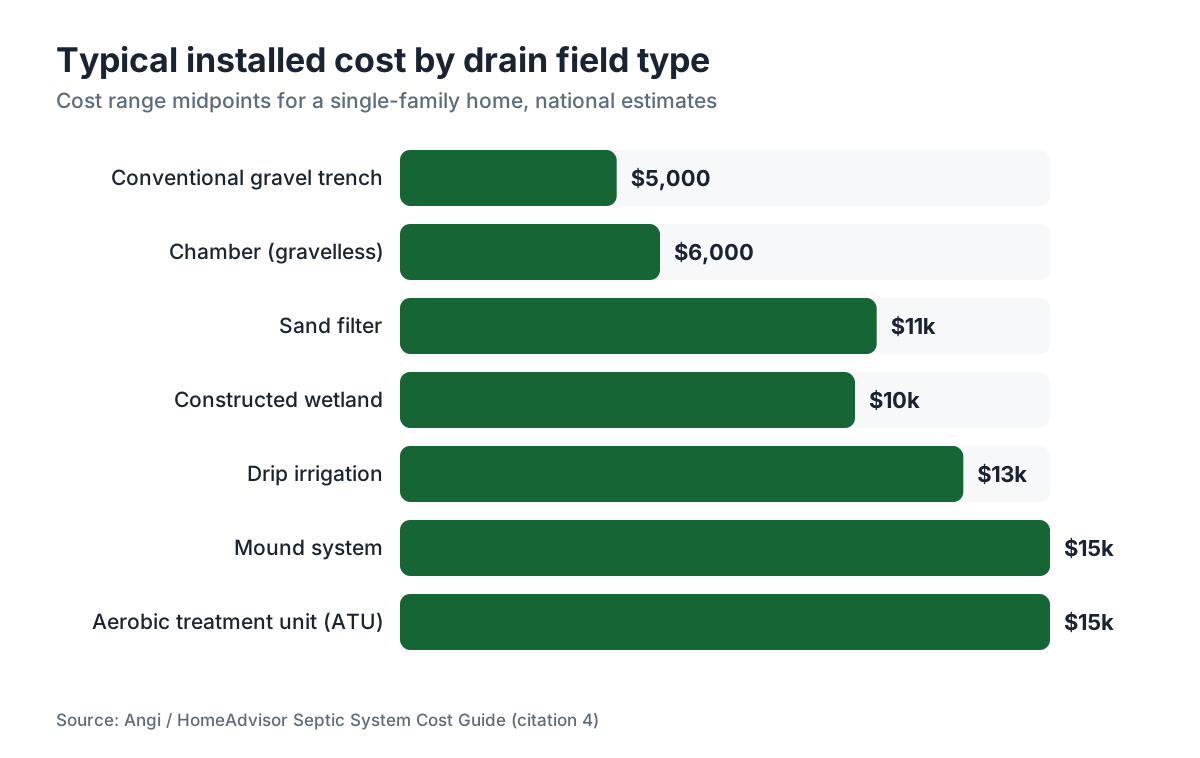
The table below covers all seven major types, a typical cost range, and the conditions each one is built for.
| System Type | Typical Installed Cost | Best For | Gravity or Pressure |
|---|---|---|---|
| Conventional gravel trench | $3,000, $7,000 | Good soil, adequate depth to water table | Gravity |
| Chamber (gravelless) | $4,000, $8,000 | Good to moderate soil, smaller footprint | Gravity or pressure |
| Mound system | $10,000, $20,000 | High water table, shallow soil | Pressure |
| Drip irrigation | $8,000, $18,000 | Tight lots, slow-perc soil, near water | Pressure |
| Sand filter | $7,000, $15,000 | Poor native soil, strict effluent quality required | Pressure |
| Aerobic treatment unit (ATU) | $10,000, $20,000+ | Very poor soil, small lots, near sensitive areas | Pressure |
| Constructed wetland | $6,000, $15,000 | Rural properties with space, nutrient reduction goals | Gravity or gravity-fed |
Cost ranges are national estimates from contractor surveys and state extension publications [3][4]. Your quote depends on lot conditions, local labor rates, permit fees, and how much soil prep the site needs. In some states, a mound system on a bad site pushes past $25,000 once you add engineered design fees.
What is a conventional gravel trench drain field and when does it make sense?
The conventional gravel trench is what most people picture when they hear "leach field." Crews dig parallel trenches, usually 18 to 36 inches deep and 1 to 3 feet wide, drop in 6 to 12 inches of washed gravel or crushed stone, lay perforated pipe on the gravel, add more gravel over the pipe, then cover it with fabric and topsoil [5].
Effluent flows by gravity into a distribution box, which splits the flow evenly across the trenches. It trickles out of the perforated pipe, through the gravel, and into the native soil, where treatment happens in a zone called the biomat. A thin biomat is healthy and slows distribution for better treatment. A thick one means the system is overloaded.
This design works when you have at least 2 to 3 feet of suitable soil above a limiting layer (bedrock, clay hardpan, or a seasonal high water table). Most counties also require setbacks from wells, property lines, and surface water. Trench length gets calculated from your daily flow estimate (usually 100 to 150 gallons per bedroom per day) and your soil's percolation rate [2].
For a normal suburban lot with decent soil, this is almost always the right call. It's the cheapest to install, the easiest to maintain, and every licensed installer knows it cold. If your perc test passes and your soil profile shows enough depth, don't overthink it. Get the conventional system.
How do chamber (gravelless) drain field systems differ from gravel trenches?
Chamber systems swap the gravel and pipe for a row of arched plastic chambers (Infiltrator is the best-known brand, though other manufacturers make similar products). The chambers snap together end to end in a trench, sit open at the bottom, and have slots on the sides so effluent can reach the soil directly.
The wins over gravel are weight (no hauling and placing tons of stone), footprint (chambers can sometimes hit the same effective absorption area in shorter trenches), and faster install. They've taken over a big share of installs in the past 20 years. NC State Extension notes that chamber systems perform comparably to gravel systems in appropriate soils and are approved in most states [3].
There's a second benefit. The open bottom puts more effluent in contact with soil than a gravel trench does, which means more treatment surface. That makes them a little more forgiving when a household occasionally overloads things.
Chambers don't fix bad soil. In saturated or very slow-draining ground, they flood exactly like gravel trenches. The site evaluation and perc test requirements are identical to any conventional system. If a salesperson tells you chambers solve a drainage problem, walk.
For what happens when any drain field fails, see our guide to septic system repair.
What is a mound system and what site conditions require one?
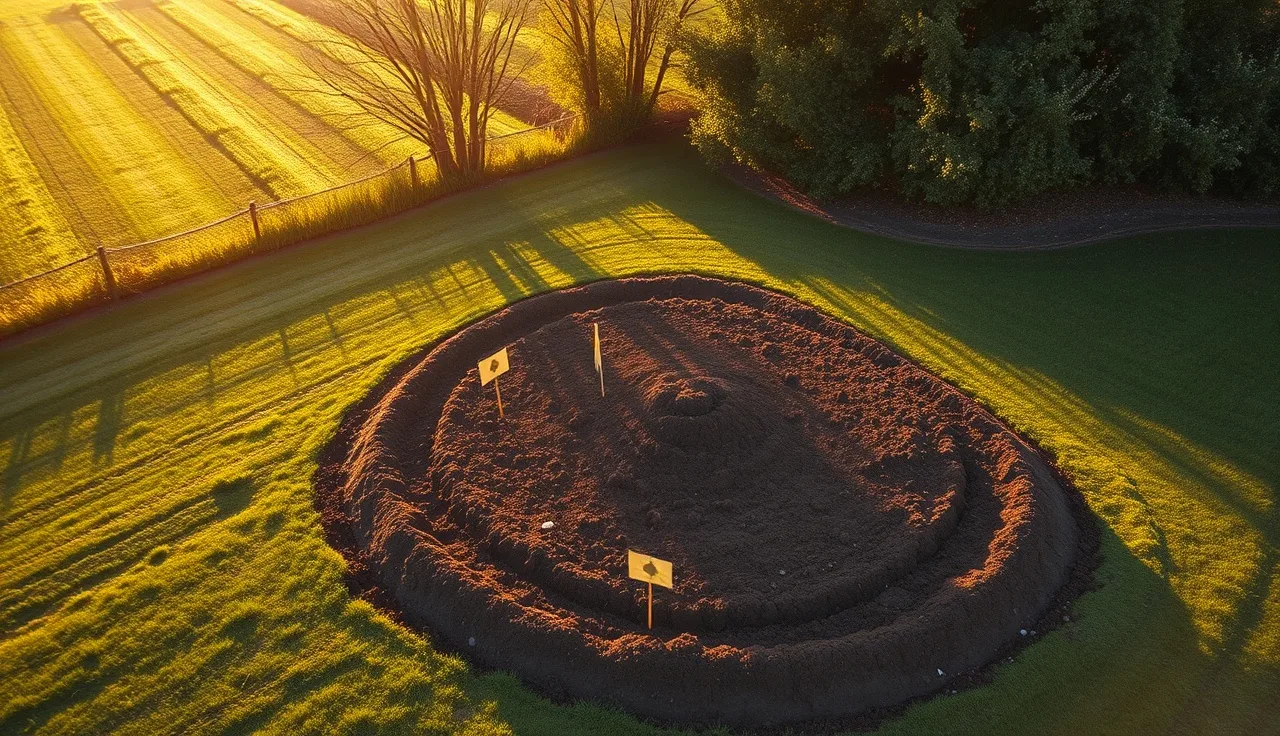
A mound system is exactly what it sounds like: a raised bed of engineered fill (usually clean sand) built on top of the native soil, with the drain field trenches or chambers buried inside the mound. It's the answer when the natural soil depth to a limiting layer (seasonal high water table, bedrock, or clay hardpan) is less than the minimum for a conventional in-ground system.
Most states require 2 to 4 feet of separation between the bottom of the drain field and the seasonal high water table or bedrock. When native soil can't give you that, you build up instead of digging down. A pump chamber is always part of a mound system because effluent has to be pushed uphill into the mound [5].
The mound gets engineered with set layer depths: a basal sand layer for treatment, the distribution network in the middle, and a topsoil cap seeded with grass to stop erosion. Designers size it from daily flow, the permeability of the sand fill, and the native soil's ability to accept the polished effluent that drains out the bottom.
Mounds cost more because of sand hauling, pump installation, and a heavier design process. They also need electricity for the pump, an alarm for pump failure, and periodic pump service. Budget at least $10,000 to $20,000 to install, and plan on a pump replacement every 7 to 12 years [4].
The mound sits visible in the yard. Some homeowners hate it. Nothing to be done there. The physics need the elevation.
How does a drip irrigation drain field work?
A drip irrigation system doses effluent through small-diameter tubing buried just 6 to 18 inches down, far shallower than conventional trenches. That shallow placement targets the biologically active root zone, where treatment is fastest. Emitters spaced along the tubing release precise small volumes at timed intervals, run by a pump and timer.
Because effluent goes out in small, frequent doses, drip systems handle soils that would drown under the continuous flow of a gravity system. They also work on steep slopes and odd lot shapes where long parallel trenches make no sense. The EPA lists drip distribution among the advanced treatment methods for sites where conventional systems can't meet treatment requirements [1].
The tradeoff is parts. A drip system has a pump, a filter (to keep emitters from clogging), a timer, pressure regulators, a flush valve, and an alarm. All of it needs attention. Emitters clog from biofilm if the filter goes unserviced. In cold climates the shallow tubing needs winterizing or it freezes.
Installed cost runs $8,000 to $18,000 for a typical single-family home, before the pre-treatment unit most state codes now require ahead of drip (usually an ATU or sand filter that cleans up the effluent before it hits the tubing). Add that in and some drip jobs approach $25,000 or more [4].
Near surface water or in nitrogen-sensitive watersheds, drip with ATU pre-treatment is sometimes the only design regulators will approve.
What is an aerobic treatment unit (ATU) and how does it affect drain field design?
An aerobic treatment unit is a self-contained pre-treatment device that replaces or supplements the septic tank. Instead of anaerobic digestion, an ATU pumps air into the wastewater, feeding aerobic bacteria that break down organic matter far more aggressively. Effluent from a working ATU is dramatically cleaner than conventional tank effluent, often meeting secondary treatment standards (BOD5 under 30 mg/L, TSS under 30 mg/L) [6].
That cleaner effluent changes the drain field's job. Since the ATU already handled most of the biological treatment, the field mainly needs to disperse water and provide final soil filtration. That lets some regulators approve smaller fields or permit dispersal on sites a conventional system couldn't support.
ATU systems require a service contract with a licensed provider in most states. The aerator motor needs regular inspection, the media (in some designs) needs periodic cleaning, and effluent quality needs testing. Texas mandates a two-year service contract at installation and ongoing annual service after that [7].
The ATU alone runs $5,000 to $12,000 before you add the drain field, pump, and electrical. This is the most mechanically complex residential septic option. If power drops for a long stretch, treatment quality falls. If the aerator dies and nobody notices, the field starts taking raw-strength effluent it was never sized for.
Get an ATU when site constraints leave no other option. Skip it if a conventional system works fine on your lot; buying one for perceived environmental virtue is a waste of money and maintenance hours.
What is a sand filter system and when do regulators require it?
A sand filter is an engineered bed of coarse sand (sometimes over a gravel underdrain) that takes septic tank effluent, filters it through the media, and sends polished effluent either to a drain field or, with a permit, to surface water. Two types exist: open (buried but open to air at the top) and recirculating (effluent passes through the sand several times before discharge).
Sand filters cut BOD, TSS, and fecal coliform to very low levels. University of Minnesota Extension notes that recirculating sand filters can hit effluent quality similar to secondary treatment, which makes them fit for sensitive receiving waters [8].
Regulators require them in shoreland setback zones, in areas with fractured bedrock where effluent could reach groundwater fast, or on lots too small for a full-size conventional field. The filter doesn't replace the drain field. It treats effluent to a higher level before it enters a smaller field.
Maintenance means periodic inspection of the distribution system for clogging, checking the underdrain, and sometimes raking or swapping the top layer of sand after years of use. The sand itself usually lasts 15 to 25 years before replacement, depending on loading and pre-treatment quality [3].
What is a constructed wetland and is it a real option for homeowners?
A constructed wetland is an engineered shallow basin filled with gravel and planted with wetland vegetation (cattails, reeds, or similar). Septic tank effluent flows through the gravel, and plant roots plus microbes in the root zone do the treatment. Treated effluent drains out the end and enters a drain field or, with a permit, surface water.
Constructed wetlands are genuinely good at cutting nitrogen and phosphorus, two nutrients conventional drain fields barely touch. They also run on low energy compared to ATUs. But they need space, roughly 150 to 300 square feet per bedroom depending on design, plus the right plants and some management to stop short-circuiting (effluent flowing straight through without enough contact time) [9].
In practice, constructed wetlands are rare for single-family homes in the U.S. Most state codes lack a clear approval path, so getting one permitted is often harder than the engineering deserves. They show up more for small communities, rural clusters, or hobby farms where the space exists and someone actually wants to manage them.
If you're on a large rural lot with a nitrogen-sensitive water body nearby, ask a licensed designer whether a wetland is permitted in your state. Don't expect a fast yes.
Can you build a DIY drain field, and should you?
The honest answer: in a handful of rural counties with minimal oversight, an owner can legally install a drain field on their own property. It's rare. Most states require the system to be designed by a licensed engineer or soil scientist and installed by a licensed contractor. Permits are required in nearly every jurisdiction, and the inspection process exists to catch installation errors before they get buried [2].
That structure exists for a reason. A bad drain field contaminates groundwater, which often feeds a neighbor's drinking well. The setbacks from wells, property lines, and surface water aren't arbitrary. They reflect real risk of fecal coliform and nitrate contamination.
If you're chasing DIY to save money, the better question is which parts you can do to shave the bill. Clearing vegetation, digging access for inspection pits, and handling landscaping restoration after install are jobs many contractors let a homeowner take on. The pipe laying, distribution box setting, and gravel placement are what have to be done right.
For the record, the most common drain field failures from published case studies come from three things: distribution pipes graded wrong (they have to be level, not sloped), too little gravel depth, and a distribution box connected wrong so all the flow dumps into one trench. None of those are hard to do right. All of them need someone who's seen the difference between right and wrong in the field.
For what a new system costs and what's included, see our cost to install septic system guide.
SepticMind's maintenance tracking tools help homeowners keep documentation organized across every system component, including drain field inspection records, so nothing gets lost between service visits.
What factors determine which drain field type your property needs?
Four factors drive the decision, in roughly this order.
Soil percolation rate and profile come first. A perc test tells you how fast water moves through your soil. A soil profile evaluation tells you how deep usable soil runs before you hit a limiting layer. Those two numbers alone rule out most options on any lot. Soil that percs under 1 minute per inch (very sandy) or over 60 minutes per inch (very tight clay) usually forces an alternative system [2].
Second, depth to the seasonal high water table. It's measured at the wettest time of year, not the day you happen to run the evaluation. Many states require 2 to 4 feet between the bottom of the field and the water table. Without that in native soil, you're looking at a mound or a drip system.
Third, lot size and shape. Conventional trenches need a set total footage of trench, plus a repair area (usually 100% of the primary area, reserved but not built). If the lot can't fit both, you need a more efficient design.
Fourth, proximity to sensitive features. Wells, surface water, property lines, and easements all set required setbacks. In some places, a lot near a lake or in a coastal zone triggers mandatory advanced treatment no matter what the soil shows.
Your local health department or a licensed site evaluator can usually tell you in one visit which systems are even in play for your property. Don't pay for detailed design work on a system your county won't permit.
For inspection guidance covering these site factors, the septic tank inspection article walks through what inspectors check and document.
How long do different drain field types last, and what maintenance do they need?
A conventional gravel or chamber field, installed right and loaded right, lasts 20 to 40 years or longer. The EPA points to regular maintenance as the single biggest factor in system life [1]. What usually kills a field isn't age. It's overloading from heavy water use, flushing of non-biodegradable material, or skipping tank pumping (solids carry over into the field and clog the soil interface).
Pump the tank every 3 to 5 years. That's the most important drain field maintenance step there is, because it keeps solids out of the field. Our how often to pump septic tank guide breaks it down by household size. Route roof drains and sump pumps away from the field. Don't plant trees over or near it; roots find the pipes. Don't park vehicles or build on top.
Systems with mechanical parts (mound pumps, ATU aerators, drip filters) need more attention.
| System Component | Service Interval | Typical Cost |
|---|---|---|
| Septic tank pumping | Every 3-5 years | $300, $600 [10] |
| Mound pump inspection | Annual | $100, $250 |
| ATU aerator inspection | Quarterly to semi-annual | $150, $300/visit |
| Drip filter cleaning | Monthly to quarterly | DIY or $75, $150 |
| ATU effluent sampling | Annual (required by most states) | $50, $150 per sample |
Service contracts for ATU systems run $300 to $600 a year in most markets, a real ongoing expense to budget for [7].
When a field does fail, it's not always a full replacement. Sometimes resting it (taking the system offline for 6 to 12 months while the biomat decomposes) partially restores absorption. Hydro-jetting the distribution pipes sometimes helps. For a full failure, though, you're usually building a new field in the designated repair area. See our septic system repair and leach field guides for the process and the cost.
SepticMind's operator platform tracks maintenance intervals across multiple systems, which matters for contractors juggling ATU service contracts across dozens of properties.
What does it cost to replace a drain field, and what affects the price?
Drain field replacement runs from roughly $3,000 for a small conventional system on an easy lot to $25,000 or more for a mound or drip system on a constrained site. The national median for a conventional replacement lands around $5,000 to $10,000 once you include design, permits, and installation [4].
The biggest cost drivers are the system type (conventional vs. alternative), excavation difficulty, how much native material has to be hauled out and replaced, engineering and design fees (complex systems eat more design time), permit fees (these swing wildly by county, from under $100 to over $1,000), and whether the existing tank can be reused or needs replacing.
If your original field is failing and your property has a designated repair area (most codes require one), the replacement goes there. No viable repair area means you may need a variance or a more intensive alternative system. That's when the price climbs fast.
For the full system cost including the tank, see our cost to put in a septic tank guide and the broader septic tank installation overview. Septic tank pumping is the one maintenance step that extends field life most and pushes this expense down the road.
Frequently asked questions
What is the most common type of septic drain field?
The conventional gravel trench is by far the most common type in the U.S. It's also the cheapest and simplest to install. Most suburban and rural properties with adequate soil depth and acceptable percolation rates use it. Chamber (gravelless) systems have become a close second over the past two decades because they're easier to transport and install on site.
What type of drain field works best in clay soil?
Clay absorbs water very slowly, often too slowly for conventional trenches. In heavy clay, designers usually specify a mound system built over imported sand fill, a drip irrigation system with timed small-dose applications, or a sand filter that pre-treats effluent before it reaches the soil. The choice depends on how tight the clay is (from the perc test) and how much depth exists to the water table. A site evaluation is required.
What type of drain field is best for a high water table?
A mound system is the standard answer. By building a raised sand bed, the designer creates the required vertical separation between the field bottom and the seasonal high water table without relying on native soil depth. Very shallow drip irrigation can also work in some high-water-table settings, but it needs pre-treatment to meet the effluent standards that protect shallow groundwater.
How do I know which drain field type my property needs?
You need a licensed soil scientist or site evaluator to run a soil profile evaluation and a percolation test. Those results, plus your lot dimensions and local setbacks, decide which systems are legal on your property. The county health department reviews the evaluation and issues the permit. There's no reliable shortcut. Guessing the wrong system type wastes money and can end in a failed installation.
Can I install my own drain field (DIY)?
In most U.S. states, no. Permits, licensed design, and licensed installation are required. A small number of rural counties allow owner installation on the owner's own property with permit approval. Even where it's legal, errors in pipe grade, gravel depth, or distribution box leveling cause field failures that contaminate groundwater. If cost is the issue, ask contractors which prep work (clearing, post-install landscaping) you can do to cut the bill.
What is the cheapest type of drain field to install?
A conventional gravel trench is the least expensive, usually $3,000 to $7,000 for a single-family home on a straightforward lot. Chamber systems price out about the same and installers often prefer them. Both need good native soil and enough depth to limiting layers. If your site can't support a conventional system, the cheapest option that actually works on your lot is the right one, even if it costs more than you'd like.
How long does a septic drain field last?
A well-installed, well-maintained conventional field lasts 20 to 40 years or longer. The EPA points to regular pumping and maintenance as the key to longevity. Fields that take excess water (leaking fixtures, roof drain connections), get loaded with non-biodegradable solids, or go without regular tank pumping fail much sooner. Mechanical systems like ATUs and drip have parts that need replacement on 7 to 15 year cycles.
What are the signs that a drain field is failing?
The common signs: wet or soggy ground over the field (especially when it hasn't rained), sewage odor in the yard, slow-draining fixtures throughout the house, and sewage backup in the lowest fixtures. Lush, unusually green grass over the field can mean effluent is surfacing. Any of these warrants an immediate call to a licensed septic contractor. Slow drains alone can also just mean the tank needs pumping.
Do drain fields need a permit to install or replace?
Yes, in nearly every U.S. jurisdiction. Installing or replacing a field without a permit is illegal and can bring fines, mandatory removal of the unpermitted work, and trouble selling the property later. Many states also require a licensed engineer or soil scientist to sign the design and a licensed contractor to install it. The permit process includes a site evaluation, design review, and an inspection before the system is buried.
What's the difference between a drain field and a leach field?
Nothing. They're the same thing. "Drain field," "leach field," and "soil absorption system" all name the network of perforated pipes or chambers buried in the ground that disperses septic tank effluent into the soil for final treatment. "Leach field" is the older colloquial term; "drain field" and "soil absorption system" show up more in regulatory language. Some regions also say "absorption field" or "disposal field."
Can a drain field be repaired instead of replaced?
Sometimes. If a field failed from biomat buildup, resting it for 6 to 12 months can partially restore absorption as the biomat decomposes. Hydro-jetting the distribution pipes can clear accumulated solids. If the failure is root intrusion, those pipes can be replaced without redoing the whole field. A complete soil failure from overloading or bad design usually means a new field in the designated repair area.
How much space does a drain field require?
It depends on daily flow (estimated from bedroom count, usually 100 to 150 gallons per bedroom per day) and soil percolation rate. A typical three-bedroom home might need 300 to 600 linear feet of trench. Most codes also require a reserved repair area equal to 100% of the primary field. Combined, primary plus repair for a three-bedroom home on average soil can run 3,000 to 6,000 square feet of clear, suitable ground, before setbacks from wells and property lines.
Are alternative drain field systems (mound, drip, ATU) more expensive to maintain?
Yes, a lot more. A conventional gravity system needs essentially nothing beyond regular tank pumping. A mound adds pump inspection and eventual pump replacement (every 7 to 12 years). An ATU needs a service contract running $300 to $600 a year in most markets, plus mandatory effluent sampling. Drip systems need filter cleaning and emitter inspection several times a year. The added maintenance cost is real and belongs in your system-type decision.
Sources
- U.S. EPA, SepticSmart: Protect Your Investment: EPA SepticSmart program identifies 'alternative systems' as appropriate when site limitations preclude conventional systems, and states that regular maintenance is the key factor in system longevity.
- U.S. EPA, Onsite Wastewater Treatment Systems Manual: Perc test rates of 1 to 60 minutes per inch define suitable soil for conventional drain fields; depth to limiting layers and setbacks are required design parameters.
- NC State Extension, Septic System Basics: Chamber systems perform comparably to gravel systems in appropriate soils and are approved in most states; sand filters can achieve effluent quality similar to secondary treatment.
- HomeAdvisor / Angi, Septic System Cost Guide: National cost estimates for drain field installation: conventional $3,000-$7,000; mound $10,000-$20,000; drip $8,000-$18,000; ATU $10,000-$20,000+.
- University of Minnesota Extension, Septic System Types: Mound systems require a pump chamber and are designed for sites where native soil depth to seasonal high water table or bedrock is insufficient for conventional in-ground systems; conventional trench design uses 6-12 inches of gravel with perforated pipe.
- NSF International, Standard 40: Residential Wastewater Treatment Systems: NSF/ANSI Standard 40 sets secondary treatment performance standards for ATUs at BOD5 < 30 mg/L and TSS < 30 mg/L.
- Texas Commission on Environmental Quality (TCEQ), Aerobic Sewage Treatment Systems: Texas requires a two-year initial service contract at installation and ongoing annual maintenance service for all aerobic treatment units.
- University of Minnesota Extension, Recirculating Sand Filter Systems: Recirculating sand filters can achieve effluent quality similar to secondary treatment, making them appropriate for sites near sensitive receiving environments.
- EPA, Constructed Wetlands for Wastewater Treatment: Constructed wetlands are effective at reducing nitrogen and phosphorus; typical sizing runs 150 to 300 square feet per bedroom depending on design.
- U.S. EPA, SepticSmart: Protect Your Investment - Maintenance Costs: Regular septic tank pumping every 3 to 5 years is cited by EPA as the single most important maintenance step to extend drain field life; typical pumping costs $300-$600.
Last updated 2026-07-09