Washington State Onsite Wastewater Regulations: A Guide for Companies
By the SepticMind Editorial Team
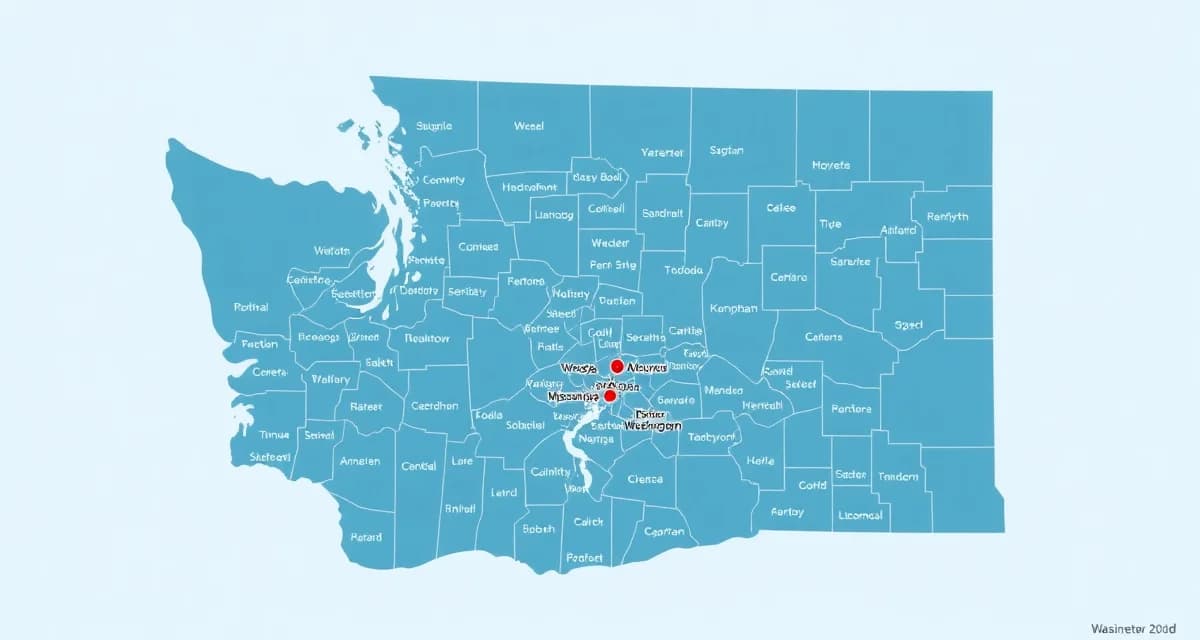
Washington's 39-county enforcement framework creates permit requirement differences that surprise expanding companies. SepticMind maps all Washington DOH requirements and all 39 county environmental health department variations.
TL;DR
- Washington septic regulations are administered at the state level with enforcement typically delegated to county health or environmental departments.
- Licensing requirements for pumping, inspection, and installation work vary by county within Washington and should be verified with local authorities.
- Operating, maintenance, and inspection reporting requirements in Washington differ for conventional systems versus alternative systems like ATUs.
- Companies operating in multiple Washington counties need to track permit and reporting requirements by county, not just by state.
- State-mandated inspection report formats in Washington must be used for regulatory submissions; generic forms are typically not accepted.
- SepticMind's permit database covers Washington county-level requirements to reduce the research burden for multi-county operations.
Washington State has strict Puget Sound protection requirements that affect septic setbacks from water bodies, requirements that companies moving from the eastern part of the state to western Washington counties discover only when they're already in the middle of a permit application.
Washington's Regulatory Structure
Washington's onsite sewage system regulations operate under a state-county framework:
Washington Department of Health (DOH). DOH establishes the statewide standards for onsite sewage systems under WAC 246-272A (the On-Site Sewage System rule). DOH sets minimum standards for system design, installation, and maintenance, and establishes the baseline licensing and certification requirements for OSS designers and installers.
Washington Department of Ecology (Ecology). For systems affecting Washington's water resources (particularly systems near salmon-bearing streams, Puget Sound, coastal areas, and other protected water bodies) Ecology may have additional requirements. The Shorelines Management Act and various water quality protection programs create overlapping jurisdiction.
County Environmental Health Departments. Each of Washington's 39 counties has its own environmental health department that administers onsite sewage permits within the county. Counties can and do establish requirements more stringent than the state minimum. This is where notable variation occurs, permit fees, additional setback requirements, design standards, inspection protocols, and approved system types can all differ between adjacent counties.
Health Districts. Some counties operate within multi-county health districts rather than standalone county health departments. The Tri-County Health Department, Benton-Franklin Health District, and others operate under the same DOH framework but may have slightly different administrative processes.
Washington's 39-County Variation
The practical challenge for operators serving multiple counties is that what works in one county doesn't always work in the next. Common areas of county-level variation:
Minimum lot size for OSS permits. Some counties have minimum lot size requirements for new onsite sewage system installation beyond what DOH requires.
Setback distances. Counties can increase setback distances beyond state minimums, from wells, water bodies, property lines, and structures. Puget Sound counties often have additional setbacks from marine water bodies.
Approved system types. Some counties restrict which system types can be used in certain soil conditions or areas, beyond the state-level guidance.
Design standards. Some counties require Professional Engineer review or endorsement for designs that DOH would accept from a licensed designer.
Inspection requirements. Inspection timing and scope can vary, some counties require more phases of inspection during installation than others.
O&M (Operations and Maintenance) Programs. Washington has a state O&M program for maintenance-dependent alternative systems, but counties administer it with varying levels of strictness. Some counties have reliable O&M inspection programs; others are less active.
The most notable county variation is typically in the western Washington counties with Puget Sound frontage. King, Snohomish, Pierce, Kitsap, Thurston, Mason, and others. These counties face pressure to protect the Sound and have often adopted requirements beyond the state minimum.
Puget Sound Protection Requirements
Washington State has strict Puget Sound protection requirements that affect septic setbacks from water bodies, particularly for properties along Puget Sound, Hood Canal, and the Strait of Juan de Fuca.
Marine shoreline setbacks. Systems in counties along Puget Sound may face setback requirements from the marine shoreline beyond standard well and water body setbacks. The specific distances vary by county.
Shellfish growing areas. Counties with active shellfish growing areas have additional protections. Failing or poorly maintained septic systems that contribute nitrogen or pathogens to shellfish growing waters face stricter enforcement and may trigger mandatory O&M requirements.
Critical areas regulations. Many Puget Sound counties have critical areas ordinances that impose additional requirements on development (including septic system installation) near wetlands, streams, and critical saltwater habitats.
Growth Management Act implications. Washington's Growth Management Act requires counties to protect critical areas. Septic systems in rural areas subject to GMA review face additional site evaluation requirements in some counties.
Washington Designer and Installer Licensing
Certified Designers. Washington requires designers who prepare OSS designs to hold a DOH certification. Designer certification levels (I, II, and III) correspond to the complexity of systems the designer is qualified to design. A Level I designer can design conventional systems; Level III designers can design complex alternative systems.
Licensed Installers. OSS installers must hold a DOH-issued license. The installer license is specific to onsite sewage systems and is separate from general contractor licensing.
O&M Specialists. For maintenance-dependent alternative systems, O&M specialists must hold a DOH certification to perform required maintenance services.
Pumping/Hauling Registration. Companies that pump septic tanks must register with DOH and hold a valid pumping registration. Vehicles used for pumping must be identified on the registration.
Inspection and O&M Requirements
Washington's O&M program requires that certain systems (particularly alternative systems) have regular inspection and maintenance by a certified O&M specialist, with reports submitted to the county. The O&M reporting requirements are enforced at the county level with varying degrees of rigor.
Counties that actively enforce O&M requirements send letters to property owners with systems on the O&M list when their reports are overdue. Service companies certified as O&M specialists in active enforcement counties have a steady flow of mandated service calls from property owners who receive these letters.
SepticMind's Washington compliance templates capture all 39 county variations and flag county-specific requirements when you create a new job. DOH-required O&M reporting deadlines are tracked and flagged in advance, so you're not submitting reports late.
For companies operating near the Puget Sound, state onsite wastewater regulations provides the framework for understanding how Washington's marine water quality requirements affect your compliance obligations.
Get Started with SepticMind
Operating in Washington means navigating county-level variation in permit requirements, inspection formats, and reporting deadlines. SepticMind's permit database covers Washington counties with forms, fee schedules, and timelines so you are prepared before you apply. See how it supports compliance in your service area.
Frequently Asked Questions
How do Washington DOH onsite sewage requirements differ between counties?
Washington DOH establishes minimum statewide standards under WAC 246-272A, but each of the 39 county environmental health departments administers those standards with county-specific additions. Common county-level variations include: increased setback distances (particularly near Puget Sound and other water bodies), minimum lot size requirements for new system permits, differences in which alternative system types are approved for certain soil conditions, additional professional engineer review requirements for some designs, and differences in O&M program enforcement rigor. Counties with Puget Sound frontage (particularly western Washington counties) often have the most notable additional requirements due to water quality protection obligations. Companies moving between counties should confirm specific requirements with the county's environmental health department before beginning a permit application.
What are the Puget Sound protection rules that affect septic systems in coastal Washington counties?
Puget Sound counties have adopted additional requirements to protect marine water quality from septic system contributions. These commonly include increased setback distances from the marine shoreline (beyond standard setbacks from water bodies), additional restrictions in shellfish growing areas (where nitrogen and pathogen contributions from failing septic systems create public health and ecological risks), critical areas ordinances that impose additional requirements near wetlands, streams, and saltwater habitats, and Growth Management Act requirements that require protection of critical areas in rural development. Some counties require mandatory O&M programs for all systems within defined distances of Puget Sound regardless of system type. The specific requirements vary by county and continue to evolve as Puget Sound recovery programs expand.
Does SepticMind include Washington licensed designer documentation and permit tracking?
Yes. SepticMind's Washington templates capture designer certification levels and credentials as part of permit application documentation. The permit tracking workflow differentiates between conventional permits (processed through county environmental health), alternative system permits (involving DOH-certified designers and county review), and O&M program documentation. For O&M-required systems, the system tracks the O&M reporting schedule and generates alerts when reports are due for each county's submission deadline. Designer and O&M specialist certifications for your staff are tracked in the technician certification module, with renewal reminders when DOH continuing education or renewal requirements are approaching.
What state agency regulates septic systems in Washington?
Septic system regulation in Washington falls under the state environmental or health agency, with day-to-day enforcement handled by county health departments or environmental offices. Licensing for pumping, installation, and inspection work is issued at the state level, but permit applications for individual projects are reviewed at the county level. Contact both the state agency and your specific county office to confirm current requirements, since county rules can differ from the state baseline.
Do Washington septic inspection reports need to be filed with the county?
In Washington, most inspection reports for real estate transactions and O&M permit systems must be filed with the relevant county health department or environmental office within the timeframe specified by state regulation. The required form and filing timeline vary by report type; real estate inspection reports typically have stricter deadlines than routine O&M reports. Using state-standardized digital report templates ensures the format meets Washington's requirements and can be submitted electronically.
Try These Free Tools
Sources
- National Onsite Wastewater Recycling Association (NOWRA)
- US EPA Office of Wastewater Management
- NSF International
- Water Environment Federation
- National Environmental Services Center (NESC)