Covering a septic tank: what's allowed, what's safe, and what to avoid
By the SepticMind Editorial Team
TL;DR
- You can cover a septic tank with grass, gravel, or a decorative riser lid.
- You cannot safely build a structure, pave over it, or plant trees on top.
- Every cover choice has to preserve access for pumping every 3 to 5 years.
- If the lid sits more than 12 to 18 inches below grade, install a riser to keep that access legal in most states.
Why covering your septic tank the right way actually matters
Most homeowners meet their septic tank the day a pumper can't find it. The lid is buried, nobody left a map, and a 20-minute pump-out becomes a two-hour dig at $75 to $150 an hour just to locate the thing. That's the problem with bad covering. It doesn't only look messy. It costs real money and creates real safety hazards.
The tank sits underground. It's usually concrete, fiberglass, or polyethylene. The top of a concrete tank carries the soil above it, and that soil load is built into the tank's engineering. Add a patio, a parked car, or a storage shed, and you can blow past the rated load and crack the lid or collapse the walls. The EPA's SepticSmart program tells homeowners to "keep cars and heavy equipment off the drain field and septic tank" as one of its basic maintenance rules. [1]
You're balancing three things when you cover a tank. Safety, so nothing collapses and no kid or animal falls in. Access, so a pumper can open it every few years. Looks, because it doesn't have to be an eyesore. Every option below hits those three differently.
What can you put over a septic tank?
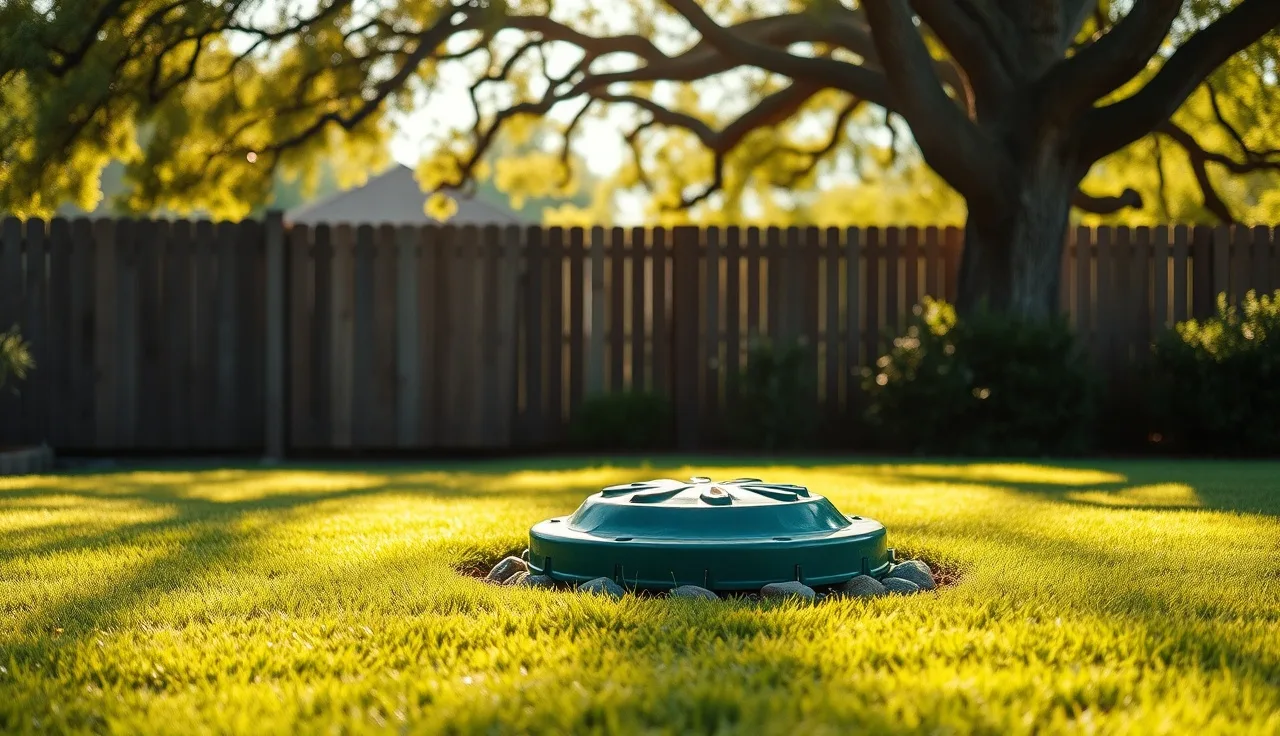
Grass, shallow-rooted groundcover, gravel or decorative stone, a fitted riser lid with a decorative cover, or a light removable planter. That's the whole safe list. Everything else involves a tradeoff that usually isn't worth it.
Grass is the default for a reason. It's light, the roots don't reach the tank, it won't block access, and it matches the rest of the yard. The University of Minnesota Extension recommends grass or wildflowers with fibrous shallow roots as the best cover for a septic area. [2] Mow it, skip the heavy fertilizer right over the tank, and you're done.
Gravel or river rock works if you want a visual border around the access area. Keep the stone under 6 inches deep so it's easy to move for pumping. Stone drains well and adds almost no weight to the tank top.
Riser lids are the upgrade most septic pros now push. A riser is a pipe section, usually 12 to 24 inches across, that runs from the tank access port up to or slightly above grade. You cap it with a locking lid. Covers from companies like Tuf-Tite and Polylok are rated for foot traffic. Some homeowners then set a fake rock cover (sold as a septic lid or tank cover) over the riser cap. Those run $40 to $200 and make the access point nearly invisible while staying easy to lift. [3]
Light container gardens can sit right on the tank slab as long as the pots move and the weight stays reasonable. A filled 20-gallon planter weighs maybe 150 to 200 pounds, which is fine. A stone trough full of wet soil is not.
What should you never put over or near a septic tank?
Concrete or asphalt paving is the most common mistake. Paving traps heat, blocks gas venting, makes access nearly impossible without a jackhammer, and in many states it's a code violation that surfaces during a home sale inspection. If you're thinking about running a driveway over a septic tank, stop. [4]
Structures are out too. Decks, sheds, garages, room additions. Even a light deck can make pumping impossible and creates liability if the ground settles or the lid fails underneath. Many state codes flat-out prohibit permanent structures over any part of a septic system. Virginia's Sewage Handling and Disposal Regulations, for example, require every system component to stay accessible for inspection and maintenance. [5]
Trees and large shrubs are the real threat within 10 to 20 feet of the tank, more than directly on top. Willow, poplar, and silver maple are the worst because their roots hunt for water and find the tank seams. [11] Once roots get in, you're looking at a septic tank repair or full septic system repair that runs into the thousands.
Vegetable gardens over the tank are a health problem separate from root damage. Even a healthy tank can leave trace pathogens near the soil surface, and no health department endorses growing food directly above it.
Pools cause trouble both ways. Above-ground pools pile concentrated weight on the tank and block access. In-ground pools need excavation that can wreck the tank.
How deep is a septic tank buried, and does that change your cover options?
Most tank lids sit 6 to 24 inches below grade. The exact depth comes from the original install: setback rules, frost line, the inlet pipe elevation from the house, and the grading. [6]
If your lid is under 6 inches deep, the ground above will feel a little hollow underfoot and may crack under vehicle weight. Here you want a riser to bring the access point up, not more dirt to push it down.
If the lid is 18 to 24 inches down, reaching it means digging every time, and plenty of pumpers charge extra for that. The fix is a riser. Riser installation usually costs $200 to $600 depending on depth and whether the old lid needs replacing. [3] It pays for itself the first or second pump-out where the pumper would otherwise bill an excavation fee.
Cold climates change the math. In Minnesota or Wisconsin the tank top may sit 24 to 36 inches down on purpose, below frost depth. Risers up north need insulation covers so the inlet pipe doesn't freeze.
The covering follows the depth. Shallow tanks take grass or gravel and nothing more. Deep tanks need a riser first, then any surface treatment you want around the lid. For what a full install looks like, see our guide to septic tank installation.
Do you need a permit to cover or landscape over a septic tank?
For plain landscaping, grass, groundcover, gravel, or a fake rock over an existing riser lid, no permit is generally required. You're not touching the system.
Anything that touches the tank or the risers gets more complicated. Swapping a damaged concrete lid for a new one is a repair and may need a permit in some places. Installing a riser modifies a permitted system, and many states require that work be done or inspected by a licensed septic contractor. Adding a riser without a permit in a state that wants one can bite you at sale time, when a septic tank inspection turns up unpermitted work.
The safe move is a phone call. Ask your county health department or environmental agency before you do anything beyond planting grass. Ask specifically whether a riser on an existing tank needs a permit. The answer changes by state and sometimes by county inside a state.
The EPA tells homeowners to "contact your local health department for local regulations" before any septic modification. [1] Boring advice. Also correct.
What are the options for decorative septic tank covers?
If you want something that looks deliberate instead of accidental, you have a few real choices.
Fake rock covers are fiberglass or polyethylene shells shaped like boulders. They sit right over a riser lid. Sizes run about 18 to 36 inches across. Prices run $40 to $200 depending on size and finish. They lift off easily, they're UV-resistant, and they look decent in a planted bed. The catch is they only cover the riser lid, so a large exposed concrete tank top still needs planting or gravel around it.
Decorative planters and garden art work as visual distractions near the access point, not on top of it. A ring of tall ornamental grasses planted 2 to 3 feet from the riser lid pulls the eye off the hardware.
Custom wooden enclosures that sit around a riser without being anchored to it are popular in tidier yards. Picture a cedar box or a low decorative fence panel around the riser cap. As long as it lifts off easily and has no fixed base sunk into the ground, it's fine. The risk is someone building it more permanently than they meant to.
For operators running multiple properties, SepticMind tracks which addresses have risers and which still need excavation at every service call, so dispatch stops getting surprised in the field.
One rule that trumps the aesthetics: most pumpers need 3 to 4 feet of clear working space around the access port. Whatever cover you pick, make sure a person with a hose can work without moving half your garden.
Can you park a car or drive over a septic tank?
No. This is a hard no.
Precast concrete septic tanks are built for soil cover plus foot traffic. They are not built for vehicles, even for a second. A loaded pickup puts 3,000 to 5,000 pounds on each axle. A lid rated for soil load and foot traffic handles a few hundred pounds spread over its surface, not point loads from tires.
Lid collapse is the failure mode. If the lid gives, the vehicle drops into a tank full of sewage. This has happened, and people have died. OSHA classifies the inside of a septic tank as a permit-required confined space because of oxygen-deficient and toxic gas hazards. [7] The second a tire caves a weak lid, you have a confined space rescue on your hands.
Even when the lid holds, repeated passes crack it over time. That lets groundwater in, which dilutes the tank and floods the drain field, and lets gas escape where you don't want it.
If your driveway layout puts tires anywhere near the tank, the fix is a riser with a traffic-rated lid. Tuf-Tite and others make H-10 and H-20 load-rated lids for driveway proximity, paired with bollards or barriers to keep tires off. That's a different job from a standard riser, and you want a septic contractor on it.
How do you find your septic tank lid if it's already covered?
This is the reverse problem. Somebody already buried it and now you need it back. A few approaches that actually work.
Start with your records. The county health department or environmental agency usually keeps the original as-built drawing on file, and it shows the tank location relative to the house foundation. Many counties put these online. Call the environmental health office and ask.
No records? A soil probe, a thin metal rod you push into the ground, will find the tank edges. Probe in a grid starting 5 to 10 feet from where the main sewer line leaves the house. The tank sounds and feels different from undisturbed soil, and you'll hit the concrete lid at a steady depth.
Electronic line locators and ground-penetrating radar find tanks under heavy cover, including lawns, gravel, and light hardscaping. Many pumping companies own this gear or can refer someone who does. A locate service usually runs $100 to $300. [3]
Once you find the lid, mark it for good. A GPS pin, a note in your home file, and ideally a riser so you never do this again. For what routine service needs from you, our guide to septic tank pump out covers the access side.
How does covering affect septic tank pumping schedules and costs?
Covering the tank correctly changes nothing about how often you pump. Covering it badly adds cost to every single visit.
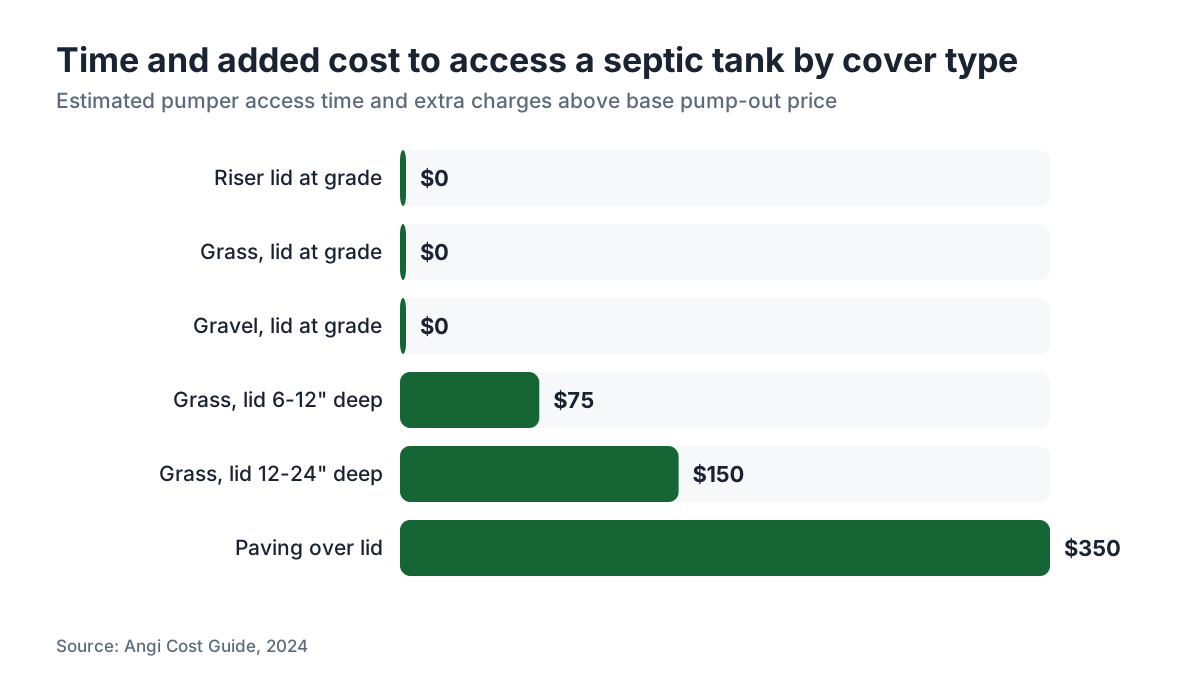
A pump-out with the riser lid at grade takes 20 to 30 minutes of real work. The national average for a standard septic tank pumping is $300 to $600 for a typical 1,000 to 1,500 gallon tank. [8] When the pumper has to dig to reach the lid, that time gets billed. Most companies charge $75 to $150 an hour for hand digging, and locating a buried lid can add $100 to $300 to the ticket.
Pumping frequency comes from tank size and household use, not from what's sitting on the ground. The EPA recommends pumping every 3 to 5 years for most households, and a family of four on a 1,000-gallon tank may need it closer to every 3 years. [1] Our breakdown on how often to pump septic tank runs the numbers by tank size and household size.
The math is simple. A $200 to $600 riser pays for itself in one or two pump-outs where you skip the excavation charge. Pump three times with a $150 dig fee each visit and you've already spent $450 with nothing to show for it. A riser would have cost less and made every future service faster.
| Cover Type | Access Time | Added Cost Per Visit | Riser Needed? |
|---|---|---|---|
| Grass, lid at grade | 2-3 minutes | $0 | No |
| Grass, lid 6-12" deep | 10-20 minutes | $50-$100 | Recommended |
| Grass, lid 12-24" deep | 20-45 minutes | $100-$200 | Yes |
| Gravel, lid at grade | 5 minutes | $0 | No |
| Paving over lid | 60-120 min + | $200-$500+ | Unavoidable replacement |
| Decorative riser lid | 1 minute | $0 | Already done |
What does a septic tank riser installation actually involve?
A riser install is a one-time job most licensed contractors finish in 2 to 4 hours. Here's the sequence.
The contractor digs down to the existing tank lid. If the lid is cracked or falling apart, it gets replaced right then. A riser pipe, polyethylene, PVC, or concrete, fits onto the access opening and runs up to or just above finished grade. The top gets a locking lid, usually screwed down so kids and animals can't lift it. Then they backfill around the riser.
Most modern risers are polyethylene. It's light, it doesn't crack in freeze-thaw cycles, and it doesn't corrode. Concrete risers still show up, mostly to match existing concrete systems, but they're heavier and harder to set.
Cost breakdown for a riser install (2024 estimates, varies by region and depth):
- Riser pipe, 12" diameter x 12" tall: $20-$60 material
- Riser pipe, 24" diameter x 24" tall: $60-$150 material
- Locking lid: $30-$80
- Contractor labor and excavation: $150-$400
- Total installed, typical: $200-$600 [3]
If the tank has two access ports, and most do, one over the inlet baffle and one over the outlet, put risers on both. That adds material cost but gives the pumper access to both ends without digging, which is how a proper septic tank cleaning gets done. Some pumpers will bill single-port access if only one riser exists. Others want both accessible before they start.
For deeper tanks (24 inches or more), stackable riser sections join together to reach grade. Each extra 12" section adds $15 to $50 in material.
What do state codes say about covering and accessing septic tanks?
State rules vary more than homeowners expect, but a few themes run through nearly every onsite wastewater code.
Access is required almost everywhere. Most codes say septic tank access ports have to be reachable for inspection and maintenance without tearing out permanent structures. What counts as "permanent" is where states split. Some require the lid at or within 6 inches of grade. Others only require access to be "readily available," which gets read more loosely.
Weight and traffic limits show up in most codes as a ban on vehicle traffic and permanent structures over septic components. Some states set specific setbacks: no structures within 5 feet, no paving within 5 feet.
Permitting for modifications is all over the map. California requires permits for any repair or modification to a septic system through the local environmental health department. Texas regulates on-site sewage facilities through the Texas Commission on Environmental Quality, which requires licensed installers for any system modification. [9]
A handful of states use the National Onsite Wastewater Recycling Association model code or something like it as their baseline, and it carries specific rules on access port requirements. [10]
The practical takeaway is the same everywhere. Before you do anything past landscaping, a 10-minute call to the county health department tells you whether you need a permit and whether the work has to be done by a licensed contractor. Don't assume your neighbor's setup is code-compliant just because it's survived a few years.
What about covering the drain field, more than the tank?
The drain field (the leach field) has tighter covering rules than the tank, because it runs on soil biology and oxygen exchange at the surface.
Grass over a drain field is fine. Paving, compaction from heavy equipment, deep-rooted trees or shrubs, and any structure are not.
The drain field pushes effluent into the soil, where bacteria break down pathogens and the soil filters contaminants before the water hits groundwater. Paving blocks oxygen exchange and can kill the aerobic bacteria that make the whole thing work. Heavy equipment compacts the soil and crushes distribution pipes. Tree roots, again, find the pipes and clog them.
Vegetable gardens over a drain field aren't recommended by any state health agency. The EPA SepticSmart program specifically warns against planting vegetable gardens on or near the drain field. [1]
If your drain field has quit, no covering change fixes it. That's a system failure that needs diagnosis and maybe full replacement. See our guide to leach field problems for failure signs and repair options.
For septic tank emptying questions tied to drain field health, remember that regular pumping protects the field directly by keeping solids from leaving the tank.
Frequently asked questions
Is it okay to put a shed over a septic tank?
No. A shed is a permanent structure and blocks access for pumping and inspection. In most states it's a code violation that can force removal when you sell. It also loads the lid with weight it wasn't designed for. If you need storage near the septic area, put the shed at least 10 feet from the tank and drain field.
Can I plant flowers or shrubs on top of my septic tank?
Shallow-rooted annuals and perennials directly over the tank are generally fine. Shrubs are borderline. Small ornamentals with fibrous, non-invasive roots, like ornamental grasses or lavender, planted near but not on the access point work well. Skip any woody shrub with aggressive roots. Keep plants far enough from the lid that a pumper can work without pulling them out.
How heavy can a decorative cover or planter be on top of a septic tank?
Concrete tanks are designed for soil overburden, not concentrated point loads. A rough industry rule is to stay under 400 pounds total for anything on the tank slab, and to spread that weight rather than concentrate it. If you can get your tank manufacturer's load rating, use it. Many precast tank makers publish this data.
What happens if I pave over my septic tank and need it pumped?
The pumper either can't reach it at all, or reaching it means breaking the pavement, which you pay for. Concrete breaking alone runs $3 to $8 per square foot for a jackhammer crew, plus haul-away. After the pump-out you're repaving or leaving a patch. Some pumpers refuse the job outright. It's expensive every time, with no good fix short of removing the paving.
Do fake rock septic tank covers actually work, and are they safe?
Yes, used correctly. Fiberglass or polyethylene fake rock covers sit over a riser lid and lift off easily for access. They're UV-stabilized so they hold color, they add almost no weight, and they make the access point look deliberate. Prices run $40 to $200. The one failure mode is someone shoving the cover aside and leaving the riser lid exposed, so make sure the riser lid itself locks.
Can a septic tank lid collapse under a person walking over it?
Old concrete lids weakened by corrosion or root damage can fail under adult weight. Hydrogen sulfide gas inside the tank eats concrete over years. Any ground that feels soft or hollow over where a tank should be needs immediate professional inspection. Don't let kids play on a lid you haven't had checked recently.
How do I cover my septic tank riser so it doesn't look ugly?
The common approach is a fake rock cover ($40 to $200) set right over the riser cap. Ring it with low ornamental grasses or groundcover to blend it in. Some homeowners use a cedar or composite enclosure that sits around the riser without being anchored. The one requirement: the cover comes off in under two minutes without tools, so a pumper can work.
Does covering a septic tank with soil affect how it works?
Soil depth affects temperature, which matters in cold climates. Too little cover (under 6 inches) can let the inlet pipe freeze in northern states. Too much (over 24 inches) makes access expensive without risers. The tank's biology isn't meaningfully affected by what's on top, as long as venting isn't blocked. Never cover the vent pipe running from the tank.
Is there a code or law against covering a septic tank with concrete?
Most state onsite wastewater codes prohibit permanent structures and impermeable paving over septic components. The exact wording varies. Virginia, California, Texas, and most other states with active septic programs require tanks to stay accessible for inspection and maintenance. Check your county health department or state environmental agency for the code that applies where you live.
Can I cover a septic tank access port with a wooden deck?
A permanent deck is prohibited in nearly all state codes because it blocks access. Some homeowners build a deck section with a removable hatch directly over the port, which some inspectors accept and others reject. The safe route: install a riser with a locking lid at grade, then frame the deck with a removable panel over it. Get your health department's opinion in writing before you build.
How much does it cost to install a riser on a septic tank?
Installed cost is typically $200 to $600 for a single riser depending on depth, riser diameter, and local labor. Deep tanks (24 inches or more) cost more because they need stacked sections. If the old lid is cracked and needs replacing, add $100 to $300. Risers on both ports (recommended for complete pump-outs) roughly double material cost but often cut labor, since both get done in one visit.
What ground cover plants are safe to plant near a septic tank?
Shallow-rooted covers that tolerate occasional moisture are ideal: creeping thyme, clover, low fescue mixes, or ornamental sedges. The University of Minnesota Extension recommends grass and wildflowers with fibrous root systems as the best choice over septic components. Avoid anything in the mint family that spreads by underground runners, since those can work into cracks over time.
How do I mark my septic tank location so I don't lose it again?
Best method is a riser that brings the port to grade. If you're not ready for that, drive a stake or set a landscape marker at the lid and record the GPS coordinates in your phone and home file. Your county health department usually keeps the as-built drawing, which shows the tank relative to the house foundation. Keep a copy with your home records.
Sources
- EPA SepticSmart Program, homeowner guidance: EPA advises keeping cars and heavy equipment off the septic tank and drain field, and recommends pumping every 3-5 years for most households
- University of Minnesota Extension, Septic System Owner's Guide: Recommends grass or wildflowers with shallow fibrous roots as the best cover for septic system areas
- HomeAdvisor / Angi, Septic Tank Riser Installation Cost Guide: Riser installation typically costs $200-$600 installed; locate services run $100-$300; decorative fake rock covers run $40-$200
- EPA, Onsite Wastewater Treatment Systems Manual: Paving over septic system components traps heat, blocks gas venting, and prevents required access for maintenance
- Virginia Department of Health, Sewage Handling and Disposal Regulations (12VAC5-610): Virginia regulations require all septic system components to remain accessible for inspection and maintenance
- National Environmental Services Center (NESC), West Virginia University, Septic Tank Installation Guidance: Most septic tank lids are installed 6-24 inches below grade depending on local conditions, frost line, and inlet pipe elevation
- OSHA, Confined Spaces Standard (29 CFR 1910.146): OSHA classifies septic tank interior as a permit-required confined space due to oxygen-deficient and toxic gas (hydrogen sulfide) hazards
- HomeAdvisor / Angi, Septic Tank Pumping Cost Guide: National average cost for a standard septic tank pump-out is $300-$600 for a 1,000-1,500 gallon tank
- Texas Commission on Environmental Quality (TCEQ), On-Site Sewage Facilities Program: Texas requires licensed installers for any on-site sewage facility modification under TCEQ regulations
- National Onsite Wastewater Recycling Association (NOWRA), Model Onsite Wastewater Code: NOWRA model code includes specific provisions requiring accessible septic tank access ports at or near grade
- University of Minnesota Extension, Protecting Water Quality with Proper Septic System Care: Tree roots from willow, poplar, and silver maple actively infiltrate septic tank seams and distribution pipes within 10-20 foot radius
Last updated 2026-07-10