Affordable septic tank pumping near Boston: what it costs and how to save
By the SepticMind Editorial Team
TL;DR
- Septic tank pumping near Boston typically costs $300 to $600 for a standard 1,000 to 1,500 gallon tank.
- Tight-access sites or large tanks can push past $800.
- Massachusetts requires licensed septage haulers, and many towns mandate pumping records.
- Pump every 3 to 5 years, compare at least three quotes, and ask for a written manifest that names the disposal facility.
What does septic tank pumping cost near Boston?
A straight pump-out near Boston runs $300 to $600 for most single-family homes. That covers a 1,000 to 1,500 gallon tank with decent truck access, a single-compartment pull, and legal septage disposal. Go bigger, add a second compartment, or bury the tank under a deck with no riser, and you can hit $700 to $900 or more.
Pricing swings more across the Boston suburbs than most people expect. A pumper in Hingham or Marshfield working the South Shore coast may add a travel premium. A company running dense routes out of a fixed yard near Framingham or Northborough tends to be cheaper per job. Nobody publishes precise regional averages, but EPA's SepticSmart program puts routine pumping at "a few hundred dollars" against a drain field replacement that runs $5,000 to $20,000 or more [1].
A few line items quietly inflate the invoice:
- Riser installation: If your lid sits more than a foot down, most companies charge $50 to $150 to dig it out. A permanent PVC riser to grade runs $100 to $300 per lid and pays for itself in two cycles.
- Filter cleaning: Many modern tanks (and some retrofitted older ones) have an effluent filter on the outlet baffle. Cleaning it adds $25 to $75 and should happen at every pump.
- Sludge measurement: A good technician measures scum and sludge before and after pumping. Some charge a few dollars, some include it. Either way, get the numbers in writing.
- Emergency or weekend service: Expect a $100 to $200 surcharge. If you're backing up on a Saturday, you'll pay it and be glad to.
The honest answer on "affordable": the lowest quote isn't always the cheapest. A pumper who skips the filter, guesses the tank capacity, and dumps septage illegally saves you maybe $80 today and can cost you a failed system later. Get three quotes, ask each company for its Massachusetts septage hauler license number (required under 310 CMR 15.000 [2]), and confirm they name a licensed disposal facility on the manifest.
How do Massachusetts regulations affect pumping near Boston?
Massachusetts runs some of the stricter septic rules in New England. The controlling regulation is Title 5 of the State Environmental Code, at 310 CMR 15.000 [2]. Title 5 covers everything from system design to inspection at the point of sale, and it lets local Boards of Health add requirements on top.
For pumping, a handful of rules matter:
Licensed haulers only. Anyone transporting septage in Massachusetts must hold a state septage hauler license from MassDEP [3]. Ask for the number before you schedule. Verifying it takes thirty seconds.
Disposal at an approved facility. Septage from your tank has to go somewhere legal, usually a municipal wastewater plant that accepts it or a licensed land application site. Your hauler has to hand you a manifest showing where it went [2]. Keep that paper. Some towns collect them during permit pulls or inspections.
Inspection trigger at sale. Under Title 5, selling a home on septic requires a system inspection within two years before the sale (or six months after, in some cases). A pump-out often rides along on the same visit, and buyers frequently make it a condition of purchase. The inspection, done by a licensed Title 5 inspector, is a separate cost from pumping, usually $300 to $500 [4].
Local Board of Health rules. Towns like Falmouth, Barnstable, and Marshfield have long required pumping on fixed schedules (every 2 to 3 years for certain systems) no matter the actual use. If you're in eastern Massachusetts, check with your Board of Health before you assume a 5-year interval flies. The Massachusetts Association of Health Boards keeps a directory to find your local contact [5].
Greater Boston's municipal sewer users flow to the MWRA, but plenty of towns outside Route 128, and almost all of the South Shore, Cape Ann fringe, and MetroWest, still run private septic. The MWRA reports roughly 375,000 properties in its region are on septic or otherwise not connected to sewer [6], which gives you the scale.
How often should you pump your septic tank near Boston?
EPA says every 3 to 5 years [1]. The real answer depends on tank size, household size, and what goes down the drain. A 1,500 gallon tank serving two people can safely go 5 years. That same tank serving five people with a garbage disposal and a teenager who showers twice a day should get pumped every 2 to 3 years.
The formula most engineers use comes from EPA's homeowner guidance: pump when the combined scum and sludge take up more than one-third of the tank's liquid capacity [8]. That's the real trigger, not a date on the calendar. A technician who measures sludge depth at each visit can tell you whether you're on track or falling behind.
We have a full breakdown by household size and tank volume in our how often to pump septic tank guide. Short version: err toward pumping sooner. A $400 pump-out beats a $15,000 drain field replacement every time.
One note on alternative systems. Massachusetts has a large installed base of nitrogen-reducing systems, especially on Cape Cod and around the South Shore estuaries, where nitrogen loading into coastal waters is a regulated problem. These systems (Presby, Advantex, FAST, Bioclere, and others) carry heavier maintenance requirements, often annual inspections and sometimes more frequent pump-outs, under their Massachusetts approval conditions [10]. If you own one and you're treating it like a conventional tank, you're probably out of compliance.
What is the actual difference between pumping and cleaning?
People swap these words freely and companies market both, so here's the precise version.
Pumping removes the liquid and floating scum from your tank. It's what happens during a standard pump-out.
Cleaning goes further. The technician uses the truck's pressure to break up the sludge cake at the bottom, suspends it in the liquid, and vacuums the whole thing. A true clean leaves the walls and baffles visually clear and pulls out more of the solids. Our septic tank cleaning guide has the full breakdown.
Pump-out as a service term is used interchangeably with pumping in most Massachusetts contracts. Read the septic tank pump out article if you want to know exactly what your invoice should cover.
For most homeowners on a regular schedule, a standard pump every 3 to 5 years is enough. If you've missed a few cycles, or you bought a house with no pumping records, pay for the full clean. Expect to add $50 to $150 over a simple pull.
How do you find an affordable, reputable pumper near Boston?
Start with the MassDEP search for licensed septage haulers [3]. It's a real database. Filter by county and you get a list of companies operating legally in your area. That's your starting pool.
Then work the list:
- Call three companies for a phone quote. Give them your tank size (check the as-built plan, or pull the original permit from your town's Board of Health), access conditions, and rough location. Any company worth hiring can quote a range without a site visit for a standard residential pump.
- Ask each one: "What disposal facility do you use?" A legitimate operator answers right away. Vagueness is a red flag.
- Ask for the manifest to be left with you. Standard practice, and required under 310 CMR 15.000 [2].
- Read Google reviews, but weight the bad ones heavily. One "they left a mess and didn't seat the lid" review tells you more than ten "great service" five-stars.
- Ask neighbors. In any street with multiple septic homes, somebody has a pumper they've trusted for fifteen years. This is genuinely one of the better ways to find a good operator in places like Medfield, Wrentham, or Pembroke.
Operators managing residential or commercial accounts across several towns often run software like SepticMind to centralize scheduling, manifest tracking, and compliance records. That matters here because Greater Boston operators juggle overlapping town and state rules that pile up paperwork fast.
Don't default to the biggest company or the one with the most trucks. Small two-truck operators often run leaner, answer their own phones, and treat every job like it matters, because every review does.
What is wastewater treatment in Greater Boston and how does it relate to your septic system?
The MWRA runs the Deer Island Treatment Plant in Boston Harbor, one of the larger secondary treatment plants in the country, handling roughly 330 million gallons a day on average [6]. If your house is on municipal sewer, your wastewater goes there and this article mostly doesn't apply to you.
If you're on septic, you are your own treatment plant. The tank is primary treatment: solids settle, anaerobic bacteria break down organics. The drain field is secondary and tertiary treatment: effluent filters through soil while microbes finish the job. Done right, what reaches groundwater is relatively clean. Done wrong, you're pushing partially treated wastewater toward private wells and surface water.
This matters more in eastern Massachusetts than most people realize. The Cape Cod Commission and the towns around Buzzards Bay have fought nitrogen-driven estuary damage for decades, and the state answered with stricter rules for septic near coastal waters [2]. Even inland, communities over sole-source aquifers (Plymouth-Carver is the best-known) have Board of Health rules that go past Title 5 minimums.
Your septic system is regulated infrastructure. The local rules in eastern Massachusetts reflect real environmental stakes, and maintaining your system well is both compliance and decent neighborly behavior where a failure can foul shared water.
If your system is aging or failing, learn how the leach field works. The drain field is almost always what fails first, and it's always the most expensive part to fix.
What does a septic inspection cost near Boston, and do you need one?
A Massachusetts Title 5 inspection runs $300 to $500 for most single-family homes, more for large systems or complicated sites [4]. It's separate from pumping, though smart inspectors coordinate both on one visit.
You need one if:
- You're selling your home. Title 5 requires it [2].
- You're buying a home on septic. Insist on a copy of a recent inspection before closing, or make a fresh one a condition of purchase.
- You haven't had one in years and you're unsure of the system's condition.
- You've had sewage odors, slow drains, or wet spots over the drain field.
An inspection documents the tank, baffles, distribution box, and drain field. It's where problems get caught early, before they turn into $20,000 failures. The septic tank inspection guide walks through what an inspector checks and what the red flags mean.
For buying and selling, the law is specific: the inspection must be done by a licensed inspector (not the same person as your pumper), and the report goes on file with the local Board of Health [2]. If the system fails, you either fix it before closing or negotiate the cost into the deal. Either way, you want to know before your name is on the deed.
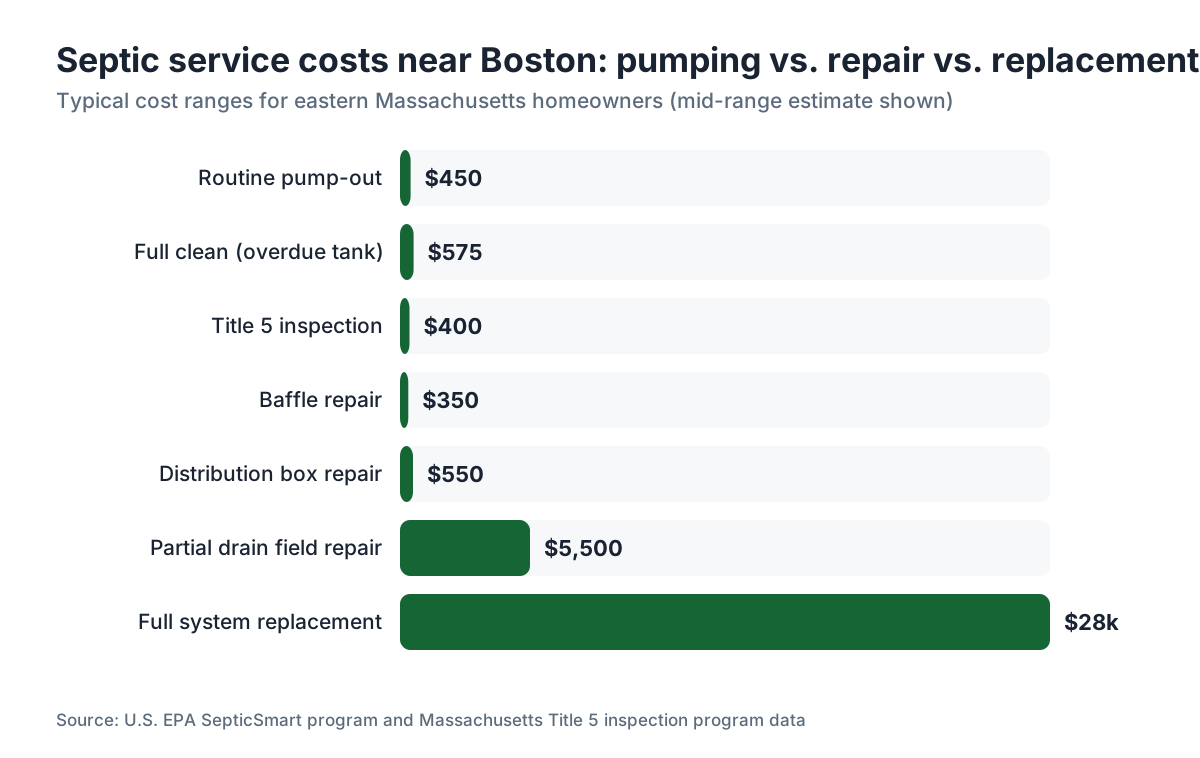
How does septic pumping compare to repair and replacement costs?
This is where the math on maintenance gets clear fast.
| Service | Typical cost range (MA) | Notes |
|---|---|---|
| Routine pump-out | $300 to $600 | Every 3 to 5 years |
| Full clean with pressure rinse | $400 to $750 | When tanks are overdue |
| Effluent filter replacement | $150 to $300 | If the filter is damaged, more than dirty |
| Baffle repair | $200 to $500 | Outlet or inlet baffle failure |
| Distribution box repair | $300 to $800 | Often paired with drain field issues |
| Drain field repair (partial) | $3,000 to $8,000 | If only part of the field has failed |
| Full system replacement | $15,000 to $40,000+ | Higher on Cape Cod and coastal towns with nitrogen rules |
| Title 5 inspection | $300 to $500 | Required at sale |
Ranges come from commonly reported Massachusetts contractor estimates [4] and EPA's national guidance [1]. Actual costs vary with site conditions, town permit fees, and soil type. Coastal and nitrogen-sensitive areas run toward the high end of replacement ranges.
The pattern is obvious. A $400 pump-out on schedule protects a system that costs $20,000 to replace. A failing drain field gives little warning. By the time sewage surfaces or the basement smells, you're already past the cheap fix.
For deeper cost context on repairs, see septic system repair and septic tank repair.
Can you reduce your septic pumping costs over time?
Yes, and most of the savings come from habits, not shopping.
Install risers. Buried lids mean digging at every pump-out. Risers bring the lids to grade for $100 to $300 per lid installed. After two pumps, they've paid for themselves in labor.
Ditch the garbage disposal. EPA is blunt: garbage disposals can "significantly increase" the solids in your tank and may double how often you pump [1]. That's the gap between pumping every 5 years and every 2.5, which adds up over a system's life.
Use water wisely. A water softener set to regenerate daily can shove a few hundred extra gallons through the system each week. High-efficiency toilets and showerheads cut the hydraulic load. Less water in means longer intervals between pumps.
Skip the additives. EPA's SepticSmart materials say plainly that there is "no scientific evidence" that additives work, and some can harm the system [1]. You're paying for nothing, or worse. Skip them.
Keep records. A pumping history lets a technician judge your real accumulation rate and catch the interval before the tank is critically full. It also pays at resale, because buyers and inspectors love a folder with every receipt and manifest.
Ask about a neighbor group. Some rural pockets in MetroWest and the South Shore run informal arrangements where a pumper does a whole street in one day and splits the travel cost. It's uncommon, but worth a question to the neighbors.
For the specifics on what the technician should do and what to verify before they leave, see our septic tank emptying guide.
What should you do if your septic system is failing near Boston?
First, stop panicking and start diagnosing. "Something is wrong" covers everything from a blocked outlet filter (a $75 fix) to a fully failed drain field (a $20,000 fix). Don't let a contractor talk you into a full replacement before you know what's actually broken.
Signs of failure: toilets backing up or slow to flush, sewage odors inside or near the tank, wet or spongy ground over the drain field, bright green grass over the field in dry weather (the nitrogen is feeding it), or a high sludge reading at pump-out.
Steps to take:
- Pump the system first if it hasn't been done recently. A backed-up tank sometimes mimics a failed drain field. Pump it, wait 48 hours, and see if the symptoms clear.
- Get a Title 5 inspection from a licensed inspector, separate from the pumper. The inspector tells you what failed and how far it's gone.
- Collect two or three repair quotes before you agree to anything. Title 5 failures are sometimes repairable without a full replacement. The septic system repair article covers the repair-versus-replace call in detail.
- Check with your Board of Health. Some towns run betterment loan programs or state-backed financing for upgrades. The Massachusetts Clean Water Trust has financed septic improvements [7].
- If you're in a nitrogen-sensitive area (most of Cape Cod, the South Shore estuaries, parts of the North Shore), you may be required to upgrade to an I/A (Innovative/Alternative) system rather than a conventional replacement [10]. These run more, $25,000 to $50,000 in some cases, but grant or loan programs sometimes offset part of it.
SepticMind's resource library tracks common repair scenarios if you're trying to understand what a contractor is proposing before you sign.
For new system cost context, see cost to install septic system and cost to put in a septic tank.
What questions should you ask a septic pumping company near Boston?
Most homeowners don't know what to ask, which is how bad operators stay in business. Here's a working list.
Before booking:
- "What is your MassDEP septage hauler license number?" (They should answer immediately.)
- "What disposal facility do you use for septage?" (They should name one.)
- "Is tank access included, or do I pay extra if my lids are buried?"
- "Do you include filter cleaning in the price?"
- "Will you leave me a copy of the manifest?"
During or after service:
- "What were the sludge and scum measurements before you pumped?"
- "Did you see anything unusual with the baffles or the tank?"
- "Based on what you saw, how long before I should pump again?"
A good technician answers all of these without hesitating. They see tanks every day and they know what healthy looks like. If a company can't or won't answer the pre-booking questions, move to the next name on your list.
Ask how they handle after-hours emergencies too. Septic backups don't wait for Tuesday morning. Knowing your pumper has a 24-hour line, and knowing the emergency surcharge, is something to settle before you need it.
Frequently asked questions
How much does septic tank pumping cost near Boston?
Most homeowners near Boston pay $300 to $600 for a standard pump-out on a 1,000 to 1,500 gallon tank. Difficult access, larger tanks, or second-compartment tanks push costs to $700 to $900 or more. Emergency or weekend service adds $100 to $200. Get three quotes, verify the contractor's MassDEP septage hauler license, and ask what disposal facility they use.
How do I find a licensed septic pumper in Massachusetts?
MassDEP keeps a searchable database of licensed septage haulers. Go to the MassDEP licensing page and filter by county. Any company transporting septage in Massachusetts must hold this license under 310 CMR 15.000. Ask for the license number before booking and verify it. Unlicensed haulers create liability for you if illegal disposal turns up later.
How often should I pump my septic tank in eastern Massachusetts?
EPA guidance says every 3 to 5 years for a typical household. Some Massachusetts towns, especially on the South Shore and coastal areas, require shorter intervals for certain system types. The real trigger is when sludge and scum together exceed one-third of the tank's liquid capacity. A technician who measures depth at each visit can tell you your actual rate of accumulation.
What is Title 5 and why does it matter for septic pumping?
Title 5 is Massachusetts' State Environmental Code for septic systems, at 310 CMR 15.000. It governs system design, inspection at sale, and septage hauler requirements. Selling a home requires a Title 5 inspection. Haulers must be licensed and must provide a disposal manifest. Local Boards of Health can add requirements on top of Title 5 minimums, so check with your town.
Is septic pumping required by law in Massachusetts?
No statewide law sets a specific pumping frequency, but some towns require regular pumping under local Board of Health regulations. Title 5 requires an inspection when selling a home, and that inspection typically includes or triggers a pump-out. For alternative systems with state approval conditions, maintenance schedules including pump-outs may be legally required.
What is included in a septic pump-out in Massachusetts?
A standard pump-out should include vacuuming all liquids and scum from the tank, sludge depth measurement before and after, a check of inlet and outlet baffles, and a manifest documenting the disposal destination. Filter cleaning (if your tank has an effluent filter) may cost extra. Ask in advance what's included and request the measurements in writing.
How do I know if my drain field is failing near Boston?
Watch for slow or backed-up drains, sewage odors in the yard or basement, soft or wet ground over the drain field, or unusually bright green grass over the field in dry weather. These signs mean effluent is surfacing instead of soaking into the soil. Pump the tank first, since a full tank can mimic drain field failure. Then get a Title 5 inspection to find out what's actually broken.
What is the difference between a septic pump-out and a septic cleaning?
Pumping removes the liquid and floating scum. Cleaning goes further: the technician uses pressurized water to break up the settled sludge cake, suspends it, and vacuums the whole tank. A full clean removes more solids and leaves the walls and baffles clear. For homes on a regular 3 to 5 year schedule, standard pumping is usually enough. If you've missed cycles, pay for the full clean.
Can I use septic additives to reduce how often I need to pump near Boston?
No. EPA's SepticSmart program states there is no scientific evidence that biological or chemical additives reduce the need for pumping or extend system life. Some additives can actually disrupt the natural bacterial balance in the tank or flush solids into the drain field. Save the money. Regular pumping on schedule is the only maintenance that actually works.
How much does a Title 5 septic inspection cost in Massachusetts?
A Title 5 inspection typically costs $300 to $500 for a single-family home in eastern Massachusetts. It's done by a licensed Title 5 inspector (not the same as a pumper), and the report is filed with the local Board of Health. It's required when selling a home and a smart move when buying one. Inspectors often coordinate with a pumper to do both on the same day.
Are there financial assistance programs for septic repairs near Boston?
Yes. The Massachusetts Clean Water Trust has offered low-interest loans for septic repairs, and some towns in nitrogen-sensitive areas (particularly Cape Cod and South Shore communities) run local betterment programs or grants for I/A system upgrades. Check with your local Board of Health and the Massachusetts Clean Water Trust for current programs. Eligibility and funding vary by year and location.
What happens if my septic system fails a Title 5 inspection?
A failed Title 5 inspection means the system needs repair or replacement before the property can be sold, or the parties must negotiate who bears that cost. The timeline and requirements come from the local Board of Health. In nitrogen-sensitive areas, a failed conventional system may need to be replaced with a more expensive I/A system. Get multiple contractor quotes before agreeing to a scope of work.
How do I find my septic tank if I don't know where it is?
Start with your town's Board of Health office. Most towns in eastern Massachusetts keep as-built drawings on file from when the system was permitted, and these show the tank location relative to the house. If no drawing exists, a septic professional can probe the ground with a metal rod along the main sewer line from the house. Some companies use electronic locating equipment for harder-to-find tanks.
Sources
- U.S. EPA, SepticSmart: How to Care for Your Septic System: EPA guidance on pumping frequency every 3-5 years, avoiding garbage disposals, and the ineffectiveness of additives; comparison of pumping cost to drain field replacement cost
- Massachusetts Department of Environmental Protection, Title 5 State Environmental Code (310 CMR 15.000): Massachusetts Title 5 requirements for licensed septage haulers, disposal manifests, and inspection at property sale
- Massachusetts Department of Environmental Protection, Septage Hauler Licensing: Requirement that septage transporters in Massachusetts hold a MassDEP septage hauler license
- Massachusetts Department of Environmental Protection, Title 5 Inspection Program: Title 5 inspection requirements at property sale and typical associated costs
- Massachusetts Association of Health Boards: Local Boards of Health authority to impose pumping frequency requirements beyond Title 5 minimums
- Massachusetts Water Resources Authority: Deer Island Treatment Plant average daily flow and scale of properties on septic in eastern Massachusetts
- Massachusetts Clean Water Trust: Massachusetts Clean Water Trust offers low-interest financing for septic system improvements
- U.S. EPA, How Your Septic System Works: Pump when sludge and scum combined exceed one-third of tank liquid capacity; garbage disposals significantly increase solids
- Massachusetts Department of Environmental Protection, Innovative/Alternative Septic Systems: I/A systems have state approval conditions requiring more frequent maintenance, inspections, and sometimes pump-outs
Last updated 2026-07-10