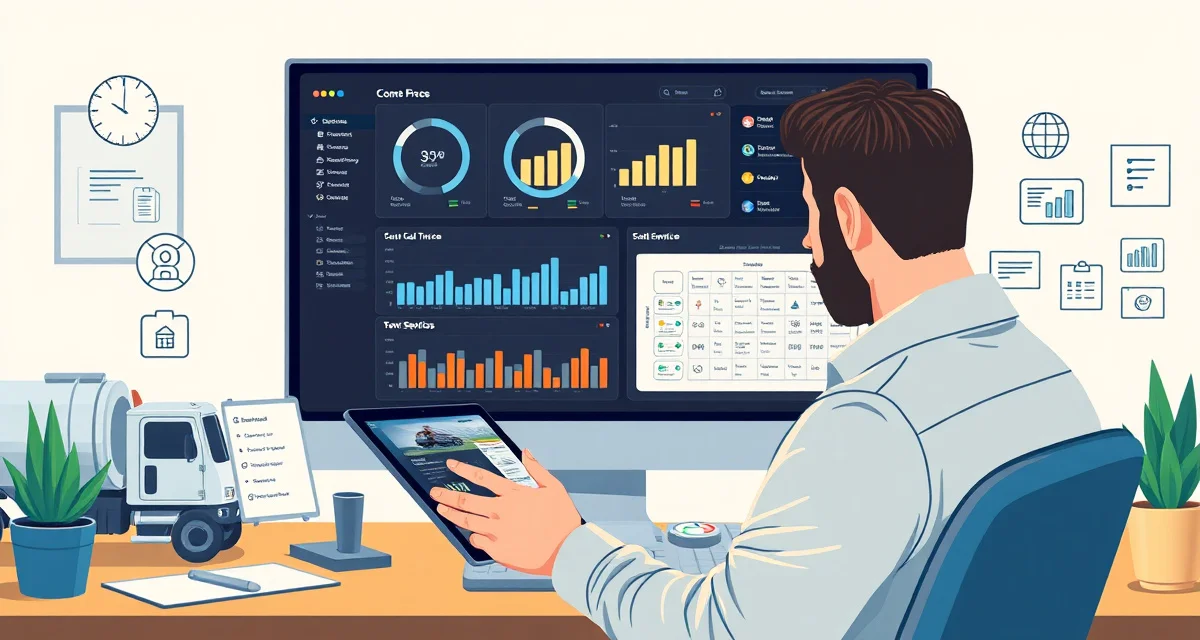
Septic Service Software for Small Companies Under 5 Trucks
By the SepticMind Editorial Team
If you're running a 1, 2, or 3-truck septic operation, you've probably heard the pitch from software sales reps and wondered if any of these platforms are actually built for a company your size. Most aren't. Enterprise field service software assumes you have an office manager, a billing coordinator, and a dispatcher. You might be all three.
TL;DR
- Septic Service Software for Small Companies Under 5 Trucks is designed to address the specific workflow and compliance requirements of septic service operations.
- Purpose-built septic software handles permit tracking, state inspection report templates, and tank data management that generic platforms do not offer.
- Companies managing ATU contracts, multi-county permit portfolios, or real estate inspection volume need software designed around those workflows.
- Mobile access allows field technicians to complete and submit inspection reports before leaving a property.
- Cloud-based platforms ensure records are accessible from any device and backed up automatically.
- Switching costs from generic software are real, so evaluating septic-specific platforms early saves migration pain later.
Over 60% of US septic companies operate 5 trucks or fewer. That's the majority of the industry, and most of them are underserved by platforms designed for 50-truck fleets.
This guide is specifically for small septic companies. What software features actually matter at your scale, what you should avoid paying for, and why compliance tools matter just as much for a 2-truck company as for a 20-truck fleet.
The Real Problem With Generic Software for Small Septic Companies
Generic field service management tools handle scheduling, invoicing, and customer records reasonably well. If that's all you need, they're fine. But septic work isn't generic field service.
Your jobs require permits. Your inspection reports have state-specific documentation requirements. The compliance rules for a pump-out in one county are different from the county two miles away. A failed system discovery has legal notification requirements. An alternative system maintenance visit needs documented proof of service for a regulatory file.
Generic platforms don't handle any of that. You end up using the software for scheduling and billing, then maintaining a separate set of spreadsheets for permits, a separate folder system for state compliance forms, and a manual process for everything compliance-related. That's not a system. That's three half-systems that don't talk to each other.
Small septic companies often rely on paper dispatch and manual permit tracking, creating compliance risk that grows as the business grows. The company that starts with paper systems usually waits too long to change them, and by then, they've had a permit violation or lost a job because of missing documentation.
What Small Companies Actually Need From Software
You don't need a system with 50 modules and a dedicated implementation consultant. But you do need these things:
Permit tracking that knows your counties. When a job comes in for a county you work in, the software should know what permits are required for that job type and county. You shouldn't have to look that up every time.
State-compliant inspection documentation. If you're doing inspections, your reports need to meet state standards. The form should generate automatically from what you fill in during the inspection, not require you to build it from scratch.
Scheduling that's actually simple. A small company needs to be able to schedule a job in under a minute, see the day's board at a glance, and adjust when something changes. No complex setup required.
A mobile app your tech can actually use. Your tech needs job details, tank specs, and the ability to fill out service records from their phone. The app needs to work in areas without cell service.
Invoicing from the field. You should be able to generate an invoice the moment the job is marked complete, not the next morning when you're back at the desk.
Customer history in one place. Every service visit, every permit, every inspection report, tied to the property. When a customer calls, you should be able to pull up their complete history in seconds.
SepticMind's $79/mo gives a 1 to 3 truck company the same compliance capability as a 50-truck fleet, because the features that matter for compliance don't scale with truck count.
Why Compliance Matters Even More for Small Companies
Here's the thing about being small: you have less margin for error. A permit violation that costs a large company a $3,000 fine is painful but manageable. The same fine for a 2-truck operation can wipe out a month of profit.
Small companies also have less redundancy. If the owner is also the dispatcher, the compliance tracker, and the only one who knows where the permit renewal spreadsheet is, one bad month can create cascading problems. When things get busy, compliance tracking is the first thing that slips.
Building software-managed compliance into your operation from the start is how small companies avoid the compliance crises that derail growth. The companies that grow successfully from 2 trucks to 8 trucks are usually the ones that built systems early, not the ones that were always planning to "figure it out when we get bigger."
Getting Started Without a Long Onboarding Process
Small companies don't have time for a 3-month software implementation. You need to be functional from week one.
SepticMind is designed to be operational quickly. The setup involves:
- Adding your service area counties
- Importing your customer list (CSV upload handles existing paper records in bulk)
- Setting up your service types and standard pricing
- Adding your technicians and their certifications
- Configuring your state compliance templates
Most small companies are running live jobs through the system within a week of signing up.
The Cost Comparison for Small Companies
It's worth doing the math honestly. Here's what a typical 2-truck septic company spends on software if they're cobbling together a solution:
- General scheduling tool (Jobber at ~$79/mo)
- Separate invoice/billing tool or QuickBooks integration ($25-50/mo)
- Permit tracking spreadsheet (free, but costs hours of manual time)
- State compliance forms (manual research and file management)
Total: $100-130/mo plus hours of manual time for compliance
Versus SepticMind at $79/mo flat, with all of the above included plus septic-specific compliance features the cobbled-together solution doesn't have at all.
The software cost is the same or less. The compliance capability is dramatically better. And the manual time savings alone, at 6 hours per week for the average company going from manual to digital workflows, pays for the subscription many times over.
Growing Into the Software
One of the practical advantages of starting with the right software early is that it grows with you. When you go from 2 trucks to 5 trucks, you add the new trucks to SepticMind. When you add a technician, you add their profile and certifications. The software doesn't require an upgrade or a new pricing tier.
SepticMind's septic service management software scales from a solo inspector to a 50-truck fleet on the same platform and the same price. Starting a septic service company covers how to build the operational foundation before adding trucks.
Features Small Companies Can Ignore at First
You don't need to configure every feature on day one. Start with what matters for your current size:
Week 1: Job scheduling, customer records, and basic permit tracking for your counties.
Month 1: Invoice automation from the field and digital inspection reports.
Month 3: Route optimization, automated maintenance reminders, and customer portal access.
Building the system in layers prevents overwhelm and ensures each feature gets properly adopted before you add complexity.
Get Started with SepticMind
The right software for a septic company handles compliance and documentation alongside scheduling and billing. SepticMind is built specifically for septic operations, from county permit tracking to ATU maintenance management. Start a free trial to evaluate it against your workflow.
Frequently Asked Questions
Is SepticMind worth it for a septic company with just 2 trucks?
Yes. The compliance features, particularly permit tracking and state-compliant inspection documentation, matter regardless of fleet size. A 2-truck company faces the same permit violation fines and documentation requirements as a larger company. At $79/mo, the cost is roughly what you'd pay for basic scheduling software without any of the compliance capability.
What setup is required to start using SepticMind for a small operation?
Initial setup involves adding your service counties, importing your customer list via CSV, configuring your service types and pricing, and adding technician profiles with certifications. Most small companies are running live jobs through the system within one week. SepticMind provides onboarding support to get your configuration right before you go live.
Can I add trucks to SepticMind as my company grows without upgrading plans?
Yes. SepticMind's flat $79/mo pricing includes unlimited technician profiles and truck assignments. There's no per-truck or per-technician fee, so adding capacity doesn't increase your subscription cost. Your compliance features, permit database access, and state templates all scale without any plan changes.
What makes Septic Service Software for Small Companies Under 5 Trucks different from general field service software?
The primary differences are septic-specific features: county permit databases, state inspection report templates formatted for regulatory submission, tank size and system type records that drive service interval calculations, and ATU maintenance contract management. General field service platforms can handle scheduling and invoicing but require manual workarounds for every compliance and documentation task that purpose-built septic software handles automatically.
Is there a free trial available to test the software?
SepticMind offers a free trial period so you can evaluate the platform with your actual workflow before committing. The trial includes access to the permit database, inspection report templates, and scheduling tools. Most companies complete their evaluation within two to three weeks and have a clear picture of how the platform fits their operation before the trial ends.
Try These Free Tools
Sources
- National Onsite Wastewater Recycling Association (NOWRA)
- US EPA Office of Wastewater Management
- National Environmental Services Center (NESC)
- Water Environment Federation
- Occupational Safety and Health Administration (OSHA)