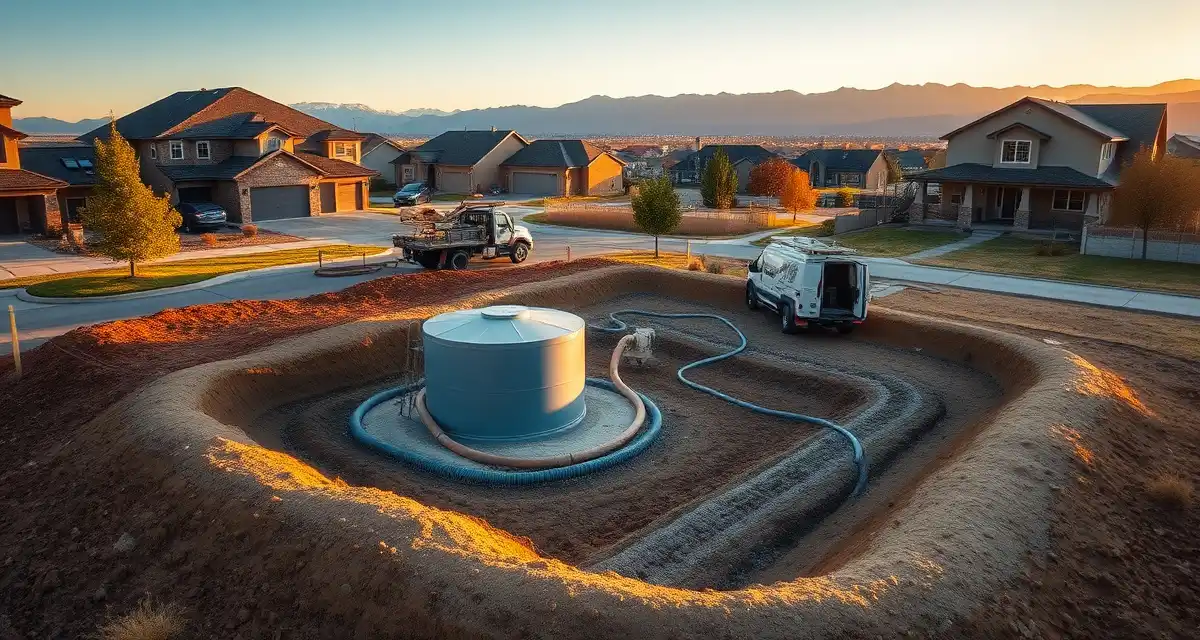
Septic Service Software for Utah Companies
By the SepticMind Editorial Team
Utah's septic market is concentrated in two very different environments: the rapidly growing Wasatch Front counties (Utah County, Davis County, Weber County) where suburban development outpaces municipal sewer capacity, and the rural counties across the rest of the state where towns are small and service distances are extreme. The Utah Division of Water Quality administers the regulatory program.
TL;DR
- Utah septic regulations are administered at the state level with enforcement typically delegated to county health or environmental departments.
- Licensing requirements for pumping, inspection, and installation work vary by county within Utah and should be verified with local authorities.
- Operating, maintenance, and inspection reporting requirements in Utah differ for conventional systems versus alternative systems like ATUs.
- Companies operating in multiple Utah counties need to track permit and reporting requirements by county, not just by state.
- State-mandated inspection report formats in Utah must be used for regulatory submissions; generic forms are typically not accepted.
- SepticMind's permit database covers Utah county-level requirements to reduce the research burden for multi-county operations.
The Direct Answer
Utah septic companies need software with Utah DWQ-compliant inspection templates, county permit tracking across Utah's 29 counties, and route tools for Utah's mix of Wasatch Front suburban density and rural southern and eastern Utah service areas. SepticMind covers all 29 Utah counties with state-specific inspection templates meeting Utah's onsite wastewater rules.
Utah's Regulatory Framework
Utah regulates onsite wastewater systems under the Utah Administrative Code R317-4 (Standards for Soil Absorption Onsite Wastewater Systems) and R317-11 (Onsite Wastewater Systems). The Division of Water Quality administers the program. County health departments serve as local permit authorities.
Utah's regulatory framework has been updated in recent years, with increased attention to systems in sensitive areas including the Jordan River corridor, Utah Lake watershed, and other areas of water quality concern.
What Makes Utah Different
Wasatch Front growth. Utah County, Davis County, and Weber County are among the fastest-growing counties in the United States. New residential development is pushing into areas without municipal sewer, generating high installation permit activity. Tooele County, Juab County, and Sanpete County are also seeing suburban growth spill over from the main Wasatch Front corridor.
Rural southern and eastern Utah. San Juan County, Emery County, Wayne County, Garfield County, these counties have very small populations and extreme service distances. A company serving rural southern Utah faces route challenges that are among the most extreme in the country.
High altitude and desert conditions. Utah's service environment spans sea-level desert to 6,000-foot mountain communities. System performance, service intervals, and installation requirements vary by elevation and climate zone.
Get Started with SepticMind
Operating in Utah means navigating county-level variation in permit requirements, inspection formats, and reporting deadlines. SepticMind's permit database covers Utah counties with forms, fee schedules, and timelines so you are prepared before you apply. See how it supports compliance in your service area.
FAQ
Does SepticMind cover all 29 Utah county health departments?
Yes. All 29 Utah counties are in SepticMind's permit database with county health department contacts and Utah DWQ R317-aligned permit requirements.
How does SepticMind handle the scheduling contrast between dense Wasatch Front service and remote southern Utah?
SepticMind's route optimization handles both environments. For Wasatch Front operations covering Utah County and Davis County, the system optimizes dense suburban routes for maximum daily job completion. For rural southern Utah routes, it minimizes dead miles across extreme distances.
Does SepticMind work offline in remote rural Utah?
Yes. The field app operates fully offline, which is essential for rural southern Utah service where cell coverage is limited across large portions of San Juan, Garfield, and Wayne counties.
What state agency regulates septic systems in Utah?
Septic system regulation in Utah falls under the state environmental or health agency, with day-to-day enforcement handled by county health departments or environmental offices. Licensing for pumping, installation, and inspection work is issued at the state level, but permit applications for individual projects are reviewed at the county level. Contact both the state agency and your specific county office to confirm current requirements, since county rules can differ from the state baseline.
Do Utah septic inspection reports need to be filed with the county?
In Utah, most inspection reports for real estate transactions and O&M permit systems must be filed with the relevant county health department or environmental office within the timeframe specified by state regulation. The required form and filing timeline vary by report type; real estate inspection reports typically have stricter deadlines than routine O&M reports. Using state-standardized digital report templates ensures the format meets Utah's requirements and can be submitted electronically.
Try These Free Tools
Sources
- National Onsite Wastewater Recycling Association (NOWRA)
- US EPA Office of Wastewater Management
- NSF International
- Water Environment Federation
- National Environmental Services Center (NESC)