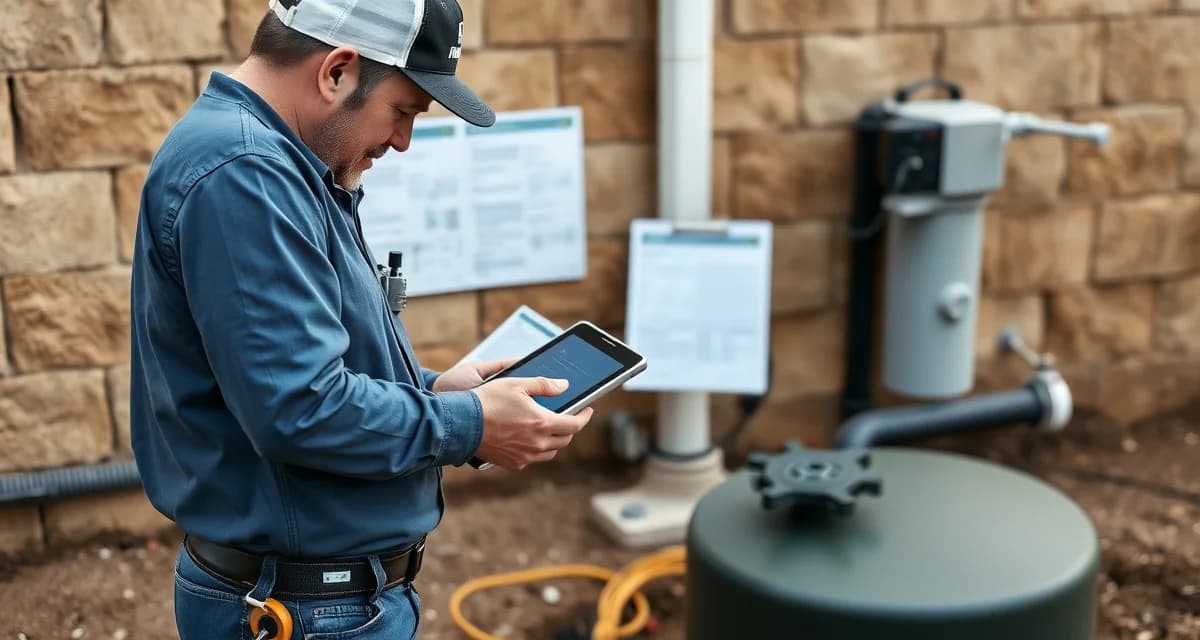
Septic Service Software for Texas Septic Contractors
By the SepticMind Editorial Team
Texas has 254 counties, more than any other state, and septic regulation that varies dramatically between them. The Texas Commission on Environmental Quality (TCEQ) sets state standards under Chapter 285, but local Authorized Agents (typically county or city environmental health departments) administer permits with considerable local variation. A contractor working across the DFW Metroplex counties operates differently than one serving remote West Texas counties where permit requirements are minimal.
TL;DR
- Texas septic regulations are administered at the state level with enforcement typically delegated to county health or environmental departments.
- Licensing requirements for pumping, inspection, and installation work vary by county within Texas and should be verified with local authorities.
- Operating, maintenance, and inspection reporting requirements in Texas differ for conventional systems versus alternative systems like ATUs.
- Companies operating in multiple Texas counties need to track permit and reporting requirements by county, not just by state.
- State-mandated inspection report formats in Texas must be used for regulatory submissions; generic forms are typically not accepted.
- SepticMind's permit database covers Texas county-level requirements to reduce the research burden for multi-county operations.
SepticMind covers all 254 Texas counties in its permit database, built for the reality of how Texas onsite sewage facility (OSS) work gets permitted and documented.
Texas OSS Regulation Framework
Texas TCEQ Chapter 285 governs onsite sewage facilities. Key points:
Authorized Agents. Most Texas counties have an Authorized Agent, county or city environmental health staff, who administers permits under TCEQ authorization. Some areas have no Authorized Agent and permit under TCEQ direct oversight.
License requirements. Installers must hold a TCEQ OSS installer license. Maintenance providers for aerobic systems must be licensed maintenance companies. Inspectors must be licensed.
Aerobic system requirements. Texas has a very high proportion of aerobic treatment units compared to national averages, particularly in areas with caliche or black clay soils that don't support conventional drain fields. State rules require maintenance contracts, quarterly maintenance visits, and maintenance reports submitted to the Authorized Agent.
Site evaluation. Soil evaluation is required before permit approval. In many Texas counties, TCEQ-licensed site evaluators are required.
What SepticMind Does for Texas Operators
All 254 county permit databases. Harris, Dallas, Tarrant, Bexar, Travis, and all 249 other Texas counties from Brewster to Zapata. Each county's Authorized Agent contact, permit application forms, and fee schedule are in the database.
ATU maintenance compliance. Texas has more aerobic systems per capita than almost any state. SepticMind's ATU management module tracks maintenance contracts, schedules quarterly visits, generates maintenance reports, and manages submissions to each county's Authorized Agent.
License tracking. TCEQ installer and maintenance licenses, expiration dates, and renewal alerts are stored in each technician's profile. Job assignments are restricted to techs with applicable credentials.
Rural route optimization. Texas distances are real. A West Texas operation may have 40-mile drives between jobs. SepticMind's route optimization accounts for actual rural drive times and sequences jobs to minimize backtracking across large territories.
Texas Market Specifics
The Aerobic System Market
Central Texas, the Austin metro, Hill Country, and surrounding area, has dense aerobic system populations because of rock and clay soil conditions. Operating a maintenance business on these accounts requires systematic scheduling and documentation. Manually tracking 80 ATU maintenance contracts across multiple counties is how things get missed.
SepticMind manages every ATU maintenance schedule, generates the quarterly reports, and files them with the appropriate Authorized Agent. Your maintenance business becomes manageable at scale.
The Growth Markets
DFW, Austin, San Antonio, and Houston continue expanding into areas without municipal sewer. New construction septic installation is a significant market in Texas suburban counties. SepticMind's new construction workflow tracks permit applications through TCEQ and county Authorized Agent approval, schedules county inspections, and generates final documentation.
Rural County Variation
West Texas and South Texas have some of the most rural service areas in the country. Some counties have minimal permit requirements. Some have no Authorized Agent and operate under TCEQ direct oversight. SepticMind's database reflects this variation, you're not applying a Dallas County process to a Presidio County job.
Pricing
- Starter: $149/mo, 1–2 trucks
- Professional: $299/mo, 3–5 trucks
- Enterprise: $499/mo, 6+ trucks
Get Started with SepticMind
Operating in Texas means navigating county-level variation in permit requirements, inspection formats, and reporting deadlines. SepticMind's permit database covers Texas counties with forms, fee schedules, and timelines so you are prepared before you apply. See how it supports compliance in your service area.
FAQ
Does SepticMind track TCEQ license requirements for Texas OSS contractors?
Yes. TCEQ OSS installer licenses, maintenance company licenses, and site evaluator credentials are stored in the technician and company profiles. SepticMind tracks expiration dates and sends renewal alerts at 90, 60, and 30 days before expiration. Job assignments require the applicable credential before they can be confirmed without an override.
How does SepticMind handle Texas counties with no Authorized Agent?
For Texas counties operating under direct TCEQ oversight rather than an Authorized Agent, SepticMind's permit records reflect the TCEQ direct permit process, including the applicable TCEQ region office contact, required forms, and the process for direct TCEQ permit applications.
Can SepticMind handle Texas aerobic system quarterly maintenance reporting?
Yes. This is one of SepticMind's core use cases in the Texas market. For each ATU on a maintenance contract, SepticMind schedules quarterly maintenance visits, generates the maintenance report at completion, and facilitates submission to the county Authorized Agent or TCEQ as applicable. Contract renewal alerts fire 90 days before expiration so you're not losing recurring maintenance accounts.
What state agency regulates septic systems in Texas?
Septic system regulation in Texas falls under the state environmental or health agency, with day-to-day enforcement handled by county health departments or environmental offices. Licensing for pumping, installation, and inspection work is issued at the state level, but permit applications for individual projects are reviewed at the county level. Contact both the state agency and your specific county office to confirm current requirements, since county rules can differ from the state baseline.
Do Texas septic inspection reports need to be filed with the county?
In Texas, most inspection reports for real estate transactions and O&M permit systems must be filed with the relevant county health department or environmental office within the timeframe specified by state regulation. The required form and filing timeline vary by report type; real estate inspection reports typically have stricter deadlines than routine O&M reports. Using state-standardized digital report templates ensures the format meets Texas's requirements and can be submitted electronically.
Try These Free Tools
Sources
- National Onsite Wastewater Recycling Association (NOWRA)
- US EPA Office of Wastewater Management
- NSF International
- Water Environment Federation
- National Environmental Services Center (NESC)