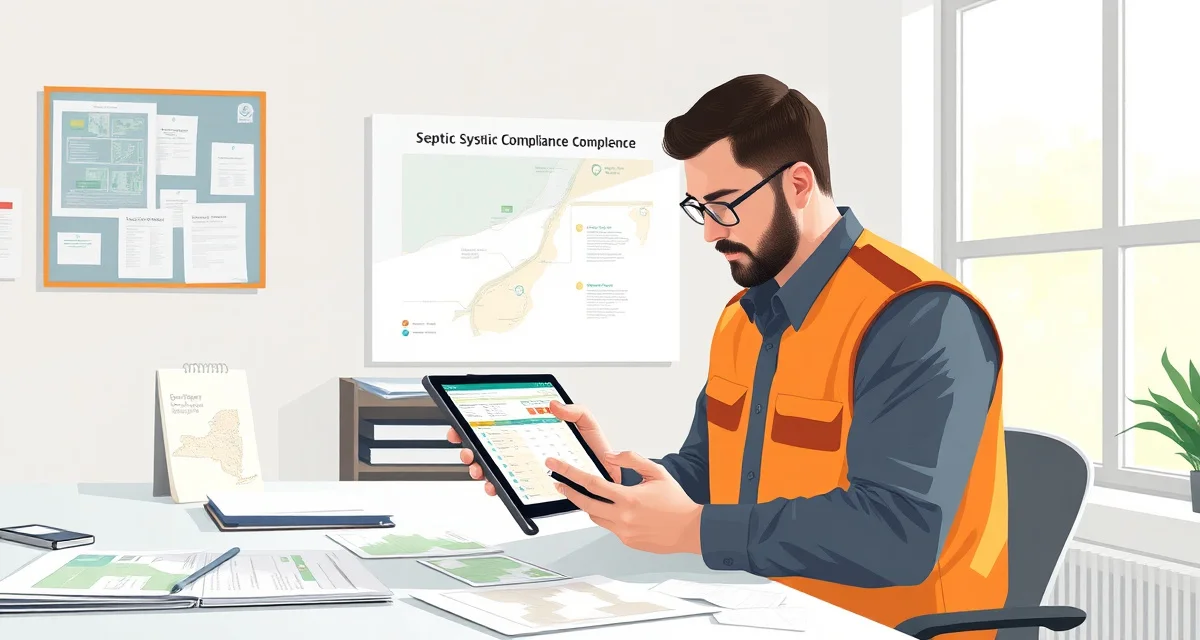
Septic Service Software for New York Companies
By the SepticMind Editorial Team
New York's septic regulatory environment is one of the most complex in the country, and not because the state is particularly strict. It's complex because New York is enormous and the rules are administered at the county level, with significant local variation between downstate and upstate, between Long Island's nitrogen crisis zone and the relatively relaxed standards of the North Country.
TL;DR
- New York septic regulations are administered at the state level with enforcement typically delegated to county health or environmental departments.
- Licensing requirements for pumping, inspection, and installation work vary by county within New York and should be verified with local authorities.
- Operating, maintenance, and inspection reporting requirements in New York differ for conventional systems versus alternative systems like ATUs.
- Companies operating in multiple New York counties need to track permit and reporting requirements by county, not just by state.
- State-mandated inspection report formats in New York must be used for regulatory submissions; generic forms are typically not accepted.
- SepticMind's permit database covers New York county-level requirements to reduce the research burden for multi-county operations.
The Direct Answer
New York septic companies need software with NYSDOH-compliant inspection templates, county health department permit tracking for all 62 New York counties, and compliance documentation for Long Island's nitrogen-reducing system requirements. SepticMind covers all 62 New York counties with state-specific templates and Long Island-specific compliance fields.
New York's Regulatory Framework
New York State Department of Health (NYSDOH) regulates individual household systems through Appendix 75-A. The State Environmental Quality Review Act and DEC regulations apply to larger systems and environmental impact assessments. County health departments administer permits.
New York's Septic System Nitrogen Reduction Law (enacted in 2022) requires that conventional septic systems be replaced with nitrogen-reducing systems when they fail in Suffolk County and Nassau County (Long Island). This is a significant compliance requirement for companies operating on Long Island.
What Makes New York Different
Long Island nitrogen crisis. Long Island's groundwater nitrogen contamination is a well-documented environmental issue. The 2022 state law mandating nitrogen-reducing replacement systems for failing septic on Long Island is the most significant regulatory change in New York's septic market in decades. Suffolk County companies need to be well-versed in the approved nitrogen-reducing system types, installation requirements, and O&M tracking for these systems.
New York City exurban counties. Westchester, Rockland, Orange, Putnam, and Dutchess counties, the Hudson Valley counties north of NYC, have active suburban and exurban real estate markets. Real estate inspection demand is high and lender requirements are specific.
North Country and Adirondack properties. Upstate New York's Adirondack region, the 1000 Islands, and the Southern Tier have significant recreational property markets with seasonal service demand patterns.
62 counties, enormous variation. Suffolk County's permit requirements have nothing in common with St. Lawrence County's. Westchester County's active health department looks nothing like Hamilton County's (the least populated county in New York east of the Mississippi).
Get Started with SepticMind
Operating in New York means navigating county-level variation in permit requirements, inspection formats, and reporting deadlines. SepticMind's permit database covers New York counties with forms, fee schedules, and timelines so you are prepared before you apply. See how it supports compliance in your service area.
FAQ
Does SepticMind handle Long Island's nitrogen-reducing system requirements?
Yes. SepticMind's Long Island-specific template includes nitrogen-reducing system documentation, O&M permit tracking, and the maintenance reporting requirements that come with nitrogen-reducing systems in Suffolk and Nassau counties. The system tracks O&M contract compliance and generates required maintenance reports.
Does SepticMind cover all 62 New York county health departments?
Yes. All 62 New York counties are in SepticMind's permit database with county health department contacts, permit requirements, and applicable fee structures.
How does SepticMind handle the scheduling difference between Long Island suburban service and upstate rural service?
SepticMind's route optimization handles both environments. Long Island operations benefit from tight suburban route planning for high-volume service days. Upstate rural operations benefit from minimized drive time across dispersed job sites. The scheduling system handles both configurations within the same platform.
What state agency regulates septic systems in New York?
Septic system regulation in New York falls under the state environmental or health agency, with day-to-day enforcement handled by county health departments or environmental offices. Licensing for pumping, installation, and inspection work is issued at the state level, but permit applications for individual projects are reviewed at the county level. Contact both the state agency and your specific county office to confirm current requirements, since county rules can differ from the state baseline.
Do New York septic inspection reports need to be filed with the county?
In New York, most inspection reports for real estate transactions and O&M permit systems must be filed with the relevant county health department or environmental office within the timeframe specified by state regulation. The required form and filing timeline vary by report type; real estate inspection reports typically have stricter deadlines than routine O&M reports. Using state-standardized digital report templates ensures the format meets New York's requirements and can be submitted electronically.
Try These Free Tools
Sources
- National Onsite Wastewater Recycling Association (NOWRA)
- US EPA Office of Wastewater Management
- NSF International
- Water Environment Federation
- National Environmental Services Center (NESC)