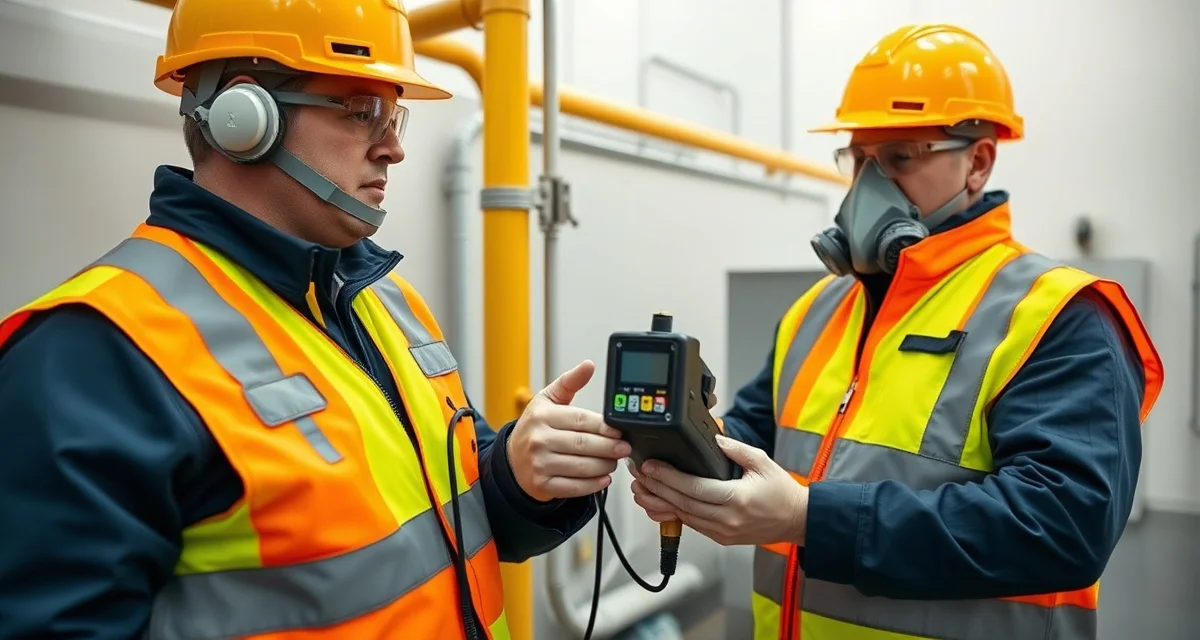
Septic Service Safety Guide: Protecting Your Technicians and Customers
By the SepticMind Editorial Team
Hydrogen sulfide gas exposure is responsible for 60% of septic service worker injuries annually. H2S is produced naturally in septic tanks through the bacterial decomposition of organic matter, which means it's present at every job your technicians work. It's colorless. It smells like rotten eggs at low concentrations, which sounds like an easy warning sign. The problem is that at concentrations high enough to cause serious injury, H2S rapidly paralyzes the olfactory nerve, making you unable to smell it. By the time you can't smell it anymore, you're already in danger.
TL;DR
- Hydrogen sulfide (H2S) is the primary safety hazard in septic work; it is heavier than air, colorless, and immediately dangerous to life at concentrations above 100 ppm.
- Confined space entry into septic tanks requires a written entry permit, atmospheric testing, ventilation, a safety attendant, and rescue equipment at the entry point.
- PPE for routine septic work includes nitrile gloves, safety glasses or face shield, waterproof boots, and a respirator for enclosed or odor-heavy work.
- H2S monitors should be carried by every field technician and tested before each work day; faulty monitors are a safety liability.
- Truck operation near active roadways requires traffic control equipment, high-visibility vests, and awareness of rollback and overflow risks.
- OSHA 29 CFR 1910.146 governs permit-required confined space entry and applies to any septic tank entry during inspection or repair work.
Septic work is classified as a confined space hazard. Improper safety protocols cause fatal accidents, real people, real companies, incidents that should never happen but continue to because of inadequate training and equipment. This guide covers every critical safety protocol your operation needs to protect the people doing the work.
The H2S Hazard
Understanding hydrogen sulfide is the foundation of septic safety.
How it's produced: Anaerobic bacteria in septic tanks break down organic matter and produce H2S as a byproduct. Every septic tank contains H2S. The concentration varies, a tank that's been undisturbed for a long time may have particularly high concentrations. Agitation during pumping releases H2S from the liquid into the air space above.
Exposure thresholds:
| Concentration | Effect |
|---|---|
| 1-5 ppm | Noticeable odor, mild irritation |
| 50 ppm | Strong odor, eye and respiratory irritation |
| 100 ppm | Loss of smell within 2-15 minutes |
| 200-300 ppm | Serious pulmonary effects, dangerous with prolonged exposure |
| 500-700 ppm | Loss of consciousness, potentially fatal within minutes |
| 1,000+ ppm | Immediate loss of consciousness, potentially fatal with brief exposure |
OSHA permissible exposure limit: 20 ppm ceiling (never exceed); 10 ppm for prolonged exposure.
Why the "rotten egg smell disappears" is dangerous: Technicians who work around H2S daily sometimes become complacent about the odor because they've grown somewhat acclimated. The odor becoming "normal" does not mean the concentration is safe, it may mean their olfactory sensitivity has been dulled.
Gas Monitoring Requirements
Every technician performing work that involves tank access must carry and use a calibrated gas monitor. This is non-negotiable.
What to monitor for:
- H2S (primary concern)
- Carbon monoxide (CO), generated by gas-powered equipment near tank openings
- Oxygen deficiency (O2 levels below 19.5% indicate displacement by heavier gases)
- Lower explosive limit (LEL) for combustible gases
Multi-gas monitors that simultaneously test for H2S, CO, O2, and combustible gases are the industry standard. Single-gas H2S monitors are insufficient for thorough safety.
Before each tank opening:
- Turn on the monitor and confirm it's functioning
- Allow the monitor to calibrate in fresh air
- Before removing the tank access lid, hold the monitor probe near the lid edge and confirm readings before full access
- Keep the monitor on and with you throughout the service visit
Alarm response protocol: If the monitor alarms, do not enter or lean into the tank space. Move upwind immediately. Ventilate if possible by leaving the lid open and stepping away. Do not re-approach until readings are confirmed safe. If a technician shows any symptoms of exposure (dizziness, headache, eye irritation, confusion) leave the area immediately and seek fresh air.
Calibration: Gas monitors must be calibrated on a schedule per manufacturer specifications and before each workday. A monitor that's out of calibration is not protection. Keep calibration records.
Confined Space Entry Rules
This is the absolute rule: you do not enter a septic tank. Not under any circumstances during routine service. Not if something looks like it needs a closer look. Not if a customer asks you to.
Every residential septic tank is a confined space as defined by OSHA 29 CFR 1910.146. Confined spaces require:
- A permit issued before entry
- Atmospheric testing before entry
- A trained attendant outside the space during entry
- Rescue equipment staged and ready before entry
- Written procedures
The costs and preparation required for compliant confined space entry cannot be satisfied during a routine service call. If a service situation appears to require tank entry, the correct answer is to stop work, explain to the customer that entry requires specialized equipment and procedures, and schedule a confined space entry with the appropriate preparation.
No exceptions to this rule. A technician who enters a tank without proper confined space procedures is in immediate danger. A supervisor who directs entry without proper procedures is liable for serious regulatory violations and potentially for harm to the employee.
Personal Protective Equipment
The minimum PPE for routine septic service:
Hands: Nitrile gloves (at minimum) for all work involving contact with septage. Heavy rubber gloves for hose handling and any task with splash risk. Septage contains pathogens including E. coli, Salmonella, hepatitis A, and others.
Eyes and face: Safety glasses for routine work. Add a face shield for tasks with notable splash risk, connecting or disconnecting hoses, opening high-volume access ports, anything where septage can reach the face.
Respiratory: A gas monitor is not respiratory protection. For routine outdoor service where H2S concentrations are confirmed within OSHA limits by the monitor, respiratory protection is not typically required. If concentrations approach permissible limits, a half-face respirator with H2S cartridges is the minimum.
Feet: Rubber boots that can be decontaminated. Leather work boots absorb septage and cannot be adequately cleaned.
Outer clothing: A water-resistant outer layer that can be removed and decontaminated or disposed of if notably contaminated.
What doesn't count as PPE: Cotton gloves, regular work gloves, and standard construction work boots are not adequate for septage exposure.
Vehicle and Equipment Safety
Septic pump trucks carry vacuum systems under pressure, large volumes of liquid waste, and mechanical components that create hazards:
Hose integrity. Inspect hoses before every use. A hose failure under vacuum creates an immediate spray hazard. Any hose showing cracking, bulging, or compromised fittings should be taken out of service.
Tank integrity and pressure relief. Vacuum tanks have pressure relief valves. Confirm these are functional and not blocked. Overpressure in the tank creates a catastrophic failure risk.
Valve operation. Know your truck's valve configuration and confirm the correct valves are open/closed before starting the pump. Filling the wrong tank, overfilling, or creating backflow are all consequences of incorrect valve operation.
Stability when loading. A tanker truck loading septage shifts its center of gravity as the tank fills. Be aware of soft ground, slopes, and the truck's stability during loading operations.
Traffic safety. On rural roads and driveways, a pump truck is a hazard to other traffic. Use cones, flags, and clear signage when parked on or adjacent to a road.
Hepatitis A and Vaccination
Hepatitis A is present in human fecal matter and can survive in wastewater. Technicians who regularly handle septage have occupational exposure. Hepatitis A vaccination is the most effective protective measure and is widely recommended for sewage and sanitation workers.
If your company employs technicians who handle septage, providing or reimbursing Hepatitis A vaccination is a reasonable workplace health practice. Other vaccinations that may be relevant depending on your service area and work type: tetanus (current booster), and where applicable, Hepatitis B.
Incident Response and Reporting
When a safety incident occurs (H2S exposure, notable septage spill, equipment failure, injury) the response matters.
Immediate response to H2S exposure:
- Move the affected person to fresh air immediately
- Do not re-enter the area
- If the person is unresponsive or not breathing, call 911 immediately
- Have someone stay with the affected person
- If the person recovers and feels fine, they still need medical evaluation. H2S effects can be delayed
Incident documentation: Every incident, near-miss, and H2S alarm event should be documented in a safety log with date, location, what happened, and how it was addressed. This documentation supports compliance if OSHA investigates and identifies patterns that can prevent future incidents.
OSHA reporting: Serious workplace injuries and fatalities have mandatory OSHA reporting requirements with specific timeframes. Know your obligations before you need them.
Using Field Software for Safety Documentation
SepticMind's job notes field lets technicians flag safety hazards at specific properties (known H2S odor issues, aggressive dogs, difficult access, confined space concerns) for future crews. When a technician notes that a specific property had elevated H2S readings on the last visit, the next technician to service that property sees that note before they get out of the truck.
Property-specific safety notes that appear in every future work order are exactly the kind of systematic documentation that prevents the situation where a new technician approaches a known-hazard property without warning.
Septic technician tracking software tracks certification status including confined space training, first aid/CPR, and H2S awareness training, so dispatchers know who is qualified for which job types.
Get Started with SepticMind
SepticMind is designed around the actual workflows of septic service companies, from county permit tracking to automated maintenance reminders. Whether you are managing a single truck or a multi-county fleet, the platform scales with your operation. See how it works for your business.
Frequently Asked Questions
What confined space safety protocols must septic technicians follow?
OSHA 29 CFR 1910.146 defines the requirements for confined space entry, which applies to septic tanks. No technician may enter a septic tank during routine service without a confined space entry permit, pre-entry atmospheric testing confirming safe oxygen levels and acceptable H2S and combustible gas concentrations, a trained attendant stationed outside the space during entry, and rescue equipment staged and ready before entry begins. These requirements cannot be satisfied during a standard service call. Routine septic service does not require tank entry, hoses are lowered into the access point, not people. If a service situation appears to require entry, work should stop and a proper confined space entry protocol should be arranged with the appropriate equipment and trained personnel.
What personal protective equipment is required for septic pumping work?
The minimum PPE for routine septic service includes nitrile or rubber gloves resistant to biological hazards, safety glasses or goggles, rubber boots that can be decontaminated, and a multi-gas monitor carried and active during all tank access. For tasks with elevated splash risk, add a face shield. For situations where gas concentrations approach permissible exposure limits, a half-face respirator with H2S-rated cartridges is required. All PPE must fit properly and be inspected before use, gloves with holes or tears do not provide protection. Hepatitis A vaccination is strongly recommended for all technicians with regular septage exposure, as the vaccine prevents one of the most notable occupational disease risks in this work.
Does SepticMind allow property-specific safety notes that appear in every future work order?
Yes. SepticMind's job notes and property notes fields allow technicians and dispatchers to flag property-specific safety information that appears in the job record for every future service visit at that address. A technician who documents elevated H2S at a particular property, a difficult or unstable tank access, a confined space concern, or any other hazard creates a persistent record that the next technician will see when their job card is generated. This prevents the situation where safety-relevant information from a previous visit isn't communicated to the next crew. Property-level notes persist through changes in service technician, seasonal breaks, and ownership changes, they're stored at the address level, not the individual job level.
What are the OSHA requirements for confined space entry at a septic tank?
Septic tanks are classified as permit-required confined spaces under OSHA 29 CFR 1910.146 when they contain or have a reasonable potential to contain a serious safety hazard (which all septic tanks do due to H2S). Permit-required entry requires: a written entry permit specifying the hazards, atmospheric testing for oxygen, flammable gas, and toxic vapors before entry, continuous atmospheric monitoring during entry, mechanical ventilation to maintain safe conditions, a trained safety attendant at the entry point, and rescue equipment available at the entry point. Routine pump-outs typically do not require entry; the regulation applies when personnel must enter the tank.
What PPE is required for septic field technicians?
Standard PPE for septic fieldwork includes nitrile or rubber gloves to prevent skin contact with sewage, safety glasses or a face shield for splash protection, waterproof boots that can be decontaminated after each job, and high-visibility vests when working near roadways. H2S monitors should be carried by all technicians and are required equipment near any tank opening. For any work that involves entering a confined space, full-body harness, tripod and retrieval system, SCBA or supplied air respirator, and a trained attendant are required. Respirators (not just dust masks) are appropriate for enclosed or particularly odorous conditions even without confined space entry.
Try These Free Tools
Sources
- National Onsite Wastewater Recycling Association (NOWRA)
- US EPA Office of Wastewater Management
- NSF International
- Water Environment Federation
- National Environmental Services Center (NESC)