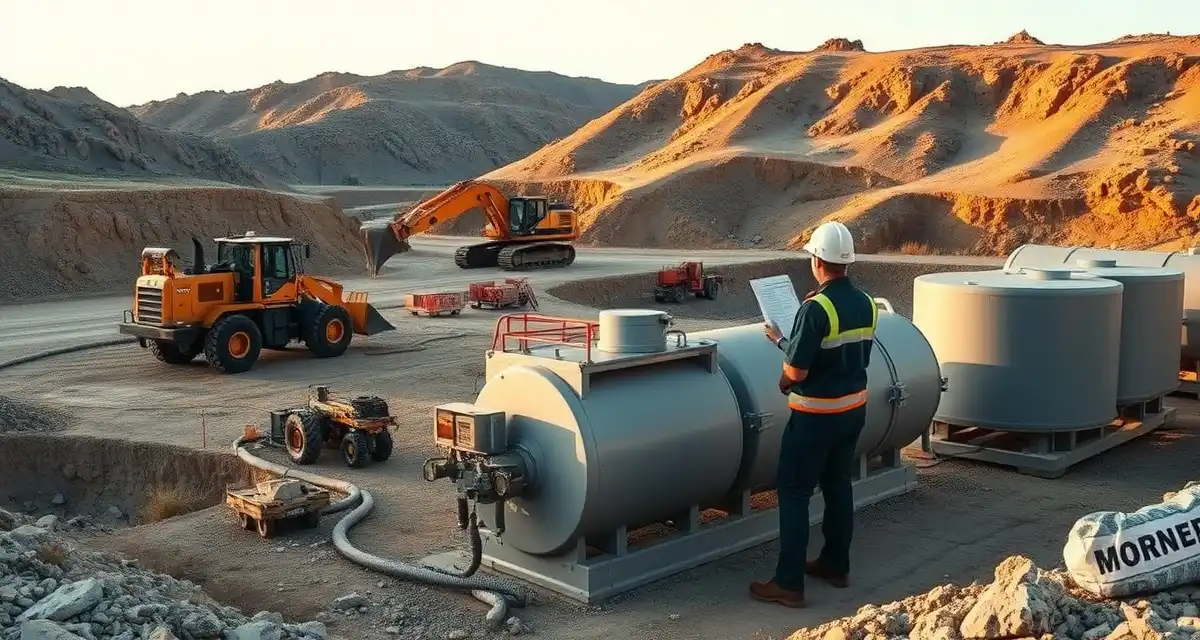
Septic Service for Rock Quarries and Mining Operations
By the SepticMind Editorial Team
Mining and quarry operation worker facilities must meet OSHA sanitation standards in remote locations, and MSHA and OSHA jointly govern sanitation at mining operations including septic system requirements. Rock quarry operators are managing compliance from two federal agencies simultaneously, and the remote, challenging site conditions at most quarry operations add an extra layer of practical difficulty.
TL;DR
- Quarries facilities have distinct wastewater loading patterns that affect septic system sizing, service frequency, and permit requirements.
- Commercial and institutional properties like quarries typically require more frequent pumping than residential systems due to higher daily usage.
- Some quarries operations generate waste streams (grease, chemicals, or high-volume flow) that require pre-treatment before reaching the septic system.
- Service contracts for quarries provide predictable recurring revenue and are easier to manage with a platform that tracks commercial account schedules.
- Health department inspections for quarries properties may require septic system condition documentation as part of facility licensing.
- Septic companies specializing in quarries service build referral networks with property managers, architects, and health inspectors in that niche.
A quarry that passes its MSHA safety inspection but fails on sanitation is still getting a citation. Don't overlook the basics because you're focused on the larger operational compliance picture.
Regulatory Framework: OSHA and MSHA
The division of regulatory authority between OSHA and MSHA at mining operations depends on the type of mining:
Metal and nonmetal mining (including most rock quarry operations): Falls under MSHA's Metal and Nonmetal Safety and Health Standards (30 CFR Part 56 for surface operations). MSHA has its own sanitation standards for surface metal and nonmetal mines that require toilet facilities and washing facilities for workers.
Stone quarrying: Also generally falls under MSHA surface mining standards.
Some construction-adjacent quarrying: May fall under OSHA's jurisdiction rather than MSHA's depending on how the operation is classified. When in doubt, check with both agencies.
MSHA's surface mining sanitation requirements (30 CFR 56.20001-56.20015) require:
- Sanitary facilities in good repair
- Toilet facilities for all workers
- Washing facilities with running water, soap, and drying materials
- Waste disposal that doesn't create health hazards
A quarry with a septic system that isn't maintained doesn't meet these standards. MSHA inspectors check sanitation facilities during routine inspections.
SepticMind's mining operation account type documents OSHA and MSHA sanitation compliance for remote worker facilities. The dual-agency framework is captured in the account alongside standard county septic compliance.
Challenging Site Conditions at Quarries
Rock quarries present several site-specific challenges for septic management:
Rocky soils: The defining feature of a quarry site is rock. Conventional gravity septic systems require soil with adequate permeability for drainfield absorption. Sites with rocky soils may not support conventional drainfields and may need engineered alternatives.
Blasting and vibration: Active quarry blasting operations create ground vibration that, over time, can affect septic tank integrity and drainfield performance. Tanks and connections near blast zones should be inspected more frequently for cracking or shifting.
Dust contamination: Rock quarry operations generate significant dust. If dust enters drain lines, it can accumulate as sediment in the septic tank, accelerating fill rates. Sealed drain lines and regular inspection of entry points help manage this.
Equipment-intensive access: Pump trucks need to access the septic system, but quarry sites often have heavy equipment operations, restricted access zones, and access roads not designed for standard service vehicles. Document access requirements carefully.
Engineered Systems for Rock Sites
For quarry facilities where conventional drainfields aren't feasible due to rocky soils:
- Holding tanks: Periodically pumped tanks with no drainfield discharge. Require frequent service but eliminate the soil permeability constraint.
- Aerobic treatment units (ATUs): Provide treated effluent that can sometimes be disposed of in ways that bypass standard drainfield requirements, such as spray irrigation or engineered absorption fields.
- Constructed wetlands: For some locations, constructed wetlands provide treatment without conventional soil absorption.
Work with a licensed engineer and your county health department to determine what system type is approved for your specific site conditions.
For industrial property septic management at similarly challenging sites, comparable alternative system approaches apply. For sawmill facilities with similar remote location challenges, the same access documentation framework is relevant.
Service Intervals at Quarry Operations
Quarry worker facility service intervals should be based on average daily worker count and facility use pattern. A quarry operating two shifts with 40 workers per shift has a different daily load than a quarry with 8 workers on a single shift.
Annual inspections are appropriate for most quarry worker facilities. Pump-out frequency depends on tank size and daily occupancy. Document your worker headcount in your service records so the interval rationale is clear to any MSHA inspector who reviews them.
Get Started with SepticMind
Managing service contracts for quarries properties is easier with a platform built for the septic trade. SepticMind tracks commercial service schedules, documents every inspection visit, and keeps your compliance records organized by property. See how it handles your commercial account portfolio.
Frequently Asked Questions
What OSHA and MSHA sanitation requirements apply to quarry and mining worker facilities?
Rock quarries and mining operations are generally subject to MSHA's Metal and Nonmetal Mining Safety and Health Standards (30 CFR Part 56 for surface operations), which require sanitary toilet facilities, washing facilities with running water, and waste disposal that doesn't create health hazards. MSHA inspectors check sanitation compliance during routine safety inspections. Some operations may also be subject to OSHA jurisdiction depending on how the operation is classified. Both agencies require functioning sanitation, which means the connected septic or sewage system must be maintained and functional. Documentation of regular maintenance satisfies inspectors who ask about sanitation system upkeep.
What septic system types work in the rocky soils common at quarry operations?
Rocky soils that characterize quarry sites often don't support conventional gravity drainfields because the soil permeability required for absorption isn't present. Options for quarry sites include holding tanks (pumped regularly, no drainfield needed), aerobic treatment units that can sometimes use alternative effluent disposal methods, and in some cases mound systems or constructed drainfields using imported engineered fill. The appropriate system type depends on site-specific conditions and what the county health department will permit. A licensed engineer should assess the site and design a system that meets both county septic requirements and MSHA sanitation standards.
Does SepticMind support OSHA and MSHA compliance documentation for quarry accounts?
Yes. SepticMind's mining operation account type captures the applicable regulatory framework for your quarry, including both MSHA and any applicable OSHA requirements, alongside standard county septic compliance. Service records document maintenance history in a format suitable for production during MSHA safety inspections. Access notes capture vehicle requirements and site-specific access conditions so service providers are prepared for quarry site logistics. For mining operations managing multiple quarry sites, all facilities can be tracked under a single account with compliance status visible across all locations.
How often should a septic system serving a quarries property be inspected?
Septic systems at quarries properties should be inspected at least annually and pumped more frequently than residential systems, since commercial-scale daily water usage accelerates sludge and grease accumulation. The exact frequency depends on the specific activities at the facility, peak occupancy, any food service or chemical use on-site, and local regulatory requirements. A service provider familiar with quarries operations can recommend an appropriate inspection and pumping schedule based on the system's actual usage profile.
What septic system issues are most common at quarries properties?
The most common septic problems at quarries properties are rapid sludge accumulation from high occupancy, grease trap failure if food service is involved, hydraulic overloading during peak-use periods, and non-biodegradable waste disposal from cleaning or maintenance activities. Regular inspection and a service contract with clear maintenance intervals are the most effective ways to catch these problems before they cause system failure or regulatory violations.
Try These Free Tools
Sources
- National Onsite Wastewater Recycling Association (NOWRA)
- US EPA Office of Wastewater Management
- NSF International
- Water Environment Federation
- National Environmental Services Center (NESC)