Septic Service for Housing Cooperatives
By the SepticMind Editorial Team
Housing cooperatives with shared septic infrastructure face a management challenge that neither single-family homeowners nor apartment building landlords deal with in quite the same way. Housing cooperative shared septic systems require coordination among member households for service scheduling, and the question of who is responsible is often less clear than it should be.
TL;DR
- Housing Cooperatives facilities have distinct wastewater loading patterns that affect septic system sizing, service frequency, and permit requirements.
- Commercial and institutional properties like housing cooperatives typically require more frequent pumping than residential systems due to higher daily usage.
- Some housing cooperatives operations generate waste streams (grease, chemicals, or high-volume flow) that require pre-treatment before reaching the septic system.
- Service contracts for housing cooperatives provide predictable recurring revenue and are easier to manage with a platform that tracks commercial account schedules.
- Health department inspections for housing cooperatives properties may require septic system condition documentation as part of facility licensing.
- Septic companies specializing in housing cooperatives service build referral networks with property managers, architects, and health inspectors in that niche.
Housing cooperative septic failures affect all members and require coordinated emergency response. When a shared system goes down, it's not one household's problem. It's everyone's problem simultaneously, and the response requires whoever manages the co-op's infrastructure to have current documentation, an active service relationship, and a clear action plan.
Who Is Responsible for Septic Compliance?
In a housing cooperative, property ownership is structured differently than in a condominium or homeowner association. Members typically own shares in a cooperative corporation rather than their individual units. The cooperative corporation itself usually owns the real property, including shared infrastructure like septic systems.
This means the cooperative's board of directors is responsible for septic maintenance and compliance, not individual member-shareholders. That's true even if only one member's household caused a specific problem. The board has a fiduciary duty to maintain the shared infrastructure, which includes the onsite wastewater system.
Most cooperative bylaws include provisions for infrastructure maintenance, but septic systems are sometimes overlooked in the detailed planning. If your co-op doesn't have a written septic maintenance policy, creating one is a reasonable governance task.
Types of Cooperative Septic Configurations
Not all housing co-ops have the same septic setup. There are several configurations you might be managing:
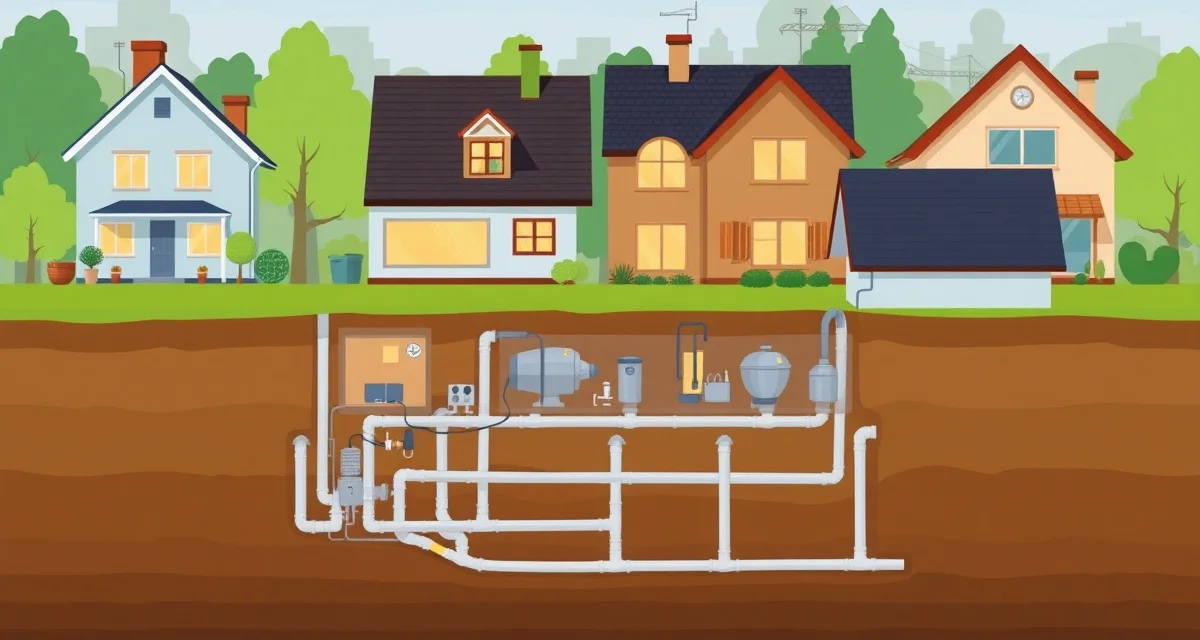
A single shared system serving all units. This is common in older cooperatives where the property was developed as a single unit with centralized wastewater handling. One tank, one drainfield, all households connected.
Cluster systems with multiple tanks. Larger cooperative developments sometimes have multiple tanks serving groups of units. Each tank needs separate tracking and its own service schedule.
Individual systems per unit with cooperative ownership. Some co-ops were developed with each dwelling on its own system, but the cooperative corporation owns all of them as common property. This creates the most administrative complexity.
SepticMind's cooperative account type manages shared septic infrastructure with individual member records, which handles all three configurations. Each system in the co-op gets its own service record, but they're all accessible under the co-op's account for the board's oversight.
Setting Service Intervals for a Multi-Household System
A shared system serving 30 households has a much higher daily wastewater load than a single-family home. Service intervals need to reflect the actual number of people connected, not just the tank size alone.
The general calculation: count total residents served by the system, apply a wastewater generation estimate per person per day (typically 50-75 gallons for residential), and size your service interval to match. A 30-unit cooperative averaging 2.5 residents per unit is generating wastewater equivalent to a 75-person residential facility every day.
Most shared cooperative systems need annual pump-outs at minimum, and many benefit from twice-yearly service. An inspection program that identifies fill rates between service events is the most accurate way to calibrate the schedule.
Communicating With Members
One of the practical challenges of cooperative septic management is that individual members may use the system in ways that create problems for everyone. Common issues include:
- Flushing wipes, feminine hygiene products, or other non-flushable items
- Pouring grease or cooking oil down the drain
- Using excessive amounts of antibacterial soap or cleaning products that disrupt tank bacteria
- Connecting unauthorized gray water sources like washing machine drains that bypass the system design
A simple member communication, one page explaining what not to flush and why it matters to the whole community, goes a long way. The cooperative's board can include septic care guidelines in the member handbook and send annual reminders.
Emergency Response Planning
When a shared system fails, there's no time to figure out who to call. The co-op board needs contact information for a licensed septic service provider, a clear process for authorizing emergency service, and a basic understanding of what the failure signs look like.
Warning signs that members should report to the board immediately include: sewage odors near the drainfield, slow drains across multiple units, gurgling sounds from multiple units at once, and wet spots or lush grass growth over the drainfield area.
For rural subdivisions and tiny home communities, similar shared-infrastructure coordination challenges apply.
Regulatory Compliance for Cooperative Systems
Shared septic systems serving multiple units often fall under commercial or multi-unit residential regulations rather than single-family rules. Depending on your state and county, this may mean:
- A commercial or multi-family system permit rather than a residential permit
- Required annual inspections rather than periodic inspections
- Mandatory maintenance agreements with a licensed service provider
- More frequent pump-out requirements based on connected unit count
Check with your local county health or environmental department to confirm what regulatory category your cooperative's system falls under. If the system has never been formally classified, now is the time to find out.
Get Started with SepticMind
Managing service contracts for housing cooperatives properties is easier with a platform built for the septic trade. SepticMind tracks commercial service schedules, documents every inspection visit, and keeps your compliance records organized by property. See how it handles your commercial account portfolio.
Frequently Asked Questions
Who is responsible for septic compliance in a housing cooperative with shared systems?
In a housing cooperative, the cooperative corporation owns the real property and shared infrastructure, including septic systems. The board of directors is legally responsible for maintaining compliance with local septic regulations, not individual member-shareholders. This means the board must ensure service intervals are met, inspection records are maintained, and any required permits or maintenance agreements are current. Individual members have a responsibility not to abuse the shared system, but the compliance obligation rests with the cooperative's governing board. Most state and county health departments treat shared cooperative systems as multi-unit residential or commercial facilities.
How do I manage septic service across a 30-unit housing cooperative?
Start by inventorying all septic systems on the property, how many tanks, what size, and which units each serves. Then calculate service intervals based on total household count, not just tank size. Get a baseline inspection to establish current condition for each system. Set a maintenance schedule with a licensed service provider and have a formal service agreement in place so you have guaranteed response capacity for both scheduled maintenance and emergencies. Communicate septic care guidelines to all members annually. Use a management platform like SepticMind to track service history across all systems and send reminders when service windows approach.
Does SepticMind support housing cooperative shared septic account structures?
Yes. SepticMind's cooperative account type is designed for properties where shared infrastructure serves multiple households. You can manage multiple septic systems under a single cooperative account, with each system having its own service record. The board can view compliance status across all systems at once. Member-level notes can document which households are served by each system, which is useful when a service problem needs to be traced to a specific area of the property. Service reminders account for the higher frequency needed for multi-household systems, and all records are organized for easy retrieval when county health department inquiries come in.
How often should a septic system serving a housing cooperatives property be inspected?
Septic systems at housing cooperatives properties should be inspected at least annually and pumped more frequently than residential systems, since commercial-scale daily water usage accelerates sludge and grease accumulation. The exact frequency depends on the specific activities at the facility, peak occupancy, any food service or chemical use on-site, and local regulatory requirements. A service provider familiar with housing cooperatives operations can recommend an appropriate inspection and pumping schedule based on the system's actual usage profile.
What septic system issues are most common at housing cooperatives properties?
The most common septic problems at housing cooperatives properties are rapid sludge accumulation from high occupancy, grease trap failure if food service is involved, hydraulic overloading during peak-use periods, and non-biodegradable waste disposal from cleaning or maintenance activities. Regular inspection and a service contract with clear maintenance intervals are the most effective ways to catch these problems before they cause system failure or regulatory violations.
Try These Free Tools
Sources
- National Onsite Wastewater Recycling Association (NOWRA)
- US EPA Office of Wastewater Management
- NSF International
- Water Environment Federation
- National Environmental Services Center (NESC)