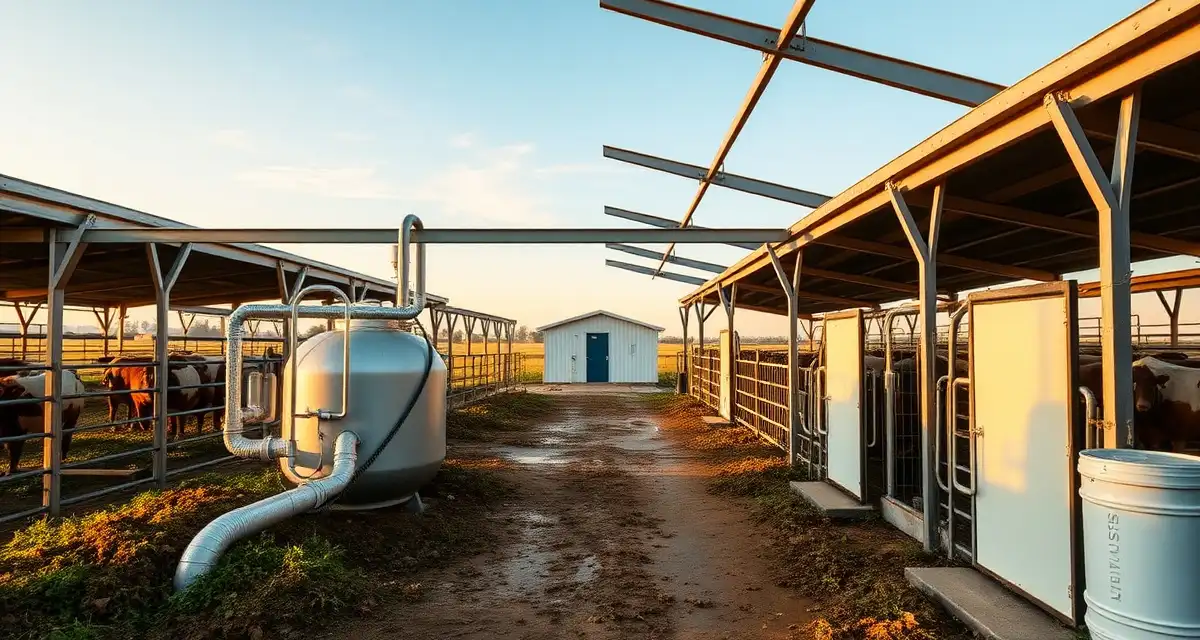
Septic Service for Barns and Agricultural Processing Buildings
By the SepticMind Editorial Team
OSHA requires proper sanitation facilities for agricultural workers, making septic compliance a labor law issue. Agricultural building septic systems with employee restrooms face workplace sanitation compliance requirements. SepticMind's agricultural building account type tracks workplace sanitation compliance alongside service records.
TL;DR
- Barns Agricultural Buildings facilities have distinct wastewater loading patterns that affect septic system sizing, service frequency, and permit requirements.
- Commercial and institutional properties like barns agricultural buildings typically require more frequent pumping than residential systems due to higher daily usage.
- Some barns agricultural buildings operations generate waste streams (grease, chemicals, or high-volume flow) that require pre-treatment before reaching the septic system.
- Service contracts for barns agricultural buildings provide predictable recurring revenue and are easier to manage with a platform that tracks commercial account schedules.
- Health department inspections for barns agricultural buildings properties may require septic system condition documentation as part of facility licensing.
- Septic companies specializing in barns agricultural buildings service build referral networks with property managers, architects, and health inspectors in that niche.
The Agricultural Building Sanitation Framework
When a farm building has employee restrooms, the septic system serving those restrooms sits at the intersection of two regulatory frameworks:
State septic regulations: The onsite wastewater system serving the building needs to be properly permitted and maintained under the state's septic program. Whether the building is a barn, processing facility, or packing shed doesn't exempt it from state wastewater requirements.
OSHA workplace sanitation standards: OSHA's sanitation standards (29 CFR 1910.141 for general industry, 29 CFR 1928.110 for agricultural workers) require employers to provide toilet facilities for workers. Functional septic systems are part of providing functioning toilet facilities.
For farm employers, this intersection means that a failed or inadequate septic system serving an agricultural building is both an environmental compliance issue and an OSHA labor law issue simultaneously.
Which Buildings This Applies To
Not every barn or agricultural building has employee restrooms, but many do -- and the regulatory requirements follow the facilities:
Packhouses and produce processing buildings: Facilities where farm workers sort, pack, or process produce typically have employee restroom facilities because workers spend extended shifts in the building.
Greenhouse and nursery operations: Larger greenhouse operations with full-time staff have employee facilities.
Farm processing buildings: Buildings where agricultural products are processed (cheese, cider, honey, value-added products) often have commercial kitchen facilities and employee restrooms.
Agricultural tourism and agritourism facilities: Farm stand buildings, farm experience venues, and agricultural education facilities with public visitors need public restroom facilities.
Barnyard facilities with seasonal worker housing: Farms that provide seasonal worker housing face additional sanitation requirements related to housing conditions.
OSHA Agricultural Sanitation Requirements
OSHA's field sanitation standard (29 CFR 1928.110) applies specifically to hand labor operations in agricultural fields but establishes principles that apply more broadly to agricultural workplaces. For permanent agricultural buildings with employee facilities, OSHA's general industry sanitation standards apply.
Key requirements:
- Toilet facilities must be available (one toilet for every 20 employees for farms with 10-19 employees)
- Facilities must be maintained in a functional and sanitary condition
- Non-functioning facilities are a citable OSHA violation
- Employers cannot require employees to work in conditions without functioning sanitation
A septic failure that takes employee restrooms offline is an OSHA sanitation violation from the moment the facilities become non-functional.
Farm Labor and H-2A Worker Housing
Farms that use H-2A (temporary agricultural worker) visa program workers face particularly strict housing and sanitation requirements set by the US Department of Labor. H-2A housing standards include specific requirements for:
- Number of toilet facilities per worker
- Functioning sewage disposal for all housing facilities
- Regular inspection and documentation of housing condition
Farms with H-2A workers that have onsite housing need septic documentation for both the housing septic system and any agricultural building systems, and must be able to produce those records during DOL compliance inspections.
Permits for Agricultural Building Septic Systems
The permit landscape for agricultural building septic systems varies by state:
Some states apply residential standards: Small agricultural buildings with limited employee use are sometimes permitted under residential standards based on bedroom equivalents.
Other states apply commercial standards: Any building with employee occupancy and plumbing is classified as a commercial establishment requiring a commercial septic permit.
Agricultural exemptions: Some states have specific exemptions or reduced requirements for agricultural buildings on working farms. These exemptions vary widely in what they cover.
Before servicing an agricultural building septic account, understand the permit basis. A system permitted as residential that's serving a 30-person packinghouse is in the same position as a B&B on a residential permit -- operating beyond the permit's intended use.
Service Intervals for Agricultural Building Systems
Service intervals depend on the actual use intensity:
- Small farm office or equipment storage with occasional restroom use: Annual to semi-annual
- Active packhouse or processing building with regular employee use: Quarterly
- Large food processing building with continuous employee use: Monthly to quarterly
Seasonal patterns matter significantly for agricultural buildings. A produce packhouse that operates for 8-10 weeks during harvest season and is otherwise minimally used needs different scheduling than one with year-round operations.
Get Started with SepticMind
Barns Agricultural Buildings facilities need a service provider who understands the specific wastewater challenges of their operations. SepticMind makes it easy to manage commercial service contracts, track inspection schedules, and document service visits for every account in your portfolio. See how it supports commercial account management.
Frequently Asked Questions
What OSHA sanitation requirements apply to farm buildings with employee facilities?
OSHA's general industry sanitation standards (29 CFR 1910.141) require that toilet facilities serving employees must be maintained in a functional and sanitary condition. For agricultural workplaces, the field sanitation standard (29 CFR 1928.110) adds specific requirements for toilet availability near field work locations. A failed septic system that takes employee restrooms offline is a citable OSHA violation from the point the facilities become non-functional. Farms with H-2A seasonal worker programs face additional Department of Labor housing and sanitation requirements that include functioning sewage disposal for all housing facilities.
What permits are required for a septic system serving a farm processing building?
Requirements vary significantly by state. Many states classify any building with employee occupancy and plumbing as a commercial establishment, requiring a commercial septic permit regardless of the agricultural setting. Some states have agricultural exemptions that reduce requirements for farm buildings on working farms. Others apply residential standards based on occupancy equivalents for small farm operations. The state health department or local environmental health office is the authoritative source for your jurisdiction. Operating a food processing building on an inadequate residential permit creates compliance risk under both the state septic program and food processing regulatory requirements.
Does SepticMind track both OSHA and state septic compliance for agricultural building accounts?
Yes. SepticMind's agricultural building account type supports documentation fields for both the state septic permit compliance requirements and OSHA workplace sanitation compliance context. Account notes document the facility type, employee count, operational season, and applicable permit basis. Service records track pump-out dates and condition observations in formats that support both state permit compliance and OSHA inspection documentation. For farms with H-2A programs, separate housing and agricultural building system records can be maintained within one farm account.
How often should a septic system serving a barns agricultural buildings property be inspected?
Septic systems at barns agricultural buildings properties should be inspected at least annually and pumped more frequently than residential systems, since commercial-scale daily water usage accelerates sludge and grease accumulation. The exact frequency depends on the specific activities at the facility, peak occupancy, any food service or chemical use on-site, and local regulatory requirements. A service provider familiar with barns agricultural buildings operations can recommend an appropriate inspection and pumping schedule based on the system's actual usage profile.
What septic system issues are most common at barns agricultural buildings properties?
The most common septic problems at barns agricultural buildings properties are rapid sludge accumulation from high occupancy, grease trap failure if food service is involved, hydraulic overloading during peak-use periods, and non-biodegradable waste disposal from cleaning or maintenance activities. Regular inspection and a service contract with clear maintenance intervals are the most effective ways to catch these problems before they cause system failure or regulatory violations.
Try These Free Tools
Sources
- National Onsite Wastewater Recycling Association (NOWRA)
- US EPA Office of Wastewater Management
- NSF International
- Water Environment Federation
- National Environmental Services Center (NESC)