Septic inspection in Atlanta, GA: what it costs and what to expect
By the SepticMind Editorial Team
TL;DR
- A septic inspection in Atlanta, GA costs $150 to $600.
- A basic visual check runs $150 to $300.
- A full inspection with a camera and load test costs $400 to $600.
- Georgia law requires an inspection before any property transfer that involves a septic system.
- Inspectors check the tank, distribution box, and drain field.
- Budget 2 to 4 hours and expect a written report.
What does a septic inspection in Atlanta actually involve?
A real inspection is not a quick glance at the lid. It touches every major part of the system: the tank, the inlet and outlet baffles, the distribution box, the drain field (also called a leach field), and the soil absorption area. Georgia inspectors work under the Department of Public Health's onsite sewage management rules, which set everything from minimum tank sizing to setback distances from wells and property lines [1].
Here is how it usually goes. The inspector finds the tank first. In a lot of older Atlanta-area homes that means probing the yard with a soil rod, because as-built drawings were never recorded. The lid comes off, the tank gets pumped if it needs it, and the interior is checked for cracks, root intrusion, and baffle damage. Then the distribution box is opened to see whether effluent flows evenly to all the drain field lines. Last, the inspector walks the ground above the field looking for soft spots, odors, or sewage breakout.
A hydraulic load test is a separate step, and not every inspector does it by default. Water is run into the system at a set volume (typically 150 gallons over 30 minutes) while someone watches the tank and field for backup or saturation. It is the closest thing to a stress test you can do without digging. If you are buying and the seller will not allow a load test, that refusal tells you something.
Camera inspections of the lateral lines are also on the menu. A small camera gets pushed through each drain line to look for crushed pipe, roots, or failed chambers. It adds $100 to $200 to the job. On a system older than 20 years, it is worth every dollar.
For more on what the drain field does and why it matters, see our guide to leach fields.
How much does a septic inspection cost in Atlanta, GA?
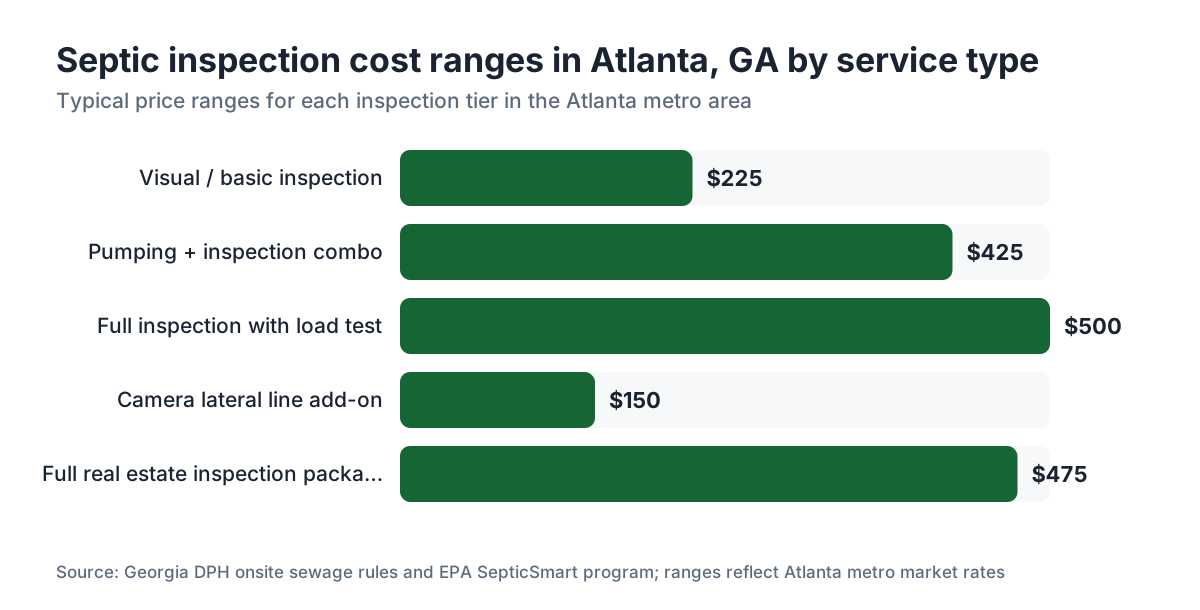
A septic inspection in the Atlanta metro runs $150 to $600, and the tier you pick drives the price. A visual check sits at the low end. A full inspection with a hydraulic load test sits at the top. The table below gives honest ranges based on what licensed Georgia inspectors typically charge.
| Inspection type | Typical cost in Atlanta | What's included |
|---|---|---|
| Visual / basic inspection | $150, $300 | Tank location, lid removal, visual interior check, surface walkover |
| Pumping + inspection combo | $350, $500 | All of above plus tank pump-out |
| Full inspection with load test | $400, $600 | All of above plus hydraulic stress test |
| Camera lateral line inspection | Add $100, $200 | Camera through drain lines |
| Real estate transfer inspection | $400, $550 | Written report suitable for a Georgia closing |
That spread reflects real variables: lot size, tank accessibility, depth to the lid, and whether the system needs pumping before the inspector can see anything useful. A tank that has not been pumped in six years may need a septic tank pump out before the inspector can even judge the baffles, and that adds $250 to $450 in metro Atlanta.
Pumping and inspecting together from one company usually beats scheduling them apart. Ask for a combined quote upfront.
Georgia publishes no statewide fee schedule for private inspectors, so prices move by county and by company. Cherokee, Forsyth, and Paulding counties north of Atlanta have more septic systems and more competition, which keeps prices toward the low end. Closer to the city in Fulton and DeKalb, septic systems are rarer and inspectors may tack on a travel premium.
The EPA's SepticSmart program puts it plainly: "having your septic system inspected regularly is far less expensive than replacing a failed system." In Georgia, a full replacement can run $10,000 to $30,000 or more [2][7].
Does Georgia law require a septic inspection when selling a home?
Yes, and it catches a lot of Atlanta buyers and sellers off guard. Any property with an onsite sewage management system (OSMS) must have that system inspected by a licensed professional before title transfers [3]. The authority behind this is the Georgia Department of Public Health, Environmental Health Section, which enforces Chapter 511-3-1 of the state's onsite sewage rules.
The seller has to hand the buyer a written report from a licensed inspector before closing. The inspector must hold a Georgia Onsite Wastewater (OW) license, issued through the Secretary of State's Professional Licensing Boards [4]. Not every plumber or general home inspector qualifies. Hire the wrong person and the inspection may not satisfy the legal requirement, which can delay or void the closing.
The rule has teeth. If a seller skips the inspection and problems surface after closing, the buyer has grounds for a claim. Atlanta title companies have gotten stricter about this in recent years, and many will not close without proof of a compliant inspection.
One nuance worth knowing: the requirement applies to transferring the property, not to routine maintenance. You do not need a formal licensed inspection every time you pump the tank. But if you are selling, you do.
Buyers should also understand that passing an inspection does not guarantee future performance. An inspector can only judge the system on the day they see it. A system that passes in February, after months of low rain and light household use, can behave differently in a wet spring with a full house. A load test gives you a better picture. It is still not a crystal ball.
Who is qualified to do a septic inspection in Atlanta, GA?
Only a licensed Georgia Onsite Wastewater inspector can perform a compliant inspection for property transfer. Georgia licenses these inspectors through the Secretary of State's office under the Onsite Wastewater (OW) category [4]. You can verify a license on the Secretary of State's lookup tool in about two minutes. Do not skip that step.
The credential tiers matter. Onsite Wastewater Inspection (OWI) covers standard residential inspections. Onsite Wastewater Systems (OWS) covers design and installation. For a pre-sale inspection, an OWI license is enough, though many inspectors carry both.
Beyond the license, look for someone with real experience in your county. Every Georgia county environmental health office has local quirks. Cobb County keeps different approval records than Cherokee County, and an inspector who works a county regularly knows where the old systems sit and what fails first in that soil.
The Georgia Environmental Health Association (GEHA) is the state industry group and keeps a member directory that helps you find qualified inspectors by county [5].
Walk away from any inspector who offers a verbal-only report. A real inspection produces a written document with findings, photos, and a clear pass/fail or advisory note. No document, no deal.
For real estate deals specifically, ask whether the inspector's report format is accepted by the title company or lender. FHA and VA loans carry their own septic requirements on top of state law, and an inspector who has done FHA work knows how to write a report the underwriter will accept.
What do Atlanta inspectors look for and what can fail?
Inspectors hunt for signs of failure or the failure that is coming next. The common findings in Atlanta-area inspections sort out by component.
Tank failures. The most frequent problem is a cracked or rotted baffle, either the inlet baffle that slows incoming flow or the outlet baffle that keeps solids out of the drain field. Concrete tanks in older Atlanta subdivisions crack along their seams too, especially in the clay-heavy Piedmont soils where ground movement is real. A cracked tank does not always mean replacement. Sometimes a liner or a new baffle fixes it. See our article on septic tank repair for what those options look like.
Drain field failures. This is where inspections find the expensive problems. Georgia's red clay drains slowly. Once a field saturates or a biomat clogs the soil pores, the system can fail even with a perfect tank. Watch for spongy ground over the field, green stripes in the grass, odor, or sewage surfacing. A dead field usually means a new leach field, which starts around $5,000 and can pass $15,000 depending on the lot.
Distribution box problems. Many Atlanta systems from the 1980s and 1990s use a concrete D-box that splits effluent among the drain field lines. D-boxes crack, settle unevenly, and fill with solids. An inspector who does not open the D-box is not doing the whole job.
Pipe failures. Orangeburg pipe, a fiber-based material used through the 1970s, still turns up in some older Atlanta homes and rots badly with age. PVC from the 1980s on holds up better but can crack or take on roots. A camera catches these.
Setback violations. Georgia sets minimum distances from wells, streams, and property lines. If a prior owner expanded or installed the system wrong, an inspector may flag a setback violation that complicates the sale or triggers a required upgrade under county authority [1][8].
How long does a septic inspection take in Atlanta?
Plan on 2 to 4 hours for a standard inspection. Add another hour if the inspector runs a load test or a camera.
Tank location is the single biggest time variable. In an Atlanta subdivision where the as-built plans got filed with the county, finding the tank takes 10 minutes. On an older rural property in Pickens or Dawson County with no records, the inspector may spend 30 to 45 minutes probing the yard before the lid shows up. Some inspectors use electronic locating gear to speed this along.
If the tank needs pumping before the inspection can proceed, that service call adds 45 to 90 minutes depending on tank size and how full it is. Booking a septic tank pumping appointment ahead of the inspection, or using a company that does both in one visit, saves a lot of back-and-forth.
For real estate deals, the written report usually lands 24 to 48 hours after the inspection. Some inspectors will email preliminary findings the same day if you ask. In a tight closing window, confirm the report turnaround before you book.
How do Atlanta's soil and climate conditions affect septic systems?
Atlanta's red clay is hard on drain fields, and that shapes what goes wrong and how fast. Metro Atlanta sits in the Piedmont physiographic region, with soils dominated by red clay and saprolite (weathered rock). These soils drain slower than the sandy soils of coastal Georgia. The practical effect on a septic system is simple: effluent leaves the field slowly, which loads the absorption area harder during wet stretches.
Atlanta gets roughly 49 inches of rain a year, close to Georgia's statewide average of about 50 inches [6]. That is more than Seattle. The wettest months, March through May, are the same months the water table sits highest, which is exactly when a marginal field is most likely to fail or break out at the surface. An inspection done in late summer or fall, after a dry spell, can miss problems a spring inspection would show.
Another thing to know: Georgia's soils are often shallow to rock. County environmental health offices require percolation tests for new system design, and many lots in the northern suburbs carry tight restrictions because shallow rock limits usable soil depth [1][8]. If your system predates today's standards, you may be living with one that would not get permitted now.
Tree roots are an Atlanta-specific headache. The mature canopy in neighborhoods like Decatur, Brookhaven, and Smyrna is beautiful, but roots chase moisture hard. Oaks, willows, and sweet gums are the worst. An inspector walking the field will note any large trees within 30 to 50 feet of the system.
What happens if an Atlanta septic inspection finds problems?
It depends entirely on what turned up and how bad it is.
Minor findings are negotiating points, not deal-killers. A rotted baffle, a cracked D-box lid, or a slow drain that clears after pumping can be repaired before closing, credited as a price reduction, or held in escrow. These repairs typically cost $200 to $1,500.
Major findings are a different animal. A failed drain field or a structurally shot tank pulls the county in. In Georgia, a system in imminent failure cannot go back into service without repair or replacement approved by the county environmental health office [3]. That means permits, county sign-off, and a timeline measured in weeks, not days.
If you are the buyer and the inspection finds something major, you have options: walk away if your contract has an inspection contingency (most do), negotiate a price reduction big enough to cover the repair, or require the seller to fix it to passing condition before closing. A Georgia real estate attorney can help you pick the path that fits your situation.
For what a replacement actually costs, see our guides on cost to install a septic system and cost to put in a septic tank. Tank-specific repair is covered in septic system repair.
One more thing. Some Atlanta-area counties run an upgrade-in-place process for failing systems that no longer meet current setback standards. It goes entirely through the county environmental health office and can take 30 to 90 days to permit. Do not count on a quick fix once setback violations are on the table.
How often should you get a septic inspection in Atlanta even if you're not selling?
The EPA recommends a professional inspection of the average household septic system every three years [2][10]. Its SepticSmart guidance states that "most septic systems need to be pumped every three to five years," and pairing a pump-out with an inspection is the most efficient way to do both.
Most Atlanta homeowners do not inspect that often. A realistic floor is every time you pump the tank, which for a typical 3-bedroom home on a 1,000-gallon tank means roughly every 3 to 5 years. See our guide to how often to pump a septic tank for a breakdown by household size and tank volume.
Some situations call for an inspection sooner, no matter your schedule. Slow drains across more than one fixture, sewage odor in the yard, wet or spongy ground over the field, or a stripe of unusually green grass all mean call an inspector now rather than waiting for the next scheduled pump.
For service operators juggling multiple properties or service contracts across the metro, tracking inspection intervals across a client list is where software like SepticMind helps. The platform is built for exactly that: recurring service scheduling and compliance documentation.
Keeping your records also pays off when you sell. A documented maintenance history is a real selling point and smooths a closing. Hold onto your inspection reports, pump receipts, and repair records in one file. Buyers and their attorneys notice when a seller has kept records.
How do you find and hire a good septic inspector in Atlanta, GA?
Start with the Georgia Secretary of State's license lookup to confirm the inspector holds a current Onsite Wastewater license [4]. Two minutes, and it eliminates a lot of risk.
Then ask these questions before booking.
Do you carry E&O (errors and omissions) insurance? A professional carries coverage for mistakes. If they do not, you bear all the risk of a missed problem.
Will you provide a written report with photos? Non-negotiable. A verbal report is worth nothing in a dispute.
Does your report meet Georgia DPH requirements for property transfer? Ask this explicitly if you are buying or selling.
Do you offer a pump-out plus inspection combo? If the tank has not been pumped recently, one combined appointment saves time and usually money.
How many inspections have you done in this county? Local experience counts. An inspector who works Cherokee County regularly knows what environmental health will flag.
References from a real estate agent or attorney who handles suburban and rural Atlanta deals are often the best leads. Title companies in Alpharetta, Marietta, and Canton work septic properties all the time and know which inspectors write useful, accurate reports.
Be wary of unusually low prices, the $75 to $100 range with no explanation. That usually means a visual-only look with no pump, no D-box check, and no written report. The money you save upfront can cost you thousands if a problem slips through.
For upkeep between inspections, septic tank cleaning and septic tank emptying services are easy to find across metro Atlanta, often from the same companies that inspect. Keeping one trusted provider makes your service history cleaner and your records easier to track. SepticMind's operator tools are built to make that record-keeping automatic for service companies managing accounts across the metro.
What does a septic inspection report include in Georgia?
A compliant Georgia report for property transfer has to document specific information under the DPH onsite sewage rules [1]. A complete report contains all of the following.
System location and an as-built diagram (or a note that none exists). Tank capacity, material, and condition. Baffle condition, inlet and outlet. Distribution box condition, if one is present. Drain field observation, including surface condition, any ponding or odor, and an estimate of remaining life if the inspector will give one. Date of last known pump-out, if records exist. And the inspector's name, license number, and signature.
Photos are not technically required by the rule, but any inspector worth hiring includes them. Shots of the opened tank interior, the D-box, and the field surface document the condition at inspection time and protect both the inspector and the client.
The report should give a clear status: functioning as designed, deficiencies needing attention, or failing and requiring repair or replacement before use. Vague language like "appeared adequate" with no specifics is a red flag that the inspector did not look closely enough.
Keep your inspection report forever. When you sell years later, that document is evidence of the system's condition at a fixed point in time. County environmental health offices do not keep private inspection records for most routine work, so you are your own archivist.
Frequently asked questions
Is a septic inspection required to sell a house in Georgia?
Yes. Georgia law requires an inspection of any onsite sewage management system before a property transfer. The inspection must be done by a licensed Georgia Onsite Wastewater inspector, and a written report must reach the buyer before closing. Skipping this can delay or void a closing and expose the seller to legal liability.
How much does a septic inspection cost in Atlanta?
Expect $150 to $300 for a basic visual inspection and $400 to $600 for a full inspection with pumping and a hydraulic load test. A camera inspection of the lateral lines adds $100 to $200. Combined pump-and-inspect appointments from one company usually cost less than scheduling separately. Prices vary by county and by tank accessibility.
How long does a septic inspection take?
Most inspections take 2 to 4 hours on-site. Add an hour for a load test or camera run. Locating an unmarked tank on a property with no as-built records can add 30 to 45 minutes. Written reports usually arrive within 24 to 48 hours. If your closing timeline is tight, ask about turnaround when you book.
Who can legally perform a septic inspection in Georgia?
Only a licensed Georgia Onsite Wastewater inspector (OWI credential) can perform a legally compliant inspection for property transfer. You can verify any inspector's license through the Georgia Secretary of State's Professional Licensing Boards website. Plumbers or general home inspectors without this credential cannot produce a report that satisfies the state requirement.
What happens if the septic inspection fails during a home sale in Atlanta?
A failed inspection does not automatically kill the deal. Minor issues become negotiating points: price reductions, repair credits, or seller-paid repairs before closing. Major failures like a saturated drain field require county environmental health involvement, permits, and physical repair or replacement before the system returns to service. Buyers with inspection contingencies can walk away or negotiate.
How often should Atlanta homeowners get a septic inspection?
The EPA recommends a professional inspection every three years for a typical household system. A practical approach is to inspect every time you pump the tank, which for a 3-bedroom home usually means every 3 to 5 years. Inspect sooner if you notice slow drains throughout the house, sewage odor in the yard, or soft or wet ground above the drain field.
What do Atlanta septic inspectors look for in the drain field?
Inspectors walk the ground above the field looking for soft or spongy spots, ponded water, sewage odor, or a linear stripe of unusually green grass, all signs of field failure or saturation. Georgia's red clay soils drain slowly, which makes field failures more common here than in sandier regions. Probe tests, surface observations, and load tests help judge field condition.
Can I use a home inspector for a septic inspection in Georgia?
Not for a legally compliant pre-sale inspection. General home inspectors in Georgia are not licensed as Onsite Wastewater inspectors, and their reports do not satisfy the state's property transfer requirement. Some home inspectors subcontract septic work to licensed OW inspectors, which is fine as long as the report carries the licensed inspector's name and credential number.
Does Atlanta's red clay soil cause more septic problems?
Yes, meaningfully. Red clay and saprolite soils in the Atlanta Piedmont region drain slowly, which loads drain fields harder, especially during the wet spring when the water table rises. Systems that run fine in summer can show saturation or surface breakout in March and April. This is one reason inspections done after dry weather miss problems a wet-season inspection would catch.
What is a load test and should I request one for an Atlanta home purchase?
A hydraulic load test runs a set volume of water (typically 150 gallons over 30 minutes) through the system while the inspector watches for backup or saturation in the drain field. It stresses the system in a way a visual check cannot. For any Atlanta home purchase where the system is over 15 years old or has no maintenance records, a load test is a reasonable precaution worth the extra $100 to $150.
How do I find my septic tank location before the inspector arrives?
Start with your county's environmental health office. Many Georgia counties have digitized as-built records for permitted systems and can give you a rough diagram. The county where the property sits controls these records, so Cherokee, Cobb, Forsyth, and others each run their own process. If no records exist, the inspector will probe the yard. Sharing what you have speeds the process and cuts cost.
What permits are required to repair a septic system in Atlanta after a failed inspection?
Any repair beyond a simple baffle replacement typically requires a permit from the county environmental health office. A full drain field replacement needs a site evaluation, soil testing, and county approval before work starts. In Fulton, Cobb, Cherokee, and surrounding counties, the permit process runs 2 to 6 weeks under normal conditions. Emergency repairs for actively failing systems may get expedited review.
Does FHA or VA financing require a septic inspection in Georgia?
Yes. FHA and VA loans carry their own property condition requirements on top of Georgia state law. FHA requires evidence that the septic system is functional and meets local code. VA appraisers will flag visible signs of septic failure. Both loan types require the inspection to be done by a qualified professional, and the underwriter may require specific report language. Confirm format requirements with your lender before booking.
Sources
- Georgia Department of Public Health, Rules and Regulations for Onsite Sewage Management Systems (Chapter 511-3-1): Georgia regulates onsite sewage management systems including minimum setbacks, soil requirements, and inspection requirements for property transfer
- U.S. EPA SepticSmart Program, Homeowner Information: EPA recommends septic systems be inspected every three years and pumped every three to five years; states that having a system inspected is far less expensive than replacing a failed system
- Georgia Department of Public Health, Environmental Health Section, Onsite Sewage Management: Georgia requires inspection of onsite sewage management systems before property transfer and prohibits returning a failing system to service without county-approved repair
- Georgia Secretary of State, Professional Licensing Boards, Onsite Wastewater: Georgia issues Onsite Wastewater (OW) licenses through the Secretary of State's Professional Licensing Boards; only licensed OW inspectors can produce compliant inspection reports for property transfer
- NOAA National Centers for Environmental Information, Climate Data for Atlanta, GA: Atlanta, GA receives approximately 49 inches of annual rainfall; Georgia statewide average is approximately 50 inches per year
- U.S. EPA, Septic System Failure: Causes, Effects and Remedies: Failed septic systems can cost $10,000 to $30,000 or more to replace depending on system type and local conditions
- Georgia Department of Natural Resources, Environmental Protection Division, Watershed Protection: Georgia soil conditions including shallow rock and clay-dominated Piedmont soils affect septic system performance and permitting requirements
- U.S. EPA, How to Care for Your Septic System: EPA SepticSmart guidance states most septic systems need to be pumped every three to five years and inspected by a professional every three years
Last updated 2026-07-09