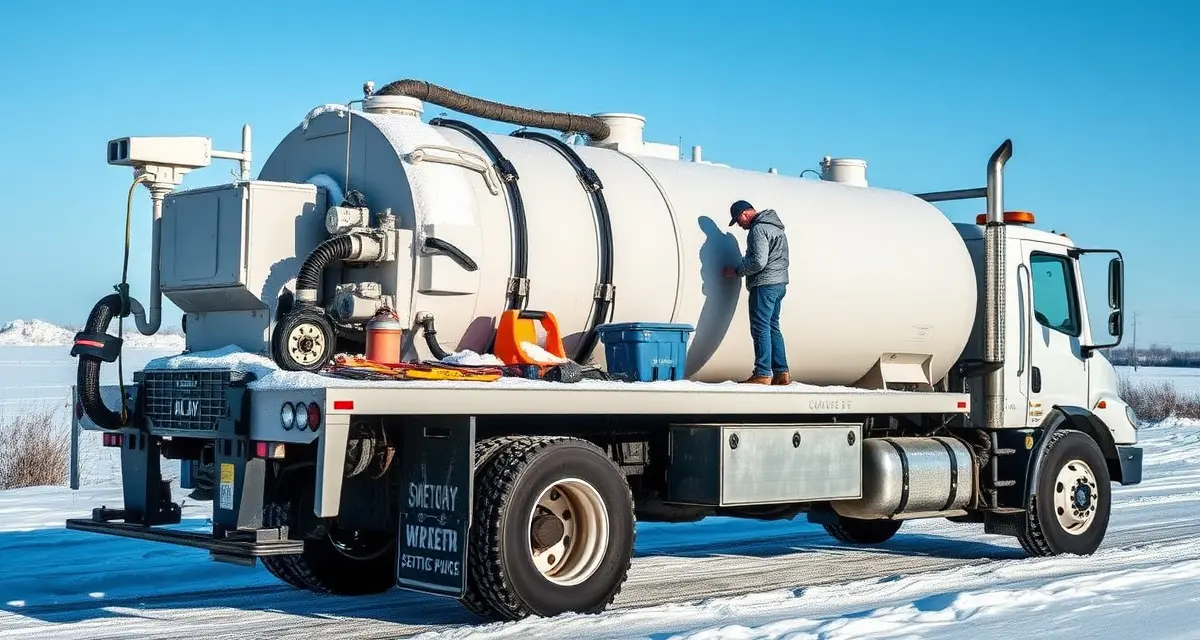
Septic Company Winter Preparation Checklist for Cold Climate Operations
By the SepticMind Editorial Team
Pump truck winterization neglect is the leading cause of equipment failure for northern septic companies. But it's rarely the only thing that goes wrong when a septic business isn't ready for winter. Frozen hoses, inaccessible tanks, customers who don't know their winter limitations, all of it adds up to a season that's more expensive and more stressful than it needs to be.
TL;DR
- Septic Company Winter Preparation Checklist for Cold Climate Operations requires balancing field operations, customer relationships, compliance obligations, and administrative management.
- Recurring service agreements provide the most predictable revenue base in the septic trade and should be a priority for growing businesses.
- Digital tools that automate scheduling, reminders, invoicing, and reporting reduce administrative overhead without adding staff.
- Tracking key performance metrics by route, technician, and service type identifies the most profitable and least profitable parts of the operation.
- Customer retention improvement through systematic follow-up typically generates more revenue than equivalent spending on new customer acquisition.
- Building commercial and institutional accounts alongside residential pumping creates revenue stability that supports equipment and hiring decisions.
Septic companies without proper winter prep plans experience 31% higher equipment failure rates in cold weather. That's not just an inconvenience, it's lost revenue while a truck sits in the shop, emergency repair bills, and jobs you couldn't complete.
This guide covers equipment prep, scheduling adjustments, and how to communicate winter service limitations to your customers before problems force the conversation.
Equipment Winterization: What to Do Before the Cold Sets In
Your pump trucks are the most important asset in your operation. Cold weather attacks them in specific ways. Here's what to address before temperatures drop.
Vacuum Pump and Hose Systems
Your vacuum pump contains moisture. When that moisture freezes in valves, seals, or the pump housing, you're looking at cracked components and failed seals. Drain and blow out your vacuum system before the first hard freeze. Run the system with no load to clear residual moisture.
Hoses need inspection before winter. A hose that has minor cracking or wear survives mild weather and fails in cold. Replace any hoses showing external cracking, stiffness, or wear at connection points. Cold-weather hose failures are far more common than summer failures because the material becomes brittle.
Tank and Pump Heating
If your trucks sit outside overnight in below-freezing temperatures, consider tank heating. Frozen residue in the tank can create major problems at startup. Some operators run the truck briefly before a morning job to warm components. Others use tank heaters or heated storage. The right answer depends on your climate severity.
Water Systems
Any freshwater system on your truck (for rinsing, system testing, or cleaning) needs to be winterized like a boat. Drain completely or add antifreeze per your truck manufacturer's specifications. A forgotten water line freeze is a cheap problem. A cracked fitting or pump is not.
Battery and Electrical Systems
Cold kills batteries. A battery that runs fine in October may not start your truck in January at 15 degrees. Load test every vehicle battery before winter. Replace any battery that tests below spec. Also inspect heated cab components, emergency lighting, and any electrical systems on auxiliary equipment.
DOT Compliance Items
Cold weather affects tire pressure (expect a drop of 1 PSI per 10-degree temperature change), brake function, and lighting. Check these before your first cold-weather service day, not during. SepticMind's equipment module tracks oil changes, pump service, and DOT inspection deadlines per truck so you're not relying on memory to stay current.
Scheduling Adjustments for Cold Weather Operations
Winter changes the math on your daily schedule. Jobs take longer. Drive times increase in bad weather. Some customers become inaccessible.
Add Buffer Time Per Job
A job that takes 45 minutes in July may take 75 minutes in January. Frozen lids, stiff hoses, and cold-weather equipment handling all add time. If you don't build this into your schedule, you'll run late on every job from the first cold snap onward.
Build a winter buffer into your scheduling from November through March. SepticMind lets you set job duration by season or by job type so winter scheduling reflects actual winter conditions.
Identify Access-Restricted Properties in Advance
Some properties become inaccessible in winter. Seasonal roads wash out. Long driveways accumulate ice. Tank lids freeze over. Customers at the end of long private lanes can't always be reached safely with a pump truck in January.
SepticMind's seasonal notes feature lets you add winter access restrictions to any customer property record. Flag the properties that are problematic in winter before the season starts. When a job comes in for that address, the dispatcher sees the restriction and can call ahead, confirm access, or reschedule for a time when conditions allow.
This is the kind of detail that prevents a truck from getting stuck on a rural driveway in February. That's not just an embarrassment, it's a recovery bill, a delayed schedule, and sometimes a tow.
Pre-Schedule Spring Jobs in the Fall
If certain customers can't be serviced in winter, get them on the spring schedule now. Calling in October to say "we won't be able to reach you in January, let's get you on the schedule for March" is good proactive service. Waiting until April to discover they needed a pump-out in February is not.
Pre-scheduling also gives you a head start on spring capacity. Spring is typically the busiest season for septic companies in cold climates, and a booked-out spring schedule is easier to manage when you've been filling it since fall.
Customer Communication for Winter Limitations
Your customers need to know what changes about their service in winter. They don't know their system behaves differently in cold weather unless you tell them. They also don't know if you have access limitations or service delays.
Communicate proactively, before winter creates urgency.
What to Communicate Before Winter
Access requirements. If you need the lid area to be accessible, tell customers they're responsible for keeping it clear of snow and ice. Send a reminder in late October or November. Most customers are happy to do this, they just need to know it matters.
Emergency response times. If a system fails in January and you're dealing with frozen ground and limited access, emergency response takes longer. Set that expectation before it's needed.
System behavior in cold weather. Bacterial activity in a septic tank slows in cold weather. For customers with ATUs or systems with biological treatment components, let them know that unusual odors or system behavior in winter may warrant a check even outside their normal service interval.
Winter service limitations. If you don't service certain areas or property types in winter, communicate that clearly. It's better for customers to know in advance than to discover it when they call in an emergency.
SepticMind's automated messaging can schedule customer communication for the fall, before winter conditions arrive. Building a winter prep message into your winter septic service challenges communication plan means customers hear from you at the right time without manual follow-up.
How to Handle Emergency Calls in Winter
Even with good planning, systems fail in winter. Have a clear protocol:
- Triage calls to determine actual emergency vs. inconvenience
- Have a partner or backup company for situations you genuinely can't reach
- Communicate ETA honestly, including weather delays
- Document access challenges at the time of service
Managing Demand Seasonally
Winter usually means slower demand for most septic services in cold climates. That's not necessarily a problem, if you've planned for it.
Fill the Schedule With Indoor Work
Service calls that don't require ground access (ATU checks on accessible systems, office-based customer communication, equipment maintenance, technician training) can fill winter days when outdoor work is limited.
Use Downtime for Business Improvement
If demand drops in winter, it's a good time for things that always get deferred: reviewing pricing, updating customer records, completing SepticMind setup you haven't gotten to, or planning marketing for spring.
For companies managing seasonal demand shifts, how to manage seasonal septic demand covers the scheduling and operational approaches in more detail.
Pre-Season Checklist: What to Complete Before Winter
Use this as your annual winter preparation checklist:
- [ ] Vacuum pump and hose system drain and inspection
- [ ] All truck batteries load-tested and replaced as needed
- [ ] Hoses inspected and worn sections replaced
- [ ] Water systems drained or winterized
- [ ] Tire pressure checked and adjusted
- [ ] DOT inspection dates confirmed current
- [ ] Oil change and fluid checks completed on all trucks
- [ ] Winter access restrictions added to customer records in SepticMind
- [ ] Spring pre-schedule calls completed for inaccessible customers
- [ ] Customer winter preparation message sent
- [ ] Emergency response protocol reviewed with dispatch team
- [ ] Partner or backup company identified for extreme weather situations
Get Started with SepticMind
Running a profitable septic business means managing compliance, customer relationships, and field operations without letting any of them slip. SepticMind handles the operational and compliance infrastructure so you can focus on growing the business. See what the platform can do for your operation.
What equipment should a septic company winterize before cold weather hits?
Vacuum pumps, hose systems, freshwater components, and batteries all need attention before winter. Drain moisture from the vacuum system and blow it clear. Inspect hoses for cracking or wear. Winterize any freshwater components per manufacturer specs. Load-test all batteries and replace those below spec. Tire pressure and fluid levels should also be checked, as cold weather affects both.
How do I communicate winter service limitations to my septic customers?
Send a proactive message in late October or November, before winter conditions create urgency. Cover access requirements (keep the lid area clear of snow and ice), any areas or property types you can't reach in winter, what to do in a winter emergency, and how to get on the spring schedule early. SepticMind's automated messaging can schedule and send this communication to your full customer list.
Should I pre-schedule spring jobs in the fall to lock in winter downtime?
Yes. Customers who are difficult or impossible to reach in winter should be proactively moved to a spring schedule while you have time to plan. It also fills your spring calendar in advance, which matters because spring is typically the busiest period for cold-climate septic companies. Customers appreciate the heads-up and the fact that their service is already handled.
Winter Is Either a Problem or an Opportunity
For companies that prepare, winter is manageable. Trucks work. Customers know the plan. Spring bookings are already on the calendar. For companies that wing it, winter is a season of breakdowns, frustrated customers, and margin-killing surprises.
Run through the checklist in this guide before temperatures drop. Get your access restrictions into SepticMind now. Send your customer communication in October. And get those spring jobs on the books before everyone else is calling in March.
Get started at SepticMind.com.
What metrics matter most for managing a septic service business?
The most important operational metrics for a septic service company are route utilization rate (percentage of available truck capacity actually booked), customer retention rate (percentage of customers who return for the next service visit), revenue per truck per day, cost per job including labor, disposal, fuel, and overhead allocation, and recurring revenue percentage from service agreements versus one-time calls. Companies that track these metrics by route and by technician identify improvement opportunities faster than those looking only at total revenue.
How does field service software reduce administrative costs for septic companies?
Field service software eliminates manual steps in scheduling, dispatching, invoicing, permit tracking, and inspection report preparation. Tasks that take an office manager 2-4 hours per day on spreadsheets and phone calls are handled automatically: reminders go out, reports generate, invoices are sent, and permit deadlines are flagged without human intervention. The hours saved are redeployed to customer service, sales, and higher-value work that grows the business.
Try These Free Tools
Sources
- National Onsite Wastewater Recycling Association (NOWRA)
- US EPA Office of Wastewater Management
- National Environmental Services Center (NESC)
- Water Environment Federation
- Occupational Safety and Health Administration (OSHA)