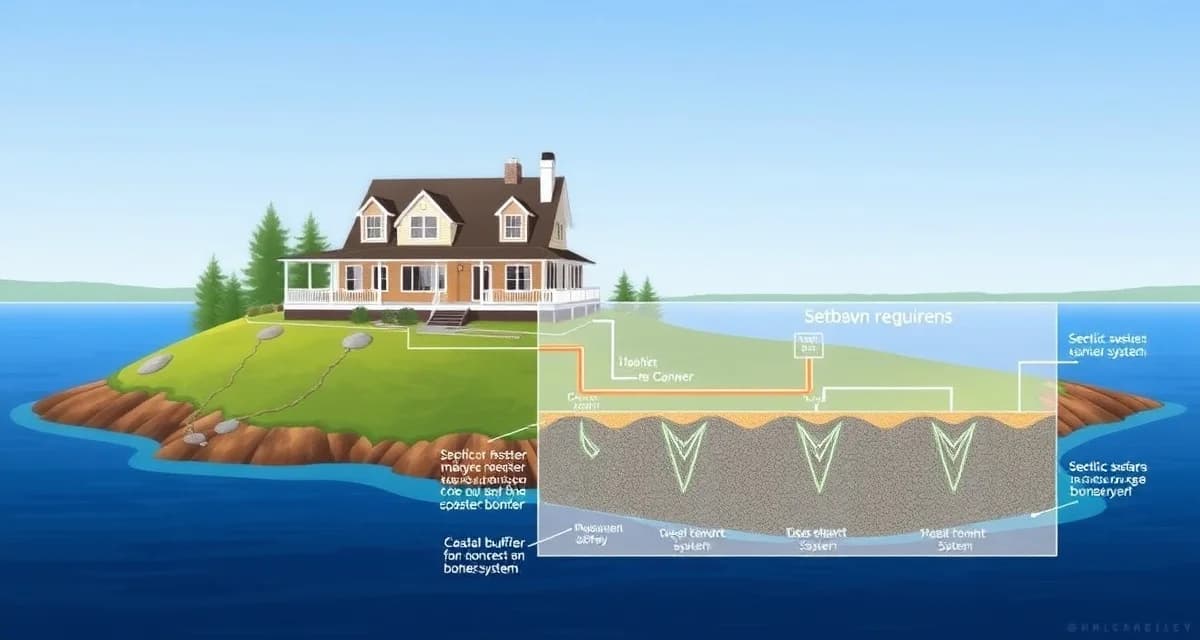
Septic Service Software for Maine Lakefront and Coastal Companies
By the SepticMind Editorial Team
Maine has over 6,000 lakes and ponds with Shoreland Zoning regulations affecting septic systems. Maine's Shoreland Zoning adds setback and design requirements for lakefront septic that generic tools miss, and that's before accounting for Maine's coastal buffer zone rules for oceanfront and tidal water properties.
TL;DR
- Maine septic regulations are administered at the state level with enforcement typically delegated to county health or environmental departments.
- Licensing requirements for pumping, inspection, and installation work vary by county within Maine and should be verified with local authorities.
- Operating, maintenance, and inspection reporting requirements in Maine differ for conventional systems versus alternative systems like ATUs.
- Companies operating in multiple Maine counties need to track permit and reporting requirements by county, not just by state.
- State-mandated inspection report formats in Maine must be used for regulatory submissions; generic forms are typically not accepted.
- SepticMind's permit database covers Maine county-level requirements to reduce the research burden for multi-county operations.
SepticMind includes Maine DEP Shoreland Zoning septic requirements for all lakefront and coastal properties.
Maine's Regulatory Framework
Maine's onsite sewage regulations are administered by the Maine Department of Environmental Protection (DEP) Subsurface Wastewater program under the rules established at 10-144 CMR Chapter 241 (Subsurface Wastewater Disposal Rules). Local enforcement is delegated to municipalities through the State Plumbing Code, which covers subsurface wastewater systems.
What distinguishes Maine work for lakefront and coastal companies:
Maine Shoreland Zoning Act. This state law requires municipalities to adopt shoreland zoning ordinances that regulate development (including septic system installation) within 250 feet of any pond, river, tidal area, or wetland. The DEP adopts guidelines that municipalities must meet or exceed.
DEP Coastal Buffer Rules. Properties adjacent to coastal waters, tidal areas, and estuaries have additional DEP requirements that go beyond standard subsurface wastewater rules. Setbacks from coastal water bodies are among the most stringent in Maine's regulatory framework.
Municipal implementation. Maine's shoreland zoning is implemented through local municipal ordinances that must meet DEP's minimum guidelines but can exceed them. Municipal ordinances vary, a lakefront property in one Maine town may face requirements that differ from a comparable property in an adjacent town.
Maine HHE-200 permits. New septic system installations and notable alterations require a permit from the local plumbing inspector (LP), who applies Maine's subsurface rules. The LP is typically a municipal employee or contractor certified by DEP.
Shoreland Zoning and Septic Systems
Within Maine's shoreland zones (250 feet from lakes, ponds, rivers, tidal areas, and certain wetlands) septic systems face specific restrictions:
No new cesspools in shoreland zones. New cesspool installation is prohibited within shoreland zones. Existing cesspools in shoreland zones may be required to be replaced with compliant systems when a building permit is issued for the property.
Setback distances. Septic tanks and disposal areas must be set back from the water body at distances specified in the municipal ordinance. These are typically more stringent than setbacks from non-water features.
Displacement and expansion limits. Lots in shoreland zones often have limited area available for septic system expansion due to lot size and water proximity. This constrains renovation or expansion projects that would increase wastewater loading.
Alternative systems in constrained sites. Where conventional systems can't meet shoreland setback requirements due to lot configuration, alternative systems (mound, pressure distribution, engineered systems) may be required. Maine DEP approves alternative system designs.
Coastal Properties and Tidal Waters
Maine's coast creates additional complexity beyond standard lake shoreland zoning:
Tidal zone protection. Setbacks from tidal waters and coastal wetlands reflect the hydrological connections between onsite systems and tidal ecosystems. Marine shellfish beds and coastal fisheries create specific protection priorities.
DEP Coastal Zone certification. Some coastal development projects require consistency with Maine's coastal management program, adding review beyond the standard subsurface permit.
Eelgrass and shellfish protection areas. In areas where nitrogen from septic effluent affects eelgrass beds or shellfish growing areas, additional treatment may be required.
Maine's Seasonal Service Patterns
Maine's lakefront and coastal markets are highly seasonal. The service patterns resemble New Hampshire's Lakes Region but with some distinctive Maine characteristics:
May opening rush. Lake camps and coastal cottages being opened for Memorial Day create concentrated demand in May. A company that can respond quickly to spring opening service wins notable business from time-pressured property owners.
Summer peak. Maine's coastal and lakefront communities see peak tourism from late June through Labor Day. Vacation rentals, campgrounds, and seasonal restaurants all need service during this period.
September–October. Some coastal communities have a second wave of fall visitors (foliage season), and properties being closed for winter benefit from pre-closing pump-outs.
Year-round real estate market. Maine's vacation property market is active year-round, with buyers evaluating lakefront and coastal properties in all seasons. Real estate inspections don't have the same dramatic seasonal drop in Maine that they do in some other northern markets.
SepticMind's Maine state templates include the applicable DEP rules and shoreland zone documentation requirements. Properties within shoreland zones are flagged when jobs are created for those addresses, surfacing the applicable additional requirements before permit applications are submitted.
Get Started with SepticMind
Operating in Maine means navigating county-level variation in permit requirements, inspection formats, and reporting deadlines. SepticMind's permit database covers Maine counties with forms, fee schedules, and timelines so you are prepared before you apply. See how it supports compliance in your service area.
Frequently Asked Questions
What are Maine's Shoreland Zoning requirements for septic systems near water?
Maine's Shoreland Zoning Act requires municipalities to regulate development within 250 feet of lakes, ponds, rivers, tidal areas, and certain wetlands. For septic systems within these shoreland zones, the requirements include minimum setback distances from the water body for both the septic tank and the disposal area (typically more stringent than standard setbacks), a prohibition on new cesspool installation, and potential requirements for alternative or enhanced treatment systems where conventional systems cannot meet setback requirements due to lot constraints. Municipal shoreland ordinances must meet DEP's minimum guidelines but may be more stringent. Confirmation of the applicable municipal ordinance requirements (not just state minimums) is essential before preparing a permit application for a lakefront or coastal property.
How do Maine coastal buffer zone regulations affect septic system design?
Maine's coastal buffer regulations add requirements beyond standard subsurface wastewater rules for properties adjacent to tidal waters, coastal wetlands, and estuaries. Setback distances from these coastal water bodies tend to be more stringent than inland water body setbacks. In areas with documented connections between onsite wastewater systems and marine resources (shellfish growing areas, eelgrass beds, and coastal fisheries) additional treatment requirements may apply to reduce nitrogen loading to coastal waters. Some coastal development projects also require review for consistency with Maine's coastal management program, adding a review step beyond the standard local plumbing permit. Companies expanding from inland Maine work to coastal work should review the applicable coastal zone requirements before taking on their first coastal installation.
Does SepticMind flag Maine properties within the Shoreland Zone for compliance?
Yes. SepticMind's Maine compliance templates include shoreland zone identification for lakefront and coastal properties. When a job is created for a property within or adjacent to Maine's 250-foot shoreland zone, the system flags the applicable shoreland zoning requirements (including setback standards, cesspool restrictions, and documentation requirements that differ from standard inland projects. For coastal properties with DEP coastal zone implications, additional documentation flags appear. This prevents the most common compliance error in Maine) applying standard inland septic rules to shoreland or coastal properties that have materially different requirements. The flag also prompts collection of the municipal ordinance requirements, since local ordinances vary and may be more stringent than the state minimum.
What state agency regulates septic systems in Maine?
Septic system regulation in Maine falls under the state environmental or health agency, with day-to-day enforcement handled by county health departments or environmental offices. Licensing for pumping, installation, and inspection work is issued at the state level, but permit applications for individual projects are reviewed at the county level. Contact both the state agency and your specific county office to confirm current requirements, since county rules can differ from the state baseline.
Do Maine septic inspection reports need to be filed with the county?
In Maine, most inspection reports for real estate transactions and O&M permit systems must be filed with the relevant county health department or environmental office within the timeframe specified by state regulation. The required form and filing timeline vary by report type; real estate inspection reports typically have stricter deadlines than routine O&M reports. Using state-standardized digital report templates ensures the format meets Maine's requirements and can be submitted electronically.
Try These Free Tools
Sources
- National Onsite Wastewater Recycling Association (NOWRA)
- US EPA Office of Wastewater Management
- NSF International
- Water Environment Federation
- National Environmental Services Center (NESC)