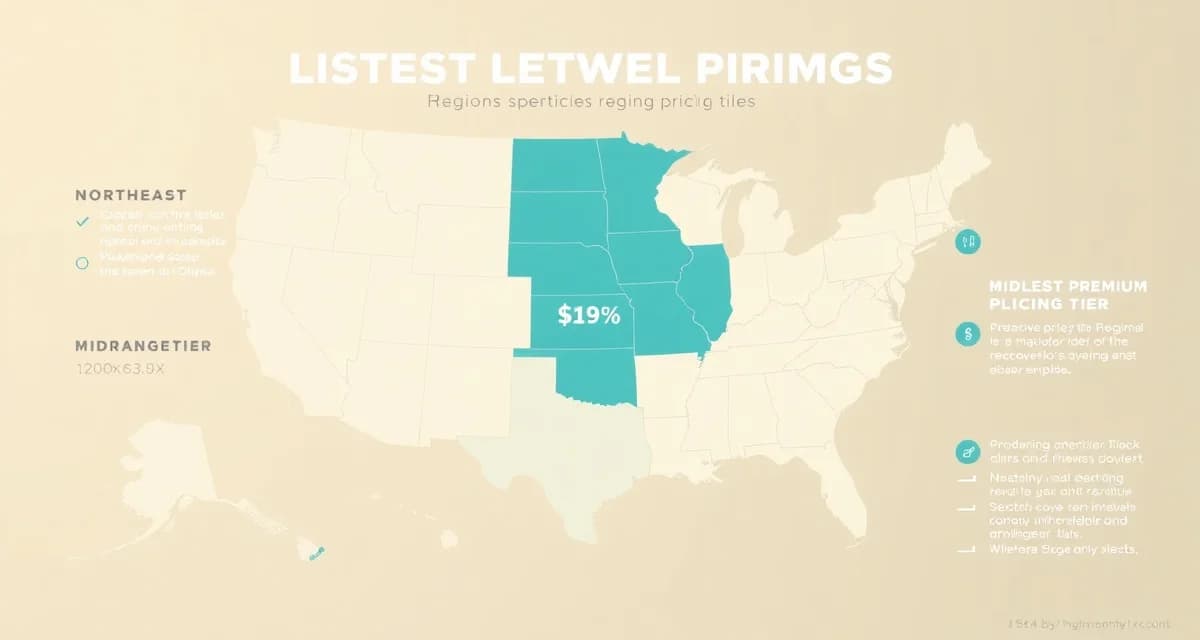
Septic Service Pricing by State: Regional Market Rate Analysis
By the SepticMind Editorial Team
Northeast US septic pumping averages $520 per service vs $265 in the lower Midwest. Companies pricing without regional data undercharge in high-value markets by an average of 22%. If you're setting your prices based on what feels reasonable without comparing to regional market data, you may be leaving substantial revenue on the table -- or in a few cases, pricing yourself out of a competitive market.
TL;DR
- Septic Service Pricing by State: Regional Market Rate Analysis requires balancing field operations, customer relationships, compliance obligations, and administrative management.
- Recurring service agreements provide the most predictable revenue base in the septic trade and should be a priority for growing businesses.
- Digital tools that automate scheduling, reminders, invoicing, and reporting reduce administrative overhead without adding staff.
- Tracking key performance metrics by route, technician, and service type identifies the most profitable and least profitable parts of the operation.
- Customer retention improvement through systematic follow-up typically generates more revenue than equivalent spending on new customer acquisition.
- Building commercial and institutional accounts alongside residential pumping creates revenue stability that supports equipment and hiring decisions.
State-by-state pricing data from SepticMind's job database helps companies benchmark their rates accurately. This guide covers the regional patterns, what drives the differences, and how to use this information in your pricing decisions.
Regional Price Patterns: The Overview
Septic service pricing varies significantly across the country, driven by a combination of market wages, operating costs, regulatory complexity, and competitive density. The broad regional patterns:
Northeast (New England + Mid-Atlantic): Highest average prices in the country. Massachusetts, Connecticut, New York, New Jersey, and neighboring states average $450-600+ for standard residential pump-outs. State regulatory complexity, high wages, and shorter seasons (affecting annual job count) all push prices up.
Pacific Coast (CA, OR, WA): Second-highest price region. California urban markets -- Bay Area, LA, San Diego -- see $400-550 average prices. Rural California and Pacific Northwest average $350-450.
Southeast: More moderate pricing, reflecting lower operating costs and more competitive markets. Florida, Georgia, and the Carolinas typically see $275-375 for standard residential pump-outs. South Florida runs higher due to market conditions.
Midwest: Broad variation by sub-region. The upper Midwest (Minnesota, Wisconsin, Michigan) tends toward $300-400. The lower Midwest (Iowa, Missouri, Kansas) sees some of the lowest average prices nationally, $250-350 for residential service.
South Central: Texas, Oklahoma, Arkansas -- $275-375, varying significantly between major metro suburban markets (higher) and rural areas (lower).
Mountain West: Colorado, Utah, and surrounding states -- $300-425, with mountain resort community markets running higher due to limited competition and affluent customer bases.
What Drives Price Differences Between States
Understanding the drivers of price variation helps you set prices for your specific market rather than just applying a regional average:
Labor costs: States with higher minimum wages and tighter labor markets have higher technician wages, which flow directly into service pricing. California and northeastern states have much higher fully loaded labor costs than southeastern or lower Midwest states.
Operating costs: Fuel prices, truck insurance rates, disposal site fees, and regulatory compliance costs all vary by state. These cost differences are often larger than people expect.
Competitive density: Markets with more competitors per capita tend toward lower prices as companies compete for customers. Rural markets with one or two operators often support significantly higher prices than suburban markets with many choices.
Regulatory complexity: States with mandatory inspection programs, stricter licensing requirements, and more demanding compliance documentation have higher operating costs for compliant operators, which supports higher pricing.
Seasonal patterns: Northern states where the pumping season is compressed (frozen ground limits winter service) see operators with higher annual overhead spread across fewer months, pushing prices up.
Real estate markets: States with active rural real estate markets have more inspection demand, which tends to elevate the market for all inspection-adjacent services.
Using This Data to Set Your Prices
The septic service pricing guide covers pricing methodology in full. Regional benchmarks add a competitive intelligence layer on top of cost-based pricing.
The right approach:
Step 1: Calculate your actual cost per job type, including labor (fully loaded), fuel, disposal, materials, and overhead allocation. This is your floor -- you can't profitably charge less.
Step 2: Look at what comparable companies in your market are charging. Call competitors as a mystery shopper, check their websites, and compare their posted prices (if any) to your calculation.
Step 3: Compare your market to the regional average. If your market is consistently below regional average, that's either a competitive market feature or an opportunity to raise prices if you offer differentiated service quality.
Step 4: Set prices at or above cost, at a level competitive in your market, that reflects your service quality positioning.
Don't price at the regional average if your cost calculation says it's below your actual cost. Regional averages are market reference points, not minimum viable prices.
The Septic Company Financial Benchmarks Connection
Pricing directly affects the financial benchmark metrics that indicate company health. If your revenue per truck is below the median $130,000, pricing is often part of the explanation. A price increase of 10-15% across your service types, while uncomfortable to implement, can move revenue per truck from below median to above median without running a single additional job.
Companies that raise prices rarely lose as much volume as they fear. Price-sensitive customers who leave were often low-margin customers anyway. The customers who stay are the ones you want.
State-Specific Pricing Notes
Massachusetts and Connecticut: Mandatory inspection programs drive high inspection volumes and support premium inspection pricing. Inspection fees of $400-650 are common in competitive Boston-area markets.
California: Price varies enormously by county. Bay Area and LA county rates can reach 2-3x Central Valley rates for the same service. Operate in multiple zones and price by zone.
Florida: Significant variation between South Florida (Miami, Fort Lauderdale -- higher prices) and rural North and Central Florida (lower prices). Tourist market areas (Keys, coastal communities) often support premium pricing.
Texas: Urban suburban markets (Dallas, Houston, Austin suburbs) are pricing similarly to mid-tier markets nationally ($350-450). Rural Texas is more competitive and lower-priced.
New York: Suburban Westchester, Long Island, and Hudson Valley markets support Northeast-tier pricing. Western and upstate New York is a mid-tier market.
Monitoring Your Own Pricing Trends
Benchmarking isn't a one-time exercise. Markets shift over time, and your pricing should shift with them. SepticMind helps companies track their own pricing trends over time through job reporting that shows average revenue per job type across periods. Comparing your current average ticket to one year and two years ago tells you whether your prices are keeping pace with cost increases.
Get Started with SepticMind
Running a profitable septic business means managing compliance, customer relationships, and field operations without letting any of them slip. SepticMind handles the operational and compliance infrastructure so you can focus on growing the business. See what the platform can do for your operation.
Frequently Asked Questions
Which US states have the highest average septic pumping prices?
Massachusetts, Connecticut, New York, New Jersey, and other New England and Mid-Atlantic states consistently top the price charts, with average residential pump-out prices of $450-600+. California follows, with major metro markets in the $400-550 range. The combination of high wages, strict regulatory requirements, dense regulatory environments, and strong real estate markets all push prices up in these regions. Mountain resort communities and coastal markets in various states also command premium prices due to limited competition and affluent customer bases.
Why do septic service prices vary so much between states and regions?
The main drivers are labor costs (which vary substantially by state due to wage levels and labor market tightness), operating costs (fuel, insurance, disposal site fees, regulatory compliance), competitive density (fewer competitors supports higher prices), regulatory complexity (more demanding state programs mean higher operating costs for compliant operators), and seasonal patterns (northern states compress the same annual overhead into fewer working months). Real estate market activity also affects pricing -- states with high rural real estate transaction volume have more inspection demand, which influences market rates for related services.
Does SepticMind help companies track their own pricing trends over time?
Yes. SepticMind's reporting module tracks revenue per job type over any time period, allowing companies to compare their average ticket for each service type year over year. This makes it easy to identify whether your effective pricing has kept pace with cost increases or drifted below where it should be. You can also filter by service area or customer type to see whether different segments of your market are pricing differently. This data supports price increase decisions with actual trend information rather than estimates about what's been happening.
What metrics matter most for managing a septic service business?
The most important operational metrics for a septic service company are route utilization rate (percentage of available truck capacity actually booked), customer retention rate (percentage of customers who return for the next service visit), revenue per truck per day, cost per job including labor, disposal, fuel, and overhead allocation, and recurring revenue percentage from service agreements versus one-time calls. Companies that track these metrics by route and by technician identify improvement opportunities faster than those looking only at total revenue.
How does field service software reduce administrative costs for septic companies?
Field service software eliminates manual steps in scheduling, dispatching, invoicing, permit tracking, and inspection report preparation. Tasks that take an office manager 2-4 hours per day on spreadsheets and phone calls are handled automatically: reminders go out, reports generate, invoices are sent, and permit deadlines are flagged without human intervention. The hours saved are redeployed to customer service, sales, and higher-value work that grows the business.
Try These Free Tools
Sources
- National Onsite Wastewater Recycling Association (NOWRA)
- US EPA Office of Wastewater Management
- National Environmental Services Center (NESC)
- Water Environment Federation
- Occupational Safety and Health Administration (OSHA)