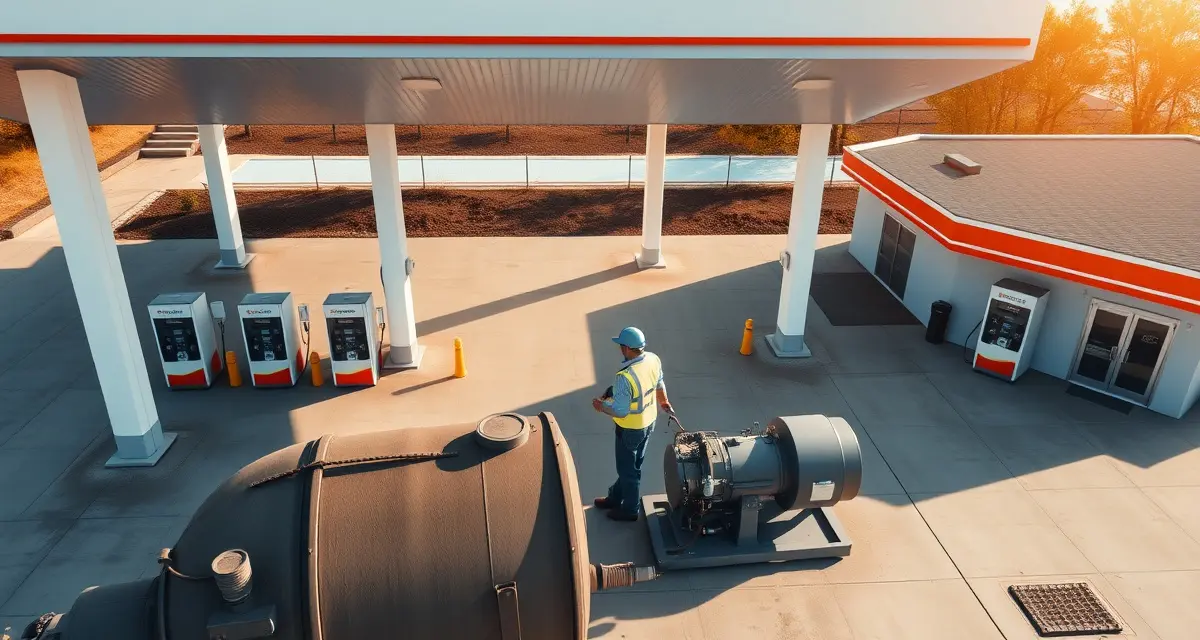
Septic Service for Truck Stops and Travel Centers
By the SepticMind Editorial Team
A truck stop restroom facility may serve 500 or more users per day, and a septic failure triggers immediate DOT and health department action that can force closure of the facility. Truck stops and travel centers run 24 hours a day, 365 days a year, with no off-season buffer and no tolerance for system downtime. Managing these accounts requires a service frequency and documentation standard that matches the commercial intensity of the operation.
TL;DR
- Truck Stops facilities have distinct wastewater loading patterns that affect septic system sizing, service frequency, and permit requirements.
- Commercial and institutional properties like truck stops typically require more frequent pumping than residential systems due to higher daily usage.
- Some truck stops operations generate waste streams (grease, chemicals, or high-volume flow) that require pre-treatment before reaching the septic system.
- Service contracts for truck stops provide predictable recurring revenue and are easier to manage with a platform that tracks commercial account schedules.
- Health department inspections for truck stops properties may require septic system condition documentation as part of facility licensing.
- Septic companies specializing in truck stops service build referral networks with property managers, architects, and health inspectors in that niche.
SepticMind's truck stop account type tracks both food service and restroom system service separately, because these two wastewater streams have different load profiles and often connect to different system components.
The Truck Stop Wastewater Challenge
Truck stops concentrate multiple high-volume wastewater sources in a single facility:
Restroom facilities: 24-hour restroom use by truckers, commuters, families, and tourists creates constant high-volume loading. A major travel center on an interstate highway may see 800-1,200 restroom users per day. Unlike daytime-only commercial facilities, the load doesn't drop off at night.
Food service: Most travel centers have at least one restaurant, fast food franchise, or deli counter. Some have multiple food operations. Kitchen wastewater has high BOD and grease content that accelerates septic loading beyond what the restroom use alone would generate.
Trucker shower facilities: Pay shower facilities at larger truck stops generate significant gray water. A truck stop with 20 shower stalls in active use produces thousands of gallons of gray water per day.
Driver lounge facilities: Laundry facilities, sinks, and personal care areas in driver lounges add to the gray water load.
The combination of 24/7 restroom use, food service wastewater, and shower and laundry gray water creates wastewater loads that exceed most commercial operations of equivalent square footage.
Regulatory Oversight at Truck Stops
A septic failure at a truck stop creates multi-agency regulatory attention:
Health department: Restaurant and restroom operations are subject to health department permits that require functioning sanitation systems. A failed septic system can result in immediate closure of the food service operation and restroom facilities.
DOT oversight: Travel centers along federal highways operate under various compliance frameworks. Depending on the state and the specific truck stop's permits, DOT or state transportation departments may have oversight of facility operations including sanitation.
EPA pretreatment: Travel centers with diesel service areas and truck washing may have petroleum-related wastewater that requires pretreatment before entering a septic system. Petroleum contamination of a septic system is both an EPA violation and a system-killing event.
State environmental agency: The onsite treatment system itself is subject to state environmental agency oversight for design, installation, and maintenance.
Separate Systems for Different Waste Streams
Larger truck stops and travel centers often have separate systems for different waste streams, and understanding that separation is essential for proper service:
Grease traps: Food service operations should have grease interceptors (grease traps) that capture fats, oils, and grease before they enter the main septic system. The grease trap is a separate maintenance item that typically needs more frequent service than the main tank.
Oil-water separators: Diesel service areas and truck washes have petroleum-laden wastewater that must be separated before discharge. Oil-water separators require separate maintenance from septic systems.
Holding tanks vs. treatment systems: Some high-volume truck stops use holding tanks that are pumped out by a licensed hauler rather than traditional septic treatment systems. Know what system type your account has before setting service intervals.
Central septic for domestic flows: The restroom and shower gray water may connect to a large central treatment system that handles the combined domestic and gray water load.
Track each system component separately in SepticMind. A grease trap on a weekly service schedule and a main septic tank on a monthly schedule are two different service relationships within the same account.
Service Frequency at High-Volume Facilities
A truck stop that serves 800+ people per day needs to be treated as a high-commercial account from the start:
Monthly service is often the minimum baseline for the main restroom system at a major travel center. Some facilities with high shower and laundry use may need more frequent service.
Grease traps at food service operations need service based on grease accumulation -- typically every 4-8 weeks for active restaurant operations, sometimes more frequently for high-volume fast food.
Oil-water separators need quarterly service at minimum, with monitoring for any signs of petroleum breakthrough.
Holding tanks are serviced based on fill rate and capacity. For a 24/7 operation, this may be weekly or even more frequent.
The service frequency at a major travel center may feel excessive compared to residential or light commercial accounts, but it's appropriate for the load. A travel center running on a quarterly service schedule for its main restroom system is running behind.
Service Access and Timing
Truck stops operate 24/7 and can't easily close for service. Plan service logistics accordingly:
Off-peak service timing: Many truck stops have lower traffic in early morning hours (3-6 AM) before commuter traffic picks up. If access to septic infrastructure requires vehicle movement in parking areas, off-peak timing reduces disruption.
Coordination with facility management: Truck stop general managers are responsible for ensuring operations continue during service. Let them know when you're scheduled and what access you'll need. Unannounced service at a busy travel center creates operational conflicts.
Emergency response expectations: Establish your emergency response protocol for this account in advance. A truck stop with a septic failure at 2 PM on a Friday needs same-day response, not a Monday morning callback. Know before you take the account whether your operation can deliver that response.
Get Started with SepticMind
Truck Stops facilities need a service provider who understands the specific wastewater challenges of their operations. SepticMind makes it easy to manage commercial service contracts, track inspection schedules, and document service visits for every account in your portfolio. See how it supports commercial account management.
Frequently Asked Questions
What septic service intervals are required for a busy truck stop facility?
A major travel center serving 500-1,000 or more users per day with active food service and shower facilities needs monthly service for main restroom systems at minimum, with grease trap service every 4-8 weeks and oil-water separator service quarterly. These intervals are starting points -- track actual fill levels at each service visit and shorten intervals if you're finding tanks above 75% capacity at service time. A 24/7 facility has no recovery period between heavy use days, so the fill rate is constant. Holding tanks at very high-volume facilities may need weekly or bi-weekly service. Set the initial interval conservatively and adjust based on observed fill rates over the first 3-6 months of the service relationship.
What compliance documentation does a truck stop need for its onsite septic system?
A truck stop needs service records demonstrating regular pump-out maintenance for health department permit compliance, grease trap cleaning records for food service permit compliance, oil-water separator maintenance records if the facility has diesel service or truck washing, and system condition documentation for the state environmental agency permit governing the septic treatment system. In some states, discharge monitoring reports are required for large commercial onsite treatment systems. SepticMind generates service records and condition documentation that meet health department, environmental agency, and food service permit documentation requirements, giving the travel center management everything they need for regulatory inspections in one organized record system.
Does SepticMind track separate service schedules for truck stop food service and restroom systems?
Yes. SepticMind's truck stop account type maintains separate facility records for the main restroom system, grease traps connected to food service, oil-water separators connected to diesel service areas, and any other distinct system components. Each component has its own service schedule, service history, and condition notes. When the food service grease trap needs service before the main septic tank, the scheduling system handles those as independent service events. Compliance documentation for each component -- the health department record for grease trap service, the environmental agency record for the main treatment system -- is generated from the corresponding facility record and can be delivered to different regulatory contacts as required.
How often should a septic system serving a truck stops property be inspected?
Septic systems at truck stops properties should be inspected at least annually and pumped more frequently than residential systems, since commercial-scale daily water usage accelerates sludge and grease accumulation. The exact frequency depends on the specific activities at the facility, peak occupancy, any food service or chemical use on-site, and local regulatory requirements. A service provider familiar with truck stops operations can recommend an appropriate inspection and pumping schedule based on the system's actual usage profile.
What septic system issues are most common at truck stops properties?
The most common septic problems at truck stops properties are rapid sludge accumulation from high occupancy, grease trap failure if food service is involved, hydraulic overloading during peak-use periods, and non-biodegradable waste disposal from cleaning or maintenance activities. Regular inspection and a service contract with clear maintenance intervals are the most effective ways to catch these problems before they cause system failure or regulatory violations.
Try These Free Tools
Sources
- National Onsite Wastewater Recycling Association (NOWRA)
- US EPA Office of Wastewater Management
- National Environmental Services Center (NESC)
- Water Environment Federation
- Occupational Safety and Health Administration (OSHA)