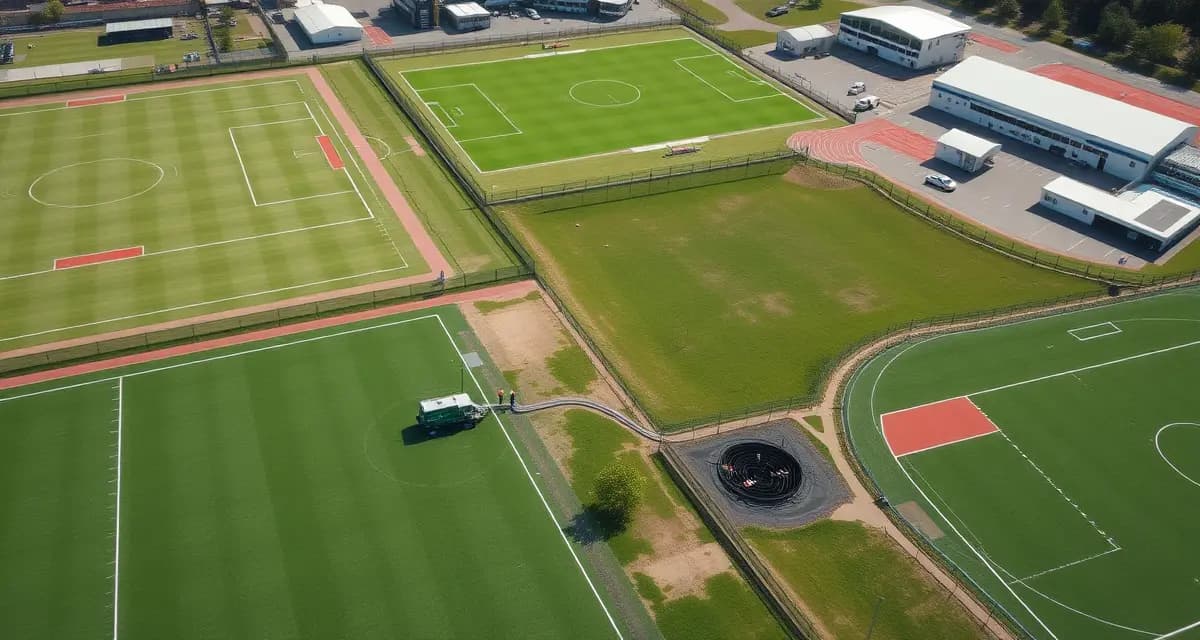
Septic Service for Sports Complexes and Athletic Fields
By the SepticMind Editorial Team
A septic failure during a youth sports tournament can affect hundreds of families and trigger health violations, and sports complex septic systems face extreme peak loads during tournaments that average-based scheduling misses entirely. The pattern of use at an athletic complex is nothing like the steady daily loading that residential or even standard commercial intervals are designed for.
TL;DR
- Sports Complexes facilities have distinct wastewater loading patterns that affect septic system sizing, service frequency, and permit requirements.
- Commercial and institutional properties like sports complexes typically require more frequent pumping than residential systems due to higher daily usage.
- Some sports complexes operations generate waste streams (grease, chemicals, or high-volume flow) that require pre-treatment before reaching the septic system.
- Service contracts for sports complexes provide predictable recurring revenue and are easier to manage with a platform that tracks commercial account schedules.
- Health department inspections for sports complexes properties may require septic system condition documentation as part of facility licensing.
- Septic companies specializing in sports complexes service build referral networks with property managers, architects, and health inspectors in that niche.
SepticMind's event facility account type schedules pre-tournament service before large athletic events, ensuring sports complex accounts are serviced when it matters most rather than on a fixed calendar that ignores the event schedule.
The Sports Complex Load Pattern
An athletic complex may have very low weekday use -- maintenance staff, early morning practices for a few teams -- followed by extreme weekend loads when multiple tournaments run simultaneously. The pattern creates a service interval problem that generic scheduling can't solve:
Average daily use is low. If you calculate service intervals based on typical weekday traffic, the interval looks like a low-commercial account.
Tournament weekends are extreme. A multi-field complex hosting concurrent youth soccer, baseball, and softball tournaments on a summer weekend can see 500-1,000 people on site in a single day. That's a load the system wasn't designed to handle based on the average use calculation.
The stakes are highest on tournament weekends. The worst possible time for a system failure is exactly when load is highest -- and when the most families, coaches, and officials are present.
The right approach: calculate service intervals based on anticipated tournament schedule and peak load days, not on daily averages. Pre-tournament service before known large events is as important as the baseline service interval.
Types of Facilities at an Athletic Complex
A full sports complex typically includes several distinct facility types with different septic profiles:
Restroom and concession buildings: The primary high-load facilities during events. Restrooms may serve hundreds of people per hour during peak tournament periods. Concession buildings add food service wastewater (grease, organic food waste) to the restroom load.
Press boxes and announcer facilities: Small facilities with minimal restroom loading. Typically minor contributors to overall system load.
Maintenance and storage facilities: Often have utility sinks and occasionally restroom facilities. Low loading in most configurations.
Parking area facilities: Some larger complexes have satellite restroom buildings at parking areas. Load depends on event size and parking configuration.
Seasonal concession stands: Temporary or semi-permanent concession operations activated during tournament season contribute significant food service loading during the active season.
Manage each distinct facility separately in SepticMind, with service schedules that reflect each facility's load profile. The main concession and restroom building needs event-driven scheduling; a maintenance facility might be on a standard annual interval.
Pre-Tournament Service: How to Plan It
For sports complex accounts, the most valuable service you provide may be the pre-tournament pump-out before a major event. Here's how to build that into the account relationship:
Get the tournament calendar. Most sports complexes know their major tournament schedule weeks or months in advance. At the time you establish the service relationship, ask for the annual event calendar and schedule pre-tournament service automatically.
Set the service window. Pre-tournament service should be scheduled 3-7 days before the event. Early enough to allow any discovered issues to be addressed; not so early that the buffer capacity diminishes before the event.
Define what "major event" triggers pre-service. Work with the complex manager to define a threshold -- perhaps any single-day event expected to exceed 200 attendees, or any multi-day tournament. Below that threshold, normal service intervals apply; above it, pre-event service is triggered.
Document the trigger in the account notes. SepticMind's event facility account type stores the trigger criteria in the account record so any dispatcher or scheduler can apply it consistently.
Service Agreement Structure for Sports Complexes
A service agreement with a sports complex typically covers:
Annual baseline service: Pump-out and inspection at the beginning of the tournament season (spring) and at the end of the season (fall, before winter closure if applicable).
Pre-tournament service: A defined number of pre-tournament pump-outs included in the annual agreement, with additional events available at a per-service rate.
Emergency response: Priority response terms for system failures during events, because a failure during a tournament requires immediate response, not a 48-hour wait.
Condition reporting: Annual system condition report documenting tank and drainfield status for the complex manager's maintenance records.
This agreement structure gives the complex a predictable annual cost while ensuring the service events that matter most are scheduled in advance rather than reactive.
Get Started with SepticMind
Sports Complexes facilities need a service provider who understands the specific wastewater challenges of their operations. SepticMind makes it easy to manage commercial service contracts, track inspection schedules, and document service visits for every account in your portfolio. See how it supports commercial account management.
Frequently Asked Questions
How often should a sports complex with restroom facilities service its septic system?
A sports complex with multiple fields, restroom and concession buildings, and a tournament season should plan for baseline service at the start and end of the tournament season, plus pre-tournament pump-outs before major events. As a starting point, plan for 2 baseline services per year for the main facilities plus pre-event service for any events expected to exceed 200+ daily attendees. High-use concession buildings with food service may need additional service during peak tournament season. The determining factor is how full the tank is at each service visit -- if you're consistently finding tanks at 80%+ capacity, the interval needs to shorten. If you're consistently finding tanks at under 50% capacity, the baseline interval may be longer than necessary.
What pre-event septic service is recommended before a large tournament at an athletic complex?
Service should be completed 3-7 days before the event to provide maximum capacity buffer while leaving time to address any issues discovered during the service. The service should include pump-out of all tanks connected to the high-load restroom and concession facilities, not just the tanks that appear fullest. A brief system condition check during the pre-event service -- baffle condition, access point integrity, drainfield surface observation -- confirms the system is ready for the load spike. Document the service with a dated service receipt the complex manager can retain for their records.
Does SepticMind support event-driven pre-service scheduling for sports complex accounts?
Yes. SepticMind's event facility account type stores the tournament calendar for each sports complex account and triggers pre-tournament service reminders based on event dates and defined threshold criteria. When a major event is added to the calendar, a pre-tournament service is automatically scheduled 5-7 days prior. The account record documents the trigger criteria -- event size threshold, lead time for scheduling, which facilities need pre-event service -- so the system applies those rules consistently without requiring the account manager to manually schedule each pre-event job. Condition notes from each service visit are stored in the account history, giving the complex manager a running record of system condition that can be used for maintenance planning and budget justification.
How often should a septic system serving a sports complexes property be inspected?
Septic systems at sports complexes properties should be inspected at least annually and pumped more frequently than residential systems, since commercial-scale daily water usage accelerates sludge and grease accumulation. The exact frequency depends on the specific activities at the facility, peak occupancy, any food service or chemical use on-site, and local regulatory requirements. A service provider familiar with sports complexes operations can recommend an appropriate inspection and pumping schedule based on the system's actual usage profile.
What septic system issues are most common at sports complexes properties?
The most common septic problems at sports complexes properties are rapid sludge accumulation from high occupancy, grease trap failure if food service is involved, hydraulic overloading during peak-use periods, and non-biodegradable waste disposal from cleaning or maintenance activities. Regular inspection and a service contract with clear maintenance intervals are the most effective ways to catch these problems before they cause system failure or regulatory violations.
Try These Free Tools
Sources
- National Onsite Wastewater Recycling Association (NOWRA)
- US EPA Office of Wastewater Management
- NSF International
- Water Environment Federation
- National Environmental Services Center (NESC)