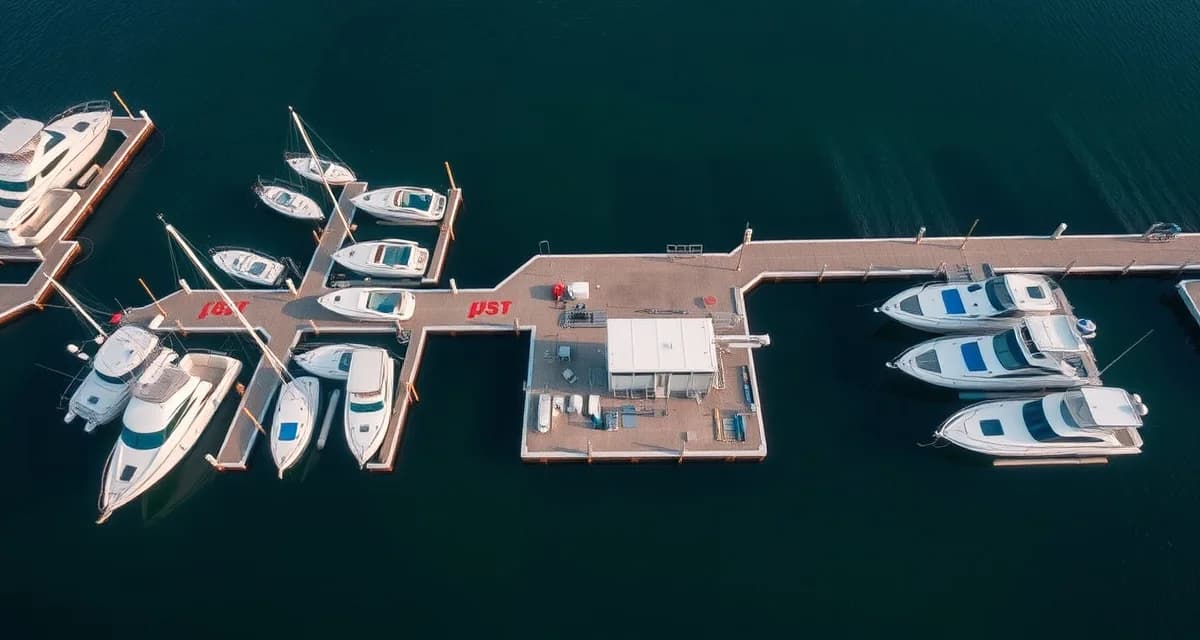
Septic Service for Marinas and Waterfront Facilities
By the SepticMind Editorial Team
All US coastal and Great Lakes marina areas within designated no-discharge zones require pump-out compliance. Marina pump-out station records are required by federal no-discharge zone regulations -- and there's no variance or exception process for marinas that fail to maintain them. The Clean Vessel Act and EPA no-discharge zone designations create a compliance framework that's more rigorous than most land-based septic programs.
TL;DR
- Marinas facilities have distinct wastewater loading patterns that affect septic system sizing, service frequency, and permit requirements.
- Commercial and institutional properties like marinas typically require more frequent pumping than residential systems due to higher daily usage.
- Some marinas operations generate waste streams (grease, chemicals, or high-volume flow) that require pre-treatment before reaching the septic system.
- Service contracts for marinas provide predictable recurring revenue and are easier to manage with a platform that tracks commercial account schedules.
- Health department inspections for marinas properties may require septic system condition documentation as part of facility licensing.
- Septic companies specializing in marinas service build referral networks with property managers, architects, and health inspectors in that niche.
For septic service companies, marinas represent a specialized commercial account type with both the pump-out station component (a marine-specific service) and the onsite land-based wastewater system serving marina facilities. Managing both requires understanding the regulatory context and how service documentation satisfies the requirements.
The Dual Compliance Framework
Marina wastewater compliance operates at two levels simultaneously:
Federal no-discharge zone (NDZ) compliance: In designated no-discharge zones, it is illegal for vessels to discharge treated or untreated sewage into the water. Marinas in NDZ areas are required to provide pump-out facilities for boaters and to maintain records demonstrating those facilities are operational and regularly serviced. This is EPA and Coast Guard territory.
State and local onsite wastewater compliance: The marina's own facilities -- offices, restrooms, showers, a restaurant or marina store if present -- generate wastewater that must be managed through an onsite septic system or public sewer connection. This falls under the same state and local regulations that apply to any commercial property.
Both systems need separate service records, separate compliance documentation, and in many cases, separate permits.
Pump-Out Station Requirements
Marina pump-out stations are specialized pieces of equipment that accept waste from vessel holding tanks. Maintaining them in operational condition is a federal requirement in NDZ areas. Key compliance requirements:
Operational status. Pump-out stations must be available and functional during marina operating hours in NDZ areas. A broken pump-out station needs to be repaired quickly or the marina needs to document the issue and notify boaters of alternative pump-out options.
Service records. The waste collected from pump-out operations must be disposed of properly. In practice, this means either discharge to a publicly owned treatment works (municipal sewer connection) or, for marinas without sewer access, collection and disposal by a licensed waste hauler with manifest records.
Inspection and maintenance. Pump-out station hoses, fittings, and the pump mechanism itself require regular inspection and maintenance. Equipment failures create both operational and compliance problems simultaneously.
Signage and availability. Marinas in NDZ areas must post signage informing boaters of the no-discharge requirement and the location of pump-out facilities.
SepticMind's marina account type tracks pump-out station service records and federal compliance documentation, keeping both the operational records and the regulatory documentation in one accessible system.
Land-Based Septic Systems at Marinas
Beyond the pump-out station, most marinas have land-based wastewater systems serving:
- Marina office buildings
- Public restrooms and shower facilities for slip holders and transient boaters
- Restaurant, bar, or marina store (if present)
- Maintenance and repair shop facilities (with potential petroleum wastewater considerations)
- Seasonal employee facilities
These land-based systems are commercial onsite wastewater systems subject to all the standard commercial septic regulations. A marina with active restroom and shower facilities for slip holders is generating significant daily wastewater from a high-turnover population that may not follow the same use patterns as a fixed commercial operation.
The restroom and shower facilities are often the highest-use component. Boaters arriving after extended trips at sea use facilities heavily. During peak boating season, a full-capacity marina may have 200+ active slip holders with regular facility access.
Water Quality Sensitivity and Enhanced Requirements
Because marinas are by definition located on or near water, their onsite wastewater systems face the strictest setback requirements and most frequent environmental scrutiny of almost any commercial category.
A drainfield failure at a marina doesn't just create a compliance problem -- it creates an immediate water quality threat that regulatory agencies respond to aggressively. State environmental agencies, in addition to local health departments, may have oversight of marina septic systems because of the proximity to navigable waters.
When inspecting or establishing service for a marina account:
- Understand all the applicable regulatory bodies (state environmental agency, local health department, Coast Guard in some cases)
- Confirm setback compliance for existing drainfield locations
- Note any existing compliance conditions or monitoring requirements
- Document water quality monitoring results if the marina is subject to any groundwater monitoring requirements
Service Intervals for Marina Accounts
Marina restroom and shower facilities serving an active slip population need more frequent service than typical commercial accounts:
- Active marina with 100+ slips, peak season operation: Monthly service during boating season
- Smaller marina or limited facilities: Quarterly during season, semi-annual off-season
- Year-round marina with enclosed facilities: Quarterly or more frequent
The seasonal pattern matters significantly. Many marinas in northern climates operate at peak capacity from Memorial Day through Labor Day, then drop to minimal use through winter. A service program that provides monthly service during the six-month peak season and semi-annual service during the off-season matches the actual use pattern.
The septic inspection for commercial properties framework applies to marina inspections with enhanced attention to proximity-to-water considerations.
Documentation for Regulatory Inspections
Marina operators face environmental inspections from multiple agencies. When an inspector shows up, the documentation they typically want includes:
- Pump-out station service and maintenance records
- Land-based septic pump-out records
- Waste disposal manifests for both pump-out and septic waste
- Any system inspection reports
- Records of any reported malfunctions or overflow events
Having all of this organized and accessible -- rather than scattered across paper files and invoices from multiple vendors -- is how a marina demonstrates a serious compliance program. Regulatory inspectors distinguish between marinas that clearly manage their systems and those that maintain records only when required.
Review the state onsite wastewater regulations resource for state-specific requirements that apply to marina operations in your service area.
Get Started with SepticMind
Managing service contracts for marinas properties is easier with a platform built for the septic trade. SepticMind tracks commercial service schedules, documents every inspection visit, and keeps your compliance records organized by property. See how it handles your commercial account portfolio.
Frequently Asked Questions
What regulations govern pump-out station management at marinas?
Pump-out stations at marinas in designated EPA no-discharge zones are regulated under the Clean Vessel Act and EPA no-discharge zone rules, enforced through Coast Guard and state environmental programs. Marinas in NDZ areas are required to provide operational pump-out facilities, maintain records of pump-out station service, and dispose of collected waste through licensed channels. State environmental programs and local health departments also regulate the land-based septic systems that serve marina facilities. In most coastal and Great Lakes states, marinas face oversight from at least two separate regulatory bodies for their wastewater systems.
How often should a marina pump-out station and onsite septic be serviced?
Pump-out station service depends on usage volume and the capacity of the station's holding or discharge system. Active marinas with heavy boat traffic should have pump-out equipment inspected monthly and serviced quarterly minimum. The land-based septic system serving marina restrooms and showers needs monthly service during peak boating season at a full-capacity marina, with reduced frequency during the off-season. Year-round marinas with consistent boater facility use should maintain quarterly or more frequent septic service. The specific interval should reflect the slip count, facility usage, and tank capacity rather than a generic commercial interval.
Does SepticMind track pump-out station compliance documentation for marinas?
Yes. SepticMind's marina account type maintains separate records for pump-out station service and the land-based septic system, since they operate on different service schedules and involve different documentation requirements. Pump-out station maintenance records include equipment inspection notes, any operational issues, and waste disposal documentation. The land-based septic records track pump-out dates, volumes, and condition notes. All records are stored at the marina account level and can be exported for regulatory inspections or permit renewal processes that require documentation of the marina's wastewater management history.
How often should a septic system serving a marinas property be inspected?
Septic systems at marinas properties should be inspected at least annually and pumped more frequently than residential systems, since commercial-scale daily water usage accelerates sludge and grease accumulation. The exact frequency depends on the specific activities at the facility, peak occupancy, any food service or chemical use on-site, and local regulatory requirements. A service provider familiar with marinas operations can recommend an appropriate inspection and pumping schedule based on the system's actual usage profile.
What septic system issues are most common at marinas properties?
The most common septic problems at marinas properties are rapid sludge accumulation from high occupancy, grease trap failure if food service is involved, hydraulic overloading during peak-use periods, and non-biodegradable waste disposal from cleaning or maintenance activities. Regular inspection and a service contract with clear maintenance intervals are the most effective ways to catch these problems before they cause system failure or regulatory violations.
Try These Free Tools
Sources
- National Onsite Wastewater Recycling Association (NOWRA)
- US EPA Office of Wastewater Management
- NSF International
- Water Environment Federation
- National Environmental Services Center (NESC)