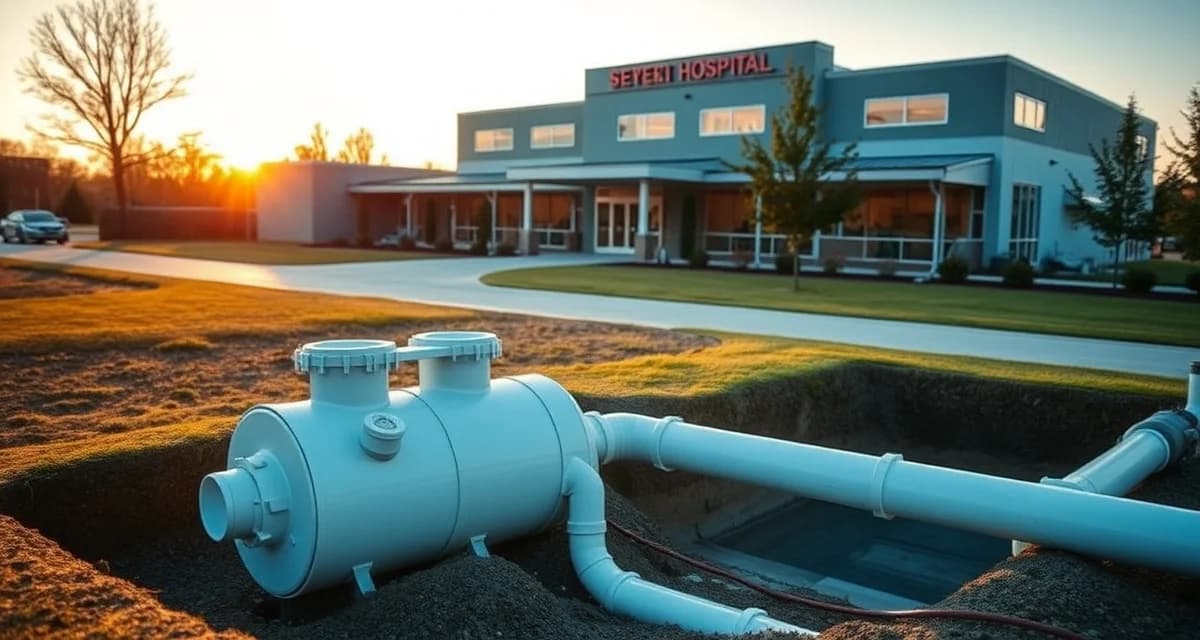
Septic Service for Small Hospitals and Medical Centers
By the SepticMind Editorial Team
A septic failure at a rural hospital triggers mandatory state health department notification and potential facility closure, and hospital septic systems receive pharmaceutical and chemical waste loads beyond residential standards that require specific management attention. Rural hospitals that rely on onsite septic systems face a regulatory environment that far exceeds what standard commercial accounts encounter.
TL;DR
- Hospitals facilities have distinct wastewater loading patterns that affect septic system sizing, service frequency, and permit requirements.
- Commercial and institutional properties like hospitals typically require more frequent pumping than residential systems due to higher daily usage.
- Some hospitals operations generate waste streams (grease, chemicals, or high-volume flow) that require pre-treatment before reaching the septic system.
- Service contracts for hospitals provide predictable recurring revenue and are easier to manage with a platform that tracks commercial account schedules.
- Health department inspections for hospitals properties may require septic system condition documentation as part of facility licensing.
- Septic companies specializing in hospitals service build referral networks with property managers, architects, and health inspectors in that niche.
SepticMind's healthcare facility account type tracks hospital septic compliance and mandatory reporting deadlines, giving healthcare facility managers organized records for the multiple regulatory bodies that oversee hospital operations.
The Rural Hospital Septic Challenge
Small rural hospitals typically operate onsite septic systems when they're located beyond municipal sewer service reach. These facilities face challenges that no other facility type combines in the same way:
24/7 operation at consistent high load: Unlike schools, campgrounds, or event facilities that have off-periods, hospitals operate continuously. Patient admissions, emergency department visits, staff shifts, and support operations generate constant wastewater loading with no meaningful recovery periods.
Pharmaceutical waste in the wastewater stream: Patient medications -- administered, excreted, or disposed of -- enter the wastewater through patient restrooms. Active pharmaceutical compounds (APIs) in hospital wastewater can affect the biological treatment process in septic systems and raise groundwater contamination concerns. This is an emerging regulatory concern rather than a fully developed compliance framework in most states, but it's a real characteristic of hospital wastewater that informs service planning.
Chemical and laboratory waste: Hospital laboratories, sterilization units, and procedure rooms generate chemical wastewater that requires management separate from the main septic flow in some cases.
High compliance stakes: A hospital's operating license depends on maintaining functioning sanitation infrastructure. State health department oversight of hospital facilities is active and rigorous. A septic failure that forces patient transfers or facility closure has immediate consequences for patient care and the hospital's operating status.
Regulatory Oversight Framework
Hospital septic systems face oversight from multiple regulatory bodies simultaneously:
State health department: Hospital operating licenses require functioning sanitation systems. State health departments conduct facility inspections that include sanitation infrastructure assessment. Failures or significant compliance concerns must be reported.
State environmental agency: The onsite treatment system is regulated by the state environmental agency for wastewater permit compliance. Operating permits for hospital-scale onsite systems may specify inspection and service intervals, monitoring requirements, and performance standards.
CMS (Centers for Medicare and Medicaid Services): Hospitals that participate in Medicare and Medicaid programs are subject to CMS Conditions of Participation, which include facility maintenance standards. A sanitation failure that creates a patient safety concern may affect CMS certification.
Joint Commission (JCAHO): Accredited hospitals are inspected by the Joint Commission under standards that include facility management and environmental safety. Documented, organized maintenance records for all critical infrastructure -- including wastewater -- are part of the accreditation review.
For the septic service relationship, this multi-agency oversight means your service records aren't just for the hospital's convenience -- they're used in regulatory and accreditation reviews. The documentation quality and completeness matters more than at most accounts.
Service Frequency at Hospital Facilities
A rural hospital with onsite septic needs commercial-scale service frequency:
Main facility septic: A hospital with 20-50 beds operating 24/7 generates daily wastewater volumes equivalent to a large commercial facility. Monthly or bi-monthly service for the main facility system is a reasonable starting point, adjusted based on observed fill levels.
Kitchen and dietary facilities: Hospital kitchens serving patients and staff three meals daily generate high-BOD food service wastewater. Grease traps for hospital dietary facilities need service every 4-8 weeks.
Laboratory drainage: Chemical waste from hospital labs ideally routes to a separate holding system rather than to the main septic. Verify laboratory drainage routing at new accounts.
Emergency department: High-throughput emergency departments with significant patient volume contribute meaningfully to the wastewater load. Emergency departments with trauma capabilities generate additional waste stream considerations.
What Happens When a Hospital Septic System Fails
A hospital septic system failure triggers a cascade of regulatory responses:
- Immediate notification to state health department
- Assessment of whether patient care can safely continue
- Emergency remediation plan required before resuming normal operations
- Potential mandatory patient transfer if sanitation cannot be maintained
- Post-failure regulatory review and corrective action plan
- Possible operating permit modification with enhanced monitoring requirements
The combination of patient safety implications and immediate regulatory response means prevention is the only acceptable outcome. There's no version of a hospital septic failure that doesn't create serious problems for the facility.
Documentation That Supports Hospital Compliance
The documentation standard for hospital accounts needs to meet the expectations of multiple reviewing organizations:
Service records: Every service visit should generate a dated, signed service report with the technician's license information, the facility's name, the system's condition at time of service, and any recommendations made.
Inspection documentation: Annual formal inspection reports with detailed system condition assessment should be maintained in the hospital's facility records.
Compliance certifications: For systems with operating permits requiring specific performance standards, compliance documentation demonstrating those standards are being met needs to be current.
Repair and maintenance records: Any repairs to the system -- pump replacement, baffle repair, drainfield remediation -- need to be documented with date, scope, and contractor information.
This documentation package should be available for immediate production when the Joint Commission, state health department, or CMS requests it.
Get Started with SepticMind
Hospitals facilities need a service provider who understands the specific wastewater challenges of their operations. SepticMind makes it easy to manage commercial service contracts, track inspection schedules, and document service visits for every account in your portfolio. See how it supports commercial account management.
Frequently Asked Questions
What compliance requirements govern septic systems at small rural hospitals?
Rural hospital septic systems face compliance requirements from state health departments (facility operating license), state environmental agencies (wastewater treatment system permits), CMS (Conditions of Participation for Medicare-participating facilities), and accreditation organizations like the Joint Commission (facility management standards). Operating permits from state environmental agencies for hospital-scale onsite systems typically specify minimum service intervals, performance standards, and monitoring requirements that exceed general commercial onsite system requirements. State health departments may require immediate notification of sanitation system failures at licensed healthcare facilities. The combination of these overlapping requirements means hospital facility managers need a compliance documentation system that can respond to any regulatory inquiry with complete, organized service and inspection records.
How often should a hospital's onsite septic system be inspected?
Hospital septic systems serving 24/7 high-occupancy operations should be formally inspected at minimum annually, with service visits much more frequent based on the facility's daily flow volume. Many hospital operating permits specify minimum inspection frequency. Service visits -- pump-out, condition check, grease trap service -- should occur monthly or quarterly depending on system capacity and the facility's bed count and patient volume. The formal annual inspection should include a comprehensive system condition assessment, documentation of any age-related concerns, performance evaluation relative to permit standards, and a professional recommendation on any needed maintenance or repairs. This inspection documentation supports both the facility's internal maintenance records and external compliance reviews.
Does SepticMind support mandatory health department reporting for hospital septic compliance?
Yes. SepticMind's healthcare facility account type tracks operating permit conditions and compliance deadlines for each hospital account, flagging required reporting dates and inspection intervals. Service records are maintained in formats that meet state health department documentation standards. When a condition is observed that triggers mandatory reporting obligations, the account record flags the condition for immediate review by the account manager. Compliance documentation for Joint Commission and CMS review -- complete service and inspection history, dated and signed by licensed technicians -- can be generated on demand from the account record. For facilities with multiple wastewater system components (main septic, grease trap, laboratory holding tank), each component's compliance history is tracked separately within the hospital account.
How often should a septic system serving a hospitals property be inspected?
Septic systems at hospitals properties should be inspected at least annually and pumped more frequently than residential systems, since commercial-scale daily water usage accelerates sludge and grease accumulation. The exact frequency depends on the specific activities at the facility, peak occupancy, any food service or chemical use on-site, and local regulatory requirements. A service provider familiar with hospitals operations can recommend an appropriate inspection and pumping schedule based on the system's actual usage profile.
What septic system issues are most common at hospitals properties?
The most common septic problems at hospitals properties are rapid sludge accumulation from high occupancy, grease trap failure if food service is involved, hydraulic overloading during peak-use periods, and non-biodegradable waste disposal from cleaning or maintenance activities. Regular inspection and a service contract with clear maintenance intervals are the most effective ways to catch these problems before they cause system failure or regulatory violations.
Try These Free Tools
Sources
- National Onsite Wastewater Recycling Association (NOWRA)
- US EPA Office of Wastewater Management
- NSF International
- Water Environment Federation
- National Environmental Services Center (NESC)