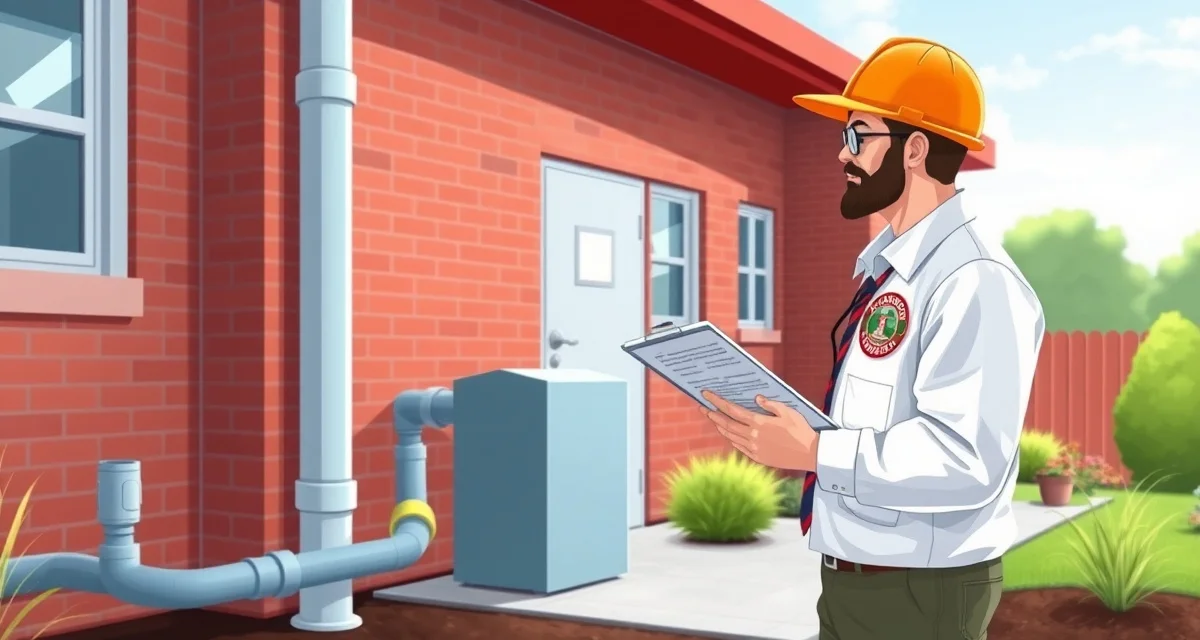
Septic Service for Head Start and Early Childhood Programs
By the SepticMind Editorial Team
Head Start programs are federally funded and must meet DHHS performance standards including facility sanitation, and ACF can place Head Start grantees on compliance status for persistent facility sanitation failures. Operating a Head Start program or other federally funded early childhood program means managing septic compliance at the intersection of federal program requirements, state childcare licensing, and county health department oversight. Getting any one of these wrong while the others are in order still creates a compliance failure.
TL;DR
- Early Childhood Programs facilities have distinct wastewater loading patterns that affect septic system sizing, service frequency, and permit requirements.
- Commercial and institutional properties like early childhood programs typically require more frequent pumping than residential systems due to higher daily usage.
- Some early childhood programs operations generate waste streams (grease, chemicals, or high-volume flow) that require pre-treatment before reaching the septic system.
- Service contracts for early childhood programs provide predictable recurring revenue and are easier to manage with a platform that tracks commercial account schedules.
- Health department inspections for early childhood programs properties may require septic system condition documentation as part of facility licensing.
- Septic companies specializing in early childhood programs service build referral networks with property managers, architects, and health inspectors in that niche.
The Federal Funding Compliance Layer
Head Start and Early Head Start programs receive federal funding through the Administration for Children and Families within the U.S. Department of Health and Human Services. With that funding comes a comprehensive compliance framework that includes facility requirements.
ACF performance standards: ACF Head Start Program Performance Standards (45 CFR Part 1302) include health and safety requirements for program facilities. Section 1302.47 on safety practices requires that facilities maintain functioning, sanitary conditions. Septic system failures at Head Start facilities are violations of federal performance standards, not just local health code issues.
Program monitoring and compliance visits: ACF monitors Head Start grantees through regular monitoring reviews. Facility conditions are reviewed during monitoring visits. Persistent facility sanitation problems can result in a grantee being placed on quality improvement plans or compliance status.
Grant renewal implications: Head Start grants are renewed through a competitive re-competition process. A history of facility compliance problems can affect a grantee's re-competition standing. Strong facility management records support a competitive re-competition application.
State licensing alignment: In addition to federal requirements, Head Start programs must be licensed by the state childcare licensing agency. State licensing requirements for childcare facilities include septic and sanitation standards. Most states require childcare facilities to have licensed and maintained onsite wastewater systems if not connected to municipal sewer.
SepticMind's Head Start account type tracks DHHS performance standard compliance alongside state septic rules, keeping both frameworks organized in one place.
Childcare Sanitation Standards for Early Childhood Facilities
Early childhood programs face specific sanitation standards that go beyond what a standard commercial office or public building must maintain. Children are more vulnerable to environmental health hazards, and regulatory standards for childcare facilities reflect this.
Diaper changing areas: Programs serving infants and toddlers have dedicated diaper changing stations with hand-washing facilities immediately adjacent. High-frequency hand washing at changing stations generates concentrated gray water loads from these specific facility areas.
Child-height restrooms: Licensed childcare facilities must provide child-appropriate restroom fixtures at appropriate heights. The number of restroom fixtures required is set by state licensing rules based on enrollment capacity. Systems must support the fixture count the licensing agency has approved.
Outdoor play area drainage: Programs with outdoor play areas need to ensure that drainage from play areas and outdoor sinks doesn't conflict with the septic drainfield location. Licensing agencies check that outdoor facilities don't compromise the sanitation infrastructure.
Handwashing stations in program rooms: Quality early childhood programs maintain handwashing stations in classroom areas for both children and teachers. Multiple handwashing stations generate distributed gray water loads throughout the facility.
Food service: Head Start programs typically provide meals and snacks to children under federal CACFP (Child and Adult Care Food Program) nutrition requirements. On-site meal preparation from a program kitchen generates commercial-level food service loads including grease that requires grease trap management.
State Childcare Licensing Inspection Preparation
State childcare licensing agencies inspect Head Start facilities on a regular cycle, typically annually. The licensing inspection includes facility condition review that covers septic and sanitation:
Current service documentation: Licensing inspectors may ask to see recent septic service records. Records should be organized, current, and show consistent professional maintenance.
No outstanding violations: Any county health department notices about the septic system should be resolved before a licensing inspection. Unresolved septic violations during a licensing review can result in a licensing deficiency that must be corrected before the next inspection cycle.
Functional restrooms for enrollment capacity: The number of functional restrooms must match or exceed what the licensing agency approved for the current enrollment. If a septic issue has taken any restrooms offline, that's a licensing concern.
Grease trap compliance if applicable: Programs with on-site kitchens preparing meals under CACFP need grease trap maintenance documentation as part of food service compliance. This is a separate compliance item from the main septic system.
For childcare centers in standard commercial settings without the federal funding overlay, that guide covers state-only compliance. For childcare centers on farm properties with agricultural property compliance added to the picture, that guide addresses the multi-framework situation.
Occupancy and Service Interval Calculations
Head Start programs typically serve children in part-day sessions of 3-4 hours or full-day programming of 6-10 hours. The wastewater generation profile differs from an all-day commercial occupancy:
Part-day programs: Two shifts of children (morning and afternoon) with teachers and staff throughout. High restroom use intensity concentrated in transition periods. Calculate service intervals based on two sessions of enrollment plus staff.
Full-day programs: Children in care from early morning to late afternoon with full-day staff. Similar to a commercial building with high occupancy all day. Calculate based on full-day enrollment plus staff.
Kitchen considerations: Programs preparing meals under CACFP add commercial kitchen wastewater to the calculation. Grease trap service needs its own schedule separate from main tank pump-outs.
Transportation staff: Programs with transportation components have bus drivers and transportation staff who may or may not use the facility's restrooms regularly. Minor contribution but worth noting for large programs.
For a Head Start center serving 60 children in full-day programming with 12 staff, the daily wastewater generation is roughly equivalent to a small commercial office building. Annual pump-outs and regular inspections are appropriate for systems of this scale.
Get Started with SepticMind
Managing service contracts for early childhood programs properties is easier with a platform built for the septic trade. SepticMind tracks commercial service schedules, documents every inspection visit, and keeps your compliance records organized by property. See how it handles your commercial account portfolio.
Frequently Asked Questions
What DHHS requirements govern septic systems at Head Start program facilities?
Head Start program facilities must comply with ACF Head Start Program Performance Standards, specifically the health and safety requirements under 45 CFR Part 1302, which require facilities to maintain sanitary conditions. A septic failure at a Head Start facility is a violation of federal performance standards that ACF monitors during compliance reviews. Beyond the federal standards, Head Start programs must maintain state childcare facility licenses that require functioning sanitation as a licensing condition. State licensing inspectors review facility conditions including septic system status during annual inspections. Programs must satisfy both the federal ACF standards and state licensing requirements simultaneously, with the stricter standard governing when they differ.
How often must a Head Start program facility service its onsite septic system?
Head Start facilities should treat their septic systems as the commercial childcare facilities they are. Annual inspections are appropriate for all licensed childcare facilities. Pump-out frequency depends on enrollment size and program hours: full-day programs serving 60+ children should plan on annual pump-outs, while smaller part-day programs may manage with pump-outs every 2 years if actual fill rate observations support that interval. Programs with on-site kitchens preparing CACFP meals need monthly or quarterly grease trap service in addition to main tank pump-outs. Schedule service in coordination with the academic or program calendar to minimize disruption, typically during summer breaks when enrollment may be reduced or programs are closed.
Does SepticMind track DHHS and state compliance for Head Start facility accounts?
Yes. SepticMind's Head Start account type captures both ACF performance standard requirements and state childcare licensing compliance in one account. ACF monitoring visit schedules and program re-competition timelines are tracked alongside service schedules so service documentation is current during federal reviews. State childcare licensing renewal dates generate service reminders to confirm compliance before inspections. Kitchen grease trap service is tracked separately from main septic service. For Head Start grantees managing multiple center locations, all facilities can be tracked under a single grantee account with compliance status visible across all program sites. Service history is stored in an organized format suitable for ACF monitoring review and state licensing inspection.
How often should a septic system serving a early childhood programs property be inspected?
Septic systems at early childhood programs properties should be inspected at least annually and pumped more frequently than residential systems, since commercial-scale daily water usage accelerates sludge and grease accumulation. The exact frequency depends on the specific activities at the facility, peak occupancy, any food service or chemical use on-site, and local regulatory requirements. A service provider familiar with early childhood programs operations can recommend an appropriate inspection and pumping schedule based on the system's actual usage profile.
What septic system issues are most common at early childhood programs properties?
The most common septic problems at early childhood programs properties are rapid sludge accumulation from high occupancy, grease trap failure if food service is involved, hydraulic overloading during peak-use periods, and non-biodegradable waste disposal from cleaning or maintenance activities. Regular inspection and a service contract with clear maintenance intervals are the most effective ways to catch these problems before they cause system failure or regulatory violations.
Try These Free Tools
Sources
- National Onsite Wastewater Recycling Association (NOWRA)
- US EPA Office of Wastewater Management
- NSF International
- Water Environment Federation
- National Environmental Services Center (NESC)