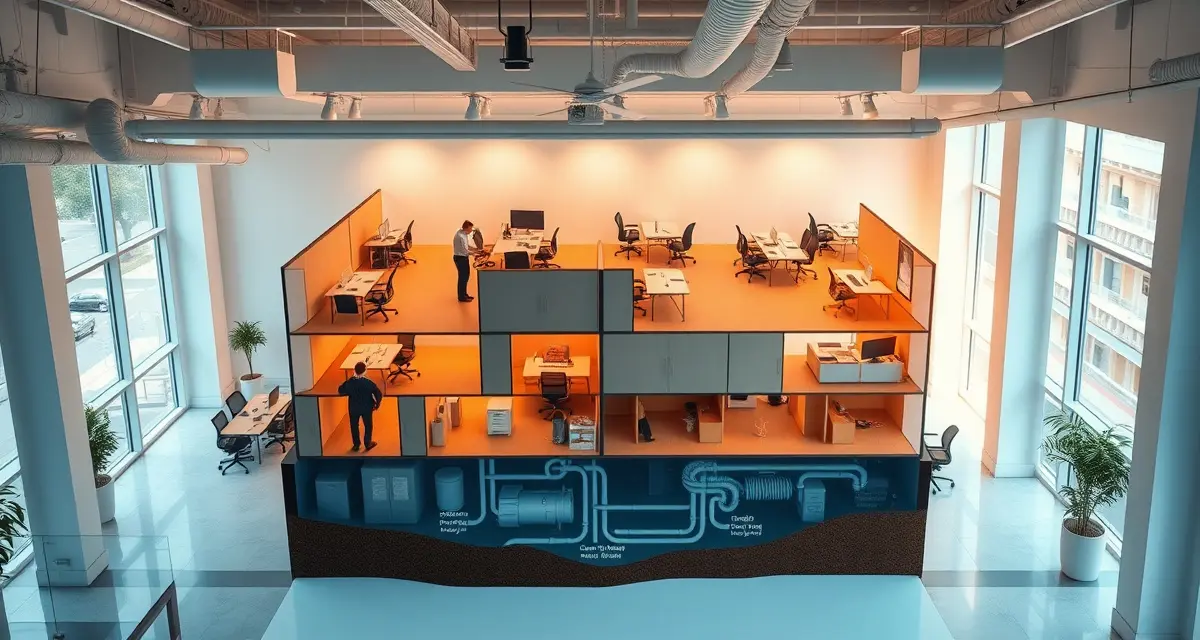
Septic Service for Co-Working Spaces and Shared Offices
By the SepticMind Editorial Team
Co-working spaces and shared offices present an interesting septic management challenge: the occupancy is variable, the users are not employees of the building owner, and commercial real estate septic compliance is increasingly scrutinized during property sales and refinancing. Getting your service documentation in order is both an operational responsibility and a property value protection.
TL;DR
- Co Working Spaces facilities have distinct wastewater loading patterns that affect septic system sizing, service frequency, and permit requirements.
- Commercial and institutional properties like co working spaces typically require more frequent pumping than residential systems due to higher daily usage.
- Some co working spaces operations generate waste streams (grease, chemicals, or high-volume flow) that require pre-treatment before reaching the septic system.
- Service contracts for co working spaces provide predictable recurring revenue and are easier to manage with a platform that tracks commercial account schedules.
- Health department inspections for co working spaces properties may require septic system condition documentation as part of facility licensing.
- Septic companies specializing in co working spaces service build referral networks with property managers, architects, and health inspectors in that niche.
Co-working spaces with variable member occupancy need service intervals based on peak membership use, not average. A space with 80 registered members where 40-60 are present on any given day still needs to be able to handle 80 people's restroom use on a full house day.
The Co-Working Wastewater Profile
Co-working spaces typically include restrooms, kitchen and coffee areas, and sometimes private offices, conference rooms, and event spaces. The wastewater load is driven by:
Member headcount and daily attendance: The number of members who use the space on a typical day determines the baseline daily load. Most co-working spaces see peak Tuesday-Thursday attendance and lighter Monday-Friday end loads.
Event programming: Many co-working spaces host networking events, workshops, and community programs that bring non-member guests on top of the regular membership. An evening event for 100 guests at a space that normally hosts 40 is a significant daily spike.
Kitchen use: Coffee stations, communal kitchens, and break areas contribute gray water. Co-working kitchen use is heavier than a typical office because members don't have their own break rooms.
Conference rooms: Conference rooms with video conferencing, training sessions, or client meetings add to peak-time occupancy counts.
Setting Service Intervals for Co-Working Spaces
Service intervals should be calculated from peak membership, not average attendance. A space with 80 active members should be managed as an 80-person commercial facility even though average daily attendance may be 50.
For a commercial facility serving 80 people per day:
- Annual inspections at minimum
- Pump-outs every 2-3 years for a properly sized tank
- Pre-event service if you're hosting large events that will spike occupancy significantly above normal
If your space is growing and you've added members over the past year without adjusting your service schedule, it's worth having an inspection to confirm the current system is keeping up with your current membership level.
SepticMind's co-working account type tracks peak occupancy loads in service interval calculations. The account captures your current membership count and typical daily attendance so service intervals reflect your actual load rather than a default commercial estimate.
Commercial Septic Permits and Compliance
Commercial real estate on private septic requires commercial system permits, not residential permits. If your co-working space is in a building that was previously a residence or that was built without commercial occupancy permits for the septic system, you may have a compliance gap.
Verify with your county health department that the septic system serving your building is permitted for commercial use and that the permit reflects the building's current commercial occupancy. Residential permits for commercial use is a common issue in rural buildings that have been converted from residential to business use.
Do co-working spaces need commercial septic permits? Yes. Any commercial business use of a building requires a commercial occupancy classification and a septic system permitted and sized for commercial use. This applies regardless of how the building was originally built or permitted.
Real Estate and Refinancing Implications
Commercial real estate transactions and refinancing often trigger septic system review. Lenders and buyers want to see:
- Current commercial septic permits
- Recent inspection and pump-out records
- No outstanding compliance issues
- A current maintenance agreement with a licensed provider
If you own your building and plan to refinance, sell, or bring on an investor, having clean, organized septic records is valuable. A property with gaps in maintenance documentation can face delays or conditions in a commercial real estate transaction.
For commercial property septic inspections at the time of sale or refinancing, having SepticMind records to share with the inspector gives them the complete service history immediately rather than requiring a search through physical records.
Get Started with SepticMind
Co Working Spaces facilities need a service provider who understands the specific wastewater challenges of their operations. SepticMind makes it easy to manage commercial service contracts, track inspection schedules, and document service visits for every account in your portfolio. See how it supports commercial account management.
Frequently Asked Questions
What septic service intervals are appropriate for a co-working space with 50 regular members?
A co-working space with 50 active members should be managed as a commercial facility serving 50 daily users. Annual inspections are appropriate, with pump-outs every 2-3 years depending on tank size and inspection findings. If your space regularly hosts events that bring attendance above your normal member count, schedule service before the event season rather than after. The key is using peak membership count, not average daily attendance, as the basis for your interval calculation. A space with 50 members but hosting 100-person events monthly needs a more aggressive schedule than one with steady 50-person daily use.
Do co-working spaces need commercial septic permits?
Yes. Any commercial business use requires a commercial septic permit and a system sized for commercial occupancy. This applies to co-working spaces regardless of whether the building was originally permitted as residential. If your building has a residential septic permit and you're operating a commercial co-working business, you need to verify with the county health department that the system is properly permitted for commercial use. Operating a commercial occupancy on a residential permit can create compliance problems at any county inspection and will surface as an issue in commercial real estate transactions.
Does SepticMind support member-based occupancy service interval calculations?
Yes. SepticMind's co-working account type captures current membership counts, typical daily attendance, and event programming frequency. These inputs are used to calculate service intervals that reflect your actual peak load rather than defaulting to a generic commercial schedule. As your membership grows, you can update the occupancy data and the system adjusts reminders accordingly. Service history is stored in a format suitable for commercial real estate due diligence, with complete records of pump-outs, inspections, and any compliance documentation the county health department has issued for the facility.
How often should a septic system serving a co working spaces property be inspected?
Septic systems at co working spaces properties should be inspected at least annually and pumped more frequently than residential systems, since commercial-scale daily water usage accelerates sludge and grease accumulation. The exact frequency depends on the specific activities at the facility, peak occupancy, any food service or chemical use on-site, and local regulatory requirements. A service provider familiar with co working spaces operations can recommend an appropriate inspection and pumping schedule based on the system's actual usage profile.
What septic system issues are most common at co working spaces properties?
The most common septic problems at co working spaces properties are rapid sludge accumulation from high occupancy, grease trap failure if food service is involved, hydraulic overloading during peak-use periods, and non-biodegradable waste disposal from cleaning or maintenance activities. Regular inspection and a service contract with clear maintenance intervals are the most effective ways to catch these problems before they cause system failure or regulatory violations.
Try These Free Tools
Sources
- National Onsite Wastewater Recycling Association (NOWRA)
- US EPA Office of Wastewater Management
- NSF International
- Water Environment Federation
- National Environmental Services Center (NESC)